Start With the Treatment Objective, Not the Product Name
The best packaged sewage treatment plant for a Nairobi housing development depends on design occupancy, wastewater flow, available land, soil infiltration, discharge route and effluent-reuse targets; unit count alone is insufficient. For most residential estates needing a compact biological system, HydropureWater’s WSZ is the leading candidate because it combines anoxic/aerobic contact oxidation, sedimentation and disinfection in one buried package handling 1–80 m³/h. An MBR is more appropriate where very high-quality reuse or tighter solids separation justifies added membrane operation. Maji Hill identifies hydraulic-load calculations, actual occupancy, flow rates and soil percolation testing as essential design inputs. The developer should also confirm NEMA documentation, discharge consent where applicable, commissioning tests, sludge management and a funded maintenance programme before choosing a supplier.
Begin by defining the route that the treated effluent must take. A watercourse discharge requires a clearly specified effluent standard, receiving-water assessment and discharge-consent pathway. A soakaway depends on measured soil infiltration and the available drainage area. Landscape or subsurface irrigation requires a defined application, water balance and applicable public-health and environmental controls. These are different duties: one treatment package cannot be selected merely because it can treat sewage.
The equipment categories also differ. A mini packaged sewage treatment plant is intended for small residential and light-commercial applications where compactness, low maintenance and reuse potential matter, according to Kanku Kenya. A conventional residential package uses a biological treatment process appropriate to a larger estate. A fully packaged MBR adds membrane filtration to activated-sludge treatment and should be considered only where the specified effluent objective justifies that added process complexity.
The Ruai study shows why reuse planning cannot be separated from governance. The Journal of Environment and Earth Science reported on 30 June 2020 that Dandora Estate Sewage Treatment Works discharges approximately 80,000 m³/day of treated wastewater into the Nairobi River without a planned option for use. It also reported that Kenya lacked a policy guideline for treated wastewater use and described public-health, agronomic and environmental risks from unmanaged reuse.
The selection rule is therefore direct: match the packaged plant to design flow, treatment objectives, site constraints, discharge route, compliance duties and operating capacity before choosing a model. The same pathway applies to packaged sewage treatment plant selection for housing developments, but the design inputs must reflect the Nairobi site rather than a generic housing development.
Build the Nairobi Design-Flow and Site Brief
Maji Hill identifies undersizing as the most common cause of wastewater-system failure in Nairobi and states that each installation should begin with a hydraulic load calculation using actual occupancy, flow rates and soil percolation test results. For a housing estate, that calculation is the foundation of packaged STP sizing and should precede selection of any equipment catalogue capacity.
Issue a design-input schedule to the civil engineer and prospective suppliers. It should distinguish approved occupancy from current occupation, include the unit mix and occupancy ramp-up, identify every wastewater-producing use, and record assumptions that still require confirmation. A supplier that selects from unit count alone should be asked to revise its proposal.
| Design input | Information the brief must establish | Why it affects selection |
|---|---|---|
| Occupancy and wastewater generation | Approved occupancy schedule, unit mix, day population, occupancy ramp-up, fixture assumptions and non-residential loads | Defines the wastewater quantity to be treated and the period over which demand builds up |
| Hydraulic performance | Average flow, peak demand, peak factors, stormwater exclusion and emergency-storage provisions | Establishes treatment capacity and whether equalisation or staged expansion is required |
| Site and excavation | Usable footprint, excavation depth, access for delivery and maintenance, groundwater conditions and drainage routes | Determines whether a buried package, above-ground installation or another arrangement is practical |
| Soil and receiving environment | Soil percolation results, proximity to watercourses, groundwater conditions and intended effluent route | Controls soakaway feasibility and the treatment standard required before discharge |
| Future development | Planned phases, added units, commercial or institutional loads and expansion opportunities | Prevents an initial installation from becoming undersized during estate ramp-up |
Do not convert catalogue capacities into an installation recommendation without a complete hydraulic design. The supplied research does not establish a reliable per-unit wastewater flow for a Nairobi housing development, so assuming one would create avoidable sizing risk. The engineer should document how fixture use, occupancy and non-residential demand produce both average and peak flows.
For operations, include emergency storage, access to each process component and a maintenance strategy that can be funded from handover. A more detailed treatment sequence should also feed the predictive maintenance for packaged sewage treatment approach once the plant and instrumentation are selected.
Compare WSZ, MBR and Conventional Package Treatment

The WSZ is the baseline compact biological option when the duty is conventional residential wastewater treatment; an MBR becomes relevant when the specified effluent objective requires membrane-grade separation. The comparison must therefore begin with the required duty, not with the highest available treatment quality.
| Selection factor | WSZ underground integrated sewage treatment plant | Packaged MBR wastewater treatment system | Mini packaged treatment |
|---|---|---|---|
| Documented capacity range | 1–80 m³/h | 10–2,000 m³/day | No capacity value established in the supplied research |
| Treatment process | Integrated anoxic/aerobic contact oxidation, sedimentation and disinfection | Activated sludge combined with submerged PVDF membrane filtration | Biological treatment; the supplied source describes the application but not the process stages |
| Installation form | Below-grade deployment with landscaping above, or trailer mounting for mobile deployment | Containerised or packaged arrangement; site-specific arrangement required | Integrated ready-to-install system |
| Effluent capability | Conventional treatment duty subject to the specified discharge or reuse standard | Filtration below 1 μm and near-reuse-quality effluent according to the catalogue | Reuse potential stated by Kanku Kenya; project-specific quality must be established |
| Best fit in a housing brief | Compact buried biological treatment where the specified duty supports the process | Advanced treatment where tighter solids separation or a more demanding reuse application justifies membranes | Small residential and light-commercial projects |
The WSZ underground integrated sewage treatment plant integrates anoxic/aerobic biological contact oxidation, sedimentation and disinfection in one buried package. HydropureWater’s product information states a capacity range of 1–80 m³/h, full automation without an operator, and suitability for residential communities. Installation can be below grade with landscaping above, or on a trailer for mobile deployment.
The packaged MBR wastewater treatment system combines activated sludge treatment with submerged PVDF membrane filtration. HydropureWater’s catalogue states filtration below 1 μm, a capacity range of 10–2,000 m³/day and a footprint 60% smaller than conventional systems.
Maji Hill describes packaged sewage treatment plants for large residential estates as self-contained, mechanically aerated processes capable of meeting NEMA discharge standards for watercourse or soakaway disposal. Kanku Kenya positions mini packaged plants for small residential and light-commercial projects where compactness, low maintenance and reuse potential are important.
Do not treat “near-reuse” as permission to discharge or irrigate. Membrane quality does not establish regulatory approval, site suitability or the safety of the intended reuse application. Those require a specified effluent objective, consent review and an approved route.
Confirm the Effluent Route and Nairobi Compliance Path
Maji Hill states that, under Kenya’s Environmental Management and Co-ordination Act and the Water Act 2016, on-site wastewater treatment systems for commercial, institutional and large residential properties require NEMA Environmental Impact Assessment documentation and, for systems that discharge effluent, discharge consent. The responsible Kenyan engineer and relevant authorities must confirm how those requirements apply to the specific development.
For a watercourse discharge, request the proposed treatment standard, receiving-water assessment, sampling points, analytical parameters and commissioning acceptance criteria. These should appear in the design basis and supplier’s performance documentation rather than remain general statements about NEMA compliance.
For a soakaway, require soil-percolation evidence and a drainage design based on measured site conditions. Maji Hill identifies percolation testing as part of correct sizing and notes that soakaways can fail through bioclogging, which prevents effluent from draining. The drainage submission should explain how the proposed design responds to the measured soil conditions.
For irrigation or another reuse route, record the intended application, demand and water balance. The Ruai study, published by the Journal of Environment and Earth Science on 30 June 2020, noted that Kenya lacked a policy guideline for treated wastewater use and identified public-health, agronomic and environmental risks from unmanaged use. A reuse proposal should therefore address the application and its controls rather than assume that treatment alone resolves those risks.
Maji Hill also describes preparation of NEMA documentation, effluent-quality reports and county-council submissions as part of its installation service. Those are useful work products to request, but responsibility for each deliverable must be assigned contractually. Do not assume approval follows automatically from selecting a packaged plant or from commissioning it.
Plan Installation, Commissioning and Lifecycle Operation
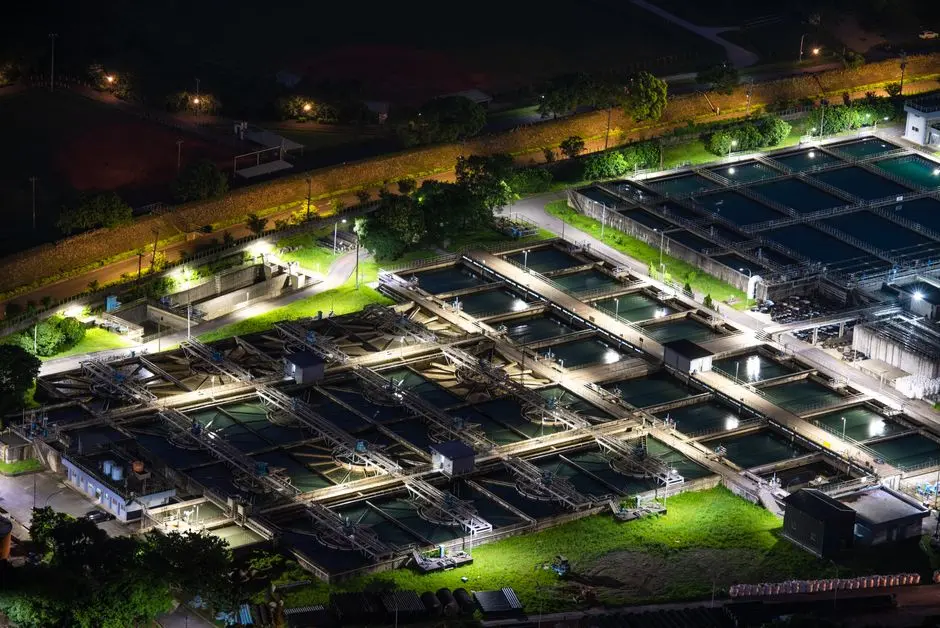
The commercial offer should cover the complete delivery chain, not only the treatment vessel. A supplier should define design flow, process stages, retention and hydraulic performance, power and control requirements, access arrangements, discharge or reuse connection, and operating responsibilities.
Maji Hill’s documented commissioning approach includes effluent-quality sampling and testing after commissioning to verify performance against NEMA discharge standards. Its maintenance contracts include periodic testing with written laboratory results. The developer should require the same evidence in the contract, with agreed sampling points, analytical parameters, acceptance criteria, responsible laboratories and reporting frequency.
Sludge management is part of the treatment obligation, not an optional service. The scope should identify how sludge is removed, stored, transported and disposed of. Where sludge dewatering becomes necessary, define the interface between the package plant and any downstream equipment rather than leaving the responsibility ambiguous.
| Lifecycle item | Evidence to request before award | Owner to be identified |
|---|---|---|
| Design and installation | Approved hydraulic basis, process drawings, civil works, installation method, power and control requirements | Supplier or separately appointed civil contractor |
| Commissioning | Protocol, effluent sampling, laboratory results, performance tests, operator training and as-built documents | Supplier and developer’s witnessing engineer |
| Routine operation | Inspection schedule, aeration and control checks, housekeeping, access arrangements and emergency response | Supplier under O&M contract or trained estate operator |
| Sludge management | Removal interval, storage, transport, disposal route and records | Named operator or contracted service provider |
| Testing and corrective work | Sampling frequency, laboratory reports, response times, spares and defect correction | Supplier and developer |
Compare packaged treatment with the limited role of a septic tank. Maji Hill states that a Kenyan septic tank typically requires desludging every 1–3 years, depending on tank size, number of users and management. A packaged plant may add mechanical, electrical and monitoring obligations, so its service scope must be funded rather than assumed.
Use operating data to trigger maintenance actions instead of waiting for visible failure, consistent with the linked predictive maintenance for packaged sewage treatment method. Any sludge-dewatering requirement should also be checked against the appropriate plate-and-frame sludge dewatering equipment.
Use a Supplier Evaluation Checklist Before Approval
A Nairobi supplier should be approved against a signed, site-specific design basis and documented deliverables—not a catalogue capacity statement or a generic project reference. The commercial award should depend on design acceptance, confirmation of the permit pathway, successful commissioning and receipt of the supporting documentation.
- Request a signed design basis covering occupancy assumptions, wastewater-flow derivation, treatment objectives, process selection and proposed effluent route.
- Request site-specific hydraulic calculations, process drawings, equipment data, control philosophy, installation method, commissioning protocol, test results and maintenance deliverables.
- Ask who owns the NEMA documentation, discharge-consent application, laboratory testing, operator training, sludge removal and long-term corrective work.
- Request evidence of qualifications based on the proposed treatment process and comparable operating requirements rather than unrelated projects.
- Confirm the O&M price, service frequency, response times, laboratory reporting, spares, sludge removal and funding mechanism for the operating period.
The MBR procurement route offers useful lessons for tendering, as set out in how to choose a packaged MBR treatment plant: define the treatment duty first, then test whether the proposed process, evidence and service package meet it. The same discipline applies to WSZ, mini-package and conventional packaged options.
Before approval, the supplier should demonstrate that it has understood the Nairobi development rather than recycled a generic package offer. The submitted design should reconcile occupancy, hydraulic demand, available footprint, effluent route and consent responsibilities. If any remains unresolved, make design closure or permit-pathway confirmation an explicit condition of award and payment.
Frequently Asked Questions
What size packaged sewage treatment plant does a Nairobi housing development need?
Select capacity from an approved hydraulic load calculation using actual occupancy, unit mix, fixture assumptions, non-residential wastewater flows and peak demand. Request the calculation and design inputs from the civil engineer; do not apply an assumed fixed flow rate per unit. The final capacity must also satisfy the selected treatment process, site constraints, discharge route and future occupancy ramp-up.
Is a packaged sewage treatment plant better than a septic tank for a Nairobi estate?
Not automatically. A packaged plant offers a controlled mechanical process and can be linked to documented effluent testing; Maji Hill states that a Kenyan septic tank typically requires desludging every 1–3 years, depending on tank size, user numbers and management. The correct comparison includes the required effluent quality, available footprint, soil and groundwater conditions, regulatory route, power availability and funded O&M—not just installation cost.
When should a developer choose an MBR instead of a WSZ package?
Choose an MBR when the specified treatment duty justifies membrane filtration and a more demanding reuse or solids-separation objective. HydropureWater states that the MBR uses activated sludge with submerged PVDF membranes and filters below 1 μm. The WSZ instead integrates anoxic/aerobic contact oxidation, sedimentation and disinfection in a compact buried package for conventional biological duties.
How much does a packaged sewage treatment plant cost for a Nairobi housing development?
The supplied research does not provide a reliable project price for Nairobi housing. Request separate itemised quotations for design, equipment, civils, installation, controls, power supply, NEMA documentation, discharge-consent support, commissioning, laboratory testing, training, O&M and sludge removal. Compare offers on the same scope and confirm which costs recur after handover.
What should a Nairobi buyer check before choosing a wastewater supplier?
Require a site-specific hydraulic design, signed treatment basis, proposed effluent route, NEMA and discharge-consent pathway, commissioning protocol, laboratory acceptance criteria, operator training and funded O&M scope. Also require clarity on sludge removal, power and control responsibilities, corrective work and the documentary handover package. Do not approve a supplier solely on stated capacity or an unrelated reference project.
Related Equipment
- packaged MBR wastewater treatment system — specifications, capacity range, and technical data