What Changes When UMC Acquires a Hungarian Plant?
Wastewater requirements for UMC’s acquisition of a plant in Hungary depend on the site’s existing authorizations, discharge route, process changes, and treatment performance rather than corporate ownership alone. The buyer must verify whether permits can be transferred, reissued, or amended; obtain the applicable site permit, sewer or pretreatment agreement, monitoring history, and chemical inventory; characterize wastewater by source; and confirm receiving-system capacity. Because no supplied source identifies UMC’s Hungarian site, permit number, limits, or flows, those facts must be confirmed with the competent Hungarian authority, receiving sewer operator, and seller.
The transaction should be screened through three linked questions: What authorizations already attach to the site? Which permissions require transfer, reissue, or amendment? Will UMC’s proposed production, utilization, chemical substitutions, or water-reuse plan change the compliance basis?
Corporate ownership alone does not answer those questions. The seller should provide current permits and consents, sewer or pretreatment agreements, amendments, monitoring records, non-compliance history, sampling plans, chemical inventories, capital projects, closure obligations, site-restoration provisions, and financial assurance. Acquired industrial plant wastewater due diligence provides a reference, but the buyer needs the operative documents and unresolved liabilities rather than a general corporate presentation.
No supplied source identifies UMC’s Hungarian plant, permit number, competent authority, receiving sewer, process flows, or applicable limits. Those omissions are transaction-critical findings. They must not be inferred from a company profile or filled with assumed flow, cost, or treatment assumptions.
Determine Which Permissions Transfer and Which Must Change
A written determination from the competent authority and receiving sewer operator is required for each permission because no universal Hungarian environmental permit transfer rule exists.
Build one register entry per authorization. Connect it to the operative document, amendment history, current holder, discharge route, monitoring duties, reporting deadlines, renewal status, enforcement history, and proposed post-closing owner. Ask the authority whether the permission may be transferred, requires a new holder, or must be amended because the operator, process chemistry, flow, production mix, or reuse arrangement will change.
Keep two schedules. The first covers obligations already attached to the site. The second covers new requirements caused by UMC’s proposed production, utilization, chemical substitution, expansion, or water-reuse targets. Historical liability should be allocated separately from future operating obligations.
| Evidence to obtain | Diligence question | Closing treatment |
|---|---|---|
| Permits, consents, amendments and authority correspondence | What conditions apply, and may the permission transfer, require a new holder or require amendment? | Condition closing on written confirmation or a completed amendment. |
| Sewer or pretreatment agreement | Does it remain valid after the change in operator and does it cover the intended route? | Obtain reissue or acceptance before closing. |
| Monitoring results, deviations, corrective actions, surcharges and residual-disposal evidence | What historical exposure remains unresolved? | Use a closing condition, express assumption or retained amount. |
| Closure, restoration and financial-assurance provisions | Which obligations survive the transaction? | Confirm security, survival and release conditions. |
Local counsel should reconcile the register with Hungarian law, while the plant EHS manager and process engineer verify operational compliance. Any historical non-compliance, surcharge, or disposal uncertainty should be priced or retained rather than absorbed into an ambiguous post-closing covenant.
Match Each Discharge Route to Its Governing Conditions
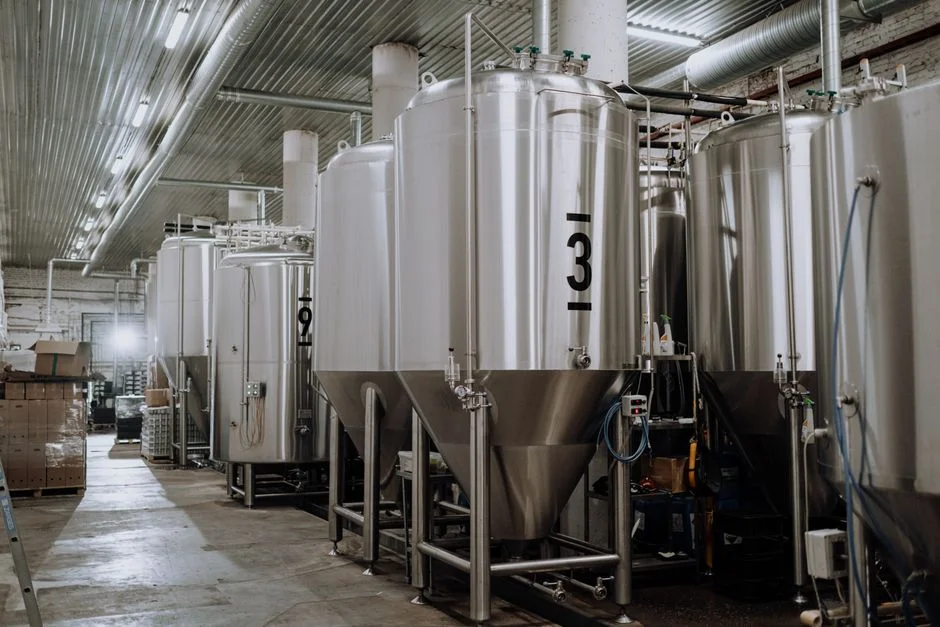
Direct environmental discharge, sewer discharge, and internal reuse are legally and operationally distinct pathways.
For direct environmental discharge, obtain the site authorization, receiving-water conditions, sampling points, reporting duties, and modification triggers directly from the competent Hungarian authority. For sewer discharge, obtain the receiving utility’s local discharge and pretreatment rules, permitted flow, prohibited materials, monitoring requirements, surcharge mechanism, and available treatment capacity. An industrial sewer pretreatment agreement may impose operating conditions that differ from the environmental permit.
For internal reuse, define the required water-quality specification and determine how greater recovery changes the residual mass balance. Higher reuse can reduce discharge volume while concentrating constituents that still require a lawful management route.
| Route | Governing evidence | Capacity and risk test |
|---|---|---|
| Direct environmental discharge | Site authorization, competent-authority confirmation, receiving-water conditions and monitoring requirements | Verify permitted route, applicable conditions, reporting duties and modification triggers. |
| Sewer discharge | Industrial sewer pretreatment agreement, local rules and receiving-capacity confirmation | Test actual flow and chemistry against permitted flow, prohibited materials, monitoring and surcharge terms. |
| Internal reuse | Process-water specification and downstream treatment requirements | Validate quality, recovery, residual concentration and the concentrate route. |
The existence of a sewer route does not prove adequate receiving capacity. Likewise, an existing treatment plant does not prove suitability for changed semiconductor chemistry. Both conclusions require current documentary evidence and, where performance is uncertain, representative testing or demonstration.
Characterize Wastewater by Source, Chemistry and Operating Condition
An average plant outlet result cannot establish treatment capacity when short-duration or source-specific batches may contain the controlling contaminant load.
Separate wastewater by production source, process step, batch or continuous operation, and normal versus upset conditions. The screening scope covers flow, pH, temperature, suspended solids, oil and grease, chemical oxygen demand, fluoride, metals, acids and bases, solvents, PFAS, and project-specific constituents. Sample each significant stream under representative operating conditions and tie results to flow records and production schedules.
Request chemical inventories, material safety data sheets, supplier declarations, and process chemistry. Proprietary chemicals and substitutions may not be visible in historical outlet data, so the buyer should establish who can direct additional sampling, who owns the analytical data, and which chemical changes require notice or permit review.
| Evidence package | Required content | Decision supported |
|---|---|---|
| Source-separated mass balance | Flow by source, operating condition, production phase and reuse stream | Treatment sizing and equalization requirements. |
| Representative analytical program | Screening parameters plus constituents identified from process chemistry | Source loads, variability and pretreatment selection. |
| Chemical disclosure | Inventory, safety data sheets, supplier declarations and substitution process | Analytical scope and permit-change screening. |
| Historical performance | Outlet data, sampling records, deviations and operating context | Baseline compliance and comparison with future conditions. |
PFAS diligence requires particular care with analytical completeness. CHIPS Communities United cited Cornell University studies from 2021 and 2023 indicating that more than 90% of semiconductor-wastewater PFAS compounds could be missed by conventional analyses such as Method 1633. That was a comparative warning in a New York dispute, not a Hungarian rule.
The same source reported that Micron’s proposed New York draft permit included testing for 40 PFAS chemicals using EPA Methods 1633/1633A. It does not establish a Hungarian analytical mandate. The Hungarian scope, detection limits, and method requirements must be confirmed independently. Further guidance on DAF versus clarifier selection for semiconductor wastewater should remain subordinate to verified stream chemistry.
Build and Validate the Treatment Train
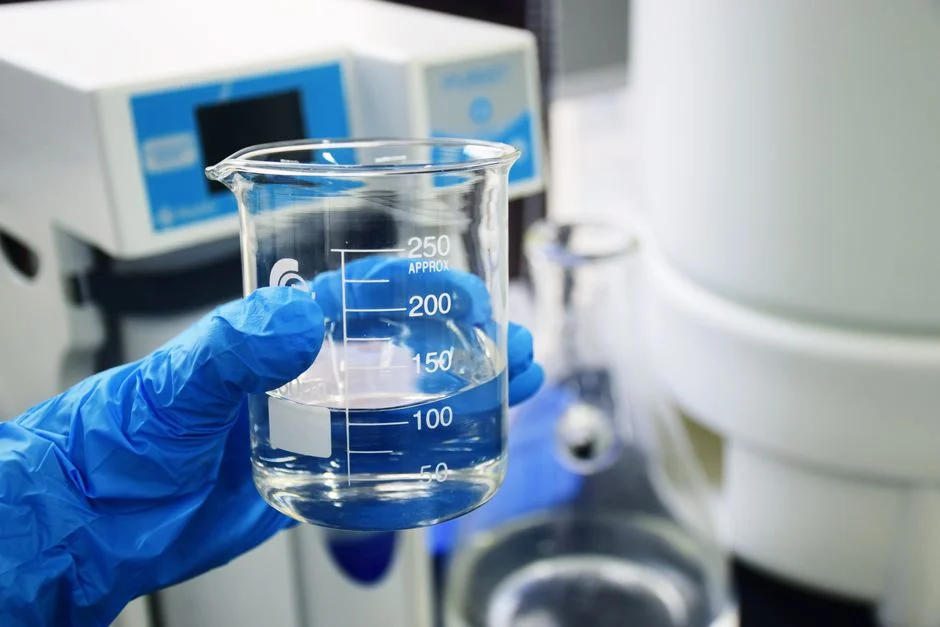
Treatment selection must follow source-specific characterization and the final discharge or reuse specification.
Develop the concept from source separation and equalization through screening, solids or oil removal, pH and chemical control, biological treatment where appropriate, membrane or polishing, disinfection where required, sludge dewatering, and reuse or final-discharge handling. Each stage needs a defined removal or control objective and a validated operating envelope.
| Technology | Published equipment scope | Acquisition validation requirement |
|---|---|---|
| DAF | HydropureWater lists 13 standard models from 4 to 300 m³/h. | Use DAF pretreatment for suspended solids, oil and wastewater where the characterization supports it; do not treat it automatically as the complete treatment train. |
| MBR | HydropureWater lists capacities from 10 to 2,000 m³/day and effluent below 1 μm. | Assess MBR wastewater treatment for industrial reuse against site flow, chemistry, footprint and sludge handling. |
| UF | HydropureWater lists hollow-fiber systems from 2,000 to 40,000 L/h using 0.03 μm PVDF membranes, with automatic backwash and air scour; stated turbidity acceptance is up to 300 ppm. | Confirm feed chemistry, solids loading, membrane compatibility and pretreatment need against the specified duty. |
| RO | HydropureWater states industrial recovery rates up to 95%. | Assess industrial RO for semiconductor water reuse only after suitable pretreatment; resolve fouling, validation, concentrate disposal and required reuse quality. |
DAF is a pretreatment option where suspended solids, oil and grease, or colloidal loads support it. MBR is relevant where biological treatment with membrane separation or near-reuse polishing is justified. UF can provide a solids-removal barrier when its specified duty fits. RO can support reuse, but reuse quality is a process specification rather than a generic equipment output.
Require a treatment demonstration for each identified constituent and relevant stream. A general statement that membranes or activated carbon remove PFAS is not performance evidence, and the supplied research supports no universal removal rate. Bidders should state the tested feed, operating conditions, analytical method, result, uncertainty, and pretreatment dependency.
Resolve Residuals, Infrastructure and Commercial Allocation
Wastewater compliance risk extends beyond the liquid outlet because treatment can concentrate contaminants into sludge, concentrate, or other residuals.
The contract should identify responsibility for sewer infrastructure, construction, operation, monitoring, exceedances, residual disposal, and third-party claims. Require named post-closing owners and budgets for each obligation. Treatment solids must be assessed for waste classification, destination evidence, monitoring, transport, and contractual liability.
Evaluate the entire lifecycle: characterization, permitting, equalization, treatment, reuse, sludge handling, monitoring, reporting, energy, chemicals, spares, operator training, and residual disposal. A plate-and-frame filter press may be relevant to the solids-handling scope, but its selection depends on solids characteristics and dewatering performance.
The research contains no defensible Hungarian cost estimate. Comparative New York figures—$150,000 for a land transaction, $549 million in taxpayer-funded Oak Orchard upgrade commitments, and a proposed facility cost of up to $2.5 billion—must not be used as Hungarian costs. A defensible quotation requires site flows, chemistry, applicable limits, reuse targets, residual destinations, infrastructure scope, and lifecycle assumptions.
Use a Closing Decision to Control Wastewater Risk

A transaction can proceed only when the buyer can trace a credible source-to-destination pathway through verified permits, sewer terms, receiving capacity, and treatment performance.
If the pathway is credible but approvals or evidence remain open, make completion a condition, price the work, or withhold a defined amount. Assign an owner and deadline to every open item. If material wastewater history, contaminants, receiving capacity, or liability cannot be established, do not rely on unverified treatment or discharge assumptions.
| Decision condition | Required action | Evidence converted before close |
|---|---|---|
| Permit register, mass balance, sewer agreement, receiving capacity and performance evidence substantiate the pathway | Close with allocated responsibilities and operating controls. | Operative approvals, source data, capacity confirmation and validated treatment evidence. |
| Pathway is credible, but specified approvals or evidence remain open | Condition completion, price the work or withhold a defined amount. | Each assumption has a named owner, evidence requirement and deadline. |
| Material history, contaminants, capacity or liability cannot be established | Do not rely on unverified treatment or discharge assumptions. | Recovered records, representative testing and written authority or receiving-operator confirmation. |
Use the wastewater facility contractor evaluation checklist to test bids against verified site conditions and named compliance ownership. Every assumption should become verified permit information, receiving-system confirmation, or performance data by an agreed date.
Frequently Asked Questions
What wastewater requirements apply when UMC acquires a plant in Hungary?
Frequently Asked Questions
What Hungarian wastewater permits and sewer approvals need to be checked when UMC acquires a plant?
UMC must verify the Integrated Environmental Permit (IPPC/Egységes Környezethasználati Engedély) issued by the competent Environmental Authority. Additionally, a valid Water Use Permit (Vízjogi Engedély) for discharge into public sewers or surface waters must be audited, alongside the specific "Water Quality Agreement" (Közüzemi Szerződés) with the local municipal utility provider which dictates the maximum allowable pollutant concentrations (e.g., COD, BOD5, AOX, and heavy metal limits).
Will the existing environmental permit transfer automatically to UMC after the acquisition?
No, environmental permits do not transfer automatically by default. Under Hungarian law (Act LIII of 1995 on the General Rules of Environmental Protection), the new operator must file a formal application for the transfer of the Integrated Environmental Permit to the competent County Government Office. This process requires demonstrating that the new entity maintains the same technological standards and compliance protocols as the previous operator.
What wastewater treatment capacity and performance evidence should UMC require before closing?
UMC should demand the last 24 months of analytical monitoring reports (Önellenőrzési Jegyzőkönyv) to verify compliance with the 27/2005. (XII. 6.) KvVM decree. Key technical data to review includes the hydraulic capacity (m³/day), the organic load capacity (kg/day), and documented removal efficiency rates for specific industrial contaminants to ensure they remain within the thresholds set by the 28/2004. (XII. 25.) KvVM decree.
How much will wastewater treatment and permit upgrades cost for the Hungarian plant acquisition?
Costs vary significantly based on the gap between current effluent quality and 2026 regulatory standards. Minor process optimizations generally range from €50,000 to €150,000, while substantial infrastructure upgrades, such as implementing membrane bioreactors (MBR) or advanced oxidation processes (AOP) to meet stricter nitrogen or phosphorus discharge limits, can range from €500,000 to over €2,000,000 depending on the daily flow volume and contamination profile.
What information should UMC request from wastewater equipment suppliers to compare proposals fairly?
UMC should request a standardized technical data sheet including the guaranteed daily treatment capacity (m³/h), energy consumption per cubic meter of treated water (kWh/m³), and the chemical dosage requirements (kg/day). Suppliers must also provide a performance guarantee statement confirming compliance with the specific limit values defined in the Hungarian Government Decree 28/2004. (XII. 25.) for the projected 2026 inflow characteristics.