Start With the Wastewater Duty, Not the Product Name
For an Astana housing development, a buried WSZ package is the stronger preliminary fit when the verified duty falls within 1–80 m³/h and automatic operation, compact installation and landscaped siting are priorities. A containerized MBR should also be considered when treatment flexibility, advanced separation or reuse objectives justify its wider technical scope. Neither choice should be fixed until the designer establishes wastewater generation, average and peak flows, wastewater characteristics and the intended discharge route. Kazakhstan’s Ministry of Ecology, Geology and Natural Resources and the relevant Astana water and sewer authority must also confirm the applicable environmental and connection route.
Start with the development’s wastewater-generation profile rather than the treatment vendor’s standard configurations. The core sizing inputs are per-capita demand, average flow and the peaking conditions expected during low and high occupancy. HydropureWater’s 2026 Astana sizing guide identifies per-capita flows and peaking factors as core inputs for containerized-MBR sizing; the underlying submerged MBR design criteria should therefore be treated as a starting reference, not a substitute for project-specific calculation.
Obtain the wastewater profile before selecting the biological process. Identify kitchen wastewater, grease, cleaning chemicals, laundry flows and any other high-strength or intermittent stream. If these flows enter the housing sewer separately, the designer must establish whether equalization, grease control or another pretreatment step belongs upstream of the packaged plant.
Define the compliance route: discharge to a receiving sewer, discharge to an approved environmental outlet, or reuse to a specified application. These routes impose different treatment objectives, documentation and operating responsibilities. The supplied research does not provide a universal Astana effluent limit, per-capita flow, footprint or housing-development cost that can be applied without site-specific design, so a fixed capacity or price at this stage would not be defensible.
Confirm Astana's Approval and Connection Route
A package plant should proceed only after the buyer identifies which authority will accept the wastewater, the discharge point and the evidence required for connection or environmental approval. Arsistek identifies the Ministry of Ecology, Geology and Natural Resources among Kazakhstan’s environmental regulatory authorities; the project designer should obtain the current requirements directly from the responsible authority rather than infer a permit route from a product specification.
Check the proposed route with the Astana water and sewer authority for sewer connection acceptance, available network capacity and any pretreatment or discharge agreement. Ask for the applicable connection conditions, sampling requirements, operating records, metering arrangements, inspection access and responsibilities for abnormal discharges. A private housing development is not relieved of these obligations because Kazakhstan is investing in wider infrastructure renewal.
ЖКХ24 reports that construction or reconstruction of treatment facilities in 45 cities is backed by 800 billion tenge of investment under the national infrastructure program. That investment demonstrates active network and treatment activity; it does not establish that an individual development’s plant can connect to a sewer or discharge without approval.
The compliance route changes the technical basis. A municipal sewer connection may require acceptance criteria for the incoming flow, whereas direct environmental discharge requires a defined receiving environment and permit conditions. A reuse system requires an end-use specification and the responsible party for managing the reclaimed water.
For foreign suppliers, documentation must be part of prequalification. Arsistek notes that suppliers may require Russian or Kazakh documentation and EAEU compliance. The RFQ should therefore ask bidders to identify the exact certificates, declarations, manuals, drawings and language requirements they can provide, together with the local party responsible for regulatory liaison.
Compare the Two Leading Package-Plant Fits
WSZ and MBR are best separated by treatment architecture and project constraints, not by product labels. The following table uses the capacity and process characteristics stated in the 2026 equipment information; final selection depends on verified site duty and approval requirements.
| Selection factor | WSZ underground integrated package | Containerized MBR system |
|---|---|---|
| Stated capacity | 1–80 m³/h | 10–2,000 m³/day |
| Biological and separation process | Combined anoxic and aerobic biological contact oxidation, sedimentation and disinfection | Activated-sludge treatment with submerged PVDF membrane filtration |
| Installation form | Below grade with landscaping above, or trailer-mounted for mobile deployment | Containerized system |
| Footprint statement | Compact buried installation; no project-specific footprint is supplied | Described as delivering a 60% smaller footprint than conventional systems |
| Primary preliminary-fit condition | Verified duty within the stated range, with automatic, compact and landscaped installation priorities | Verified duty within the stated range, with treatment flexibility, advanced separation or defined reuse objectives |
| Critical bidder information | Burial conditions, access covers, odor control, drainage, excavation, lifting and landscape reinstatement | Membrane configuration, aeration arrangement, module replacement, controls and service access |
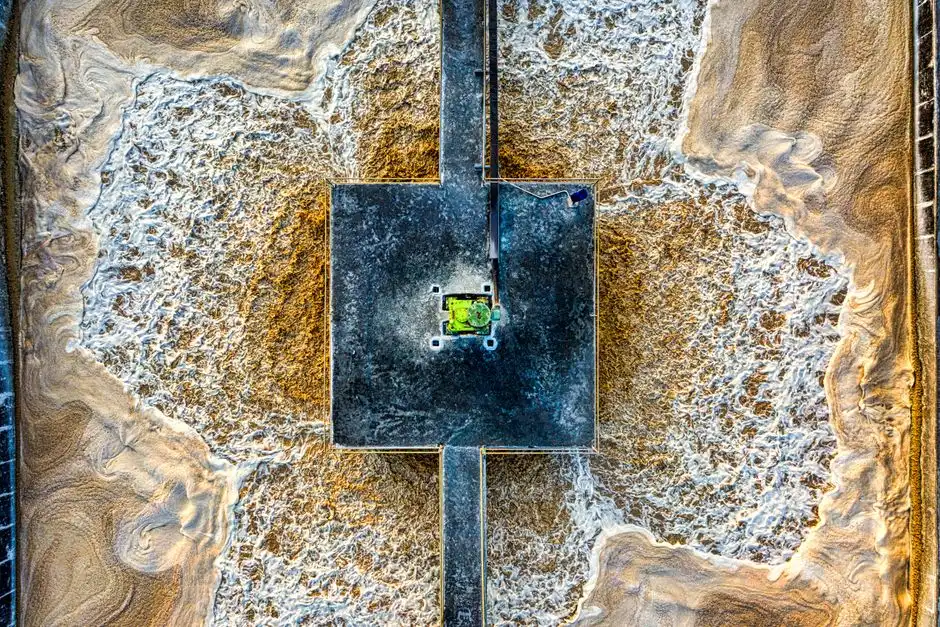
The WSZ underground integrated sewage treatment plant combines anoxic and aerobic biological contact oxidation, sedimentation and disinfection in one integrated buried package. Its stated capacity is 1–80 m³/h. For a housing development within that range, below-grade installation can reduce visual conflict, while automatic control may reduce routine attendance. The bidder must still define the civil works, burial depth, access arrangement, odor controls, landscaping reinstatement and maintenance requirements.
The containerized MBR wastewater treatment system combines activated-sludge treatment with submerged PVDF membrane filtration. Its stated capacity is 10–2,000 m³/day, and the supplied product information describes a 60% smaller footprint than conventional systems. MBR merits comparison where the development requires a defined reuse objective, greater treatment flexibility or a membrane-based separation train. These attributes increase the scope that must be priced, including aeration, controls, membrane maintenance and replacement planning.
Both catalog systems are positioned for automatic operation, but automatic control does not eliminate operating responsibility. The comparison must also address utilities, sludge handling, maintenance access, local service support and total lifecycle cost. Do not select on average flow alone: the supplied research identifies peaking factors as a required MBR sizing input, so occupancy-dependent inflows must be tested against both peak treatment performance and the electrical, biological and membrane systems serving that peak.
Design for Astana Conditions and Developer Constraints
A nominal capacity match does not prove that a package is suitable for Astana. The supplier must define its winterization package for the submitted duty and identify how biological performance, exposed piping, instrumentation, access and maintenance conditions are protected. HydropureWater’s Kazakhstan housing guidance treats winter performance as a core comparison point; see its packaged sewage treatment guidance for Kazakhstan housing.
For a buried WSZ installation, request a site-specific civil and installation basis. The supplier and designer should resolve groundwater exposure, load-bearing conditions, excavation requirements, lifting access, drainage, odor control, noise expectations and the landscape finish above the treatment modules. Also establish how each access cover, chamber and pipe connection remains serviceable after landscaping is completed.
For an MBR package, ask for the proposed membrane configuration, aeration arrangement, control philosophy, module replacement strategy and recommended service-access arrangement. If the package is supplied in containers, confirm container configuration, lifting requirements, removable covers, internal access and the manufacturer's position on field replacement of membrane modules.
Utilities, chemicals, sludge removal, standby provisions and remote monitoring belong in the offer and total-cost comparison. Even if a package is described as requiring no operator, commissioning, preventive maintenance, alarm response, sludge management, consumable replacement and regulatory recordkeeping still need named responsibilities. Require the bidder to distinguish between unattended routine operation, remote monitoring and any proposed on-site staffing.
Developer constraints should be translated into measurable bid requirements: available plot area, construction access, burial depth, utility connections, noise limits, odor criteria, commissioning water, waste-removal arrangements and local maintenance access. This avoids comparing a buried package with a containerized MBR when their civil works, replacement strategy and service obligations are not equivalent.
Move from Shortlist to a Purchase-Ready RFQ
A comparable RFQ requires every bidder to price the same project boundary. State the verified design flow, hourly and daily peaks, wastewater characteristics, discharge route, reuse objective, available footprint, burial depth, utility availability and local authority requirements. Do not release a fixed-price request until the designer has resolved the preliminary selection inputs and identified the required approval route.
| RFQ package | Required bidder response |
|---|---|
| Technical basis | Design flow and peaking basis, process train, treatment objectives, utilities, footprint, installation method and performance guarantees |
| Included equipment and ancillaries | Treatment modules, screens, pumps, aeration, controls, instrumentation, odor control, sludge handling, sampling and standby provisions |
| Construction and commissioning | Civil works, excavation, installation, piping, electrical connections, testing, commissioning, training and handover documentation |
| Commercial schedule | Itemized equipment, civil works, installation, commissioning, training, annual operation, sludge disposal and membrane or media replacement |
| Exclusions and risks | Explicit exclusions, permits, authority interfaces, taxes, duties, utilities assumptions, site conditions, delivery constraints and warranty limitations |
| Supplier capability | Kazakhstan execution experience, required documentation, reference projects, service coverage, local spare-parts support and warranty responsibility |
Ask each bidder to identify its process train, duty basis, guaranteed treatment performance, included ancillaries, construction scope, commissioning tests, operator training, warranty and local spare-parts support. Where upstream screening is required, identify the interface separately; for example, the bidder should state whether the rotary mechanical bar screen is included or an exclusion.
Request itemized pricing rather than one package figure. The review should separate equipment, civil works, installation, piping, electrical connections, commissioning, training, annual operation, sludge disposal and membrane or media replacement. The supplied research does not provide a defensible 2026 price for an Astana housing project, so a complete quotation cannot be stated from the available information.
Do not compare prices until bidders have stated their exclusions. Use prequalification to test documentation, local execution capability, reference projects, service coverage and compliance experience in Kazakhstan. A nominal capacity statement is not enough; the selected bidder must show how its documented offer covers the site duty, approval route and operating responsibilities.
Frequently Asked Questions
Which packaged sewage treatment plant is the best preliminary fit for a housing development in Astana?
WSZ is generally the stronger preliminary fit when the verified duty is within 1–80 m³/h and the developer prioritizes automatic operation, a buried arrangement and a compact landscaped installation. The final selection must still pass the duty, wastewater, approval and site checks described above.
When should an MBR package be compared with WSZ?
Compare MBR when the verified duty falls within 10–2,000 m³/day and advanced separation, treatment flexibility or a defined reuse objective justifies the wider technical scope. The bidder must then define the membrane configuration, aeration, controls, module replacement strategy and service access.
Why can’t a compliant fixed price or final capacity be quoted yet?
A defensible quotation requires design flow, peak factors, wastewater characteristics, discharge route, reuse objective, available footprint, utilities and authority requirements. Ask each bidder to state its assumptions and exclusions; without those inputs, a fixed package price would conceal unresolved engineering and commercial risk.
Which checks should be completed before accepting delivery and performance guarantees?
Confirm the Astana sewer or environmental approval route with the relevant authorities, obtain required language and EAEU documentation, and verify local execution and service capability. Then make the guarantees conditional on the agreed design duty, wastewater characteristics, utilities, treatment objectives, commissioning tests and clearly stated supplier responsibilities.