What Changes When Equinix Acquires a German Plant?
What wastewater requirements apply when Equinix acquires a plant in Germany? The buyer must establish whether the site discharges wastewater directly, sends it through a municipal sewer, or manages cooling and process water for reuse, then verify the applicable German approvals, sewer terms, monitoring duties and transfer actions. An acquisition also requires testing of the existing treatment plant, cooling-water chemistry, sludge handling and subsurface contamination. Equinix’s 30 September 2021 announcement confirms facilities in Munich, Düsseldorf, Frankfurt and Hamburg, but it does not establish the legal or operating position of any acquired site.
The transaction should be treated as a compliance decision gate. Do not infer the wastewater profile from the buyer’s data-center footprint or from the plant’s former industrial use. Before signing, identify:
- the current landowner, plant operator and permit holder;
- whether production is active, curtailed or discontinued;
- each wastewater source and its receiving route;
- the proposed data-center cooling, process and water-reuse configuration;
- the treatment capacity, permit envelope and sewer capacity available for the intended future operation.
A manufacturing discharge profile cannot be converted into a data-center cooling profile by assumption. The post-acquisition process design must follow from site-specific flow, temperature and chemistry data. The approach is set out in German plant-acquisition wastewater requirements.
Equinix’s 30 September 2021 announcement reported a new Frankfurt FR8 facility whose first phase added 4,800 m². The same announcement stated that Equinix had invested $1.6 billion in Germany across facilities in Munich, Düsseldorf, Frankfurt and Hamburg. These are documented corporate facts about the 2021 footprint, not evidence about the target site’s permits, discharge route or treatment assets.
Classify Every Wastewater Stream Before Reviewing Permits
Direct discharge, indirect discharge and on-site reuse require different evidence and different approvals, so a single generic permit request is inadequate for acquisition diligence.
Build a source-by-source inventory covering process wastewater, cooling-tower blowdown, sanitary wastewater, stormwater, washdown, laboratory drains, fire-water runoff and water-treatment rejects. For each source, obtain flow under normal, seasonal and peak conditions; sampling points; and available chemistry for pH, temperature, suspended solids, organics, dissolved solids, metals, nutrients, oil and grease, biocides and cleaning chemicals. These are diligence parameters, not a claim that every item is legally regulated at the site.
HydropureWater’s commercial article on data-center cooling-blowdown treatment design notes that cooling-tower blowdown may contain high total dissolved solids and residual biocides such as isothiazolinones. It warns that these may inhibit nitrifying bacteria in a legacy activated-sludge system. That is a hypothesis requiring site-specific validation, not proof that the target’s biological treatment will fail.
| Pathway | Primary legal or contractual instrument | Diligence focus |
|---|---|---|
| Direct discharge | German discharge authorisation and applicable approvals | Permitted receiving water, discharge points, limits, monitoring, reporting and transfer conditions |
| Indirect discharge | Municipal sewer contract, local discharge conditions and industrial-user requirements | Acceptance of proposed flow and chemistry, pretreatment obligations, sewer capacity and restrictions |
| On-site reuse | Water-use, reuse and operating conditions relevant to the intended use | Water balance, quality specification, process compatibility and residual treatment requirements |
For reuse, keep the commercial objective separate from the legal discharge question. A proposed internal reuse loop may reduce freshwater demand without eliminating obligations for residual blowdown, sludge or wastewater that leaves the site. Conversely, a sewer connection may create indirect-discharge duties even where the site has no direct outfall.
Verify German Permits, Sewer Agreements and Transfer Conditions
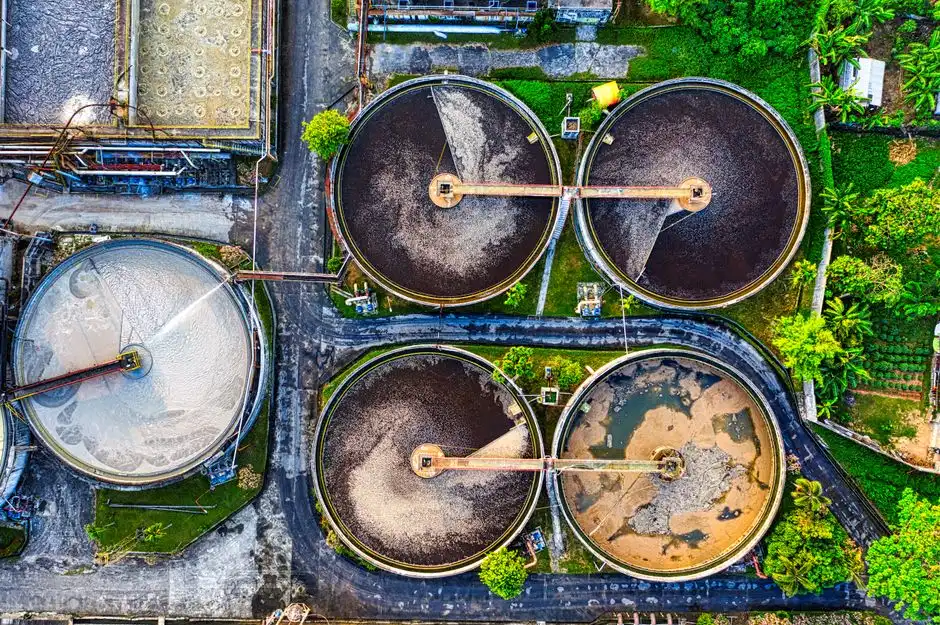
A German acquisition requires document-level verification of the permit holder, regulated discharge route, compliance history and the consequences of a change in operator or facility use.
Request the current German industrial wastewater permit or equivalent discharge authorisation, all amendments, regulator correspondence, inspection records, violations, consent measures, monitoring reports, self-inspection reports and emergency plans. Record the issuing authority, permit conditions, receiving water, sampling and reporting duties, and any outstanding regulator commitments. Confirm whether an acquisition, operator change, change in wastewater composition, cooling strategy, production volume or site use requires notification, permit modification, new industrial-user approval or a revised sewer agreement.
For an indirect industrial discharge, obtain the sewer contract, supplementary agreements, local discharge conditions, pretreatment or non-discriminatory sewer rules, hazardous-substance restrictions and current industrial-user permits. The sewer operator must confirm whether the proposed data-center load and chemistry are acceptable; a seller’s statement that the site is “connected” is not enough.
Do not transplant US frameworks such as NPDES, 40 CFR 403, 40 CFR 423 or 316(a)/316(b) into a German legal analysis. Those references in HydropureWater’s commercial article describe a US context and do not determine German authority, permit or contract requirements. Map each obligation instead to the German competent authority, the relevant discharge approval, the municipal sewer relationship and applicable groundwater or contaminated-site requirements.
HydropureWater recommends reviewing five years of discharge data for BOD, TSS, metals and temperature where relevant. Treat that as a commercial diligence recommendation, not a German statutory review period, and adjust it to the permit history, site chronology and available records.
| Evidence request | Decision supported | Closing implication if incomplete or adverse |
|---|---|---|
| Discharge authorisation, amendments, correspondence and inspection records | Legal status, conditions, open enforcement and transfer pathway | Condition precedent, covenant, price adjustment or indemnity |
| Monitoring reports, self-inspections and historical discharge data | Actual compliance and operating consistency | Escrow or quantified remediation reserve if residual exposure remains |
| Sewer contract, supplementary terms and industrial-user approval | Right to continue indirect discharge and future acceptability | Pre-closing consent, operating restriction or post-closing CAPEX |
| Compliance calendar, sampling plan, emergency plans and assigned personnel | Ability to operate the permit after closing | Operating handover condition before transfer of responsibility |
Test the Existing Treatment Plant and Cooling-Water Reuse Option
Existing treatment capacity is an acquisition asset only if its current condition, design basis and operating record support the intended post-acquisition flow and chemistry.
HydropureWater’s commercial article identifies treatment systems operating above 85% of design capacity as high-risk assets for data-center integration. Use that as its commercial risk threshold, then confirm the position against verified flow and load data rather than treating it as a German compliance standard.
Audit clarifiers, biological reactors, filters, sludge dewatering, controls, flowmeters, online analysers and chemical dosing against the original design basis. Check structural condition, maintenance history, calibration records, analyser reliability and completeness of the historian. Request 12 months of mixed-liquor suspended solids, sludge-volume index and dissolved-oxygen profiles, together with flow, temperature, pH, ammonia, nitrate and relevant chemical data. These records must be tested against the anticipated cooling-water chemistry and control strategy.
HydropureWater presents MBR, RO and crystalliser integration for zero-liquid-discharge retrofit at $7 million–$12 million. It also presents RO recycling of cooling-tower blowdown as reducing freshwater make-up by 75% at $1.50–$2.50/m³. These are attributed commercial planning figures, not German thresholds, quotations or site-specific estimates. A Germany-specific proposal should be based on the verified mass balance, effluent quality, residual streams, utilities, footprint, automation and disposal routes. An integrated MBR membrane bioreactor or industrial RO system should not be selected before those inputs are resolved.
| Audit area | Required evidence | Reuse or acquisition decision |
|---|---|---|
| Hydraulic capacity | Current flow, peak flow, equalisation volume and design capacity | Confirm whether the asset can accept the proposed operating profile |
| Physical condition | Inspection, maintenance, overhaul and corrosion records | Estimate repair, rehabilitation or replacement exposure |
| Process performance | 12 months of biological, flow, temperature, pH and nutrient data | Test whether existing biology tolerates anticipated chemistry |
| Reuse feasibility | Water balance, quality requirements, compatibility and residual-treatment needs | Assign reuse value only after validation |
Do not credit expected water savings in the acquisition model until the process, control strategy, makeup-water quality, blowdown destination and residual-treatment route have been validated together.
Investigate Legacy Soil and Groundwater Before Closing
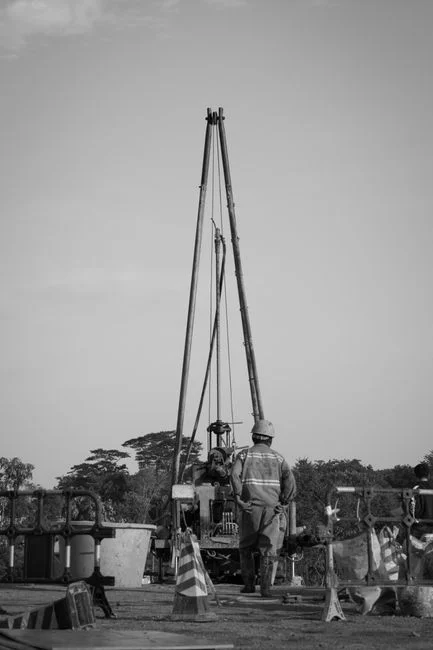
Wastewater liabilities can survive a permitted acquisition through contaminated soil, groundwater, sludge, lagoons or former subsurface infrastructure.
Request historical site plans, tank and lagoon records, chemical inventories, spill and release logs, waste manifests, soil and groundwater reports, remediation files and maintenance records for wastewater assets. Inspect lagoons, spray-irrigation fields, drainage channels, sludge beds, underground tanks and abandoned wastewater lines as potential release or migration pathways.
HydropureWater recommends a Phase II Environmental Site Assessment using a multi-compound panel for heavy metals, VOCs and PFAS, particularly where aqueous film-forming foams were used for fire suppression. This is a commercial due-diligence recommendation, not a universal German statutory protocol. The scope should instead be selected with German environmental professionals based on site history, conceptual site model, groundwater pathways and the buyer’s intended use.
HydropureWater reports groundwater-plume remediation costs of $1.2 million–$3.8 million for a 2-acre site and recommends investigating dredged sediments before disposal. Those figures come from its commercial article and cannot be transferred directly to Germany. Obtain a Germany-specific investigation and cost study, including material characterisation and any required disposal route.
For transaction purposes, distinguish confirmed contamination from exposure requiring further assessment. A confirmed source, migration pathway and regulatory concern generally supports stronger pre-closing protection than an unverified inference, but legal responsibility and remediation obligations must be assessed under the applicable German framework and the transaction documents.
Turn Wastewater Findings Into Deal Conditions
Each material wastewater finding should be assigned a transaction mechanism and a named owner, rather than left inside the post-closing capital plan.
Use a closing condition where legality, permit continuity, sewer acceptance or material contamination must be resolved before transfer. Use a pre-closing covenant for controlled information exchange or regulator engagement. Use a price adjustment for quantified legacy cost, an indemnity for retained historical liability, an escrow for identified but uncertain exposure, and a post-closing capital item for an agreed future investment with defined technical scope.
HydropureWater recommends a five-to-seven-year environmental-indemnity survival period, a 25% capital-expenditure contingency and a risk matrix in which findings scoring above 12 on likelihood multiplied by impact move to pre-closing resolution or escrow. Treat these as commercial negotiation benchmarks, not German legal requirements. Its article also recommends a remediation escrow of 1.5 times estimated remediation capital expenditure; use that multiplier only where the underlying estimate and residual risk are sufficiently developed.
| Finding | Preferred deal treatment | Evidence required before commitment |
|---|---|---|
| Unresolved permit or sewer status | Closing condition, then pre-closing covenant with regulator and sewer-operator plan | Authority correspondence, effective approval, sewer terms and written pathway |
| Documented historical exceedance or violation | Indemnity, price adjustment or escrow | Monitoring records, notices, remediation scope and exposure estimate |
| Known treatment bottleneck | Price adjustment or post-closing capital item | Verified flow and load data, condition audit and site-specific estimate |
| Suspected groundwater or soil impact | Condition precedent, escrow or indemnity depending on certainty | Conceptual site model, investigation results and Germany-specific remediation plan |
| Planned reuse or change of use | Condition on authority and sewer acceptance before assigning benefit | Water balance, chemistry, proposed process and written approval pathway |
Before closing, require a permit-transfer plan, regulator and sewer-operator engagement plan, monitoring handover, staffing or operating-contract plan, spares inventory and compliance-calendar transfer. Final capital estimates should remain conditional on the wastewater mass balance, source testing, current approvals, sewer conditions, subsurface findings and proposed future operation. See the transaction approach in wastewater acquisition due-diligence framework, while applying the German documents and approvals identified here.
Frequently Asked Questions
What wastewater requirements apply when Equinix acquires a plant in Germany?
Classify every stream as direct discharge, indirect discharge or on-site reuse, then verify the corresponding German discharge authorisation, municipal sewer contract and industrial-user requirements, or water-reuse conditions. Transferability of approvals must be confirmed with the competent authority and sewer operator; it cannot be assumed from the asset sale.
Does acquiring a German plant require a wastewater permit transfer or modification?
It may require notification, modification, a new approval, industrial-user consent or a revised sewer agreement, depending on the operator change, discharge route, wastewater composition and intended use. The buyer should request all current approvals and obtain a written action pathway from the authority and sewer operator before making permit continuity a deal assumption.
What should a buyer budget for wastewater and cooling-blowdown treatment?
HydropureWater’s commercial article presents MBR/RO/crystalliser zero-liquid-discharge integration at $7 million–$12 million, RO recycling at $1.50–$2.50/m³, and a 25% capital contingency. It also suggests a remediation escrow of 1.5 times estimated remediation capital expenditure. These are planning benchmarks, not quotations or German compliance figures. Request a Germany-specific proposal and cost study based on verified flows, analysis, permit limits, sewer conditions, footprint, utilities and subsurface findings.
How should treatment equipment be sized and a supplier selected?
Require verified flow and peak-load data, source analysis, water balance, effluent or reuse quality, footprint, utilities, automation, maintainability, sludge or concentrate handling and permit constraints before comparing an integrated MBR membrane bioreactor, industrial RO system, DAF, dewatering or dosing equipment. Supplier selection should follow the verified design basis rather than precede it.
Should unresolved permit status or contamination influence the purchase price?
Yes, where the exposure is material and cannot be resolved before closing. Confirmed or unresolved permit and contamination risk should be addressed through a closing condition, price adjustment, indemnity or escrow as appropriate; it should not be buried inside an equipment-price negotiation or treated only as a post-closing operating cost.