Start With the Site Constraints That Determine Plant Fit
For an Osaka housing development, no packaged sewage treatment plant is universally correct. Selection should begin with measured wastewater flow and load, then compare standard aerobic Johkasou, underground WSZ and MBR packages against effluent duties, site constraints and the confirmed discharge route. A flush toilet without a public sewer connection commonly requires a compliant Johkasou under Japanese building practice, but the relevant Osaka authority must confirm the applicable approvals. The final choice depends on BOD/TSS, temperature, available space, groundwater, power, access for sludge removal and any reuse requirement—not the unit name alone.
Obtain a measured or reliably calculated average daily flow, then apply the approximately 20% peak-flow buffer described in HydropureWater’s 2025 Japan guide. Its example specifies a 10 m³/day average duty at about 12 m³/day. The selected package and all upstream civil works should be checked against that peak condition, not merely the nominal daily average.
The design basis should also record BOD and TSS concentrations, wastewater temperature, discharge destination, soil and groundwater conditions, available footprint, electrical supply and the route available for maintenance and sludge removal. Domestic wastewater usually arrives at 200–300 mg/L BOD, while continuous temperatures below 5°C require insulated tanks or heat tracing for aerobic packages, according to HydropureWater’s 2025 guide. These values must be verified against influent testing and the final equipment proposal.
For Osaka, the receiving route is a procurement gate, not a later consent detail. Confirm whether the treated flow will enter a sewer, receiving water, infiltration route or another approved destination. The authority’s answer determines the required effluent tier and whether the project is being assessed as Johkasou Act compliance, a permitted discharge or another regulated route.
Choose the Treatment Train to Match the Effluent Duty
A standard aerobic Johkasou is the normal process candidate for domestic-strength housing sewage, while anaerobic, hybrid and membrane trains address different energy, nutrient and solids-separation constraints. The process choice should follow the confirmed effluent duty, not the supplier’s preferred technology.
Johkasou is Japan’s factory-built, on-site treatment format for locations where collector sewers are uneconomic. HydropureWater’s 2025 Japan guide reports that Johkasou served about 11.8 million people, or 9.4% of Japan’s population, at the end of FY2022, citing MOEJ data published in 2024. For residential clusters using domestic-strength wastewater, standard aerobic treatment provides the relevant baseline: BOD ≤20 mg/L, with optional 15, 10 or 5 mg/L targets and optional T-N and T-P tiers under the MOEJ performance evaluation described in that 2025 guide.
Anaerobic filtration becomes relevant where low energy use is decisive. HydropureWater’s 2025 guide gives an energy use of approximately 0.1–0.3 kWh/m³ without mechanical aeration, but also gives BOD removal of 60–80%. That performance may be adequate for a specific disposal route while remaining inadequate for a tighter discharge or reuse duty.
Hybrid A2O adds anoxic and anaerobic stages before aeration where nitrogen or phosphorus reduction is required. An MBR wastewater treatment system is the candidate when tighter solids separation, reuse quality or a higher-level treatment specification justifies membrane solids retention. Influent above about 1,000 mg/L BOD is outside the standard domestic package envelope described by HydropureWater’s 2025 guide and requires pretreatment, equalization, hybrid stages or an industrial flowsheet.
| Process candidate | Normal selection basis | Main constraint to resolve |
|---|---|---|
| Standard aerobic Johkasou | Domestic-strength housing sewage; standard BOD ≤20 mg/L duty | Verify plot allocation, aeration, inspection and sludge access |
| Anaerobic package | Low-energy priority | Confirm whether 60–80% BOD removal satisfies the receiving route |
| Hybrid A2O | Nitrogen or phosphorus reduction required | Confirm flow, load, recirculation, dosing and operating controls |
| MBR | Tighter solids separation or reuse specification | Accept membrane cleaning, replacement and specialist maintenance obligations |
Match Johkasou, WSZ and MBR to the Housing Site
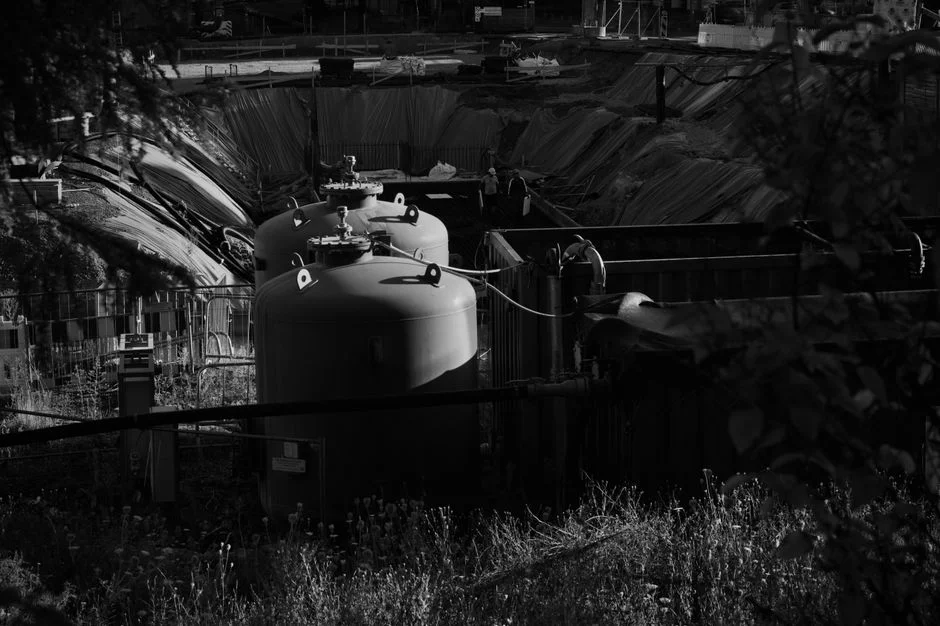
The practical distinction is site fit: Johkasou offers the simplest domestic package, WSZ consolidates treatment below ground, and MBR adds membrane separation for a more demanding effluent duty. All three must be assessed on the same flow basis, footprint, energy, maintenance and development constraints.
HydropureWater’s 2025 guide gives the aerobic Johkasou footprint benchmark as 1.5–3 m² per m³/day of design flow for 5–500 population equivalents. Use that only for initial plot testing; the supplier’s general arrangement, tank dimensions, installation clearances, access routes and the site’s actual boundary must control the layout.
The underground WSZ sewage treatment plant has a product range of 1–80 m³/h and integrates anoxic/aerobic biological contact oxidation, sedimentation and disinfection in one buried package for residential communities. Its process arrangement can reduce above-ground plant area, but burial does not remove civil work, groundwater, flotation, access or sludge-handling risks. The excavation method, buoyancy control, waterproofing, chamber ventilation and means of removing accumulated sludge must be resolved during site design.
For domestic duty, HydropureWater’s 2025 guide reports aerobic Johkasou energy use of often 0.3–0.8 kWh/m³, compared with about 1.2–2.0 kWh/m³ for many conventional SBR trains. MBR energy must be evaluated with its membrane-scouring and cleaning requirements rather than represented by a biological-stage value alone.
| Criterion | Aerobic Johkasou | Underground WSZ | MBR |
|---|---|---|---|
| Flow basis | Domestic-strength duty; use the buffered design flow | Product range stated as 1–80 m³/h | Confirm membrane hydraulic and solids-loading duty at the selected flow |
| Treatment sequence | Conventional aerobic biological treatment with final separation | Anoxic/aerobic contact oxidation, sedimentation and disinfection | Biological treatment followed by membrane solids separation |
| Footprint | HydropureWater 2025 benchmark: 1.5–3 m² per m³/day for 5–500 population equivalents | Buried package; actual excavation and access footprint must be verified | Compare the full plant arrangement and maintenance clearances |
| Effluent capability | Standard BOD ≤20 mg/L; optional 15/10/5 mg/L and T-N/T-P tiers | Must be matched to the confirmed discharge and reuse specification | Selected for tighter solids separation or reuse criteria |
| Energy | Often 0.3–0.8 kWh/m³ for aerobic packages | Require the supplier’s duty-point energy calculation | Include membrane scouring, cleaning and replacement requirements |
| Maintenance | Inspection, aeration service and periodic desludging | Entry, chamber cleaning and buried-package servicing | Chemical cleaning and periodic membrane replacement |
Any comparison should also test whether the proposed arrangement protects housing amenity. Ventilation, odour control, noise, sampling access and truck or vacuum-removal routes can determine whether a nominally compact package is constructible on a constrained residential site.
Compare Capital Cost, Operating Cost and Permit Exposure
Equipment price alone is not the development cost. The 2025 benchmark below covers packaged equipment at a defined scale; excavation, foundations, piping, electrical supply, controls, access works and local approvals can materially change the commercial comparison.
For a 10 m³/day aerobic Johkasou, HydropureWater’s 2025 Japan guide gives a typical equipment-scope CAPEX of $30,000–$50,000. Comparable conventional SBR packages are $40,000–$65,000, while an MBR train is $60,000–$90,000. These figures exclude local civil and electrical tie-ins and should not be used as quotations for an Osaka development.
The same guide gives annual operating costs of approximately $0.15–$0.30 per m³/day of capacity for aerobic Johkasou, $0.25–$0.45 for SBR and $0.40–$0.70 for MBR when cleaning and membrane replacement are included. Its fifteen-year comparison places Johkasou lifecycle cost at roughly $80,000–$120,000, against $140,000–$200,000 for MBR at the studied scale. The comparison is relevant as a benchmark, but the buyer should request a site-specific total-cost model with the actual duty, energy tariff, maintenance contract, membrane interval and replacement price.
| 2025 equipment-scope benchmark | Aerobic Johkasou | Conventional SBR | MBR |
|---|---|---|---|
| CAPEX at 10 m³/day | $30,000–$50,000 | $40,000–$65,000 | $60,000–$90,000 |
| Annual OPEX per m³/day of capacity | $0.15–$0.30 | $0.25–$0.45 | $0.40–$0.70 |
| Fifteen-year lifecycle benchmark | $80,000–$120,000 | Not stated in the cited comparison | $140,000–$200,000 |
| Exclusions | Local civil works, electrical tie-ins and site-specific conditions are additional unless expressly included in a quotation | ||
A sewer extension is the external alternative. HydropureWater’s 2025 guide cites approximately $100,000–$500,000 per kilometer and reports that on-site upgrades can pay back in 3–7 years where the collector route is long. The developer should compare that route with the full on-site package lifecycle rather than accepting a generic payback claim.
Permit exposure also carries continuing cost. Annual legal inspection by a designated agency remains mandatory under the Johkasou Act framework, according to HydropureWater’s 2025 guide. Sludge dewatering or removal must be planned rather than left as an operating detail; the plate-frame filter press for sludge dewatering illustrates one possible handling package, but its suitability depends on sludge characteristics and removal logistics.
Move from Shortlist to Osaka Approval
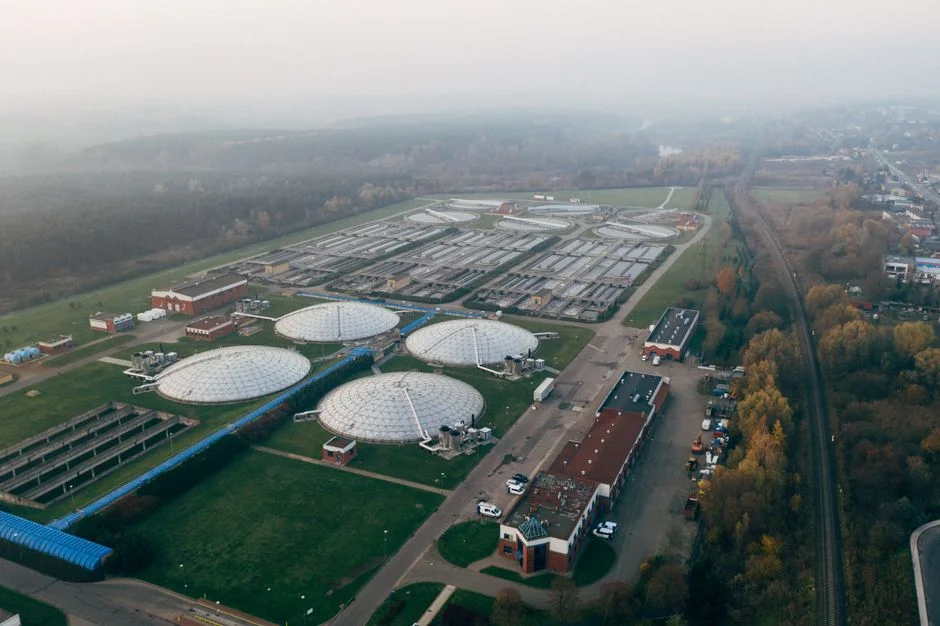
The procurement sequence should move from verified design data to authority confirmation, complete supplier scope, performance evidence and finally award. Selecting a unit from a catalogue flow range before this sequence creates avoidable redesign and permit risk.
- Develop the design basis. Record measured flow and load, BOD/TSS, temperature, footprint, discharge route, reuse requirements, available power and sludge-removal access. Do not use catalogue flow ranges as a substitute for site data.
- Issue that basis to the relevant Osaka authority. Confirm whether the discharge is to a sewer, receiving water, infiltration route or another approved destination. Establish the applicable effluent requirements and approval route before freezing the process.
- Define the complete supplier scope. Include civil works, electrical supply, controls, odour control, access, sampling, sludge dewatering, spare parts, inspections and contracted maintenance. A tank price does not cover these interfaces.
- Test the approval programme. HydropureWater’s 2025 guide estimates 8–14 weeks from design submission to operating approval for packaged plants, compared with about 20 weeks for many custom civil plants. Treat these as planning estimates, not guaranteed schedules.
- Require evidence before award. Ask for substantiated effluent claims, guarantees, rated duty points, local technician coverage, spare-parts lead times and responsibility for inspection support.
For a second reference point, HydropureWater’s 2026 guide to decentralized, WSZ and MBR sewage treatment options uses the same separation between process selection, site conditions, lifecycle cost and local compliance. The Osaka project should retain that discipline, while replacing Dakar’s receiving-water assumptions with the route and requirements confirmed by the Japanese authority.
Supplier commitments should be written into the purchase documents. A defensible award should identify the accepted influent range, design flow, effluent guarantees, test methods, utility requirements, inspection interface, sludge route, spare-parts support, start-up obligations and consequences of non-performance.
Recommended Fit by Development Scenario
The defensible shortlist changes with the receiving route and development constraints, so each option should be selected conditionally rather than declared universally best. The following recommendations use the same evidence base and remain subject to Osaka authority confirmation.
| Development condition | Recommended candidate | Purchase condition |
|---|---|---|
| Domestic sewage, confirmed on-site treatment route, conventional residential effluent criteria and adequate installation space | Standard aerobic Johkasou | Verify buffered flow, effluent tier, plot allocation, inspection access and sludge removal |
| Above-ground visibility and spatial continuity are dominant constraints, and the confirmed flowsheet suits the package | Underground WSZ | Resolve excavation, groundwater, flotation, access, ventilation and buried-unit maintenance |
| The receiving route or reuse specification requires tighter treatment than the standard aerobic envelope | MBR | Accept higher equipment and operating costs plus membrane-cleaning and replacement obligations |
| Energy availability, nutrient targets or local approval favour a different train | Anaerobic or hybrid alternative | Check energy supply, BOD removal, nutrient duty, temperature and approval before selection |
For a conventional housing development, start with the standard aerobic Johkasou and the underground WSZ sewage treatment plant as the principal footprint comparison. Bring the MBR wastewater treatment system into the shortlist when the confirmed effluent or reuse duty makes membranes relevant. No candidate should be chosen from flow capacity, effluent tier or energy consumption alone; the final award should follow site verification and authority confirmation.
Frequently Asked Questions
What does a packaged sewage treatment plant cost for a 10 m³/day Osaka housing development?
HydropureWater’s 2025 Japan guide gives 2025 equipment-scope CAPEX of $30,000–$50,000 for an aerobic Johkasou, $40,000–$65,000 for a conventional SBR and $60,000–$90,000 for MBR at 10 m³/day. Ask each supplier for a quotation that separately identifies the package, civil works, electrical tie-ins, installation, commissioning and local approvals; the cited ranges exclude those local works and are not project quotations.
How should the plant be sized for a housing development?
Start with measured or reliably calculated average flow and confirm the BOD/TSS load. Apply the approximately 20% peak-flow buffer described in HydropureWater’s 2025 guide, then check the selected equipment’s rated flow, organic loading and peak-handling capability. The guide’s example specifies 10 m³/day average duty at about 12 m³/day.
How should a supplier be selected for installation and maintenance in Japan?
Check verified effluent performance, accepted duty, guarantee methodology, local installation capability, inspection support, technician availability and spare-parts lead time. Require a complete commercial scope covering civil interfaces, electrical supply, controls, sludge handling, maintenance, sampling and start-up rather than selecting on equipment price alone.
Does BOD ≤20 mg/L prove that the package is permitted in Osaka?
No. The standard-type BOD ≤20 mg/L criterion described in HydropureWater’s 2025 guide is a national performance tier, not the site’s discharge authorization. Confirm the receiving route, applicable effluent limits, treatment specification and approvals with the relevant Osaka authority before finalizing the process.
How long should the buyer allow for packaged-plant approval?
HydropureWater’s 2025 guide estimates 8–14 weeks from design submission to operating approval for packaged units, versus about 20 weeks for many custom civil plants. Use these as planning allowances and require the supplier to identify the approval dependencies and responsible parties in the programme.