What the Acquisition Changes—and What It Does Not
The supplied research does not identify a specific ExxonMobil plant acquisition in Malaysia, so no site-specific wastewater requirement or automatic permit transfer can be assumed. Under Malaysia’s Environmental Quality Act 1974 and Environmental Quality (Industrial Effluent) Regulations 2009, the buyer should verify the current written consent, permit holder, discharge point, effluent limits, monitoring duties, and receiving authority. The acquisition team must also obtain written confirmation from the Department of Environment and the relevant sewer, drainage, or other receiving authority on change-of-control filing, consent, amendment, or transfer requirements. Historical exceedances, contamination, sludge liabilities, and future operating duties should be allocated separately in the purchase agreement.
Ownership changes who controls the plant; it does not reset the site’s legal position. The acquired facility’s waste profile, physical discharge route, written consent, monitoring history, and local receiving-authority rules determine the post-closing obligations. This is the decision principle behind the Malaysia plant-acquisition wastewater due-diligence framework.
For each approval, use one transaction category: continuing with the plant, requiring transfer, requiring amendment, requiring owner notification, requiring a permittee-specific change, being replaced, or remaining with the seller for a defined historical period. If the document is missing or ambiguous, record that uncertainty rather than resolving it by assumption.
Historical and prospective obligations must remain separate. A future permit or compliant treatment system does not erase pre-closing contamination, exceedances, penalties, or unauthorized sludge disposal. Conversely, inherited liabilities should not be used to obscure the buyer’s post-closing duties for monitoring, reporting, operation, maintenance, and remediation.
Malaysia’s Legal and Classification Framework
Malaysia’s Environmental Quality Act 1974 is the cornerstone of the environmental framework, while the Environmental Quality (Industrial Effluent) Regulations 2009 contain the industrial-effluent requirements described by Totalmas in its 2026 compliance guide. For an acquired plant, those general sources are only a legal baseline. Current legislation, DOE guidance, the site’s written consent, amendments, and receiving-authority requirements must be checked before determining the binding conditions.
Totalmas in 2026 associates Standard A with factories upstream of water-supply intakes and Standard B with factories downstream. The supplied research provides only one quantified parameter for each: BOD of 20 mg/L for Standard A and 50 mg/L for Standard B. These values are classification references, not a complete petroleum-plant effluent specification. The buyer must obtain the full applicable limits directly from current law, DOE confirmation, and the site’s consent.
Totalmas in 2026 identifies accurate flow measurement and site assessment as the first steps in determining the applicable standard. Accordingly, the acquisition team should not classify the facility from the company’s identity, address, nominal production capacity, or treatment-equipment name. It should establish the actual discharge point, receiving-water context, and measured flow.
Enforcement exposure also requires current Malaysian legal advice. Totalmas reports that the Environmental Quality (Amendment) Act 2024 provides for mandatory imprisonment of up to five years and fines from RM50,000 to RM10 million for pollution of inland waters. The commercial source does not establish how those provisions apply to the unidentified plant, so the agreement should not assign or reserve liability without advice on the site’s conduct and applicable law.
| Issue | Supplied 2026 reference | Transaction control |
|---|---|---|
| Environmental framework | Environmental Quality Act 1974; Environmental Quality (Industrial Effluent) Regulations 2009 | Check current legislation, DOE guidance, written consent, and amendments |
| Standard A context | Factories upstream of water-supply intakes; BOD reference of 20 mg/L | Confirm the actual receiving-water and intake relationship; do not treat BOD as the full specification |
| Standard B context | Factories downstream; BOD reference of 50 mg/L | Obtain DOE or receiving-authority confirmation for the actual discharge point |
| Pollution of inland waters | Mandatory imprisonment of up to five years; fines from RM50,000 to RM10 million, as reported by Totalmas | Obtain site-specific Malaysian advice and preserve the enforcement record |
Build a Route-by-Route Approval Register
A single site permit cannot answer whether an acquisition is compliant when multiple waste routes have different legal endpoints. Build one register entry for sanitary sewage, process wastewater, cooling or wash water, stormwater, contaminated soil and groundwater, oil and gas wastewater, and every reuse or disposal route.
For each route, record the governing environmental approval or licence, permit holder, covered facility or discharge, written limits, monitoring obligations, receiving authority, and the required transfer or amendment mechanism. The plant-acquisition approval and evidence workflow provides a transferable structure, but its jurisdictional details are not evidence of Malaysian requirements.
| Wastewater route | Approval record to obtain | Transaction question |
|---|---|---|
| Sanitary sewage | Approval, service agreement, local limits, billing and permittee records | Does the buyer become the approved user, and does the receiving authority require notification or a new application? |
| Process wastewater and cooling or wash water | Consent, amendments, permitted outfall, limits, monitoring history and flow data | Which sources and discharges are covered, and are any permittee-specific details affected? |
| Stormwater | Approved drainage arrangements, inspection records and sampling results | Is the authorized pathway and impaired drainage-area coverage still accurate? |
| Contaminated soil and groundwater | Investigation, treatment, containment and authorized-disposal records | Who retains historical contamination and residual liability? |
| Oil and gas wastewater | Waste profile, route description, disposal-site approval, manifests and receiving agreements | Is the destination authorized for this waste, and whose approval or operational responsibility changes? |
| Reuse and on-site treatment | Design basis, operating records, monitoring data, sludge records and reuse specifications | Does the approved treatment system remain valid, and who controls performance and residual disposal? |
Request the current written consent, all amendments, wastewater-flow data, reuse and sludge records, monitoring results, laboratory reports, calibration files, inspection reports, non-compliance notices, authority correspondence, current drawings, process data, and receiving-authority bills and correspondence. The supplied research does not identify a plant-specific permit or approve a transfer, so obtain written instructions from the DOE and the relevant sewer, drainage, or other receiving authority.
Give every unresolved item an owner, deadline, and consequence. Depending on the finding, use a pre-closing condition, price adjustment, covenant, indemnity, escrow, capital commitment, seller remediation obligation, or accepted post-closing action. A monitoring gap and a capacity shortfall should not receive the same contractual treatment.
Verify the Discharge Point and Applicable Standard
The legal classification follows the actual outfall, not the acquiring company’s description of the plant. Obtain the approved process flow diagram, site plan, and discharge coordinates; identify the receiving water; and map upstream and downstream water-supply intakes before assigning Standard A or Standard B. Ask the relevant authority to confirm the resulting classification.
Check flow measurement independently. Verify meter identity, installation, units, calibration status, and readings against discharge records. Then reconcile generation, reuse, discharge, and other destinations for every stream. A route compliant at average flow may still be wrong during batch discharges, stormwater events, or production peaks.
The 20 mg/L BOD reference for Standard A and 50 mg/L BOD reference for Standard B reported by Totalmas in 2026 cannot size equipment or determine compliance by themselves. They are limited classification references. The governing consent may contain additional parameters, monitoring conditions, discharge restrictions, and reporting duties that must be incorporated into the legal endpoint.
Maintain an auditable wastewater mass balance linking source data, meter records, laboratory results, reuse, and final destinations. Flag unexplained differences before closing. They may indicate bypasses, unrecorded disposal, meter error, or a permit coverage gap, and each possibility requires a different response from the buyer.
Characterize Each Wastewater Stream Before Buying Equipment
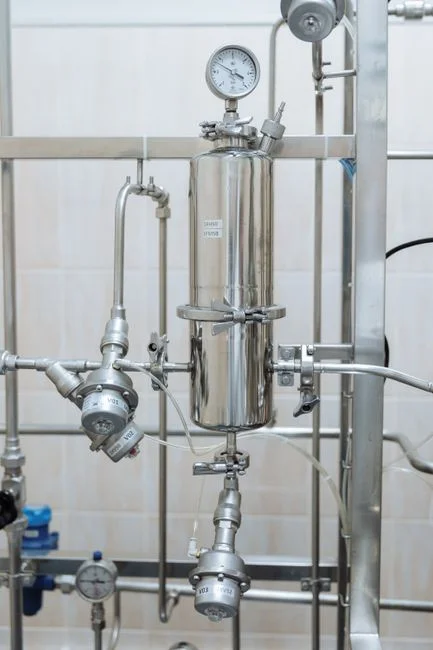
Equipment selection begins with a verified stream profile, not a generic petroleum-plant assumption. For every stream, document its source, variability, measured flow, contaminants, treatment objective, responsible operator, and final route to on-site reuse, treatment, sewer discharge, or another destination. Separate incompatible streams rather than averaging them into one compliance case.
Request representative analysis for the parameters relevant to the actual site. Depending on the waste, this may include oil and grease, suspended solids, pH, metals, organics, toxicity characteristics, and sector-specific constituents. Pair sampling with operating data because a laboratory snapshot may miss batch, slug, storm, or variable oil loads.
| Design basis | Evidence required | Decision use |
|---|---|---|
| Legally permitted discharge or sewer conditions | Current consent, sewer conditions, receiving-authority rules and applicable discharge limits | Defines the compliance endpoint |
| Internal pretreatment objective | Feed analysis, identified contaminants, required removal duty and downstream treatment constraints | Defines process removal targets |
| Higher-quality reuse specification | Reuse objective, receiving process, fouling review and required monitoring | Defines polishing and integration requirements |
For oil, grease, and high-solids streams, evaluate the measured profile, required removal duty, hydraulic flow, recovered-solids handling, downstream treatment, and physical site constraints. An industrial DAF system for oil, grease and suspended-solids pretreatment is a candidate where those data support its use; it is not an automatic selection. The DAF-versus-clarifier selection guide can structure the comparison.
Evaluate biological treatment or membrane polishing only after feed analysis and fouling review. An MBR wastewater treatment system for industrial reuse evaluation should be assessed against the required endpoint, controls, monitoring, footprint, and integration with the existing train.
Match Treatment and Sludge Handling to the Legal Endpoint
Equipment capacity is not a compliance solution. The selected configuration must match measured flow, wastewater characteristics, treatment objective, permit condition, residual-disposal route, and a defined monitoring role. Use catalog information to frame a question, not to close a design basis.
| Screening option | Supplied 2026 catalog reference | Required site check before selection |
|---|---|---|
| DAF | 4–300 m³/h across 13 standard models | Measured flow, solids and FOG profile, removal duty, recovered-solids handling and site constraints |
| MBR | 10–2,000 m³/day; described near-reuse-quality effluent below 1-micrometre filtration | Feed analysis, fouling controls, required endpoint, footprint, controls and monitoring |
| Plate-and-frame press | 1 m² to 500 m² of filtration area | Sludge characteristics, dewatering performance, cake destination and receiving acceptance criteria |
These product figures come from HydropureWater’s 2026 product-selection material. They are catalog-level screening examples, not evidence that any configuration suits the acquired plant or satisfies its consent. The industrial ETP and DAF comparison and industrial wastewater technical specification guide can support process screening, but not site selection without verified data.
Capital recommendations should follow defined triggers: inability to meet a verified limit, insufficient hydraulic or organic capacity, deteriorating equipment, expired authorization, sewer-capacity constraint, or a confirmed reuse opportunity. Until those triggers and the design basis are established, an estimate is a placeholder rather than an acquisition-grade budget.
Evaluate sludge dewatering separately from ultimate disposal. The receiving destination’s acceptance criteria and the legal route for recovered solids must be established before selecting a press or relying on a catalogue area.
Turn Environmental Findings into Closing and Contract Terms
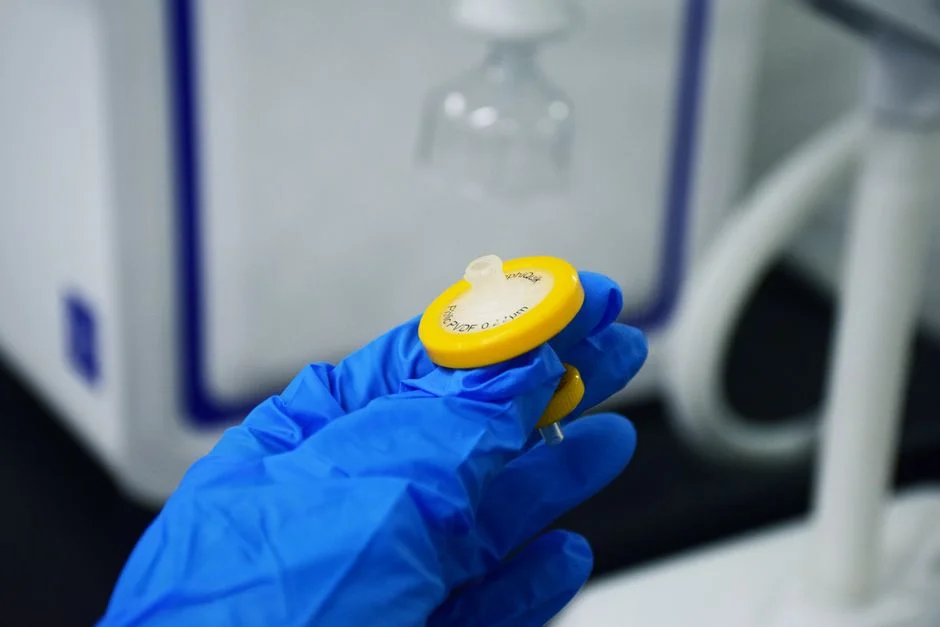
The technical review should produce a dated sequence: complete route mapping, establish each approval’s status, obtain authority instructions, close evidence gaps, reconcile physical operations, allocate liability and funding, and define post-closing ownership. Use the plant-acquisition wastewater transaction framework as a workflow reference, not as Malaysian legal authority.
Classify every finding as permit-critical, compliance-critical, operational, or improvement-only. Permit-critical and compliance-critical matters should be closing conditions or require an approved remediation plan with milestones, responsibility, and completion evidence. Operational items need funded corrective actions. Improvement-only items should remain separate so they do not obscure inherited liabilities.
Allocate pre-closing contamination, exceedances, penalties, remediation costs, sludge liabilities, and third-party claims expressly. The agreement should not leave these matters in general environmental boilerplate. Include a historical contamination indemnity for retained seller responsibility where appropriate, with survival, scope, claims procedure, and access rights defined expressly.
Preserve the records needed to establish the closing-date boundary: laboratory results, flow records, calibration files, bypass logs, notices, authority correspondence, and waste-disposal documents. Specify the treatment of a change-of-control notification filing, consent, or amendment once the relevant authority confirms the applicable requirement.
Name the post-closing owner for monitoring, reporting, regulator correspondence, waste manifests, sludge disposal, calibration, maintenance, and agency inspections. Add a cooperation mechanism for document preservation, information requests, audits, consent analysis, and regulator access. Historical liability and the buyer’s future operating duties need separate owners and remedies.
Frequently Asked Questions
Does ExxonMobil’s acquisition automatically transfer the Malaysian plant’s wastewater permit?
No automatic transfer rule is established by the supplied research. The buyer must obtain the current written consent and written confirmation from Malaysia’s DOE and the relevant sewer, drainage, or other receiving authority concerning any change-of-control filing, consent, amendment, or replacement requirement. The approval document and the acquiring entity’s details must then be reconciled before closing.
What evidence is needed to determine whether the plant falls under Standard A or Standard B?
Obtain the actual discharge point, approved site plan or process flow diagram, receiving-water identification, upstream and downstream water-supply intake map, current written consent, and calibrated flow records. The 20 mg/L and 50 mg/L BOD references reported by Totalmas in 2026 do not establish classification or complete the effluent specification; DOE or receiving-authority confirmation should control.
How should treatment equipment be sized for the acquired plant?
Size it from the verified legal endpoint, measured flow, peak conditions, contaminant profile, reuse objective, residual route, site constraints, and monitoring role. Keep permitted discharge or sewer conditions, internal pretreatment objectives, and higher-quality reuse specifications separate. A supplier should identify each sizing input, the process-performance basis, and how compliance will be demonstrated.
What should the buyer request when budgeting for a wastewater upgrade?
The supplied research supports no acquisition-specific price. Request a priced scope covering equipment, civil works, utilities, chemicals, sludge handling and disposal, monitoring, controls, commissioning, training, maintenance, and contingency. Require exclusions, performance assumptions, delivery scope, acceptance criteria, and validity dates; otherwise the quotation cannot be compared against the verified permit and waste profile.
What should the buyer require when selecting a wastewater-treatment supplier?
Require the supplier to disclose sizing inputs, feed-analysis assumptions, performance guarantees tied to the legal endpoint, installation boundary, commissioning evidence, O&M requirements, chemical and residual-management assumptions, and support for monitoring records. Equipment references alone do not establish suitability, compliance, or acceptance by the receiving authority.