What the Acquisition Does—and Does Not—Change
No single wastewater requirement can be assigned from the fact that ExxonMobil acquires a plant in Vietnam. The buyer must establish the site, each wastewater source, its final discharge route, the controlling permit or agreement, applicable monitoring and reporting conditions, and whether historical contamination remains. Vietnam’s industrial-park growth has increased concern about inadequate wastewater treatment and chemical pollution, but that context does not establish a plant’s legal limits. Closing diligence should therefore use four gates: regulatory pathway, permit and compliance evidence, treatment-system adequacy, and legacy environmental liability. Foreign precedents, including the Mexican rules appearing in competing content, are workflow references only—not Vietnamese requirements.
The supplied research does not identify a specific ExxonMobil acquisition, acquired Vietnamese plant, site permit, pollutant limit, or violation. It also does not provide a verified Vietnam legal list that can safely be applied to an unidentified facility. Before an environmental team can determine what applies, the transaction file needs the exact plant location, industrial sector, operating units, production profile, water sources, waste streams, and final destinations.
A change in ownership or control does not erase existing permits, monitoring duties, discharge restrictions, enforcement history, sludge obligations, or remediation exposure. It may, however, change the operator named in an instrument, the entity responsible for future filings, or the need for a transfer or handover step. Those consequences must be confirmed from the site’s official instruments and by qualified Vietnamese environmental counsel.
Keep three questions separate. First, is the discharge route legally authorized? Second, has the site complied with the conditions attached to that authorization? Third, who bears responsibility for contamination that existed before closing? A valid permit does not answer the third question, and a clean compliance history does not establish that the property is free of legacy contamination.
Use the transaction controls described in this wastewater acquisition diligence structure, but substitute verified Vietnamese records for any foreign assumptions. The defensible starting point is the site record, not the buyer’s corporate identity.
Map the Wastewater Route Before Reviewing a Permit
Each wastewater stream must be traced from source to final destination before the buyer selects a legal pathway or evaluates treatment capacity. A plant with several streams cannot support a reliable site-wide permit conclusion when an outlet, dilution step, or reuse route remains unidentified.
Reconcile utility invoices, source records, drainage drawings, process flows, operating logs, sewer agreements, and physical outfalls. The same records should be checked against the permit narrative and the treatment system’s physical configuration. A discharge to a municipal sewer, a receiving water, an on-site treatment system, and a reuse point are separate compliance paths; they should not be collapsed into one conclusion.
The U.S. Commercial Service reports that rapid industrial-park development in Vietnam has produced inadequate attention to wastewater treatment, while chemical-related water pollution remains a priority concern. That is market context, not proof of the acquired plant’s obligations, but it supports a conservative mapping exercise. The industrial wastewater treatment selection in Indonesia is useful as a process-selection reference, not as a statement of Vietnamese requirements.
| Stream or outlet | Records to reconcile | Diligence output |
|---|---|---|
| Process wastewater | Process flows, batch or continuous logs, production records, sampling points | Origin, variability, treatment duty, actual destination |
| Cooling and wash water | Make-up and discharge records, chemical dosing, blowdown controls | Authorized route, reuse potential, monitoring points |
| Sanitary sewage | Sewer agreement, connection records, facility operators | Responsible utility, contractual conditions, handover status |
| Stormwater and contaminated stormwater | Drainage drawings, inspection records, rainfall controls, outfalls | Segregation status, identified outfalls, applicable obligations |
| Sludge and treatment residuals | Waste manifests, handling contracts, storage and transfer records | Destination, documentation, disposal constraints |
| Wastewater intended for reuse | Quality objectives, treatment records, end users, blending controls | Reuse specification, treatment objective, monitoring and change control |
For every outlet, the buyer should identify the responsible authority, required authorization or agreement, permitted or agreed discharge point, flow basis, monitoring points, reporting duties, and operational controls. A physical survey should test the documentary map. Where an outlet cannot be matched to an instrument, qualified Vietnamese counsel should determine the approval or agreement needed, and the competent authority should confirm the route where necessary.
Build the Vietnamese Permit and Compliance Evidence File
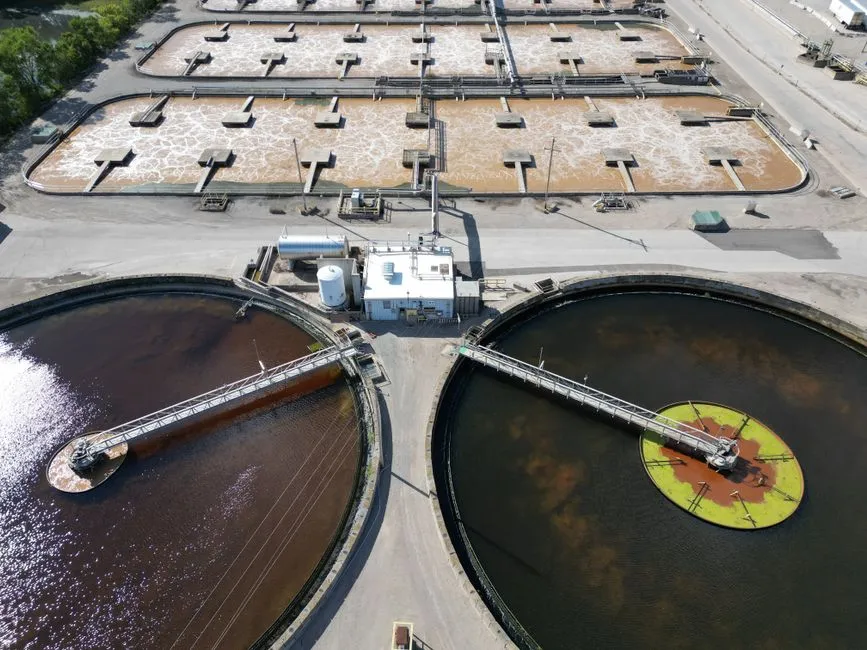
The permit file must connect the site’s current physical discharge route to a valid instrument and demonstrate whether the permitted activity matches actual operations. A permit presented without its history, supporting laboratory evidence, and authority correspondence is not an adequate basis for closing.
Request the current official permits, environmental approvals, sewer or discharge agreements, renewal correspondence, inspection findings, monitoring reports, laboratory reports, chain-of-custody records, and authority correspondence. Ask the seller to identify every modification, suspension, enforcement action, corrective measure, and unresolved condition. If the site changed its process, chemical use, drainage configuration, or treatment operation, request the associated approval history rather than assuming the original authorization still describes the plant.
Do not infer permit transfer from an acquisition announcement. Ask qualified Vietnamese environmental counsel to review the operative language and transfer or handover procedure, then seek confirmation from the relevant competent authority where the governing instrument or local practice requires it. A municipal sewer discharge agreement, an environmental approval, and a direct-discharge authorization must each be matched to the outlet they actually govern.
| Evidence item | Reconciliation test | Escalation if unresolved |
|---|---|---|
| Permit or approval and sewer/discharge agreement | Compare status, site boundaries, sources, outlets, conditions, and named operator | Require counsel and authority confirmation before risk acceptance |
| Renewal, modification, and inspection records | Confirm chronology, outstanding conditions, enforcement, and authority commitments | Make cure, closure, or allocation a transaction condition |
| Monitoring reports and laboratory files | Match sample point, parameter set, method, chain of custody, result, and submission | Commission targeted sampling and independent technical review |
| Operating and corrective-action records | Reconcile actual flow and treatment performance with the authorized conditions | Test capacity against the acquired operating profile |
| Sludge and residual records | Trace origin, handling, destination, and supporting documentation | Define liability, disposal plan, and closing protection |
Missing records, inconsistent parameter lists, unexplained sampling-method changes, or gaps between reported and observed operations should trigger targeted sampling and independent review. Do not convert missing historical evidence into an assumption of historical compliance. The plant-acquisition wastewater due-diligence workflow illustrates the sequence, but its jurisdictional content must not be imported into Vietnam.
After closing, retain permits, laboratory evidence, submissions, operating logs, renewal evidence, inspections, and corrective actions in an inspection-ready evidence room. Assign document ownership and review dates so that the historical file remains usable for regulatory review and future transaction diligence.
Test the Existing Treatment System Against the Real Waste
Installed treatment capacity must be demonstrated under the acquired plant’s real wastewater profile, not inferred from equipment age or an existing permit. The inspection must cover collection, equalization, treatment, reuse or discharge, metering, sampling points, bypasses, sludge handling, maintenance, and control logic.
Request actual flow, pollutant parameters, variability, production and chemical changes, required effluent quality, reuse objectives, footprint, sludge-disposal constraints, and operating history. A material change in the plant’s production or chemistry can invalidate the original design basis even when the treatment train has not physically changed.
Use a dissolved air flotation system as an initial screen where the waste profile supports removal of oil, FOG, suspended solids, and colloidal material. HydropureWater’s DAF range is 4–300 m³/h across 13 standard models, and its product information describes petrochemical pretreatment applications. Use an MBR wastewater treatment and reuse system as a screen where biological treatment and membrane separation are needed for industrial process water or reuse. HydropureWater’s MBR range is 10–2,000 m³/day, and its product information describes near-reuse-quality effluent below 1-micron filtration.
| Screening question | DAF screen | MBR screen |
|---|---|---|
| Primary wastewater concern | Oil, FOG, suspended solids, and colloidal matter | Biological treatment and membrane separation |
| Principal output | Clarified or physically separated stream for downstream treatment or disposal | Treated water for a defined discharge or reuse objective |
| Required evidence before selection | Accepted characterization, flow, applicable requirements, and sludge disposition | Accepted characterization, biodegradability, effluent objectives, footprint, and reuse criteria |
| Common transaction exclusions | Civil works, chemical demand, validation, commissioning, site utilities, bypass controls, and warranty exclusions must be defined separately | |
These catalog ranges are initial screening data only. Final selection requires accepted wastewater characterization, applicable requirements, site constraints, a process basis, validation plan, civil scope, commissioning plan, and clear warranty exclusions. If the evidence does not establish adequate capacity, the transaction decision should address treatment explicitly rather than treating a permit as proof of performance.
Separate Historical Contamination from Permit Compliance

A current permit addresses authorized discharge and monitoring; it does not release the buyer from liability associated with earlier operations. Historical soil and groundwater contamination therefore needs a separate evidence stream and a separate contractual decision.
Review historical spills, chemical and waste handling, groundwater use, septic systems, former discharge locations, soil and groundwater findings, and plausible contaminant-migration pathways. Reconcile those records with the physical route taken by current wastewater and with changes to the drainage network or treatment infrastructure. The review should also consider whether former operators, waste handlers, or equipment locations create migration pathways outside the present treatment footprint.
Missing analytical history is not evidence that contamination is absent. Conversely, a finding in soil or groundwater does not by itself establish a permit breach. Commission a separate environmental assessment where records are missing, the wastewater system has materially changed, or the available history cannot explain prior findings. The assessment should define the evidence gap, delineate plausible exposure, and identify further work; it should not import thresholds or remediation costs from another jurisdiction.
The supplied research provides no contamination threshold, remediation cost, or site-specific liability conclusion for a Vietnamese plant. Any such conclusion requires the location, site history, analytical data, applicable Vietnamese requirements, and transaction-specific advice from qualified Vietnamese counsel.
Allocate unresolved risk through purchase-agreement representations, indemnities, remediation obligations, escrow or holdback, and closing conditions. This should be distinct from permit-transfer administration. The separate permit and legacy-contamination diligence method shows the workstream boundary, but the Mexican legal content has no evidentiary value for the Vietnamese site.
Convert Diligence Findings into a Closing Decision
Every unresolved wastewater finding should have an owner, deadline, evidence requirement, and transaction consequence. A useful closing system distinguishes issues that can be accepted, conditions to closing, remediation funding, holdback protection, or further technical review.
A missing authorization, unresolved discharge route, unauthorized outlet, permit gap, material contamination finding, or treatment train without demonstrated capacity should be escalated to EHS, engineering, procurement, and qualified Vietnamese counsel before environmental risk is accepted. The decision record should state what is known, what remains unverified, who controls the next action, and what evidence will close the issue.
| Finding | Minimum decision evidence | Potential transaction response |
|---|---|---|
| Missing or inconsistent authorization | Official instrument, counsel interpretation, authority confirmation where required | Closing condition, delayed handover, or documented acceptance if legally permissible |
| Undocumented or unauthorized route | Physical and documentary outlet map, relevant agreement, corrective plan | Condition closure before closing or controlled post-closing cure |
| Treatment-capacity gap | Accepted process basis, capacity review, validation and implementation plan | Capital commitment, price adjustment, holdback, or further engineering |
| Legacy contamination | Site-specific assessment, exposure pathway, remediation scope and closure evidence | Remediation funding, indemnity, escrow, holdback, or closing condition |
| Missing monitoring or laboratory history | Targeted sampling, chain of custody, independent review | Reserve, closing condition, or expressly accepted historical uncertainty |
After closing, name owners for permit renewals, sampling, laboratory coordination, reports, authority correspondence, record retention, bypass control, maintenance, and change notification. Require notice and reassessment whenever production, chemistry, water source, drainage configuration, or treatment operation changes.
Use Vietnam’s expanding treatment capacity as market context, not as site evidence. The U.S. Commercial Service reports a 480,000 m³/day target for the Nhiêu Lộc–Thị Nghè plant, an approximately $1.3 billion six-plant and upgrade plan, and a $524 million Thu Duc MBBR project designed for up to 1.1 million m³/day. Those municipal infrastructure figures do not determine the acquired plant’s permits, treatment need, or closing risk.
Frequently Asked Questions
Do Vietnamese wastewater requirements transfer automatically to ExxonMobil after an acquisition?
Ownership does not erase permits, monitoring duties, discharge restrictions, enforcement history, sludge obligations, or legacy contamination exposure. Whether a permit, environmental approval, or municipal sewer discharge agreement must be transferred, replaced, or merely handed over must be confirmed from the site’s official instruments, qualified Vietnamese counsel, and the relevant competent authority.
How much should a buyer budget for wastewater treatment?
The supplied research provides no Vietnam-site estimate. Require the supplier to price against an accepted process basis: flow, wastewater characterization, receiving or reuse requirements, treatment scope, civil work, sludge handling, controls, commissioning, validation, and warranty exclusions. A catalogue range or acquisition announcement is not a defensible budget.
Should the buyer select a DAF or MBR before completing diligence?
Not yet. DAF is an initial screen for oil, FOG, solids, and colloidal pretreatment; MBR is an option where biological treatment and membrane separation are required. The final choice depends on accepted wastewater data, applicable discharge or reuse requirements, site constraints, and treatment validation.
What is the biggest compliance risk in buying a Vietnamese industrial plant?
The highest-risk combination is an undocumented or unauthorized discharge route, incomplete permit evidence, historical contamination, and a treatment train that has not demonstrated capacity under the buyer’s operating profile. Each issue needs separate evidence and should not be masked by a single site-wide compliance statement.
What should be transferred into the post-closing compliance system?
Assign named owners for renewals, monitoring, reporting, laboratory evidence, records retention, maintenance, bypass controls, corrective actions, change notification, and authority communications. Preserve the historical evidence room and require reassessment when the process, chemistry, water source, drainage, or treatment operation changes.