Which packaged sewage plant fits a Rome housing development?
The best packaged sewage plant for a Rome housing development is usually a buried A/O unit for a small, stable residential estate, while a larger or phased development generally needs an MBR package with primary clarification, disinfection and room for future nutrient-removal stages. Selection must start with measured and seasonal flows—not a generic PE label. For agglomerations covered by EU Directive 91/271/EEC, the supplied Italy guide gives secondary limits of BOD5 below 25 mg/L, TSS below 35 mg/L and COD below 125 mg/L. A 500 PE package typically needs 250–500 m², while permits may take 6–12 months. Rome’s sewer connection, receiving water, reuse plans and future duties under EU 2024/3019 determine the final configuration.
Use this conditional decision path:
- Small estate, stable occupancy, conventional secondary treatment: assess the underground WSZ package sewage treatment plant. The supplied Italy guide gives its operating envelope as 1–80 m³/h for residential communities and other decentralized applications.
- Variable daily batching, equalisation requirements or a compact footprint: assess an SBR package against the measured peak-hour flow and operating-control sequence.
- Land-constrained site, sensitive discharge, water reuse, staged expansion or a higher-quality polishing requirement: assess an MBR membrane bioreactor package.
- Available municipal sewer: investigate pretreatment requirements before selecting a standalone treatment package.
No process should be selected from population equivalent alone. The final brief needs defensible average and peak flows, the discharge route, available plot, future development phases and the receiving authority’s requirements.
Build the design basis before selecting equipment
A suppliers’ PE rating becomes meaningful only when converted into a project-specific hydraulic and loading brief. Collect average and peak domestic wastewater flows, daily and seasonal occupancy, groundwater infiltration, rainfall-derived inflow, toilet loading, kitchen flows, laundry contributions and any commercial discharge. These inputs distinguish a small private residential estate from a multi-phase catchment and expose whether a single package can absorb the actual peak.
The supplied Italy guide identifies peak-hour factors of 2.0–3.0 for many Italian tourism catchments in August. Test that benchmark explicitly where Rome-area housing has seasonal occupancy, school traffic or commercial activity. A site with a sharply concentrated breakfast or evening peak may need greater equalisation, whereas a stable estate may not.
- Establish the present average daily flow and the design peak flow.
- Model occupancy and infiltration sensitivities for undeveloped phases.
- Define required equalisation or storage volume.
- Identify the discharge route and required effluent quality.
- Set sludge-removal frequency, tanker access and service clearances.
Where the development is not yet built, the supplied Italy guide recommends at least 12 months of representative sampling, or a clearly documented occupancy-based model with sensitivity cases. Also state whether the proposed unit must operate as a standalone works, provide pretreatment to a municipal sewer or polish water for reuse. Each route changes the process train and permit scope.
| Design-basis item | Evidence required | Decision affected |
|---|---|---|
| Average and peak flow | Measured flow data or documented occupancy and infiltration model | PE rating, equalisation, pipe and blower capacity |
| Occupancy pattern | Daily, weekly and seasonal use | A/O, SBR or MBR selection; redundancy |
| Influent quality | COD, BOD, TSS, FOG and pH | Pre-treatment, biological loading and sludge yield |
| Discharge route | Receiving-water, sewer or reuse requirements | Secondary, tertiary or quaternary treatment scope |
| Site and servicing | Plot, groundwater, access, noise, odour and tanker constraints | Layout, materials and operating cost |
Compare A/O, SBR and MBR package plants
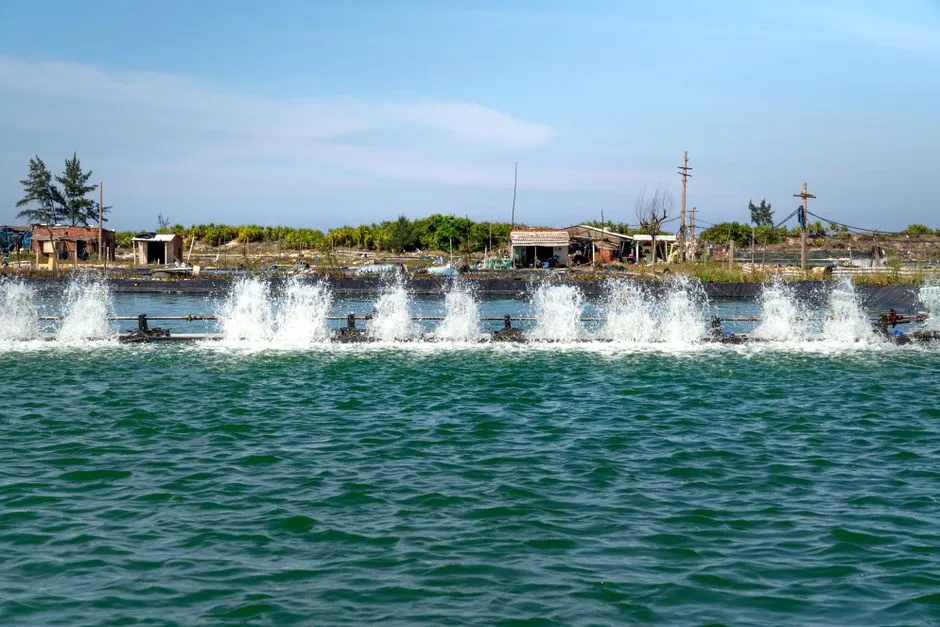
A/O contact oxidation combines anoxic and aerobic biological treatment, sedimentation and disinfection in a compact package that can be installed below grade and automated for residential-community duty. Its principal advantages are straightforward automation and a comparatively modest energy demand. The supplied Italy guide reports design energy use of 0.3–0.8 kWh/m³ for high-efficiency MBR packages and 0.1–0.4 kWh/m³ for compact A/O contact-oxidation units with variable-speed blowers.
SBR is appropriate where the plant can exploit fill, react, settle and draw cycles around a predictable daily or seasonal batching pattern. Its process sequence must be matched to equalisation requirements and plant-control logic; a nominal PE curve does not demonstrate that the selected cycle handles the project peak.
MBR adds membrane separation to biological treatment. That can produce a more compact installation and create a polishing option for sensitive discharge or reuse, but it also introduces membrane cleaning, replacement, controls and higher mechanical complexity. The supplied Italy guide states that a high-efficiency MBR can hold BOD below 10 mg/L, TSS below 10 mg/L and TN below 15 mg/L when sludge age and membrane integrity are controlled.
| Process | Best-fit condition | Main design question | Operating commitment |
|---|---|---|---|
| A/O contact oxidation | Small, stable estate requiring conventional secondary treatment | Can the plant handle the measured peak and effluent route? | Aeration control, diffuser and screen maintenance, sludge wasting |
| SBR | Development with batchable flows and justified equalisation | Do the cycle, storage and controls match the hydraulic profile? | Sequential control, settling performance, aeration and sludge removal |
| MBR | Land-constrained, sensitive discharge, reuse polishing or staged expansion | Do the required quality and footprint justify membrane maintenance? | Membrane cleaning, replacement provisions, critical spares and alarms |
Do not expect the biological package alone to absorb every shock load. For sewage exceeding 1,000 mg/L COD or carrying high FOG, the supplied guide identifies equalisation, pH control and dissolved air flotation as pretreatment measures that can protect downstream biology. For every proposal, request the process flow diagram, design calculations, hydraulic loading, sludge-age assumptions and performance guarantees matched to the measured influent.
Check the plot, hydraulics and service requirements
A 500 PE package typically needs 250–500 m², including the process footprint, access lanes and buffer zones, according to the supplied Italy guide. Underground or MBR layouts sit toward the low end of that benchmark, while above-ground A/O with separate sludge handling sits toward the high end. The figure is an allowance for preliminary comparison, not a substitute for a measured site layout.
Compare compact A/O, lamella-clarifier and MBR configurations against the actual boundary. Check the location of tanks, control panels, blowers, pumps, sludge storage, sampling points, chemical deliveries and vehicle movements. A package can meet process targets but fail operationally if membrane cleaning, sludge withdrawal or tanker access has no workable route.
| Physical check | Information to obtain | Procurement consequence |
|---|---|---|
| Plot allocation | Survey, setbacks, buried services and access dimensions | Confirm the proposed arrangement fits without displacing required service access |
| Hydraulic grade | Peak flow, head loss and equalisation calculations | Size pumps, blowers and pipework from duty, not nameplate PE |
| Groundwater | Seasonal groundwater level and installation method | Require buoyancy and structural checks for buried units |
| Materials | Exposure to salt air, FOG and buried conditions | Review AISI 304 or 316 selection where justified by the site |
| Servicing | Sludge removal, cleaning and maintenance access | Price the complete operating arrangement |
The supplied Italy guide notes that coastal and industrial installations often use AISI 304 or 316 tanks, UV-stabilised covers and redundant blowers because salt air and FOG can shorten carbon-steel life. Where groundwater is high, include buoyancy and installation checks rather than assuming an underground tank is simply a buried steel vessel.
Check the WSZ operating envelope of 1–80 m³/h against the selected duty. Require the supplier to show how the rated flow relates to the calculated development peak, including any equalisation credited upstream of the package.
Design for Rome’s permit and discharge conditions
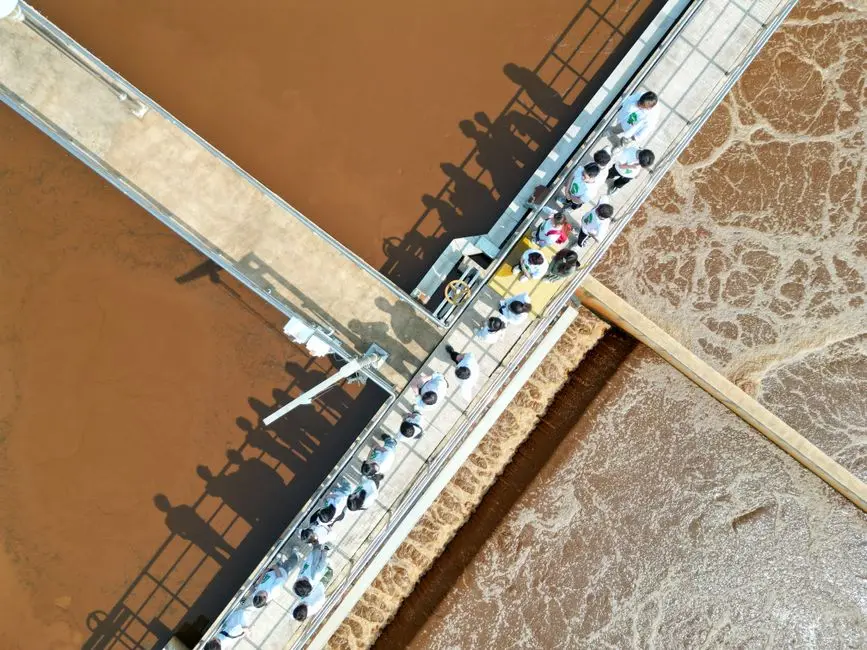
For agglomerations covered by EU Directive 91/271/EEC, the supplied Italy guide gives secondary limits of BOD5 below 25 mg/L, TSS below 35 mg/L and COD below 125 mg/L. The same guide notes that agglomerations above 100 PE must run weekly effluent monitoring where that monitoring duty applies. These are design and compliance reference points, not a substitute for the permit issued for the Rome site.
Confirm the applicable D.Lgs 152/2006 conditions, regional requirements, discharge point, receiving-water classification and any sewer pretreatment or acceptance controls with the competent authority and local sewer operator. The revised Urban Waste Water Treatment Directive, EU 2024/3019, entered into force on 1 January 2025 and phases in duties including nutrient removal, quaternary treatment and energy neutrality. The supplied guide says that designers currently size units against Directive 91/271/EEC Table 1 and D.Lgs 152/2006 while reserving space for future tertiary or quaternary stages where national transposition and site duties require them.
Permitting for a new or upgraded works usually takes 6–12 months, according to the supplied Italy guide. Its cited 300 PE MBR project in Castelnuovo del Garda took eight months, which supports starting the approval work before committing the civil design. Permit duration for a Rome development still depends on the authority, dossier and site-specific conditions.
| Compliance item | Evidence to request | Procurement consequence |
|---|---|---|
| Secondary treatment | Process calculations and effluent guarantees for BOD5, TSS and COD | Define contractual acceptance limits |
| Discharge authorisation | Authority-issued conditions and approved monitoring plan | Finalise the treatment train before equipment order |
| Small systems up to 50 PE | UNI EN 12566-3 conformity, CE marking of the assembly and regional authorisation evidence | Reject nonconforming or incomplete documentation |
| Residential impacts | Noise, odour and maintenance requirements | Include mitigation, access and monitoring in the design |
| Future duties | Space, pipe-route and electrical-capacity assessment | Preserve upgrade options during phased development |
Plan for reuse, nutrient removal and future capacity
Water reuse can change the required process train. The supplied Italy guide identifies UNI EN 16941-2:2021 as the relevant alignment point for tertiary polishing. Confirm whether the proposal covers treatment only, treatment plus storage, or a defined reuse service involving additional disinfection and operating controls.
For sensitive receiving waters, site-specific total nitrogen and total phosphorus limits may require enhanced nutrient removal beyond the standard secondary targets. The supplied Italy guide also states that a controlled high-efficiency MBR can achieve TN below 15 mg/L. That performance belongs to the cited MBR design; it cannot be transferred to an A/O or SBR proposal without project-specific evidence.
- Reserve space for future tertiary, quaternary or nutrient-removal equipment.
- Fix future pipe routes and electrical capacity before underground installation.
- Use modular architecture when occupancy is staged across development phases.
- Assess equalisation or dual trains where one train could be overwhelmed by a seasonal peak.
- Document which expansion items are reserved, accessible and contractually defined.
For MBR, the supplied product information states a 10–2,000 m³/day range and a 60% smaller footprint than conventional systems. The project brief must still establish whether the footprint and polishing benefits outweigh membrane cleaning, replacement and energy obligations. The comparison is conditional, not a default recommendation.
Compare installed cost and lifecycle obligations
Package bids are comparable only after civil works, utilities, sludge handling, monitoring and operating obligations are separated from the treatment skid. The supplied Italy guide gives benchmark CAPEX of €50,000–€200,000 for 10–50 PE, €200,000–€800,000 for 50–500 PE and €800,000–€2,000,000 for 500–5,000 PE. These are market benchmarks, not quotations for a Rome site.
| Cost element | Benchmark or evidence requirement | Treatment in comparison |
|---|---|---|
| Treatment package | Supplier quotation tied to the approved process and duty | Keep the skid price distinct from installed cost |
| Permitting | €10,000–€50,000 benchmark identified in the supplied Italy guide | Allow for the actual dossier and authority schedule |
| Foundations and piping | €20,000–€100,000 benchmark identified in the supplied Italy guide | Subject to site conditions; obtain itemised pricing |
| Operating cost | €0.15–€0.40/m³ benchmark for energy, chemicals and routine maintenance | Use as a comparison baseline, not a guaranteed price |
| Sludge and services | Extraction frequency, disposal route, spare parts and Italian support | Price the complete service route |
Require a 10-year cash-flow comparison based on measured average and peak flows. It should include contractual effluent guarantees, an energy envelope, sludge yield, membrane and blower warranties, spare-parts availability and Italian service coverage. The supplied guide reports that mechanical-equipment warranties of 2–5 years are common, while membrane and blower warranties require separate review. A low skid price without a defined sludge route or available spares can become the more expensive option operationally.
Do not convert the OPEX benchmark into a fixed budget. Obtain the supplier’s assumptions for treated volume, electricity tariff, chemical consumption, aeration hours, sludge-removal frequency, membrane cleaning and preventive maintenance. A compliant installation and operating plan for a Rome housing development is also useful when developing a packaged sewage plant sizing for housing developments.
Use a staged procurement and acceptance plan
Begin with representative influent sampling, then lock the PE rating, process selection, plot constraints and discharge assumptions before issuing the final equipment order. The supplied Italy guide identifies early sampling, PE lock-in and effluent guarantees as the sequence that prevented an undersized purchase on the cited Italian project.
- Define: approve influent data, design flow, service route, outlet and plot constraints.
- Select: complete the process comparison and obtain a project-specific flow diagram.
- Price: separate skid, civils, electrical work, sludge handling, monitoring and services.
- Contract: attach performance guarantees, acceptance tests and enforceable remedies.
- Commission: verify operation at design flow, peak flow and the required effluent quality.
Make the proposal conditional on an approved process flow diagram, hydraulic calculations, materials certificates, utilities demand, noise and odour assessment and an enforceable performance schedule. Specify BOD, TSS and COD guarantees, a kWh/m³ energy envelope and sludge yield, with remedies or penalties tied to acceptance-test failure.
| Acceptance subject | Required evidence | Relevant package |
|---|---|---|
| Process performance | Composite influent and effluent sampling against contractual limits | All technologies |
| Hydraulic capacity | Demonstration at the agreed peak and operating records | All technologies |
| Controls and utilities | Alarm, blower, pump and control-panel test records | A/O and SBR |
| Membrane condition | Cleaning method, frequency, replacement terms and critical spares | MBR |
| Records | Portable DO probes, turbidity meters, refrigerated composite samplers, calibration certificates and operating logs | All technologies |
For A/O or SBR packages, address blower redundancy, aeration-control logic, screen and diffuser maintenance, sludge wasting, odour control and operator training. For MBR, address membrane cleaning, expected chemical-cleaning frequency, replacement provisions, critical spares and remote alarms. The decentralized sewage treatment buyer’s guide provides a useful cross-check for supplier documentation and operating support.
Frequently Asked Questions
What cost should a Rome housing-development sewage package be budgeted at?
Use the supplied Italy guide’s 2024 market benchmarks only for initial screening: €50,000–€200,000 for 10–50 PE, €200,000–€800,000 for 50–500 PE and €800,000–€2,000,000 for 500–5,000 PE. Ask each bidder for an itemised installed-cost offer and a 10-year cash-flow comparison at the project’s measured average and peak flows. Treat the benchmark operating cost of €0.15–€0.40/m³ as a comparison baseline, not a guaranteed price or fixed Rome permit fee.
How should a supplier be selected for a decentralized sewage treatment package?
Require a project-specific process flow diagram, hydraulic calculations, UNI EN 12566-3 conformity where applicable, CE marking of the assembly, material certificates, Italian service coverage and contractual effluent, energy and sludge-yield guarantees. Ask for critical-spares availability, membrane and blower warranty terms, and an acceptance procedure with enforceable remedies. A low equipment price is not sufficient if the proposed training, sludge route or service support is undefined.
Can a Rome housing development be sized from population equivalent alone?
No. Use PE only after deriving average and peak flows from occupancy, wastewater contributions, infiltration, rainfall-derived inflow and the future development schedule. The supplied Italy guide recommends at least 12 months of representative sampling where the development is not yet built, or a clearly documented occupancy-based model with sensitivity cases. A brochure PE curve does not establish performance at the calculated peak.
When should A/O, SBR or MBR be selected?
Select A/O where a small, stable estate needs straightforward, compact secondary treatment and the supplied effluent targets are adequate. Consider SBR where measured flows support a justified batching and equalisation sequence. Assess MBR where land is constrained, sensitive-discharge or reuse polishing is required, or staged expansion justifies membrane maintenance. The final choice must match the permit, discharge route, plot and future-capacity obligations.