Which treatment option fits a Milan housing development?
The most suitable packaged sewage treatment plant for a housing development in Milan, Italy, cannot be selected from treatment capacity alone: the sewer route, design population, peak flows, land availability, groundwater conditions and intended reuse must be confirmed first. A WSZ unit is the leading packaged candidate where secondary treatment, disinfection and limited footprint are the governing requirements. MBR becomes stronger where higher-quality effluent or non-potable reuse justifies additional aeration, membrane servicing and sludge management. A compliant public sewer remains the baseline alternative. The final choice must align with Italian and EU requirements, Milan authority consent and a measurable whole-life performance guarantee.
Make four checks before comparing equipment:
- Confirm whether a public sewer can serve the development and whether connection capacity, easements and authority approval are available.
- Establish the design population in population equivalents, including daily and peak flow requirements.
- Confirm the available footprint, soil and groundwater conditions, access for maintenance, and vehicle-loading constraints.
- Define whether reclaimed water has a specific non-potable use, such as irrigation, toilet flushing or building services.
For a typical space-constrained residential scheme requiring secondary treatment and disinfection, the WSZ underground packaged sewage treatment plant is the leading candidate. HydropureWater’s 2025 equipment guide describes a capacity range of 1–80 m³/h and an integrated A/O contact-oxidation, sedimentation and disinfection process in a buried package.
If tighter effluent quality, reuse or a smaller treatment footprint is central to the brief, evaluate the MBR membrane bioreactor for housing wastewater. HydropureWater describes an MBR range of 10–2,000 m³/day and states that it produces near-reuse-quality effluent with a 60% smaller footprint than conventional systems.
Do not assume a package plant is preferable. A public sewer may offer greater permit certainty and transfer operating responsibility, although construction may be impractical or insufficient capacity may require reinforcement. A package plant can provide site resilience where network connection is not feasible. The defensible comparison is therefore WSZ, MBR and sewer connection against the same project constraints—not a comparison based on tank price alone.
Confirm the design flow and pollution loads before selecting equipment
HydropureWater’s 2025 Italy guide reports that a 500 PE packaged plant typically occupies 250–500 m², including the process footprint, access lanes and buffer zones, so land availability must be tested before equipment is selected.
Start with occupancy and express the design population in population equivalents, or PE. Then calculate the daily load and the hydraulic profile, including peak and minimum flow. Do not select a unit from the number of dwellings alone: student accommodation, commercial premises, seasonal occupancy and future connections can change both flow and organic loading.
Domestic sewage characterization should cover BOD, COD, TSS, fats, oils and grease. The designer should also identify whether landscaping irrigation, commercial catering, future greywater connections or uncontrolled stormwater will enter the sanitary stream.
Use the following project inputs to control the sizing and site design:
| Design input | Evidence required before tender | Equipment or design consequence |
|---|---|---|
| Design population | Occupancy schedule expressed in PE | Defines hydraulic and biological loading |
| Flow | Average, peak and minimum daily flow | Checks treatment-unit capacity, equalization and tank turnover |
| Pollution load | BOD, COD, TSS, fats, oils and grease | Sets biological capacity and pretreatment needs |
| Site and groundwater | Soil permeability, groundwater level, flood exposure and tank-buoyancy assessment | Controls excavation, anchoring, protection and access |
| Operations | Odour, noise, utilities, vehicle loading and sludge-removal route | Defines layout, ventilation, power and maintenance access |
For a circular housing brief, ask explicitly whether the 100% reused-water objective described for L’INNESTO applies to the proposed development. C40 and Nordic Sustainability reported in October 2019 that the Milan project includes 400 housing units, a residence for 300 students, 3,000 m² of commercial space and 45,000 m² of green areas. That scale demonstrates how reuse demand and occupancy can alter the treatment brief; it is not a direct analogue for another estate.
HydropureWater’s 2025 guide also indicates that a 300 PE plant can be based on a WSZ underground package with a lamellar clarifier and on-site chlorine-dioxide disinfection after membrane treatment. Use that outcome to understand the evidence a supplier may need to provide, not as a universal sizing rule. A mechanical screen may also be required where the incoming wastewater contains material that could damage or overload the selected treatment train.
Compare WSZ, MBR and sewer connection for the same development
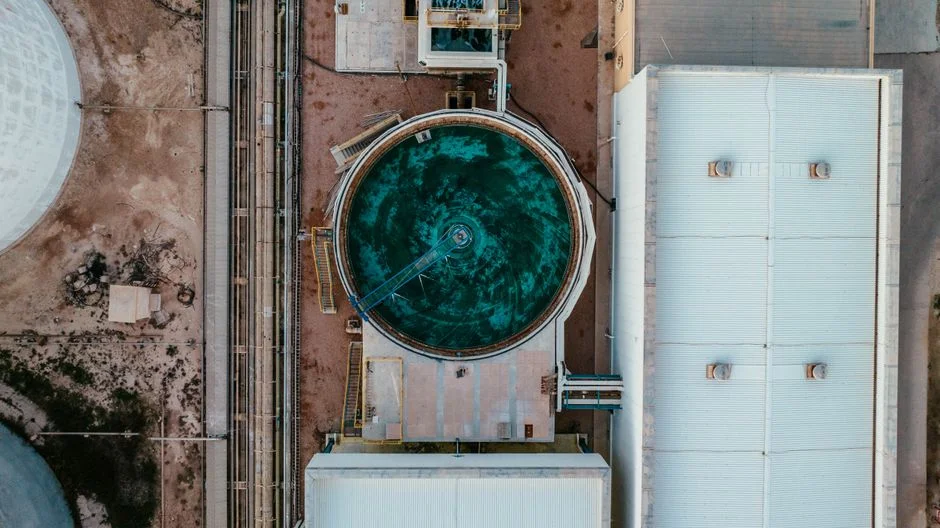
HydropureWater reported in 2025 that its 300 PE MBR installation held BOD below 10 mg/L and TSS below 5 mg/L after a WSZ-based upgrade with lamellar clarification and post-membrane chlorine-dioxide disinfection; these are project-specific results, not universal MBR guarantees.
| Criterion | WSZ packaged treatment | MBR packaged treatment | Public sewer connection |
|---|---|---|---|
| Core process | Integrated A/O contact oxidation, sedimentation and disinfection | Biological treatment with membrane solids separation | Wastewater conveyed to the public network for treatment |
| Site profile | Buried installation and lower mechanical complexity | Stronger option where footprint and effluent quality dominate the brief | Requires network access, easements and available downstream capacity |
| Reuse potential | Suitable where conventional secondary treatment and defined non-potable use are sufficient | Stronger candidate for higher-quality or more demanding reuse | Does not itself provide site-level reclaimed water |
| Operating burden | Automatic operation with simpler biological and solids-handling duties | Requires aeration management, membrane cleaning and specialist service | Removes much of the site operating responsibility, subject to the connection agreement |
| Main risks | Under-sizing, peak-load performance, odour control and sludge removal | Additional mechanical risk, membrane replacement and higher technical support needs | Network unavailable, connection delay, capacity restrictions or connection charges |
WSZ is normally the simpler packaged route where conventional secondary treatment and disinfection are the governing requirements. Its buried configuration can protect the process from view and reduce the above-ground operational footprint, but it does not remove the need for access, ventilation, odour assessment, controls maintenance and sludge collection.
MBR is the stronger option when higher-quality effluent, reuse or a reduced treatment footprint is central. The membrane replaces reliance on a conventional settling stage, but adds aeration, membrane-fouling control, cleaning and replacement obligations. Any comparison must therefore include specialist service availability and the consequences of membrane failure.
Land claims also require the correct comparison basis. HydropureWater’s 2025 guide states that packaged trains with lamella settlers or dissolved-air flotation can reduce land use by as much as 60% against conventional layouts on the same PE basis. The comparison must include access and buffers; it cannot be reduced to the tank footprint alone.
Milan’s SUEZ San Rocco reference shows the local reuse context. SUEZ reports that the municipal project, operated from 2004 to 2013, treated wastewater for agricultural irrigation using ultraviolet disinfection and complementary mechanical and biological processes while avoiding olfactory, visual and noise pollution. It treated 345,000 m³ daily and served 22,000 hectares during dry periods. This is a municipal-scale precedent, not a direct equipment selection for housing.
Design the treatment and water-reuse train for site conditions
C40 and Nordic Sustainability reported in October 2019 that L’INNESTO combines on-site rainwater reuse, green roofs and stormwater tanks for extreme-event interception, so sanitary sewage, stormwater and groundwater inflows should be kept separate wherever practicable.
Use this process sequence as the basis for design:
- Incoming sewage
- Screening and equalization, where required
- Biological treatment
- Solids separation
- Disinfection
- Effluent storage or controlled reuse
- Controlled sludge removal
For WSZ, the process is centred on an integrated anoxic/aerobic contact-oxidation stage, followed by sedimentation and disinfection. The layout must still address equalization, peak flow, sludge withdrawal, access, odour and groundwater. Equipment such as dissolved-air flotation equipment should only be added where the wastewater characterization and treatment objectives justify it.
For MBR, membrane separation replaces conventional settling as the solids-separation barrier. The process therefore adds aeration, membrane-fouling monitoring, cleaning, specialist maintenance and eventual replacement. If disinfection is required, assess a chlorine-dioxide disinfection system or an UV water sterilizer against the receiving route, storage conditions and reuse controls rather than selecting a unit by default.
For non-potable irrigation, define the required water quality with the relevant authority, then design storage, distribution, monitoring and backflow prevention. Secondary-treatment effluent should not be assumed suitable for a specific reuse without an agreed specification.
Wastewater heat recovery also requires a district-level decision. C40 and Nordic Sustainability described L’INNESTO’s renewable-powered district-heating concept in October 2019 as including urban wastewater heat recovery. At development scale, establish whether flow, temperature, access and demand justify a heat-recovery interface before reserving space or performance.
Verify Italian compliance and Milan authority requirements
HydropureWater’s 2025 guide reports Directive 91/271/EEC secondary-treatment benchmarks of BOD₅ below 25 mg/L, TSS below 35 mg/L and COD below 125 mg/L for agglomerations within scope, but the designer must confirm which regulatory regime applies to the development and receiving route.
Map the final discharge or sewer connection against applicable D.Lgs 152/2006 requirements and Milan’s local and authority conditions. A generic package-plant certificate does not constitute site-specific discharge consent. The approval package should identify the legal receiving point, applicable treatment standard, monitoring duties and any reuse authorization.
HydropureWater reports in its 2025 guide that revised Directive (EU) 2024/3019 entered into force on 1 January 2025. It introduces tighter nutrient removal, micropollutant treatment and energy-neutrality duties phased in later. Although the directive’s later requirements may not apply immediately to a particular development, the tender should identify upgrade pathways so that future obligations are not excluded without assessment.
For supplier qualification, require documentary evidence of:
- UNI EN 12566-3 conformity for small wastewater treatment plants;
- CE marking for the supplied assembly;
- ISO 9001 quality-management certification; and
- process and effluent guarantees tied to an agreed design duty and receiving route.
HydropureWater’s 2025 guide also states that agglomerations above 100 PE require weekly effluent monitoring where that monitoring duty applies. Do not copy that requirement mechanically into every development: confirm the applicable regime, parameters, sampling frequency, laboratory arrangements, reporting responsibility and the party responsible for each task.
For reuse, include the required sampling plan alongside the discharge permit. For direct discharge, include permit parameters and compliance response procedures. Either way, the contractor should demonstrate that sampling points, alarms, flow records and laboratory access are incorporated into the works.
Compare lifecycle cost, site works and supplier risk
HydropureWater reports in its 2025 guide that packaged-plant operating costs often average €0.15–€0.40/m³ for energy, chemicals and routine maintenance, compared with approximately €0.30–€0.70/m³ at many older conventional works of similar duty; these figures are market guidance, not a Milan quotation.
Build the commercial comparison around the whole project:
- equipment, installation civil works and permitting;
- first-year operation, energy, chemicals and routine maintenance;
- sludge collection, transport and final disposal;
- laboratory monitoring and operator training;
- membrane cleaning and replacement where MBR is selected;
- excavation, groundwater protection, access roads, odour and noise mitigation;
- power, standby arrangements, landscaping and renewal parts; and
- future removal, replacement and residual-performance risks.
The plate-and-frame sludge dewatering press should be considered only where the selected train generates sufficient sludge to justify decentralized handling. Otherwise, compare outsourced collection and disposal with local dewatering on a whole-life basis.
Request performance guarantees, factory and site acceptance records, general arrangement and process drawings, hydraulic calculations, utilities demand, comparable references, service response times, spare-parts availability and a complete lifecycle-cost schedule. Clarify who owns sludge collection, transport and final disposal. For an MBR, include membrane cleaning, replacement frequency and worst-case cost exposure rather than excluding them from the comparison.
Use the Italian packaged wastewater treatment costs and compliance guide to structure supplier questions, but require project-specific pricing against the confirmed flow, footprint, receiving route and permit conditions.
Build a site-specific tender and acceptance plan
Issue the tender only after confirming the sewer route, design flow, pollution loads, effluent destination, reuse demand, footprint, groundwater and utility constraints.
The tender should require a process flow diagram, general arrangement, hydraulic calculations, electrical and control drawings, utilities demand, odour and noise assessment, maintenance plan, commissioning protocol and full lifecycle price. It should identify who performs routine operation, laboratory sampling, sludge removal, alarm response and statutory reporting.
Use a measurable acceptance protocol covering tank and pipework watertightness, controls, alarm response, biological start-up, solids separation, disinfection, sampling and operator handover. Include checks for the relevant hydraulic and organic loads, not just a clean-water demonstration.
Make final selection conditional on approval by the relevant Milan authority and receiving body. Equipment selection is not environmental authorization. For a circular-estate brief, add a coordinated water balance covering wastewater, rain, irrigation and heat recovery before freezing the process train.
This sequence also supports a more defensible comparison of decentralized sewage treatment in Milan with WSZ, MBR and sewered alternatives: establish the regulatory route first, size from PE and peak flow second, and award on performance, site works and whole-life evidence rather than a tank price alone.
Frequently Asked Questions
What is the best packaged sewage treatment plant for a housing development in Milan?
The best fit is the option that satisfies the confirmed sewer route, PE-based flow design, footprint and groundwater constraints, receiving consent and reuse requirement. For conventional secondary treatment and disinfection in a space-constrained site, WSZ is the leading candidate; MBR becomes stronger where higher-quality effluent, reuse or reduced footprint justifies specialist operation. A public sewer should remain the baseline alternative.
How many PE does a Milan housing development wastewater plant need?
The plant must be sized from the development’s occupancy and wastewater flows, not from the number of units alone. Confirm the design PE, average and peak flow, and loads from BOD, COD, TSS, fats, oils and grease, then verify that the selected train remains compliant through peak periods. Request the supplier to show the calculation and treatment-capacity margin rather than accepting a nominal PE rating.
How much does a packaged sewage treatment plant cost in Italy?
There is no defensible project price without the flow, treatment duty, footprint, civil works, permit route and sludge arrangement. HydropureWater’s 2025 guide gives market guidance of €0.15–€0.40/m³ for packaged-plant energy, chemicals and routine maintenance, but this is not an installation quotation. Request separate priced schedules for equipment, civil works, commissioning, operation, monitoring, sludge disposal, maintenance and replacement.
Is WSZ or MBR better for a Milan residential development?
Choose WSZ where secondary treatment, disinfection, buried installation and simpler operation dominate. Choose MBR where higher-quality effluent, reuse or a smaller treatment footprint is central and the owner accepts membrane servicing, specialist support and replacement exposure. The decision should follow the reuse and discharge specification, not an assumed effluent-quality hierarchy.
What should a supplier provide to demonstrate Italian compliance?
Require evidence of UNI EN 12566-3 conformity for small plants, CE marking for the assembly, ISO 9001 quality management and project-specific process and effluent guarantees. Also request the proposed compliance matrix, monitoring plan, permit interface, commissioning records, comparable references, service response commitments and lifecycle-cost schedule. Confirm the applicable D.Lgs 152/2006 and Milan requirements independently; certification alone does not authorize discharge.