What Changes When Shell Takes Ownership
When Shell acquires a plant in Vietnam, the buyer must verify—not assume—that the site’s wastewater permit remains valid after the change of ownership. The review must cover provincial or permitting authority requirements, the industrial-park or sewer agreement, pretreatment obligations, monitoring and reporting, chemical and sludge handling, and whether the installed treatment capacity supports the post-closing production plan. Vietnam’s central structure changed on March 1, 2025: MONRE merged with MARD to form MAE, with the Vietnam Environment Administration under MAE. Written confirmation of permit continuity, amendment, transfer, or re-issuance should be a closing condition where commercially and legally feasible.
This is a permit-and-capability review, not a document-transfer exercise. The transaction team should first identify three parties: the legal entity owning the site, the entity operating the wastewater system, and the entity named in the permit. Those identities should be reconciled against land rights, industrial-zone tenancy, sewer agreements, and wastewater service contracts. A mismatch may affect who can submit reports, incur liabilities, or exercise the right to discharge.
Then answer four questions separately:
- Does the permit remain valid after the change of ownership?
- Does the competent authority require notification, amendment, transfer, or re-issuance?
- Do the approved process and capacity match Shell’s post-closing production plan?
- Does the receiving authority accept the new operator and the proposed operating arrangements?
The seller’s assurance is not regulator confirmation. Obtain the competent authority’s or receiving operator’s written decision in the form required for the transaction. A missing entry in a permit register should be treated as an open compliance issue, not proof that no obligation exists. The same review discipline applies to broader Shell plant acquisition wastewater due diligence: identify the approval, the responsible authority, the evidence required, and the consequence if the evidence is absent.
Separate the Three Layers of Vietnam Approval
Vietnam wastewater approval should be separated into national regulatory context, provincial or site permitting, and industrial-park or sewer acceptance because one approval does not authorize every part of the discharge route. On March 1, 2025, MONRE merged with MARD to form MAE, with the Vietnam Environment Administration under MAE as the main central body for regulations, standards, permits, and inspections, according to the U.S. Commercial Service’s Vietnam Environmental Technology guide. That national structure identifies the governing framework; it does not establish a site’s permit conditions.
| Approval layer | What it governs | Evidence the buyer needs |
|---|---|---|
| Central regulatory context | National regulations, standards, permit framework, and inspection structure | Current central guidance and the applicable legal text for the site’s sector and discharge route |
| Provincial or site permit | Authorization of the specified facility, process, capacity, discharge point, monitoring, and reporting | Current permit and complete amendment history, held by the identified competent authority |
| Industrial-park or sewer acceptance | Connection and reserved receiving capacity, accepted wastes, pretreatment interface, and sampling access | Written confirmation from the industrial-zone operator or sewer authority |
For the provincial layer, identify the exact issuing authority, permit number, holder, effective dates, approved process and capacity, discharge point, receiving medium, monitoring conditions, reporting dates, renewal status, and amendment history. The permit holder should be compared with the acquiring entity, and the approved facility description should be compared with the installed plant and Shell’s production forecast.
For the industrial-park or sewer layer, obtain written confirmation of connection rights, reserved capacity, accepted waste types, prohibited discharges, pretreatment interface, sampling access, and consequences of increased industrial flows. A sewer connection does not by itself establish permission to exceed treatment or receiving-system limits.
National statistics provide context only. The U.S. Commercial Service reported that an estimated 16% of urban wastewater was collected and treated in 2024, while more than 55 plants were in development with combined capacity exceeding 2 million cubic metres per day. Those figures are not hydraulic allowance, treatment performance, or receiving capacity for the acquired plant.
Build the Permit and Document Register

A permit register becomes the transaction control document only when it links each legal instrument to the installed system, the operating record, and the receiving agreement. Request current originals and amendment histories for environmental and discharge permits, industrial-zone agreements, sewer connection or use agreements, wastewater contracts, monitoring reports, incident records, chemical inventories, sludge records, and regulator correspondence. A permit file without its supporting approvals can conceal a mismatch between the approved process and the installed system.
| Register item | Required comparison | Decision rule |
|---|---|---|
| Permit and amendments | Holder, facility description, process, capacity, discharge point, monitoring, reporting, and renewal status | Resolve continuity, notification, amendment, transfer, or re-issuance with the issuing authority |
| Site and operating agreements | Land or lease rights, industrial-zone tenancy, sewer agreement, and wastewater contract | Confirm that the acquiring and operating entities can exercise the required rights |
| Compliance evidence | Sampling plans, results, calibration, laboratory scope, chain of custody, notices, and corrective actions | Do not treat missing or inconsistent records as demonstrated compliance |
| Wastewater duty | Suspended solids, oil and grease, pH, nutrients, color, metals, and process-specific contaminants | Apply only the numerical limits established by the permit, relevant sector requirements, and current Vietnamese law |
| Chemicals, sludge, and support | Storage, segregation, spill response, sludge destination, maintenance, operators, and spare parts | Assign immediate controls, remediation, and post-closing actions |
The wastewater characterization should reflect the actual production route, including batch discharges, cleaning activities, contaminated stormwater, laboratory drains, and other process streams. Do not insert generic numerical limits into the register. Record the applicable source for each limit and test method, then identify any discrepancy between the permit, the pretreatment interface, and the receiving agreement.
Also record land and site-arrangement history relevant to transaction execution. A 2023 Growing Science case study on state land acquisition in Bac Ninh identified compensation, support, and resettlement complaints as among the most complicated and time-consuming aspects of Vietnam’s land-acquisition process. That research does not determine the wastewater permit, but it supports checking whether site or access arrangements could create administrative delay or dispute.
Test Whether the Wastewater System Can Meet the New Operating Plan
A permit-valid plant can still be physically inadequate, while a capable plant can still have incomplete compliance evidence. Reconcile design flow, current average and peak flows, bypass frequency, hydraulic upsets, standby-equipment status, reagent consumption, sludge production, and maintenance history against both permitted capacity and contracted receiving capacity. The post-closing production forecast should be translated into hydraulic and contaminant duties rather than compared only with the equipment nameplate.
Determine whether underperformance is caused by hydraulic loading, contaminant loading, equipment condition, controls, or laboratory uncertainty. Rated equipment capacity is not proof of compliant performance. Use this sequence:
- Reconstruct the historical hydraulic and contaminant load.
- Compare it with the approved process, permitted capacity, and contracted receiving capacity.
- Separate equipment deficiencies from sampling or laboratory deficiencies.
- Define the operating conditions and acceptance evidence for any corrective test.
Review sampling plans, monitoring results, calibration and laboratory records, chain-of-custody documents, regulatory notices, corrective actions, and unresolved gaps. Where performance is uncertain, define a representative baseline test under agreed operating conditions rather than relying only on historical results. The DAF versus clarifier selection for industrial wastewater illustrates why process choice must follow the actual separation duty, while an industrial wastewater sewer-limit and pretreatment review illustrates why receiving obligations must be tested separately from treatment capability.
Operational resilience belongs in the same assessment. Review flood exposure, power-loss arrangements, chemical supply, remote monitoring, operator competence, spare-parts availability, commissioning access, and local technical support. If a treatment train depends on unsupported equipment or unqualified local intervention, the post-closing operating model remains exposed even if the compliance file appears complete.
Select Treatment Equipment by the Actual Duty
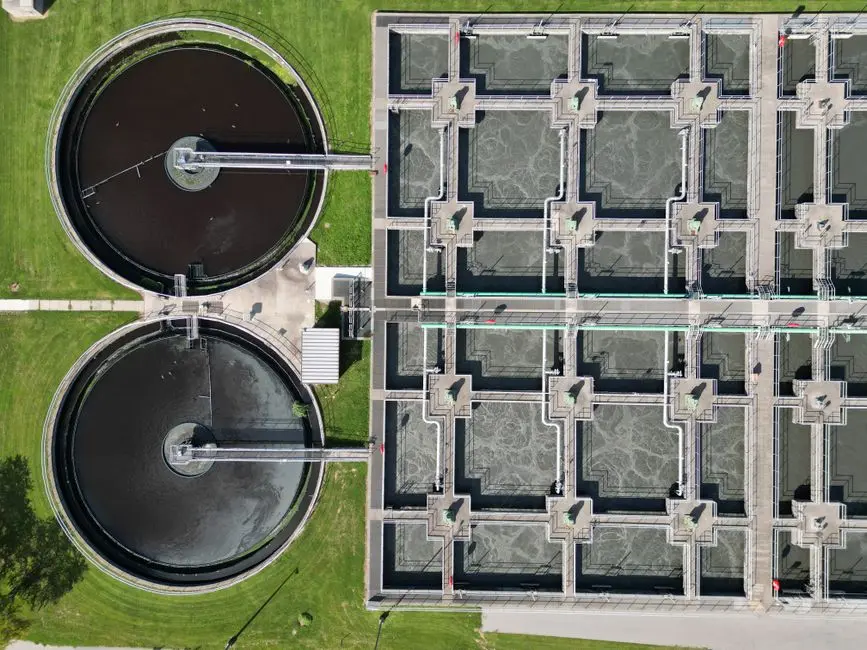
Equipment should be selected from the wastewater characteristics and receiving requirements, not from nominal flow alone. Oil, grease, suspended solids, colloids, and sludge-dewatering needs may point toward DAF, lamella clarification, and filter-press functions. Higher-quality separation or reuse objectives may justify MBR review. These processes are not interchangeable.
| Equipment | Catalog capability | Required buyer checks |
|---|---|---|
| Industrial DAF system for oil, grease, and suspended solids | 4–300 m³/h across 13 standard models; designed for suspended-solids, FOG, oil and grease, and colloidal-matter separation | Actual wastewater duty, footprint, installation, pretreatment interface, and receiving-system requirements |
| MBR wastewater treatment system for higher-quality effluent or reuse | 10–2,000 m³/day; listed near-reuse-quality effluent; 60% smaller footprint than conventional systems | Influent quality, required effluent objective, membrane operation, residuals, site integration, and authority acceptance |
| Plate and frame filter press for industrial sludge dewatering | 1–500 m² filtration areas; manual, hydraulic, or fully automatic PLC-controlled operation | Sludge characteristics, dewatering objective, installation constraints, operator training, documentation, and local service capability |
These catalog figures describe equipment capability, not permit validity, regulatory acceptance, or guaranteed site performance. Require every supplier to state its permit, pretreatment, receiving-system, site, commissioning, training, and service assumptions. Each assumption must be verified independently. Equipment can meet a stated treatment duty, but it cannot establish authorization to discharge or acceptance by the receiving authority.
Turn Compliance into Closing and Post-Closing Conditions
Critical permit confirmation, regulator engagement, and any required amendment or transfer should become closing conditions where commercially and legally feasible. Diligence reduces uncertainty but cannot guarantee regulator approval. For every condition, assign one named owner, define the required evidence, and set the date by which it must be resolved. Closing should not proceed on a verbal assurance where an operating permit or receiving agreement is affected.
| Period | Required control | Closure evidence |
|---|---|---|
| First 30 days | Confirm operating procedures, sampling responsibilities, calibration status, chemical suppliers, emergency contacts, and the baseline operating record | Reconciled baseline record against the permit, approved process, receiving agreement, and pre-closing monitoring history |
| Within 60 days | Perform a documented wastewater-train performance and compliance test; verify hydraulic and contaminant mass balances; review bypass and upset events | Test report, identified equipment or laboratory gaps, and agreed corrective actions |
| Within 90 days | Finalize preventive maintenance, sludge-disposal, chemical-safety, training, spare-parts, and contractor-support plans | Approved plans and a risk register listing every unresolved action, accountable owner, and closure evidence |
Where performance is uncertain, the 60-day test should be representative and performed under agreed operating conditions. Do not defer a known permit discrepancy indefinitely by placing it in the risk register; classify it as a closing condition, a price-and-indemnity issue, or an accepted post-closing obligation with clear funding, ownership, and timing.
Budget and Procurement Decisions
The supplied research does not support a universal Shell acquisition price or wastewater-compliance cost. The first budgeting step is a plant-specific audit covering flow, contaminants, permit gaps, equipment condition, sludge route, monitoring deficiencies, and local integration needs. The audit should identify scope gaps before suppliers price equipment against undefined duties.
Request scoped proposals that separate advisory and permitting work, immediate remediation, equipment capital expenditure, commissioning, recurring operation, and service costs. This prevents a remediation allowance from being buried in an equipment price and makes post-closing operating expenditure visible.
Compare bids using a common duty definition, performance criteria, installation assumptions, references for similar industrial wastewater, local commissioning and service capability, spare-parts availability, operator training, and transparent guarantee tests. Do not select on rated flow alone. Obtain hydraulic and contaminant data, and have the buyer team verify every permit, pretreatment, receiving-system, and site assumption independently. Where filtration or reuse is under consideration, an ultrafiltration system should be assessed against the same verified duty and receiving requirements rather than treated as a substitute for site-specific permit review.
Frequently Asked Questions
Does Shell’s Vietnam wastewater permit remain valid automatically after the acquisition?
No. The buyer must determine whether the permit continues, must be notified, requires amendment or transfer, or must be re-issued. Obtain written confirmation from the competent authority in the form required for the transaction; unchanged equipment does not establish continuity.
How should Shell budget for wastewater compliance and equipment costs?
Begin with a plant-specific audit, then request separate priced allowances for permitting advice, immediate remediation, equipment, commissioning, operation, and service. The supplied research supports no universal price, so require suppliers to state cost assumptions and exclusions clearly.
What inputs are required to size wastewater treatment after the acquisition?
Obtain current and peak flows, wastewater characterization, production forecasts, permitted and contracted capacity, pretreatment conditions, receiving-system requirements, and site constraints. A supplier’s rated flow is not a substitute for hydraulic and contaminant duty data.
How should Shell select a wastewater supplier and reduce closing compliance risk?
Evaluate the proposed duty, local commissioning and service capability, spare parts, operator training, documentation, comparable references, and transparent guarantee tests. For permit risk, require competent-authority or receiving-operator confirmation and assign accountable owners to closing conditions; diligence cannot guarantee approval.
Related Equipment
- industrial DAF system for oil, grease, and suspended solids — specifications, capacity range, and technical data