
Why Jordan Requires a Site-Specific Sewage Strategy
Domestic sewage treatment in Jordan requires matching the treatment process to the site, discharge route, reuse objective, and applicable approval. Jordan’s water scarcity makes reuse important, but the supplied research shows that municipal access and treatment infrastructure do not cover every project need. The main options are decentralized systems, an underground WSZ package sewage treatment plant, and an MBR membrane bioreactor system. Jordanian Standard 893/2006 for treated domestic wastewater and 202/2007 for industrial discharges must be confirmed before equipment selection.
Jordan is an arid to semi-arid country with a land area of approximately 89,342 km²; more than 92% of that area receives annual average rainfall below 200 mm, according to Wastewater Treatment and its Reuse in Jordan (MWI, 2016). Water availability was reported as 145 m³ per capita per year in 2017 and was described as diminishing, with an expectation of almost 80 m³ per capita per year by 2025; the same paper attributes these figures to MoEnv, 2014; MWI, 2017; and Hadadin et al., 2009.
The reuse case is substantial but not automatically permissive. The paper reports that 50–55% of total effluent supply was unused, wasted, or disposed of to the environment, citing USAID (2019). That identifies an utilization problem, not a permit. A hotel, residential development, industrial site, or remote facility must establish whether its project will discharge, reuse on site, connect to a sewer, or combine these routes, because each route has different evidence and approval requirements. The paper’s coverage figures also have different scopes and dates: it reports access to wastewater collection and treatment for about 75% of the urban population and 52% of the total population, while a separate JDOS (2016) figure states 61% population access. Neither figure guarantees that a particular site can connect, discharge, or reuse water.
For a site-specific planning basis, use the [regional perspective on wastewater reuse and water security](/blog/12918-egypt-forum-spotlights-wastewater-reuse-and-water-security-oct-2026-20261022.html) to frame the decision, then verify Jordan’s current requirements with the relevant authority and project environmental consultant.
Map the Wastewater Route Before Choosing Equipment
The project’s wastewater route must be defined before equipment is selected because the same design flow can have different treatment and approval requirements depending on its final destination. The basic route is source and collection, characterization, preliminary treatment or pretreatment, biological treatment, solids separation, disinfection where required, and then authorized discharge or reuse.
Domestic sewage should be separated from industrial wastewater during this exercise. The supplied paper identifies Jordanian Standard 202/2007 for industrial wastewater discharges alongside Jordanian Standard 893/2006 for discharge of treated domestic wastewater. An industrial flow entering a biological treatment system can therefore change both the process design and the applicable compliance basis.
Prepare the following project inputs before comparing suppliers:
- Hourly and daily wastewater flow, with current and future occupancy.
- Domestic wastewater composition and any industrial trade waste.
- Infiltration and inflow conditions.
- Available footprint, power supply, access for maintenance, and local operating responsibility.
- Receiving point, intended reuse destination, and the final-use requirement.
- Sludge destination and the proposed route for disposal or reuse.
Pretreatment should be evaluated before biological treatment where industrial inputs could interfere with the biological process. The paper notes that pretreatment of industrial wastewater became necessary in some sewer systems to prevent toxic chemicals from interfering with biological treatment. This is a process-control issue, not merely a permitting issue; the selected route must establish whether the industrial component requires equalization, segregation, physical removal, or another verified treatment step.
Connection availability, reuse permission, and the final-use requirement should be confirmed with the relevant Jordanian authority. The presence of a nearby treatment plant does not establish that a site can connect, that effluent can be reused for the proposed purpose, or that the proposed treatment train satisfies the applicable standard. A site survey and a rotary mechanical bar screen reference can help frame preliminary treatment and solids-management requirements without presuming the final equipment selection.
Compare WSZ Package, MBR, and Decentralized Treatment
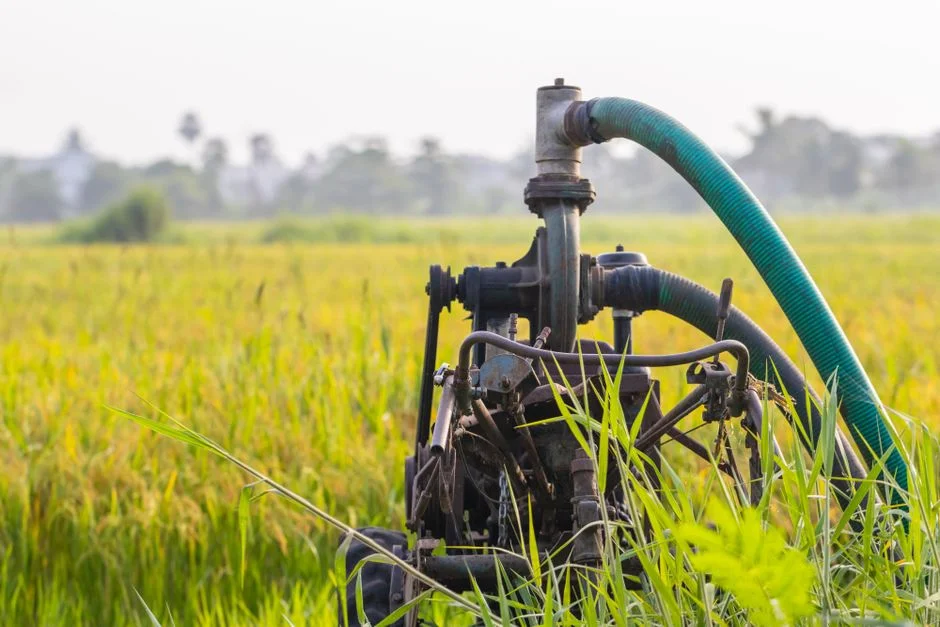
WSZ, MBR, and decentralized treatment are not interchangeable categories: WSZ is a specified buried package configuration, MBR is a membrane-based process configuration, and decentralized treatment is a broader delivery and ownership model. The comparison below is based on the supplied product catalog and research; it is not a Jordan-specific cost or approval comparison.
| Decision factor | Underground WSZ package plant | Integrated MBR system | Broader decentralized treatment |
|---|---|---|---|
| Process configuration | Anoxic/aerobic A/O biological contact oxidation, sedimentation, and disinfection in a single buried package unit | Activated sludge combined with submerged PVDF membrane filtration | May combine biological treatment, solids separation, and disinfection; the process must be specified rather than inferred from the category |
| Verified product boundary | 1–80 m³/h | 10–2,000 m³/day | No single verified capacity range is supplied in the research |
| Installation and footprint | Can be installed below grade with landscaping above, or mounted on a trailer for mobile deployment | The catalog states a footprint 60% smaller than conventional systems; applicability remains site-specific | Depends on the selected process, site layout, civil works, and land availability |
| Automation and operator burden | Catalog position: fully automated, with no operator required | Requires defined membrane cleaning, replacement, fouling control, and operating arrangements | Local ownership and operating familiarity may be decisive |
| Reuse and solids separation | Combined package process is a candidate where site constraints favor a compact buried unit | Membrane-based solids separation is a candidate for projects requiring this separation approach | Reuse suitability depends on the complete process, final treatment, and approval basis |
| Key procurement issue | Access to the buried unit, sludge removal, electrical supply, and remote operating controls | Membrane area, peak-hour behavior, cleaning, replacement, and downtime planning | Local operating capability, redundancy, process familiarity, and approval complexity |
The verified WSZ configuration is a single buried package unit combining anoxic/aerobic A/O biological contact oxidation, sedimentation, and disinfection, with a stated capacity of 1–80 m³/h. The catalog positions the underground WSZ package sewage treatment plant as fully automated, with no operator required, and identifies residential communities, hotels, hospitals, factories, and rural areas as application contexts. Its below-grade installation or trailer mounting are relevant site-planning features, not proof of suitability for every project.
The verified MBR range is 10–2,000 m³/day. The integrated MBR membrane bioreactor system combines activated sludge with submerged PVDF membrane filtration. The catalog states sub-1 μm filtration and a footprint 60% smaller than conventional systems. Those statements should be treated as catalog claims and checked against the proposed layout, rather than generalized to every site configuration.
Use WSZ as a candidate for smaller or space-constrained decentralized projects within 1–80 m³/h, MBR as a candidate for larger flows or projects requiring membrane-based solids separation, and conventional decentralized treatment where local operation and established process familiarity dominate. The supplied research does not provide Jordan-specific capital costs, operating costs, guaranteed effluent values, delivery lead times, or approval timelines for these three options.
Match Treatment Capacity to Real Site Demand
Sizing should begin with measured or reliably estimated site demand, not a headline product capacity. The quotation should state how peak hourly flow, average daily flow, and peak seasonal factors were calculated, and the designer should show the assumptions used to convert occupancy or operating schedules into a design flow.
| Project input | What the buyer should require | Why it affects selection |
|---|---|---|
| Flow | Peak hourly flow, average daily flow, and peak seasonal factors | Determines hydraulic and biological loading and peak-hour behavior |
| Occupancy and operations | Current and future occupancy, operating schedules, and expansion plans | Links demand to the actual use of the site rather than a generic population assumption |
| Influent and process flows | Wastewater composition, industrial inputs, and verified allowances for backwashing, sludge withdrawals, and other unit-process flows where applicable | Prevents omitted flows from creating a false capacity margin |
| Reliability and access | Redundancy strategy, standby power, maintenance access, and the consequences of downtime | Protects discharge or reuse continuity and identifies site constraints |
For residential communities, hotels, hospitals, factories, and rural sites, occupancy and operating schedules should establish the design flow. Process losses, backwashing, sludge withdrawals, and other unit-process flows should be added only where the selected process and verified design basis require them. Do not convert the WSZ range of 1–80 m³/h into a population-equivalent claim without project data; it is a product capacity boundary.
Similarly, the MBR range of 10–2,000 m³/day is a product boundary, not a complete design criterion. Check peak-hour behavior, membrane area, hydraulic loading, and treatment objectives separately. The approach described in packaged sewage treatment plant sizing for housing developments can support the general sequence of deriving flow from project use and checking the selected configuration.
Require each supplier to state the design basis, selected model or configuration, duty point, margins, and assumptions in the quotation. Current and future expansion, redundancy, standby power, maintenance access, and the effect of equipment downtime on the discharge or reuse route should be explicit. A capacity range alone does not demonstrate that the proposed system can meet the project’s actual peak and future demands.
Build the Jordan Compliance and Reuse File
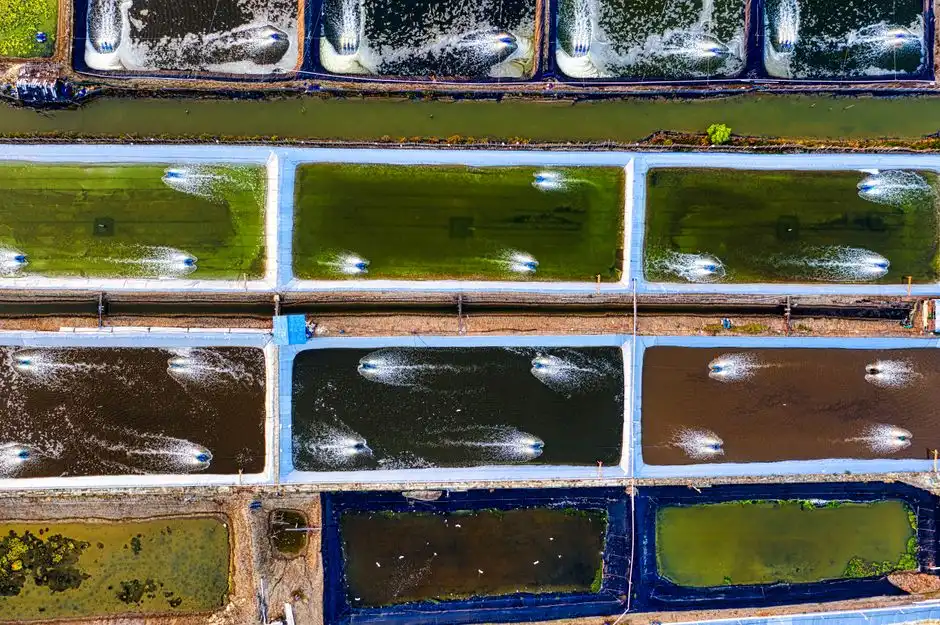
Jordanian Standard 893/2006 for discharge of treated domestic wastewater and Jordanian Standard 202/2007 for industrial wastewater discharges must be verified with the relevant authority or the project environmental consultant. The project file should convert those standards into a written, site-specific discharge or reuse basis rather than rely on a general statement that a product is compliant.
| File item | Minimum information to obtain | Decision it supports |
|---|---|---|
| Regulatory basis | Current applicable standards, authority confirmation, and any sector-specific conditions | Whether the proposed route can be approved and delivered |
| Discharge or reuse basis | Receiving point, permitted use, sampling, reporting, and intended irrigation, process-water, or other application | Which treatment objectives and performance tests apply |
| Performance acceptance | Process guarantees, sampling points and frequency, responsible party, and remediation process for nonconformance | How compliance will be demonstrated and corrected |
| Operations and residuals | Sludge quantity and destination, odor controls, chemical storage if any, access for maintenance, and local operating support | Whether the site can operate and maintain the system |
The paper’s historical account of wastewater reuse in Jordan is not a substitute for current approval. Confirm the current rule set and sector-specific conditions at the time of procurement. The paper also reports that Jordanian wastewater infrastructure includes wastewater stabilization ponds and other treatment arrangements; the supplier should explain how the proposed process relates to the actual treatment route and receiving point.
For an MBR proposal, the file should address membrane cleaning, replacement, fouling control, and downtime planning. For a WSZ proposal, it should address access to the buried unit, sludge removal, electrical supply, and remote operating-control requirements. The [comparison of MBR versus conventional activated sludge](/blog/12912-mbr-vs-conventional-activated-sludge-for-food-wastewater-in-2026.html) provides a useful process-level reference for that distinction, but the industrial or domestic influent and the Jordanian approval basis must be evaluated for the actual project.
Do not treat reuse as a default entitlement. Request the receiving point, proposed use, quality criteria, monitoring method, and responsible authority in writing, then use those inputs to define performance guarantees and acceptance tests.
Move From Specification to Equipment Selection
A defensible equipment award should follow a fixed sequence that resolves site, approval, and process questions before comparing commercial bids. The sequence is:
- Appoint the project owner and advisers. Identify who will decide approvals, operate the system, manage sludge, and own reuse performance. The [regional effluent treatment plant buyer’s guide](/blog/12896-effluent-treatment-plant-in-bahrain-2026-buyer-s-guide) illustrates the value of defining responsibility before quotations are opened.
- Issue a site survey and influent characterization request. Cover flow, wastewater quality, industrial inputs, land, relevant geology, power, drainage, access, and the intended discharge or reuse route.
- Prepare a common technical basis and commercial scope. WSZ, MBR, and decentralized proposals should be compared on the same duties, exclusions, civil interfaces, utilities, residuals, commissioning requirements, and acceptance criteria.
- Conduct a pre-compliance or concept review with the relevant authority where reuse, land installation, or an unconventional discharge route is proposed. Do this before accepting an assurance that approval is straightforward.
- Request complete technical submissions. Each bidder should provide the process route, selected capacity, design basis, materials of construction, control philosophy, civil works, installation, commissioning, training, spare parts, warranty, and performance-test method.
- Evaluate lifecycle considerations qualitatively unless verified quotations are available. Request separate pricing for equipment, civil works, utilities, sludge handling, commissioning, consumables, maintenance, and replacement items. The supplied research contains no Jordan-specific cost figures, so a single package price would conceal scope risk.
- Make the award conditional. Permit alignment, accepted performance criteria, site-acceptance tests, operator handover, and a documented maintenance and spare-parts plan should be conditions of award rather than post-aword intentions.
For international projects, the regional comparison between an [effluent treatment plant buyer’s guide for Manama](/blog/12910-effluent-treatment-plant-in-manama-2026-buyer-s-guide) and the broader regional reference can be used to challenge omissions in tender documents, but Jordan-specific site data, authority confirmation, and supplier commitments remain necessary. The purpose of this sequence is not to select a technology by label. It is to ensure that the final package can legally receive, treat, discharge, or reuse the wastewater generated by the site.
Frequently Asked Questions
Should I choose WSZ or MBR for domestic sewage treatment in Jordan?
Choose between WSZ and MBR by matching the process to the project, not by comparing labels. The verified WSZ range is 1–80 m³/h, with anoxic/aerobic A/O contact oxidation, sedimentation, and disinfection in one buried unit. The verified MBR range is 10–2,000 m³/day, using activated sludge with submerged PVDF membrane filtration. Confirm flow, peak-hour behavior, space, automation, sludge handling, membrane maintenance, reuse objectives, and operating responsibility. Review the underground WSZ package sewage treatment plant and integrated MBR membrane bioreactor system against the same site requirements.
How do I size a sewage treatment plant for a Jordanian hotel or development?
Start with measured or reliably estimated peak hourly flow, average daily flow, occupancy, operating schedules, and current and future expansion. Document infiltration, industrial inputs, and any process flows required by the selected technology. Use 1–80 m³/h for WSZ and 10–2,000 m³/day for MBR only as product boundaries, not as population-equivalent rules. Require the designer to show the calculation, selected duty point, and assumptions.
Is treated wastewater reuse allowed in Jordan?
Do not assume that reuse is permitted for a particular site. Distinguish discharge from reuse and confirm the current requirements, receiving point, proposed use, sampling, reporting, and any sector-specific conditions with the relevant Jordanian authority and the project environmental consultant. Jordanian Standard 893/2006 for discharge of treated domestic wastewater and Jordanian Standard 202/2007 for industrial wastewater discharges should be verified for the project.
How do I select a sewage treatment supplier?
Request verifiable technical documents, references for comparable duties, the design basis, process guarantees, commissioning boundaries, site-acceptance test method, training, warranty, spare parts, and after-sales support. For WSZ, ask about buried-unit access and sludge removal; for MBR, ask about membrane cleaning, replacement, fouling control, and downtime. Treat these as documented commitments, not general capability statements.
What should a domestic sewage treatment quotation include for Jordan?
Request a fully scoped quotation because the supplied research provides no Jordan-specific prices. Separate equipment, civil works, utilities, installation, sludge handling, commissioning, training, consumables, maintenance, replacement items, and performance testing. Require exclusions, assumptions, design basis, selected configuration, and validity period to be stated. Compare lifecycle obligations only after confirming that each bidder is pricing the same scope.