What Streams Does a Jacksonville Data Center Need to Treat?
A Jacksonville data center needs treatment sized around separate domestic sewage, cooling-tower blowdown, process wastewater, storm water and sludge streams. Cooling blowdown requires characterization for suspended solids, colloids, oil, organics, scale-forming salts, residual biocides and antiscalants before discharge or reuse. DAF can remove suspended solids, oil and grease and colloidal matter; UF can remove bacteria, colloids and suspended solids; MBR is suited to wastewater requiring near-reuse-quality effluent; and disinfection may be needed for reuse or biological control. The final train depends on the receiving route and reuse application.
The first engineering step is a site-specific data center water balance. Meter water entering through potable supply, groundwater or another source; calculate evaporation and drift; measure blowdown; and identify water returned to cooling, sanitary flushing, landscape irrigation, equipment washing or other non-potable uses. Use the broader data center wastewater treatment planning guide for the sequence, but apply the receiving authority and drainage conditions in Duval County or the applicable local jurisdiction.
Do not combine incompatible streams in one treatment train. Domestic sewage normally goes to municipal sanitary treatment, an on-site package plant or a decentralized treatment system. Keep cooling blowdown in a dedicated pretreatment and discharge-or-reuse assessment. Route process wastewater according to its contaminant profile, isolate storm water from contaminated process areas, and manage sludge separately from the liquid treatment train.
| Stream | Required engineering decision | Do not assume |
|---|---|---|
| Domestic sewage | Confirm sanitary-service responsibility, capacity and local discharge requirements. | That cooling-blowdown equipment can treat sanitary sewage. |
| Cooling-tower blowdown | Characterize solids, oil, organics, metals, heat, conductivity, scale formers and treatment chemicals. | That flow volume alone defines the equipment load. |
| Process wastewater | Identify the generating process, contaminant profile and receiving route. | That it can be diluted into blowdown. |
| Storm water | Separate clean drainage from contaminated equipment and process areas. | That all roof and site runoff has the same quality. |
| Treatment sludge or residuals | Define dewatering, storage, transport and disposal requirements. | That liquid treatment eliminates residual-management obligations. |
The public research does not provide universal Jacksonville limits for these streams. Before equipment selection, confirm the receiving authority, point-of-discharge options, stormwater separation requirements, pretreatment standards and reuse rules. A cooling blowdown treatment process guide can support route comparison, but it does not replace site-specific acceptance criteria.
What Makes Jacksonville Cooling Blowdown Difficult to Treat?
Cooling-system blowdown is the water removed to prevent mineral and scale buildup, and it may contain chemicals that require treatment before discharge (UGA Extension, 2026). Its treatment difficulty comes from variable flow and chemistry, not simply from its volume.
First distinguish water usage from water consumption. Evaporation removes water from the local watershed, while discharge remains available for treatment and potential reuse (Genesis Water Technologies). A water-use metric can conceal substantial blowdown because it does not, by itself, distinguish evaporated water from recoverable discharge.
Cycles of concentration determine the relationship between circulating-water concentration and blowdown. At 4 CoC, blowdown equals 25% of makeup volume; at 6 CoC, it equals 20% (Genesis Water Technologies). The reduction is therefore 5 percentage points of makeup, or 20% of the 4-CoC blowdown—not 50%. Biological growth, scale, corrosion and suspended-solids accumulation can also force premature blowdown and erase expected savings.
Scale is a material constraint when the objective is cooling-tower makeup reuse. Clarification can remove suspended material, but it does not remove dissolved salts that concentrate through evaporation. Disinfection and chemical carryover also require evaluation because reused water returns to the cooling system.
Genesis Water Technologies gives an illustrative 10 MW evaporative-cooled facility at 4 CoC: 15 million gallons monthly of intake and 3.75 million gallons monthly of blowdown. That example is not a Jacksonville design flow; it demonstrates why metering and chemistry data must precede selection. The same source also reports that measured blowdown can exceed theoretical calculations by 15–30% because of unmeasured losses and emergency dumps, so allow the site’s own operating history to govern preliminary sizing.
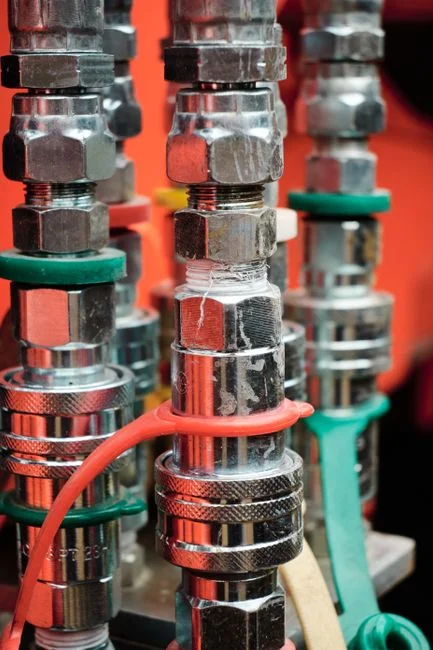
Use available treatment components, valves and filter media only after defining the contaminant envelope, flow profile and required endpoint.
Which Treatment Options Fit Each Discharge or Reuse Path?
The correct treatment train is defined by where the water goes and what quality it must have at the point of use. A generic reuse system can conserve water but still fail the receiving route, while open evaporative cooling can be comparatively water-efficient but unacceptable if blowdown chemistry is not controlled.
| Route or objective | Indicative treatment sequence | Decision that closes the design |
|---|---|---|
| Sanitary sewer | Equalization and physical separation as needed, followed by targeted chemical dosing or biological treatment where required. | Industrial-user requirements, permitted flow and contaminant controls confirmed with the receiving utility. |
| Surface-water discharge | Characterization, solids or oil removal, pH and temperature control, and additional treatment specified by the permit. | Whether an NPDES or other state permit applies and what the discharge limits are. |
| Non-potable reuse | Two-stage physical separation followed by treatment matched to toilet flushing, washing, irrigation or another non-critical demand. | Reuse water-quality specification and treatment train validated against actual blowdown. |
| Cooling-tower makeup reuse | More stringent solids removal, dissolved-solids management, disinfection and chemical-carryover control. | Whether advanced treatment can meet concentration, scaling and biological-control requirements. |
| Closed-loop cooling | Cooling-system redesign with make-up, heat rejection and water-quality controls. | Energy demand, capital cost, operating complexity and redundancy accepted by the owner. |
| Zero-liquid-discharge objective | Broad pretreatment, dissolved-solids concentration, and a managed concentrate or residual stream. | Complete water balance, energy assessment, concentrate plan and economic case completed. |
For a sanitary-sewer route, do not specify a full treatment plant before obtaining the utility’s industrial-user requirements. Physical separation and targeted chemical dosing are appropriate only where the discharge characterization supports them.
For direct surface-water discharge, determine permit applicability first. UGA Extension states that facilities discharging wastewater directly to waterways may require NPDES permits and that cooling-system blowdown may require permits or wastewater treatment before discharge (UGA Extension, 2026). Permissible parameters will depend on the receiving authority and site conditions.
For non-potable reuse, Genesis Water Technologies reports that a two-stage approach—physical separation followed by targeted treatment—can reduce makeup-water demand by 15–25%. Treat this as a reported commercial-source figure, not a Jacksonville guarantee. A DAF system for cooling blowdown pretreatment can address suspended solids, oil, grease and colloidal material; ultrafiltration for data center wastewater can provide a finer physical barrier, but neither establishes suitability for the final reuse route.
For cooling-tower makeup reuse, clarification alone is not a complete solution. Evaluate dissolved-solids control, disinfection, residual biocides, antiscalants and corrosion inhibitors. MBR may be appropriate where biological treatment and membrane separation are required for a higher-quality endpoint, but its applicability must be demonstrated against the actual water.
Closed-loop cooling can reduce water consumption by up to 70% compared with open evaporative cooling, although it costs more and requires greater system complexity (UGA Extension, 2026). For zero-liquid-discharge goals, the supplied research establishes no Jacksonville mandate. A complete site water balance, concentrate-management plan, energy assessment and economic model must therefore drive the decision.
How Do You Size a Data Center Treatment System?
Preliminary equipment selection begins with measured flow and contaminant data; final sizing requires verification against the selected reuse or discharge endpoint. Request daily, peak and emergency blowdown flows, makeup-water records, evaporation estimates, operating schedules and seasonal cooling-load changes. Calculate cycles of concentration by comparing conductivity in circulating and makeup water, then reconcile the result with the facility water balance.
Establish the contaminant envelope for suspended solids, turbidity, oil and grease, BOD, COD, pH, conductivity, hardness, temperature, metals and residual treatment chemicals. Sample across representative operating conditions rather than relying on one grab sample. Include chemical inventories because antiscalants, biocides, corrosion inhibitors and antifoams can affect both reuse suitability and downstream treatment.
| Equipment | Available capacity | Preliminary role | Final sizing check |
|---|---|---|---|
| Dissolved air flotation | 4–300 m³/h | Remove suspended solids, oil, grease and colloidal material. | Governing flow, equalization, sludge removal, chemical demand and redundancy. |
| Ultrafiltration | 2,000–40,000 L/h | Provide physical separation after appropriate pretreatment. | Feed quality, membrane area, backwash, recovery and residual handling. |
| MBR | 10–2,000 m³/day | Combine biological treatment and membrane separation where the reuse objective warrants it. | Organic loading, membrane flux, aeration, controls, solids handling and redundancy. |
These equipment capacities are preliminary selection limits, not a Jacksonville design recommendation. Select hydraulic capacity for the governing flow, then verify equalization, redundancy, backwash or sludge handling, controls, chemical feed and future expansion. An automatic chemical dosing system should be defined by measured chemistry and treatment objectives, not installed as a default feature.
Ultrafiltration has a nominal 0.03 μm membrane barrier and a chemical-free physical-separation role, making it useful for high-solids pretreatment when feed conditions are appropriate. It does not independently remove dissolved salts or every dissolved organic contaminant. Those limitations must be explicit in any cooling-makeup reuse claim.
Require pilot or side-stream testing when blowdown chemistry varies materially, reuse quality is stringent, or equipment performance must be verified against data-center wastewater. The pilot should test the complete relevant train, not a membrane or DAF skid in isolation.
What Must Be Disclosed to Regulators and the Community?
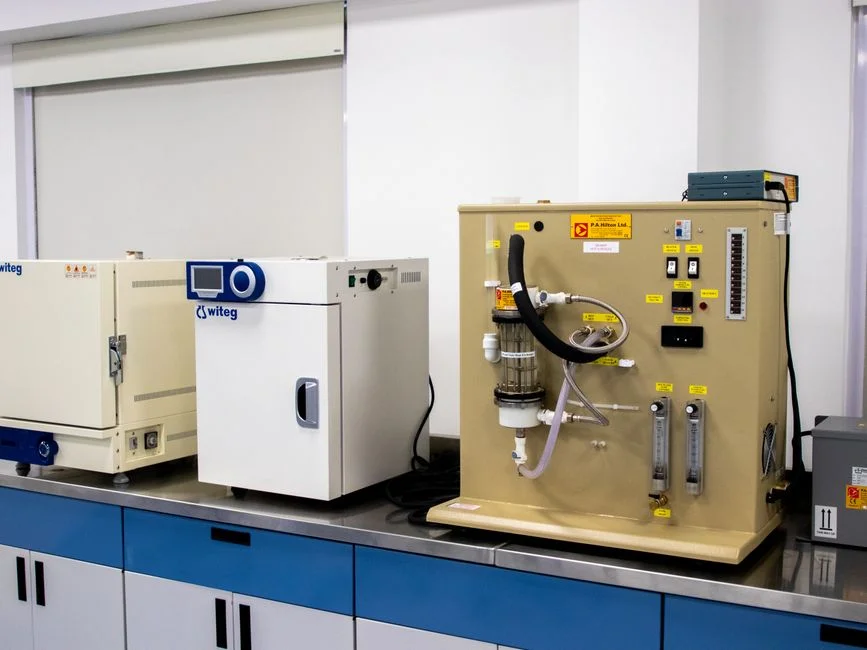
Water accounting should distinguish withdrawals, usage, consumption, evaporation, blowdown, discharge and reuse because each term answers a different regulatory or operational question. Record meter locations, calibration status, operating dates and calculation methods.
Maintain a discharge log for each permitted point. Document treatment bypasses, emergency dumps, chemical use, sludge generation and its destination, together with sampling results and corrective actions. Undocumented emergency discharges can invalidate both compliance records and the water balance used to justify reuse investments.
The wider concern is measurable. NCSU reports that large-scale data centers can consume millions of gallons per day and that a persistent lack of transparency leaves regulators and communities unable to understand local water use (NCSU, 2026). Facility-level disclosure therefore supports both permitting and community confidence.
Use local hydrological and discharge constraints in the business case rather than applying a program designed for Arizona, Oregon, Tennessee or another jurisdiction without adaptation (Genesis Water Technologies). Florida heat, rainfall, groundwater conditions, receiving waters and utility requirements may produce a different balance between conservation, energy and compliance.
Do not state a Jacksonville permit, numerical discharge limit or reuse rule without confirmation from the applicable authority. The wastewater permit and pretreatment checklist is a planning aid, not evidence of site-specific requirements. A specific permit or numerical discharge limit must be verified for the discharge point and receiving authority.
How Should a Jacksonville Operator Implement the Treatment Plan?
Implementation should proceed from measurement to optimization, then to pretreatment and reuse, with advanced systems added only after the operating baseline is reliable.
- Phase one—measure and optimize. Install or verify metering for makeup, blowdown, evaporation, discharge and reuse. Characterize water quality through representative operations. Repair leaks, correct premature blowdown triggers and optimize existing cooling controls before installing major equipment.
- Phase two—route and pretreat. Separate domestic sewage, process wastewater, storm water and cooling blowdown. Install equalization and physical separation where the characterizations support them. Verify recovered water against the selected non-critical reuse demand.
- Phase three—improve controlled reuse. Optimize chemical control, add disinfection where justified, and establish sampling, operator and maintenance procedures before expanding reuse.
- Phase four—validate advanced integration. Pilot cooling-makeup reuse or closed-loop integration where justified. Complete operator training, maintenance planning, contingency response and residual management.
The business case should include total water cost, avoided disposal, water conservation, chemical consumption, energy and residual handling—not utility rates alone. Genesis Water Technologies states that total-cost accounting can improve a sample project’s simple payback from 6.7 years to 3–5 years, but that example is not a Jacksonville budget and should not be transferred without local inputs.
Frequently Asked Questions
How much should a Jacksonville data center budget for cooling blowdown treatment?
There is no defensible universal price from the supplied research because the supplied material does not establish a Jacksonville equipment quotation. Request a vendor cost broken into treatment equipment, equalization, pumping, chemical feed, controls, electrical work, residuals handling, installation and lifecycle operating costs. Give suppliers the measured peak flow, water analysis, reuse endpoint, required redundancy and operating schedule, and require each bid to state exclusions and assumptions. Compare the result against avoided water, disposal and disposal charges using total cost of ownership.
Is DAF or UF the better first-stage treatment for cooling blowdown?
DAF is the better first-stage fit when the primary objectives are removing suspended solids, oil, grease and colloidal material before further treatment. Ultrafiltration is the stronger choice when a defined 0.03 μm physical barrier is needed after upstream solids reduction. The decision should follow the water analysis and final endpoint: neither technology independently resolves dissolved salts, residual treatment chemicals or every organic contaminant, and UF requires a suitable feed and backwash strategy.
How do you size blowdown treatment equipment for a data center?
Size the preliminary train from the governing measured flow—not average blowdown alone. For the available preliminary ranges, DAF spans 4–300 m³/h, UF spans 2,000–40,000 L/h and MBR spans 10–2,000 m³/day. Confirm those capacities against daily, peak and emergency flows, seasonal operation, equalization, redundancy, backwash, sludge handling and future growth. Require pilot or side-stream testing where water chemistry varies or reuse quality is stringent.
What permits and water-quality data are needed before selecting a discharge route?
First identify the receiving authority, receiving water or sanitary sewer, discharge point and whether an NPDES or other state permit applies. Obtain the applicable industrial-user, pretreatment, discharge and non-potable reuse requirements. Provide representative results for suspended solids, oil and grease, BOD, COD, pH, conductivity, hardness, temperature, metals, scale-forming ions and residual treatment chemicals. No specific Jacksonville numerical limit should be assumed without written confirmation.
Should the project use a packaged system or a custom treatment train?
Choose a packaged system when the stream is stable, the treatment objective is well defined and the available equipment capacity covers the measured duty with the required redundancy. Use a custom train when blowdown chemistry changes substantially, several reuse destinations have different quality requirements, or residuals, biological treatment and advanced solids management must be integrated. A supplier should demonstrate the selected route with actual wastewater data and provide a complete water and mass balance, not only a flow-based skid selection. The data center wastewater treatment case guide can support route-specific questions, but the final supplier decision must be based on Jacksonville requirements and site data.
Related Equipment
- DAF system for cooling blowdown pretreatment — specifications, capacity range, and technical data