
Start with Hyderabad's sewerage coverage—not the product catalogue
The best packaged sewage treatment plant for a Hyderabad housing development depends on its location, sewer connection, available land, development phasing, and reuse objective. As of 2024, the Asian Development Bank Institute (ADBI) reported sewerage coverage of 100% in Hyderabad's Core Area, approximately 30% in the Periphery Area, and 0% in the ORR Village Area. An underground WSZ package may suit sites where space is limited, while an MBR package may better support higher-quality reuse and compact installation. Final selection requires a site-specific design based on measured flows, effluent requirements, and land availability.
ADBI defines the ORR Village Area as the area between the Periphery Area boundary and the Outer Ring Road. A housing project cannot be assigned a treatment route from its label alone; the developer must establish whether a public sewer connection is technically and legally available at the specific site.
| Location screening | 2024 sewerage coverage reported by ADBI | Preliminary treatment route | Action required |
|---|---|---|---|
| Core Area | 100% | Connection and treatment through the public sewerage system, subject to site confirmation | Obtain connection conditions, available sewer capacity, connection location, and discharge requirements |
| Periphery Area | Approximately 30% | Public connection where feasible; otherwise evaluate pretreatment or a private decentralized sewage treatment plant | Confirm the individual parcel's sewer status rather than relying on area coverage |
| ORR Village Area | 0% | Evaluate a private decentralized sewage treatment plant and the associated reuse or discharge route | Confirm whether no public connection is available and identify the receiving authority and consent pathway |
Many new commercial buildings in the Periphery and ORR Village Areas have installed private decentralized wastewater treatment plants. For a housing development, the practical screening sequence is: confirm public sewerage; establish whether pretreatment is required before sewer discharge; and, where access is absent, develop a decentralized treatment and reuse concept. Confirm the exact connection conditions with the relevant authority because area-level coverage does not prove that an individual site can connect.
Define the design basis for a housing development
A packaged plant must be sized from the wastewater design basis rather than headline treatment capacity or population alone. Residential wastewater flow typically peaks in the mornings, late afternoon, and evenings, making peak-flow behavior, low-flow periods, biological loading, and equalization essential design inputs. The supplier should document how its proposed process handles those peaks rather than treating average daily flow as sufficient for equipment selection.
| Design input | Information the developer should provide | Why it affects selection |
|---|---|---|
| Flow and occupancy | Daily wastewater flow, average flow, peak flow, current occupancy, phased occupancy, and design horizon | Defines hydraulic treatment capacity, equalization, pumping, biological loading, and future expansion |
| Influent characteristics | COD, BOD, ammonia, suspended solids, grease, and expected wastewater characteristics | Determines biological process, pretreatment, aeration, solids handling, and discharge performance |
| Outlet and reuse | Sewer discharge, permitted reuse, irrigation, toilet flushing, landscaping, cooling, or another specified destination | Establishes the applicable effluent and treatment objectives |
| Site constraints | Footprint, geology, groundwater, access for maintenance, power, noise limits, and future construction areas | Controls above-ground versus below-ground design, civil works, access, and operating arrangements |
Residential wastewater often contains high levels of ammonia and COD due to cleaning products and disinfectants. Obtain representative wastewater data rather than assuming a generic domestic composition. For a buried installation, the design must also address excavation, structural and waterproofing requirements, groundwater, lifting arrangements, access, and safe sludge withdrawal.
The outlet must be fixed before comparing process options. A sewer-discharge design, a reuse design, and a direct non-potable reuse design have different performance, monitoring, and approval requirements. Use the principles in underground sewage treatment system design to prepare the design brief, then ask the supplier to show the hydraulic calculation and process basis behind the proposed unit.
Choose between a buried WSZ package, MBR, and conventional treatment
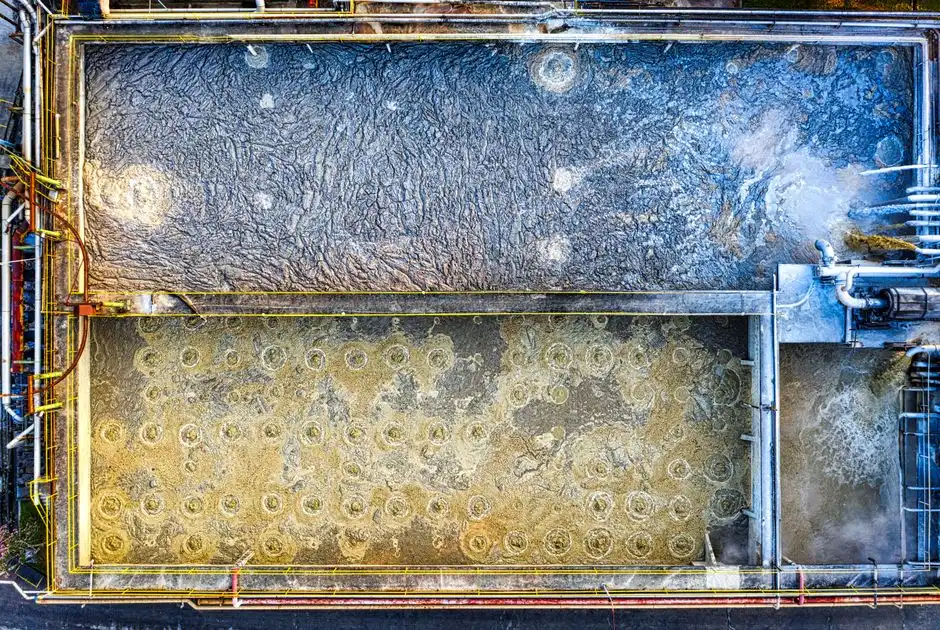
The process decision should follow the required effluent quality, reuse objective, land constraint, operating model, and budget. A buried WSZ package combines space-saving installation with a defined biological and solids-removal sequence; an MBR package adds membrane-based solids separation; a conventional decentralized system may offer a wider civil and process scope but requires a different site, cost, and operating assessment.
| Option | Process and stated capacity | Where it fits | Key checks before selection |
|---|---|---|---|
| Buried WSZ package | HydropureWater's underground integrated package uses anoxic/aerobic biological contact oxidation, sedimentation, and disinfection; stated range: 1–80 m³/h | Sites where below-grade installation and compact treatment are priorities | Civil design, soil, groundwater, landscaping, access, pumping, power, bypass, and confirmed effluent requirements |
| MBR package | HydropureWater's system combines activated sludge with submerged PVDF membrane filtration, stated filtration below 1 μm, a 60% smaller footprint than conventional systems, and capacity of 10–2,000 m³/day | Compact installations, stringent solids separation, or reuse-oriented treatment | Specified membrane filtrate quality, solids handling, cleaning, replacement, controls, and consent conditions |
| Conventional decentralized options | Biocell Water identifies MBBR and SBR for below-ground systems; MBBR, MBR, and fixed-bed biological reactors for containerized systems | Projects needing site-specific process selection or greater civil integration | Effluent standard, site restrictions, budget, civil works, maintainability, and operating responsibility |
The underground WSZ packaged sewage treatment plant can be installed below grade with landscaping above or mounted on a trailer for mobile deployment. Below-grade selection transfers civil, structural, groundwater, and access responsibilities into the project design.
The MBR membrane bioreactor package may be appropriate when compactness, solids separation, or reuse quality drives the decision. However, filtration below 1 μm is a process claim, not proof of regulatory compliance. The supplier must demonstrate the complete treatment train against the applicable effluent specification, including how pretreatment, biological treatment, membrane operation, disinfection, and solids return are integrated.
Process selection must reflect the site-specific effluent standard and budget. Compare options against the same design basis rather than allowing a brochure process description to substitute for a project-specific recommendation.
Match the package to land, phasing, reuse, and operating requirements
The technically suitable package is the one whose land, phasing, reuse, and maintenance arrangements remain workable after construction begins. For a space-constrained site, compare the below-grade WSZ arrangement with the compact MBR option, including excavation, structural works, lifting and access, electrical systems, future media or membrane replacement, and operator access.
For a phased housing project, require a capacity plan. Modular installation allows treatment to be added as the development grows. The supplier should state which modules can be installed first, how hydraulic and biological capacity change with occupancy, and whether later additions require shutdowns or temporary treatment arrangements.
For non-potable effluent reuse, define the use before selecting the process. Hyderabad reuse examples include toilet flushing, gardening, and cooling. MBR's stated filtration below 1 μm may support a higher-purity objective, but the required quality must be tied to each intended use and supported by the relevant authority's conditions.
Maintenance is a design requirement. Compare access for inspections, sludge removal, media or membrane care, chemical dosing, and alarm response. Prioritize systems without submerged moving parts and those fitted with alarms that make faults immediately visible.
Request a process-flow diagram showing treatment stages, solids or sludge handling, disinfection, final outlet, bypass provisions, and every required add-on. Phosphorus removal, additional ammonia removal, disinfection, and grease treatment are potential modules that may be necessary beyond the base package. The broader selection lessons in packaged sewage treatment selection for housing developments and the procurement considerations in the domestic sewage treatment buyer’s guide can be applied to Hyderabad's site and approval conditions.
Evaluate suppliers with a technical and commercial checklist
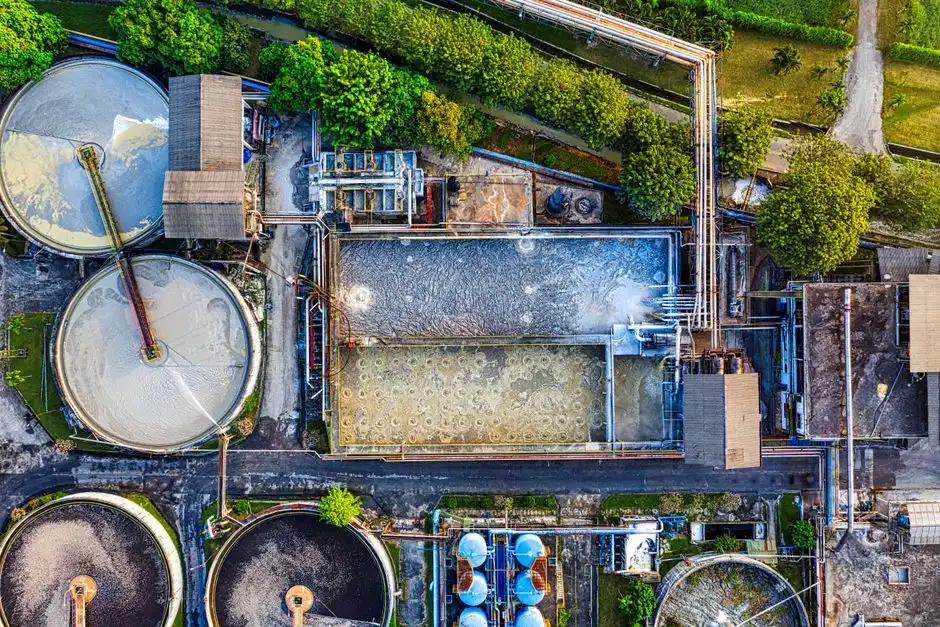
A supplier should be evaluated as the proposer of an engineered system rather than a vendor of a catalogue unit. Quotations should follow a documented design basis and state the conditions on which they are valid.
| Check | Evidence to request before award | Commercial risk controlled |
|---|---|---|
| Design basis | Average and peak flow, phased occupancy, influent data, outlet, reuse objective, and design horizon | Prevents comparison of plants designed for different duties |
| Performance and compliance | Guaranteed effluent parameters, applicable standard or consent basis, test method, and compliance responsibility | Prevents reliance on broad performance claims |
| Complete scope | Civil works, pumps, controls, power supply, sludge handling, installation, commissioning, training, spares, maintenance, monitoring, and consumables | Identifies exclusions and later change orders |
| Phasing and service | Expansion method, local service capability, alarm and monitoring options, warranty conditions, and replacement-part availability | Addresses operation after handover and future occupancy growth |
Ask each bidder to identify its design flow basis, process technology, guaranteed effluent parameters, consent basis, and complete plant scope. Clarify whether the offer includes civil works, pumps, controls, power supply, sludge handling, installation, treatment plant commissioning, training, spares, maintenance, monitoring, and consumables. The automatic chemical dosing system should be evaluated as part of the treatment train and required scope.
Do not compare quotations on headline capacity alone. A price is meaningful only when the hydraulic duty, effluent guarantee, delivery scope, installation scope, civil responsibility, commissioning test, and long-term operating responsibilities are consistent. For cost control, request a written scope boundary and an itemized commercial breakdown tied to the agreed design basis.
Frequently Asked Questions
How should a packaged sewage treatment plant be sized for a Hyderabad housing development?
Size it through a site-specific hydraulic and wastewater design using daily and average flow, peak flow, current and phased occupancy, influent characteristics, reuse objectives, and the applicable outlet conditions. Do not select capacity from population or a supplier's headline range alone.
Should a Hyderabad housing project choose MBR or a buried WSZ package?
Choose MBR when compact installation, stringent solids separation, or higher-purity reuse is the defining priority. A buried WSZ package may suit a space-constrained site where its integrated biological, sedimentation, and disinfection sequence meets the agreed effluent requirement. Make the final choice after assessing land, civil works, maintenance, and the specified discharge or reuse route.
Does Hyderabad's sewerage coverage establish discharge or reuse approval?
No. ADBI's 2024 area-level coverage figures are a site-screening tool, not a discharge approval. Obtain the applicable sewer connection, discharge, and reuse requirements from the relevant authority for the specific site and proposed outlet.
What should be checked before selecting a package-plant supplier?
Request verifiable design parameters, guaranteed effluent values, scope boundaries, operating references, local service arrangements, maintenance details, replacement-part availability, and a contractual performance basis. Check whether each quotation uses the same flow, effluent, delivery, installation, commissioning, and long-term operating assumptions.