Underground Sewage Treatment System Design Engineering for a Buried Plant
Underground sewage treatment system design engineering sizes a buried A/O plant for the peak hour, not the daily average. A 500 m³/day hospital load on 200 m² of land fitted an 80 m² buried vessel. Soil cover cuts blower noise by 20–30 dB versus a surface blower and steadies winter biology. Footprint falls 50–70% versus an open tank farm.
A municipal hospital in a dense urban zone had to upgrade 500 m³/day of wastewater and had only 200 m² of surface left. The buried shell used 80 m², and the rest of the pad became emergency-vehicle parking. That dual use is built into the Underground Package Sewage Treatment Plant (WSZ Series), which stacks the stages in one carbon-steel or FRP (Fiber Reinforced Plastic) vessel.
Once the tanks are buried, the surface can be planted, paved, or returned to park use, so the equipment stays out of public view. Buried tanks dampen blower noise by 20–30 dB versus a surface install (HydropureWater field data, 2025). Hospitals, resorts, and housing need that quiet as much as they need the effluent number. The treatment path inside the shell is set out in How Underground Sewage Treatment Systems Work: Engineering P.
Soil around the shell is a thermal blanket. It holds biological temperature through winter and avoids the cold shock that hits nitrifiers in an exposed tank. On hospital jobs, the footprint cut lands near the low end of that 50–70% range when the blower room stays small. Sizing bands for this duty sit in the WSZ series underground sewage treatment system specs and sizing guide.
Step-by-Step Process Flow: How Underground Systems Treat Sewage
An underground sewage treatment system treats sewage in a modified A/O contact-oxidation train with little daily labor. Fixed or suspended biofilm raises the mixed liquor inside a small tank, unlike a conventional activated-sludge basin. On domestic plants we commission, operators hold the oxic zone near 2 mg/L, the bottom of the 2–4 mg/L band.
- Screening: Raw sewage enters the system through GX series rotary bar screens for primary screening in underground systems. This stage removes 95% of TSS for particles larger than 5 mm, preventing rags and plastics from fouling downstream pumps or clogging aeration diffusers.
- Primary sedimentation: Wastewater flows into a high-efficiency sedimentation tank where velocity is reduced. Using DAF clarifiers for high-efficiency solids removal in pretreatment can be an option for industrial loads. Standard underground units typically use lamella-style plates to achieve 50–70% TSS removal with surface loading rates of 20–40 m/h.
- Anoxic/oxic biological treatment: In the anoxic zone, denitrification occurs, converting nitrates into nitrogen gas while reducing organic load. The oxic zone follows, where fine-bubble diffusers maintain dissolved oxygen (DO) levels between 2–4 mg/L. Biofilm carriers (fillers) allow for an MLSS range of 3,000–5,000 mg/L, facilitating rapid COD/BOD reduction and nitrification of ammonia (NH₃-N).
- Secondary sedimentation: The treated liquor enters the secondary clarifier. Sludge settles to the bottom and is either recycled to the anoxic zone (RAS) or wasted (WAS). This stage ensures effluent TSS remains ≤30 mg/L, meeting EPA secondary treatment standards.
- Disinfection: To ensure a 99.9% pathogen kill, effluent is treated using chlorine dioxide generators for underground system disinfection. A contact time of 30 minutes is standard to neutralize coliform bacteria before discharge.
- Sludge handling: Residual sludge is periodically pumped to a storage tank or dewatered using a plate and frame filter press, which reduces sludge volume by pressing it into cakes with 20–30% solids content for easy disposal.
Plate settlers do the normal primary cut on a buried unit. The lamella clarifier working principle is what produces 50–70% TSS removal at a surface loading of 20–40 m/h. A dissolved-air step is the industrial option, not the default shell.
| Process Stage | Equipment/Method | Technical Benchmark | Primary Removal Target |
|---|---|---|---|
| Pre-treatment | GX Rotary Screen | >5 mm particle capture | Large solids, rags |
| Primary Settling | Lamella Clarifier | 20–40 m/h loading rate | 50–70% TSS |
| Biological (A/O) | Biofilm Carriers | 3,000–5,000 mg/L MLSS | COD, BOD, NH₃-N |
| Disinfection | ClO₂ Generator | 30 min contact time | Fecal Coliform |
Read the table as a design gate, not a brochure. The screen row is the only stage aimed at particles larger than 5 mm, and the biological row is where COD, BOD, and NH₃-N actually drop. Disinfection is a 30 min contact step aimed at fecal coliform, after the clarifier has already held effluent TSS at ≤30 mg/L.
Engineering Specs: Underground vs. Above-Ground Systems Compared
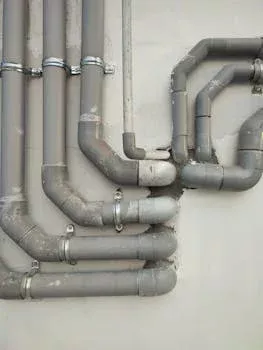
An underground vessel must carry lateral soil pressure and uplift from a high groundwater table, loads an open tank never sees. Designers add ribs or thicken the wall, often to 10–12 mm carbon steel with an epoxy coal tar pitch coating. Ventilation is the other buried-only duty, because the headspace is a confined space. On cold-climate jobs, the soil cover keeps nitrifiers alive without a tank heater.
| Parameter | Underground System | Above-Ground System | Engineering Notes |
|---|---|---|---|
| Footprint (m²/m³/h) | 0.5–1.0 | 1.5–3.0 | Underground saves ~60% space. |
| Construction Cost (RMB/m³) | 2,500–4,000 | 1,500–2,500 | Buried excavation/reinforcement adds cost. |
| Operating Cost (RMB/m³) | 0.8–1.2 | 0.6–1.0 | Higher ventilation and pumping costs. |
| Maintenance Access | Manhole/Vault | Open walkway | Underground requires confined space safety. |
| Odor Control | Integrated Biofilters | Open-air dispersion | Underground systems are superior for urban areas. |
| Climate Resilience | High (Insulated) | Moderate (Exposed) | Underground maintains biology in cold climates. |
| Lifespan | 20–30 Years | 20–30 Years | Requires anti-corrosion coating (GB/T 13288). |
Capital cost for a buried plant is typically 30–50% higher because of excavation and the heavier shell. Lifecycle cost can still be lower where land is the expensive item. Where the pad is the hard limit, hollow fiber MBR systems for advanced treatment in compact spaces take even less area than a standard A/O buried unit, at a higher operating cost.
Buyers who are about to swap the buried A/O tank for membranes should read the mbr working principle first. The membrane train changes both power and the cleaning routine, not just the footprint line in the table.
Pollutant Removal Efficiency: What to Expect from Underground Systems
Underground sewage treatment systems are designed to China's GB 18918-2002 Class 1A and to the EU Urban Waste Water Directive 91/271/EEC. Contact oxidation keeps the effluent inside those bands when the influent swings. According to the European Commission, the revised Urban Wastewater Treatment Directive entered into force on 1 January 2025.
According to EUR-Lex, Directive (EU) 2024/3019 replaces Directive 91/271/EEC as from 1 August 2027, and Member States must transpose it by 31 July 2027. The same summary drops the collection threshold from 2,000 population equivalent to 1,000, and it calls for secondary treatment by 2035 on agglomerations above 1,000 population equivalent. Until 2028, the Commission still takes implementation reports under the 1991 directive.
According to US EPA 40 CFR 133.102, the eCFR text current as of 23 September 2026 shows no change to that section after 1/03/2017. Secondary treatment is a 30-day average of 30 mg/L BOD5 and 30 mg/L suspended solids. Thirty-day removal must be at least 85 percent, and the 7-day average must not exceed 45 mg/L for either parameter. Effluent pH shall stay within 6.0 to 9.0 unless the plant adds no inorganic treatment chemicals and industrial flows do not push pH outside that band.
Earlier tables called a ≤10 mg/L BOD5 target EPA secondary treatment. The federal secondary floor is 30 mg/L as a 30-day average, not 10 mg/L. Keep the ≤10 mg/L BOD5 and ≤10 mg/L TSS rows when the permit is Class 1A. Use 30 mg/L only when the permit truly stops at secondary.
| Pollutant | Influent Range (mg/L) | Effluent Target (mg/L) | Removal Efficiency | Compliance Standard |
|---|---|---|---|---|
| CODcr | 200–1,000 | ≤50 | 80–90% | GB 18918-2002 Class 1A |
| BOD₅ | 100–400 | ≤10 | 90–95% | EPA Secondary Treatment |
| TSS | 150–500 | ≤10 | 92–97% | EU 91/271/EEC |
| NH₃-N | 20–80 | ≤5 | 75–90% | China Class 1A |
| Total P (TP) | 3–10 | ≤0.5 | 80–90% | EU Directive |
A hydraulic retention time of 6–12 hours is the domestic window for full nitrification. On domestic duty, we hold HRT inside that 6–12 hour band and still clear the rows above. If the influent COD exceeds 1,000 mg/L, add a two-stage A/O process or use modular sewage treatment systems as an alternative to underground plants. The extra stage supplies the biomass area the single shell does not have (HydropureWater Engineering Manual, 2025).
What does buried packaged stp installation require?
Buried packaged stp installation requires a groundwater reading, a peak-hour flow, and a shell that will not float when empty. Delivering the tank before those three numbers are known is how buried jobs get rebuilt. On wet sites, the anchor design takes longer than setting the tank.
Set the excavation for the real footprint, not the brochure pad. The hospital case dropped a 500 m³/day duty from 200 m² of surface need to 80 m² of vessel. If groundwater is found at depths of less than 1 meter, place buoyancy anchors and a 2.0 mm HDPE secondary containment liner before any backfill. Manholes need at least 800 mm of clear diameter so a technician can enter and a pump can come out.
Connect the screen, the A/O tanks, and disinfection before you bury the nozzles. A 30-minute chlorine-dioxide contact and a 1 m³ biofilter on a 50 m³/h plant, with a 30-second gas contact time, both have to be reachable after paving. Backfill only after a leak test. A paved lid is not a substitute for that test.
How should underground wwtp structural design resist buoyancy?
Underground wwtp structural design resists buoyancy by sizing the empty tank, not the full one, against groundwater uplift. Soil load and corrosion sit on the same calculation sheet. A buried shell is commonly 10–12 mm carbon steel with an epoxy coal tar pitch coating, checked to GB/T 13288 for surface prep before coating. Service life in the comparison table is 20–30 years only if that coating stays intact.
The worst uplift case is an empty vessel during construction or a full pump-out, when the shell weighs the least and the water table pushes the most. Concrete anchors or a thickened base stop the tank from popping. Where the water table is less than 1 meter down, the 2.0 mm HDPE liner is a leak barrier, not a structural member. A long, narrow plot is a different shell; read a linear underground sewage treatment facility when the site is a strip rather than a pad.
Selection Checks Before You Order the Shell
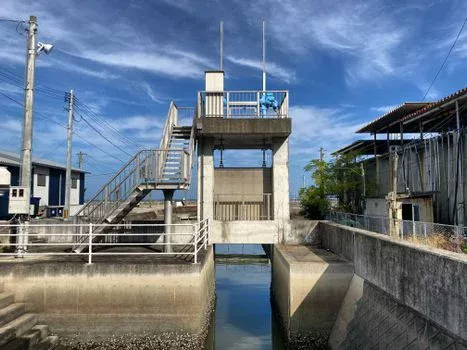
Selecting an underground wastewater system is a site check, not a catalog match on average flow. Miss the groundwater level or the peak hour and the tank either floats or the biology washes out. The six checks below are the ones that change the shell, the anchors, or the process.
- 1. Influent characterization: Run a 24-hour composite for average and peak COD, BOD, and NH₃-N. If your COD/BOD ratio is below 0.3, the sewage is not readily biodegradable and may need pre-acidification.
- 2. Flow rate and HRT: Match daily volume to the WSZ series capacity. For a flow of 50 m³/h, a 6-hour HRT requires a minimum active tank volume of 300 m³. Always size for peak hourly flow, not the daily average.
- 3. Discharge standard: Decide whether you must meet Class 1A (reuse) or Class 1B (river discharge). Class 1A typically needs tertiary filtration or MBR integration.
- 4. Groundwater: If groundwater is found at depths of less than 1 meter, include buoyancy anchors and a 2.0 mm HDPE secondary containment liner. The liner blocks infiltration and keeps the tank from leaking into the aquifer.
- 5. Odor: On an urban site, specify an integrated biofilter. A 50 m³/h system typically needs a 1 m³ biofilter with a 30-second gas contact time to cut H₂S and mercaptans.
- 6. Access and controls: Manholes should be at least 800 mm in diameter for entry and equipment removal. Ask for a PLC with IoT monitoring of DO and pump status.
Who Should Specify a Buried Plant
A buried plant fits a buyer who has a real flow, a named discharge limit, and almost no spare land. The hospital pattern is the type case: 500 m³/day on a pad that could not give up 200 m², solved in 80 m². Resorts and housing with a 20–30 dB noise limit fall in the same group. Jobs with under 200 m² of free land are the ones that go underground.
Look elsewhere when influent COD exceeds 1,000 mg/L and a single A/O shell cannot hold the biomass. Look elsewhere when the permit is plain secondary treatment at 30 mg/L and land is cheap, because the table shows a lower construction cost above grade. Look elsewhere when the duty is micropollutant removal at 150,000 population equivalent; that quaternary step is a large-plant rule under Directive (EU) 2024/3019, not a 50 m³/h package.
Send the 24-hour composite, the peak hour, and the groundwater depth through a buried-plant sizing request before the excavation drawing is frozen.
Frequently Asked Questions
Buyers of a buried plant usually ask about retention time, odor, groundwater, maintenance, and membranes.
What is the typical hydraulic retention time (HRT) for underground sewage treatment systems?
For standard domestic sewage, a buried A/O plant uses an HRT of 6–12 hours. Most municipal plants we size run at the lower end of that 6–12 hour band. Industrial wastewater with complex organics often needs 12–24 hours. A system handling 50 m³/h of municipal waste needs a 300 m³ reactor to hold a 6-hour HRT, which keeps effluent BOD below 10 mg/L.
How do underground systems handle odor control?
Odor on an underground system is managed with sealed tank covers and forced ventilation to biofilters or activated carbon towers. Biofilters use biological media to oxidize hydrogen sulfide. In a typical 50 m³/h installation, a 1 m³ biofilter provides a 30-second gas contact time. Most urban plants we size use that 1 m³ bed, which keeps emissions below detectable nuisance levels for nearby residents.
Can underground systems be installed in high groundwater areas?
Yes, underground systems can be installed in high groundwater if the empty tank is anchored against buoyancy. Designers increase wall thickness, add external stiffening ribs, and cast concrete buoyancy anchors so the vessel does not pop out of the ground. Where groundwater is found at depths of less than 1 meter, the system must include a 2.0 mm HDPE secondary containment liner. A 1.5–2.0 mm HDPE lining adds leak protection in sensitive aquifers.
What are the maintenance requirements for underground systems?
Maintenance on an underground system is light but scheduled. Crews remove sludge monthly with a plate and frame filter press, inspect air diffusers each quarter, and replace biofilter media once a year. Automated PLC controls cut the need for a daily onsite operator. Remote monitoring of DO and MLSS is still recommended, because a buried tank hides a failed diffuser until effluent BOD rises.
How do underground systems compare to MBR for small spaces?
An underground A/O plant has lower capital cost, about 2,500–4,000 RMB/m³, and uses less energy than a membrane tank. Membrane bioreactors reach about 99% TSS removal and fit a smaller footprint. For a 20 m³/h project, the buried A/O train is the lower-cost choice for simple discharge. Plants we size for reuse usually need tertiary filtration or a membrane step, because Class 1A reuse is tighter than a plain discharge limit.
Further Reading
Explore these in-depth articles on related wastewater treatment topics: