Confirm the discharge pathway before selecting equipment
Food and beverage plants near Dallas meet pretreatment limits by characterizing flow, BOD₅, TSS, FOG and pH, then installing the treatment and controls required by the receiving POTW’s industrial user permit. The treatment train may combine screening or grease interception, flow equalization, pH neutralization and dissolved air flotation (DAF) or biological treatment. The plant must demonstrate compliance through monitoring, reporting and operating controls before full production discharge. Local limits must be confirmed with the serving POTW because sewer availability does not guarantee permission to discharge food-processing waste.
The first action is to identify the POTW serving the property and contact its pretreatment coordinator. The municipality or utility district may impose different local limits, permit forms, monitoring requirements and equipment conditions. The coordinator should receive a preliminary process-water balance, anticipated flow, production schedule, cleaning chemicals and expected pollutant concentrations. A useful due-diligence framework for an acquisition is covered in Texas wastewater due-diligence requirements for an industrial acquisition.
For an indirect discharge, federal pretreatment rules apply through the local program. Modern Engineering Solutions (MES) reports that 40 CFR Part 403 requires POTWs receiving industrial wastewater above defined thresholds to establish and enforce pretreatment programs. Significant industrial users generally need a POTW industrial user permit. MES states that food and beverage manufacturers are almost always classified as significant industrial users because of their BOD, TSS and FOG characteristics. A categorical or local limit may also apply, but the POTW’s written requirements and permit control the proposed connection.
If the site has no POTW service, a direct discharge to a water body requires a TCEQ-issued TPDES permit. MES reports a realistic new-permit timeline of nine to eighteen months from a complete application. Industrial stormwater is separate: exposed outdoor storage, loading, processing or washdown areas require evaluation for Multi-Sector General Permit coverage, and construction disturbance may require Construction General Permit coverage.
Characterize the wastewater the plant will actually generate
Food-processing wastewater characterization must capture both average load and batch behavior because production surges, clean-in-place cycles and concentrated cleaning chemicals can change flow, strength, pH and temperature within a short period. The engineering package should document the process-water balance, equipment specifications, drain-by-drain flow estimates, proposed products and production schedule, cleaning-chemical regimes, and expected discharge points. For a new plant without operating history, the characterization should use process calculations and analogous operations rather than a generic food-processing load.
The minimum engineering characterization requested for permit discussions should cover flow, BOD₅, TSS, FOG, pH range and other pollutants of concern identified by the POTW. Sampling assumptions should distinguish production wastewater, equipment and floor washdown, cooling or process blowdown, and clean-in-place waste. Explain how each stream enters the collection system and whether it can be segregated for treatment. The MBR versus conventional activated sludge for food wastewater comparison is useful later, but neither technology can be sized without this wastewater profile.
| Input or condition | Evidence to obtain | Engineering use |
|---|---|---|
| Dairy screening benchmark | Hixson reports BOD₅ around 170 mg/L, COD approximately 1,007 mg/L and TSS approximately 300 mg/L for some operations. | Initial screening only; not a permit limit or design flow. |
| Brewery screening benchmark | Hixson reports BOD₅ around 338 mg/L and COD approximately 1,118 mg/L. | Initial biological-load check; replace with site data. |
| Extreme product stream | Hixson reports distillery stillage can reach BOD₅ of 25,045 mg/L and COD approximately 26,907 mg/L. | Test whether streams require segregation and higher-strength treatment. |
| Batch discharge | Production, washdown and CIP schedules; expected flow, pH and pollutant peaks. | Equalization sizing, controls and compliance monitoring. |
| Local discharge conditions | Written POTW limits and monitoring instructions. MES identifies common local pH limits of 6–9 and temperature limits of 104–140 degrees Fahrenheit. | Confirm the serving POTW’s actual values before treatment selection. |
These sector values are not discharge limits. The characteristic that most affects equipment selection is variability. A compliant daily average can hide a concentrated CIP batch, and a short high-FOG slug can impair downstream biological treatment or the collection system. Ask the POTW how it evaluates batch discharges, flow, temperature, monitoring and sampling, and obtain its written local limits. A reference to 40 CFR Part 403, a 250 mg/L threshold or a 6–9 pH range does not replace the serving POTW’s permit conditions.
Turn the permit limits into a treatment train
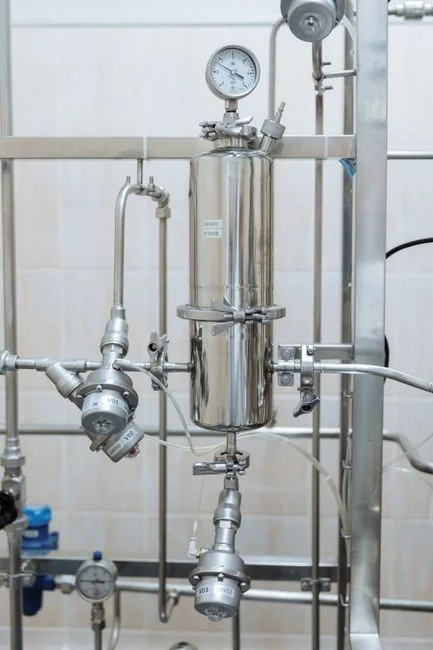
Each treatment unit should remove a defined contaminant or prevent a specific failure mode, and the complete train should be tested against the POTW’s written discharge conditions. Screening, grease interception or removal, and flow equalization form the protective front end: they capture product debris, reduce FOG and solids, and buffer production surges before pumps, biological systems or the POTW.
Where caustic cleaning and acid sanitizing can create pH excursions, include pH neutralization with automatic controls. For high-strength streams, DAF can remove suspended solids, FOG and oil before biological treatment; Hixson identifies DAF as the workhorse primary treatment technology in food processing. An industrial DAF system for food-processing pretreatment should therefore be evaluated against site-specific FOG, solids and flow data, not against dairy or brewery benchmarks.
Anaerobic digestion is an option for high-strength organic streams when energy recovery is attractive. Hixson cites food-processing COD removal of 89.8–96.5% and methane yields of 0.27–0.33 liters CH₄ per gram of COD removed. MBR is appropriate when the permit requires very low solids, the available footprint is limited or the project includes a water-reuse objective. Hixson cites beverage pilot data showing effluent COD of 16.9 mg/L, TSS of 3.8 mg/L and COD removal of 92.6%. These figures support an initial comparison, not a performance guarantee.
| Problem to solve | Unit process to evaluate | Decision condition | Critical design inputs |
|---|---|---|---|
| Product solids and debris | Screening and solids removal | Select before pumping or biological treatment. | Solid characteristics, flow, drain configuration and disposal route. |
| FOG and free oil | Grease interception or DAF | Select according to actual FOG loading and the POTW requirement. | FOG concentration, production pattern, skimming and sludge handling. |
| Flow and strength surges | Flow equalization | Use when batch peaks could overload downstream treatment or violate discharge conditions. | Peak and average flow, batch duration, storage time and mixing requirements. |
| Cleaning-chemical pH excursions | Automatic pH neutralization | Use when individual batches can leave the permitted range. | Acid/caustic demand, probe location, control logic and containment. |
| High dissolved organic load | Anaerobic, aerobic or MBR treatment | Choose only after confirming the required discharge objective. | BOD₅, COD, nutrients, temperature, reuse objective and footprint. |
Do not select biological, membrane or reuse equipment until the POTW confirms the discharge limits and whether on-site treatment beyond baseline pretreatment is required. For a direct TPDES discharge, the receiving-water requirements and permit conditions become the basis of design instead. The industrial ETP and DAF selection guide provides a useful unit-process framework, but the Dallas-area permit remains decisive.
Design the controls that prevent batch-limit violations
Equalization and interlocks convert treatment capacity into dependable batch compliance. Flow equalization should buffer both hydraulic surges and concentration changes so production peaks and clean-in-place chemical spikes do not overwhelm downstream biological or disinfection processes. Its operating strategy must define how much storage is available for a specific batch, how the tank is mixed and how stored wastewater is released.
Automatic pH adjustment is preferable to relying on average daily performance because a compliant average can conceal an individual batch excursion. An automatic pH and coagulant dosing system should be evaluated with the proposed sensor location, chemical demand, calibration method, fail-safe response and operator interface. High-flow, extreme-pH, equipment-fault and confirmed-exceedance conditions require documented interlocks. The response should divert, hold or stop discharge before an unauthorized release, with the operator action and notification sequence clearly defined.
Use online or automated monitoring where the permit requires it or where the batch profile makes continuous visibility valuable. For any monitored parameter, define alarm thresholds, the difference between an approaching and confirmed breach, the sampling or verification method, and the authorized response. The permit, monitoring plan and operating procedure must use the same sample point and terminology.
Treat grease interceptors, pumps, chemical dosing, skimming and sludge removal as one operability system. Initial equipment performance will not sustain compliance if skimming is delayed, sludge storage is inadequate or a dosing pump is not maintained. Include these tasks in the standard operating procedure, preventive-maintenance plan, training program and operating-cost estimate.
Commission, prove performance and maintain the permit
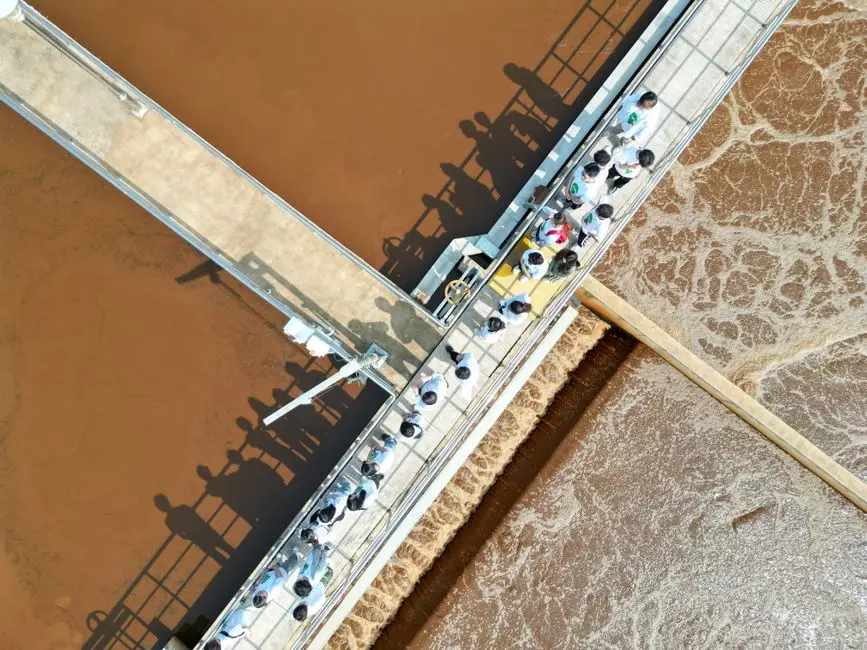
The commissioning protocol should be agreed with the POTW before startup testing and should define the sampling method, frequency, reporting schedule, named monitoring points, tested flow and strength conditions, and acceptance criteria. MES reports that the POTW may require pretreatment equipment to be designed, installed and commissioned before it authorizes full production discharge. The facility therefore needs an approval sequence, not only an equipment readiness check.
Test the complete train at representative flow, strength, pH and FOG conditions. Include the plant’s actual cleaning-chemical regimes instead of relying on a clean-water shakedown. For DAF and biological systems, hold operating parameters within the tested envelope and document coagulant selection, skimming frequency, sludge withdrawal, equalization operation and biological response. Agree the test protocol in advance so a disputed sample point or method does not delay acceptance.
Maintain an operating record that links laboratory results to production conditions, chemical dosing, equipment status and corrective actions. Hixson notes that real-time monitoring can help operators respond before an exceedance becomes a permit violation, but the permit remains the governing document for required monitoring and reporting.
Compliance continues after commissioning. The operating budget must include recurring laboratory monitoring, sensor calibration, preventive maintenance, chemicals, sludge handling and disposal. Equipment suppliers should identify which consumables and services are included in the initial price, and the plant should verify that trained operators can maintain the tested operating envelope.
Build a supplier brief that controls cost and lead time
A comparable quotation requires a common process-water balance, wastewater characterization, operating envelope, written local limits, installation constraints and commissioning acceptance criteria. If those inputs are missing, a supplier can only offer a conceptual price and may later add equipment or civil scope. The brief should also identify the required sample point, test method, flow basis, duty cycle, controls scope, sludge-handling requirement and utility demand.
Separate equipment price from the installed project. Pretreatment systems can require foundations, piping, electrical work, odor control, accessways, chemical systems and startup engineering. A bid should state exclusions, utility requirements, structural loads, controls integration, startup services, operator training, performance testing and spare parts. The same scope should be used to compare biological, MBR and DAF alternatives.
| Procurement input | Why it controls the quote | Required supplier response |
|---|---|---|
| Written POTW limits and permit | Defines the required treatment objective and acceptance basis. | Map every supplied component to a permit requirement or operating need. |
| Influent characterization and batch profile | Defines hydraulic, BOD₅, TSS, FOG and pH loading. | State design basis, peak duty, equalization assumptions and redundancy. |
| Site and utility constraints | Determines civil, piping, electrical, access and operating scope. | Identify foundations, utilities, controls, odor control and installation exclusions. |
| Acceptance protocol | Prevents disputed performance demonstrations. | Agree sample point, method, flow, strength, duration and pass criteria before shipment. |
| Schedule basis | Distinguishes equipment delivery from operational startup. | Provide design, approval, fabrication, installation, testing and training milestones. |
MES reports that a grease interceptor or trap may take weeks to a couple of months when identified early. It also reports that pH-neutralization design through startup can take several months, while a DAF or other advanced high-strength pretreatment system may require six months or longer from design initiation to full operational startup testing. These are schedule warnings, not quotations; request a milestone schedule tied to the actual permit and site.
An unconfirmed POTW pathway remains a commercial risk. Available sewer service does not establish that the POTW will accept the waste stream at a reasonable cost. Resolve the permit, treatment objective and required equipment before relying on a connection fee or equipment price in the project budget.
Frequently Asked Questions
What must be known before a meaningful DAF or MBR size can be selected?
The written discharge limits, site-specific wastewater characterization and treatment objective must be known first. The design basis needs average and peak flow, BOD₅, COD, TSS, FOG, pH range, batch duration, clean-in-place chemistry and the required effluent sample point. Sector benchmarks and pilot results are screening references only; final sizing requires site data and an agreed performance protocol.
What drives the cost of food-processing pretreatment?
The principal cost variables are process capacity, solids and FOG loading, required redundancy, controls, civil work, sludge handling and commissioning—not equipment price alone. Request an installed-scope breakdown that identifies foundations, piping, electrical work, odor control, access, chemicals, utilities, startup engineering and operator training. The receiving POTW’s written requirements and the site-specific characterization should be attached to that quote so alternatives are priced for the same duty.
Which authority controls an indirect versus direct discharge?
An indirect discharge to a municipal sewer is controlled through the serving POTW’s written local limits and industrial user permit under its pretreatment program. A direct discharge to a water body follows the TCEQ TPDES pathway, with facility- and receiving-water-specific permit conditions. Federal pretreatment requirements, categorical standards, benchmark values and generic pH references do not replace either authority’s written requirements.
When should pretreatment coordination begin during a Dallas-area project?
Begin during site selection and lease negotiation, before the property commitment. MES identifies wastewater characterization, pretreatment design, procurement, installation and startup as potential schedule drivers for Dallas-area projects. A preliminary discussion with the Dallas-area pretreatment coordinator can identify likely permit and equipment requirements, while complete characterization supports the formal application and equipment sizing.