Why Ras Al Khaimah’s Wastewater Treatment Costs Are Rising in 2025
A 60,000 m³/day wastewater treatment plant in Ras Al Khaimah costs approximately $300 million under a PPP (BOOT) model, as seen in the 2026 Saur consortium project. For smaller projects (5,000–20,000 m³/day), costs range from $5M to $50M depending on technology (e.g., MBR vs. conventional activated sludge), civil works, and compliance requirements. This guide breaks down CAPEX/OPEX, technical specs, and ROI for municipal and industrial projects in Ras Al Khaimah.
The cost landscape for wastewater treatment in Ras Al Khaimah is currently shaped by rapid demographic shifts and tightening environmental oversight. Between 2020 and 2024, Ras Al Khaimah’s population grew by 4.2% annually, leading to an 18% increase in total wastewater volume according to 2024 Ras Al Khaimah Municipality data. This surge has outpaced existing infrastructure capacity, necessitating large-scale capital investments to maintain public health and environmental integrity.
Regulatory pressure is the primary driver of technical upgrades. UAE Federal Law No. 24/1999 mandates secondary treatment for all municipal wastewater, but the Ras Al Khaimah Municipality has introduced even more stringent standards for industrial effluent. Currently, facilities must ensure a Biological Oxygen Demand (BOD) of less than 20 mg/L and a Chemical Oxygen Demand (COD) of less than 120 mg/L before discharge. These limits are significantly tighter than historical requirements, forcing facilities to adopt advanced filtration and biological processes.
Industrial zones, particularly the RAK Industrial Park and Al Hamra, face strict compliance deadlines throughout 2025 and 2026. While the $300 million Saur project serves as a definitive benchmark for utility-scale investments, the majority of upcoming projects are mid-sized facilities (5,000 to 20,000 m³/day) designed for hotels, hospitals, and manufacturing plants. These decentralized systems must balance high-performance effluent quality with the high energy and land costs characteristic of the UAE market.
Wastewater Treatment Plant Cost Breakdown: CAPEX vs. OPEX in Ras Al Khaimah
Allocating a budget for a wastewater treatment plant in Ras Al Khaimah requires a granular understanding of how capital expenditure (CAPEX) and operating expenditure (OPEX) scale with project size. For a utility-scale plant like the 60,000 m³/day Saur project, CAPEX is heavily weighted toward specialized equipment and civil engineering capable of handling high saline and high-temperature influent typical of the region.
CAPEX for large-scale projects in the UAE generally follows a 40-35-15-10 distribution. Equipment accounts for 40% of the budget, civil works for 35%, engineering and design for 15%, and permitting/legal fees for 10% (Gulf Construction 2026). In contrast, smaller industrial projects often see equipment costs rise to 50-60% of CAPEX as they utilize modular, pre-fabricated systems like MBR systems for Ras Al Khaimah’s compact urban projects to minimize on-site civil works.
OPEX is dominated by energy consumption and sludge management. In Ras Al Khaimah, energy costs average approximately $0.08/kWh, making power-intensive processes a significant long-term liability. Sludge disposal costs are also a critical factor; landfilling costs roughly $120/ton, whereas composting facilities charge approximately $80/ton. This price gap is driving interest in sludge dewatering and stabilization technologies to reduce weight and disposal frequency.
| Cost Category | Municipal (60,000 m³/day) | Industrial (10,000 m³/day) | Key Cost Drivers |
|---|---|---|---|
| CAPEX (Total) | $280M – $320M | $15M – $30M | Technology choice, Civil footprint |
| Equipment % | 40% | 55% | Automation, Membrane costs |
| OPEX per m³ | $0.40 – $0.60 | $0.80 – $1.50 | Influent COD, Energy prices |
| Energy % of OPEX | 35% | 45% | Aeration efficiency |
| Sludge Disposal | $80/ton (Compost) | $120/ton (Landfill) | Dewatering efficiency |
While Public-Private Partnership (PPP) models, such as the 25-year BOOT (Build-Own-Operate-Transfer) contract used by Saur, reduce immediate CAPEX requirements for the government, they result in higher long-term OPEX due to the inclusion of financing costs and private sector profit margins. Understanding how Ras Al Khaimah’s costs compare to Southeast Asia can help procurement teams benchmark these global financing structures against local economic realities.
Technical Specs for Ras Al Khaimah Wastewater Treatment Plants: What You Need to Meet Compliance
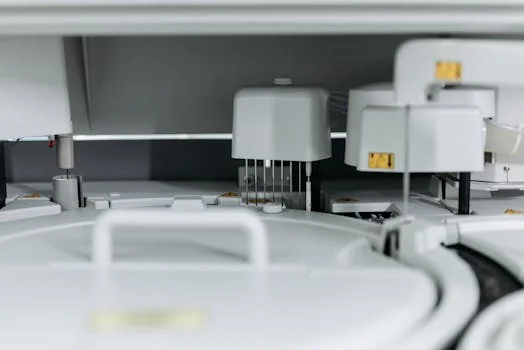
Engineering a wastewater system in Ras Al Khaimah requires strict adherence to UAE Federal Law No. 24/1999 and specific municipal mandates. Failure to meet these standards can result in penalties reaching AED 500,000 or immediate plant shutdown. The primary technical challenge in the region is the high ambient temperature, which affects biological activity and oxygen solubility in aeration tanks.
For industrial effluent, pretreatment is almost always required to protect secondary biological stages. This often involves DAF systems for industrial pretreatment in Ras Al Khaimah to remove fats, oils, and grease (FOG), followed by chemical dosing systems for UAE compliance to adjust pH and coagulate suspended solids. Membrane Bioreactor (MBR) technology has become the preferred choice for new projects due to its ability to produce high-quality effluent suitable for reuse in irrigation or cooling towers.
| Parameter | RAK Municipality Standard | CAS Performance | MBR Performance |
|---|---|---|---|
| BOD (mg/L) | < 20 | 15 – 25 | < 5 |
| COD (mg/L) | < 120 | 80 – 110 | < 30 |
| TSS (mg/L) | < 30 | 20 – 30 | < 1 |
| Energy (kWh/m³) | N/A | 0.3 – 0.5 | 0.6 – 0.8 |
| Footprint (m²/m³/d) | N/A | 0.5 – 1.0 | 0.2 – 0.4 |
Energy consumption is a critical engineering parameter. While MBR systems offer a smaller footprint and superior effluent quality, they consume approximately 40% more energy than Conventional Activated Sludge (CAS) systems. Engineers must evaluate whether the land savings and reuse potential justify the higher power demand. disinfection is mandatory; selecting the disinfection methods for Ras Al Khaimah’s effluent standards is vital for achieving fecal coliform counts below 1,000 CFU/100mL.
PPP vs. EPC vs. Turnkey: Which Project Model Fits Your Ras Al Khaimah WWTP?
The selection of a project delivery model significantly impacts the financial risk and operational control of a wastewater treatment facility in Ras Al Khaimah. The choice typically depends on the daily flow volume and the technical expertise available within the owner's organization.
The PPP (BOOT) Model is the gold standard for large municipal projects exceeding 30,000 m³/day. In this model, a private consortium finances, builds, and operates the plant for 20 to 30 years. The primary advantage is the lack of upfront CAPEX for the government and the transfer of operational risk to the private partner. However, it requires long-term commitments and offers less flexibility for future process changes.
The EPC (Engineering, Procurement, Construction) Model is most common for industrial projects between 5,000 and 20,000 m³/day. Owners pay for the project upfront (costing between $1,500 and $3,000 per m³ of capacity) but retain full control over the asset once commissioned. This model is ideal for factories that have their own utility teams but requires the owner to bear all OPEX risks, including energy price fluctuations and equipment maintenance.
The Turnkey Model is reserved for small-scale projects under 5,000 m³/day, such as those for individual resorts or labor camps. These are often package plants with fixed prices ranging from $2,000 to $4,000 per m³. While they offer the fastest delivery and a single point of accountability, they provide limited customization. These models are increasingly popular as they mirror Qatar’s PPP models and compliance standards, which emphasize rapid deployment for infrastructure growth.
| Model | Best For | CAPEX Burden | Typical Cost per m³ | Operational Risk |
|---|---|---|---|---|
| PPP (BOOT) | Municipal >30k m³/d | Zero Upfront | Service Fee Based | Low (Contractor) |
| EPC | Industrial 5k–20k m³/d | 100% Upfront | $1,500 – $3,000 | High (Owner) |
| Turnkey | Small <5k m³/d | 100% Upfront | $2,000 – $4,000 | Moderate (Owner) |
ROI and Payback Period for Wastewater Treatment Plants in Ras Al Khaimah
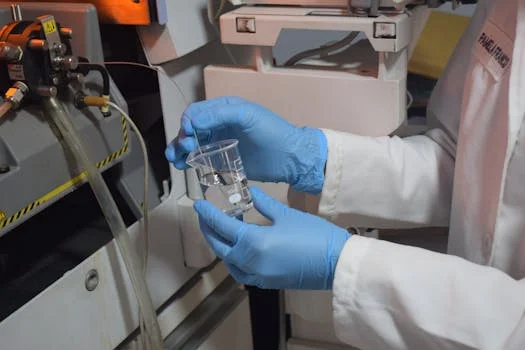
Justifying a wastewater investment in Ras Al Khaimah requires a shift from viewing the plant as a "cost center" to viewing it as a "resource recovery center." The ROI calculation for these projects is determined by the formula: (Annual Savings + Revenue) / (CAPEX + Annual OPEX). In the UAE, the primary revenue stream is the reuse of Treated Sewage Effluent (TSE).
Municipal plants generate revenue by selling TSE to district cooling companies or for landscaping irrigation. Industrial plants, however, find their ROI through the avoidance of discharge fees. Ras Al Khaimah Municipality charges between AED 5 and AED 15 per m³ for the disposal of non-compliant or high-strength effluent. By treating wastewater on-site to compliant levels, a facility processing 10,000 m³/day can save millions in annual disposal costs.
Case Study: A 10,000 m³/day industrial facility in the RAK Industrial Park implemented an MBR-based EPC project. The total CAPEX was $18 million. By reusing 70% of the treated water for on-site cooling and avoiding discharge penalties of AED 8/m³, the facility achieved a payback period of 4.2 years. The government also provided a 30% CAPEX rebate as part of its water conservation incentive program, further accelerating the ROI.
| Project Type | Avg. Payback Period | Primary Revenue/Savings Source | ROI Impact of Technology |
|---|---|---|---|
| Municipal PPP | 5 – 7 Years | TSE Sales, Tariffs | Energy efficiency reduces service fees |
| Industrial EPC | 3 – 5 Years | Discharge fee avoidance, Reuse | High-quality MBR water replaces potable water |
| Commercial Turnkey | 4 – 6 Years | Irrigation cost savings | Lower labor costs via automation |
How to Select a Wastewater Treatment Plant Supplier in Ras Al Khaimah: 2025 Checklist
Selecting the right supplier is the most critical step in ensuring long-term compliance and financial viability. In the Ras Al Khaimah market, look for vendors who possess local certifications from the Emirates Authority for Standardization and Metrology (ESMA) and have a proven track record with the Ras Al Khaimah Municipality.
A major red flag during the procurement process is the lack of a local service center. Wastewater plants require immediate attention during equipment failures to avoid environmental breaches. Reputable suppliers now offer 24/7 remote monitoring and diagnostic services to proactively manage system health. for complex industrial effluents, always insist on a 3-to-6-month pilot test. This ensures the proposed technology can handle the specific chemical profile of your waste stream before full-scale CAPEX is committed.
- Compliance: Does the supplier provide a written guarantee of meeting BOD < 20 mg/L and COD < 120 mg/L?
- References: Can the supplier provide at least three UAE-based case studies of similar capacity?
- Energy: Is the kWh/m³ consumption clearly stated and backed by performance data?
- Automation: Does the system include SCADA integration for remote monitoring?
- After-Sales: Does the vendor have a local team in the UAE for 24-hour emergency response?
When comparing proposals, do not simply choose the lowest CAPEX. A system with a slightly higher initial cost but 20% lower energy consumption will almost always provide a better ROI over a 10-year horizon. For more detailed guidance on regional standards, review our guide on package wastewater treatment plants in Bahrain to see how regional engineering trends are converging across the GCC.
Frequently Asked Questions
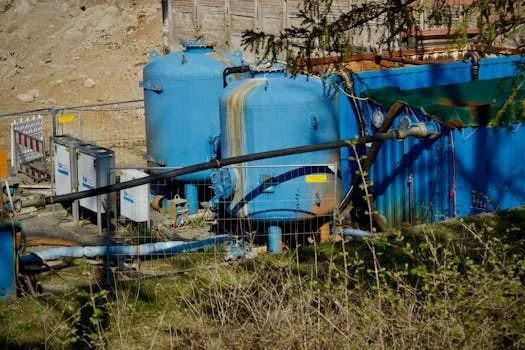
How much does it cost to set up a sewage treatment plant in Ras Al Khaimah?
Costs vary widely by scale. A 5,000 m³/day turnkey plant typically starts at $5 million, while a utility-scale 60,000 m³/day plant can reach $300 million under a PPP model. Key factors include the choice of technology (MBR vs. CAS) and the extent of civil works required.
What is the largest sewage treatment plant in the UAE?
The largest in the UAE is the Mafraq WWTP in Abu Dhabi, which treats approximately 800,000 m³/day. In Ras Al Khaimah, the Saur consortium project (60,000 m³/day, expandable to 150,000 m³/day) is the largest facility in the emirate.
How much does it cost to install a sewage treatment plant per m³?
CAPEX generally ranges from $1,500 to $4,000 per m³ of capacity. Smaller, specialized industrial plants are at the higher end of this range due to advanced treatment requirements, while large municipal plants benefit from economies of scale.
Do wastewater treatment plants make money in Ras Al Khaimah?
Yes, through resource recovery. Municipal plants generate revenue by selling treated water for irrigation and industrial use. Industrial plants "make money" by avoiding high municipal discharge fees (AED 5–15/m³) and reducing their reliance on expensive potable water for non-drinking purposes.
What are the compliance requirements for wastewater treatment in Ras Al Khaimah?
Facilities must comply with UAE Federal Law No. 24/1999 and Ras Al Khaimah Municipality standards. Key limits include BOD < 20 mg/L, COD < 120 mg/L, TSS < 30 mg/L, and fecal coliform < 1,000 CFU/100mL. Industrial zones may impose stricter limits depending on the nature of the manufacturing process.