Where a Decanter Centrifuge Fits in Biodiesel Wastewater Treatment
A decanter centrifuge for biodiesel wastewater is a continuous solid-liquid separation machine: centrifugal force moves dense solids toward the rotating bowl wall, while clarified liquid overflows through an adjustable discharge, and a differential-speed screw conveys the solids out. It can support wastewater pretreatment, separated-oil or feedstock recovery, and sludge dewatering, but it does not replace biological treatment, DAF, filtration, or pollution-control systems. Selection must be based on the actual stream, required phases, solids characteristics, discharge target, corrosion exposure, and hazardous-area classification.
A decanter is one separation step within a treatment train, not a complete biodiesel wastewater treatment system. In a continuous decanter, denser solid particles migrate toward the rotating bowl wall. The less-dense liquid forms an inner layer, while a screw conveyor rotates at a different speed from the bowl and transports separated solids along the conical section toward discharge. Alfa Laval describes this as continuous solid-liquid separation, with centrifugal effects reported as up to 4000 times those of gravity in its equipment configuration.
The engineering question is not simply “Can a decanter separate this waste?” It is “Which phase must be recovered, and what discharge quality is required?” A wastewater-solids duty calls for clarified liquid and a handleable solids discharge. An oil-recovery duty requires a sufficiently clean oil phase for its intended reuse. A FAME-purification duty may require separation of glycerin, soaps, water, and other transesterification contaminants. A sludge-dewatering duty requires an acceptable cake condition and downstream solids handling.
Use this sequence for preselection:
- Characterize the feed and identify its normal variability.
- Define the required phase split and discharge specifications.
- Choose two-phase or three-phase separation.
- Run representative testing with the actual feed chemistry.
- Specify controls, materials, hazardous-area requirements, and maintenance access.
For streams dominated by oil, grease, colloids, or suspended solids, a DAF system for oil, grease, and suspended solids may be the more appropriate upstream or alternative duty. The decanter should enter the process only after its separation function and discharge routes are clearly defined.
How Two-Phase and Three-Phase Decanting Works
A two-phase decanter separates solids from one liquid phase, whereas a three-phase decanter separates solids and directs multiple liquid phases into separate outlets. Alfa Laval states that internal baffles route each phase to its designated flow path, reducing the risk of cross-contamination between separated streams.
In the two-phase arrangement, the bowl creates a liquid annulus around the compacted solids. The clarified liquid overflows through the dam plates or liquid-discharge system at the opposite end of the bowl. Meanwhile, the differential-speed screw conveyor moves the solids out of the liquid and along the conical beach. This compaction removes surplus liquid from the solid phase, producing a dewatered cake that must then be discharged and handled according to the plant’s requirements.
For three-phase separation, the mechanical principle remains the same, but the phase arrangement and collection system change. A single decanter can separate multiple liquid phases as well as solids. According to Alfa Laval, the clarified liquid—or multiple liquid phases in a three-phase arrangement—overflows through dam plates or PowerTubes, while internal baffles direct each phase into its designated flow path. This arrangement may fit a feed containing recoverable oil and an aqueous phase, but it is not justified simply because the plant produces biodiesel.
Two operating variables connect the machine to feed behavior. Pond depth, or liquid depth, is adjustable through the discharge arrangement, while the scroll differential speed can also be changed. Alfa Laval describes variable-frequency-drive and torque-control arrangements that monitor conveyor torque and adjust differential speed as solids loading changes. This matters because feed characterization, operating controls, and discharge consistency cannot be separated during selection.
| Separation arrangement | Outlets | Primary use | Selection question |
|---|---|---|---|
| Two-phase | Clarified liquid and compacted solids | Solid-liquid separation | What liquid quality and cake consistency must the machine deliver? |
| Three-phase | Separated liquid phases and compacted solids | Separation of multiple liquids plus solids | Are the liquid phases sufficiently distinct, and can each outlet meet its purity requirement? |
The differential-speed conveyor is therefore not simply a discharge mechanism. It determines how solids are transported, compacted, and presented to the cake-discharge system. The appropriate setting must be established with representative feed rather than inferred from bowl geometry alone.
Which Biodiesel Wastewater Stream Needs Centrifugal Separation?
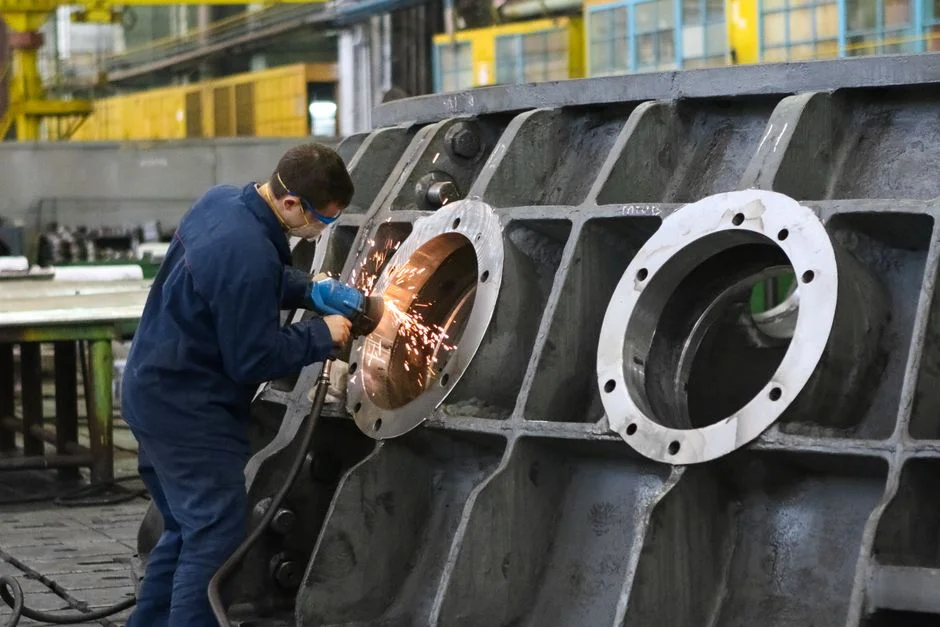
The correct application is determined by the stream’s physical phase structure and the required product or discharge, not by its association with biodiesel production. Wastewater pretreatment, feedstock recovery, FAME purification, and sludge dewatering impose different duties and should not be combined into one generic equipment specification.
| Application | Feed and separation objective | Evidence and decision |
|---|---|---|
| Biodiesel wastewater pretreatment | Remove suspended solids before biological treatment, filtration, or another polishing step. | Request flow, suspended-solids concentration, oil and grease, particle characteristics, temperature, and clarified-water quality. The research does not establish a universal loading or recovery value. |
| Oil-and-fat or waste-oil recovery | Recover an oily stream for feedstock reuse while separating associated solids and water. | Alfa Laval describes a waste-management company using decanter separation to turn waste oils and fats into biofuel-production feedstock. A three-phase duty may be relevant, but phase properties and recovered-oil quality must be established. |
| Biodiesel FAME purification | Remove contaminants from FAME before downstream processing or product handling. | US Centrifuge lists glycerin, soaps, water, and other contaminants that may be present during transesterification. This is a product-purification duty, not automatically a wastewater-treatment duty. |
| Sludge or process-residue dewatering | Reduce water in a solids-rich residue before collection, transport, or further treatment. | Compare a decanter with a plate-and-frame sludge dewatering filter press using the same feed and discharge criteria. |
For wastewater pretreatment, the buyer should define the process endpoint before issuing an enquiry. Suspended-solids removal does not necessarily remove dissolved contaminants, emulsified oil, or biodegradable material, and it does not establish biological treatment performance. A decanter may precede or follow another unit depending on the stream, but those process relationships must be defined from sampling and mass-balance data.
For oil recovery, establish whether the oil is free, emulsified, or attached to solids, and whether it must be returned directly to feedstock processing. The Alfa Laval waste-management example demonstrates a recovery application, but it does not establish performance for every biodiesel waste stream.
For FAME purification, focus the enquiry on contaminant composition, phase behavior, and product-quality requirements. US Centrifuge identifies glycerin, soaps, water, and other possible transesterification contaminants. The equipment configuration must follow the actual FAME stream rather than the wastewater stream.
For sludge dewatering, compare the solids discharge, operating pattern, and downstream handling. A continuous decanter and a batch filter press may both be credible, but only matched-feed testing and a common discharge specification can distinguish them.
Critical Inputs for Sizing and Supplier Selection
Capacity cannot be selected from a catalogue flow range without a documented design feed. US Centrifuge lists commercial biodiesel centrifuge systems from 5 gpm to 60 gpm, but its publication does not establish that any rate within that range will adequately treat a particular biodiesel wastewater duty.
Require the supplier to state how proposed capacity relates to the design feed envelope. The enquiry should include feed flow, suspended-solids concentration, oil content, particle-size distribution, temperature, viscosity, chemical dosing, and whether operation is batch or continuous. It should also define the range of normal variability, not only an average condition. A feed characterized only by average flow and solids concentration leaves the operating envelope undefined.
Define liquid and solids discharge expectations separately. For liquid, specify clarification quality or recovered-phase purity, destination, and compatibility with downstream treatment. For solids, specify cake dryness, discharge consistency, handling method, and whether another dewatering step is required. These are distinct acceptance obligations.
| Enquiry item | Evidence required from supplier |
|---|---|
| Design basis | Feed flow envelope, solids and oil loading, particle characteristics, temperature, viscosity, and chemical dosing |
| Capacity relationship | Documented link between proposed throughput, selected machine geometry, and design conditions |
| Discharge duties | Separate liquid-quality, recovered-phase-purity, and solids-consistency requirements |
| Materials | Process-contact materials and wear-resistant process equipment selected for the stated chemistry and abrasion |
| Hazardous-area compliance | Explosion-proof configuration where the installation requires it |
| Controls and service | Torque-responsive differential-speed control, access covers, wear protection, and maintenance provisions |
US Centrifuge explicitly offers corrosion-resistant construction and explosion-proof configurations for biodiesel systems. Alfa Laval describes stainless-steel process-contact parts and abrasion-resistant protection in the feed zone, solids-discharge zone, bowl, and scroll. The material schedule should follow the actual feed chemistry and expected wear mechanisms; a generic corrosion-resistance statement is not enough.
Evaluate serviceability with the supplier’s proposed access arrangements. Alfa Laval identifies hinged access covers, wear protection, adjustable liquid depth, and automatic differential-speed control based on conveyor torque. These features should be tied to the maintenance strategy, including inspection access, cleaning, replacement of wear parts, and operating controls. A sludge dewatering equipment selection guide can help structure the broader comparison with solids-handling duties.
Decanter Centrifuge, DAF, or Filter Press: Choose by Process Function
No unit is universally superior because centrifuges, DAF, and filter presses perform different functions. Selection should start with the separation mechanism required by the feed and then apply the client’s discharge specification.
A decanter provides continuous solids separation: the screw conveyor transports compacted solids along the bowl, and clarified liquid overflows through the discharge system. Its primary case is continuous handling of solids from a liquid stream, including recovery of multiple liquid phases where the application supports three-phase operation.
A DAF removes oil, grease, suspended solids, and colloidal material through micro-bubble flotation and automatic skimming. The cited HydropureWater commercial range covers 4–300 m³/h across 13 standard models. That range describes catalogue offerings, not demonstrated suitability for a given wastewater. If flotation is the target mechanism, the micro-bubble flotation design criteria should be reviewed alongside feed characterization.
A plate-and-frame filter press performs sludge dewatering by filtration. The cited HydropureWater catalogue range is 1–500 m² of filtration area, with manual, hydraulic, or fully automatic PLC-controlled operation. Compare cake dryness, filtrate quality, cycle time, labor, washability, and downstream handling rather than selecting on filtration area alone.
| Equipment | Primary process function | Discharge emphasis |
|---|---|---|
| Decanter centrifuge | Continuous solid-liquid separation; selected liquid-phase separation where applicable | Clarified or separated liquid and compacted solids |
| DAF system | Oil, grease, suspended-solids, and colloidal removal by flotation | Skimmed oily or solids-rich stream and clarified liquid |
| Plate-and-frame filter press | Sludge dewatering by filtration | Filtrate and retained solids cake |
US Centrifuge states that centrifugation can reduce process time compared with settling that generally requires several days. That is a commercial comparative claim, not a universal performance guarantee. The correct conclusion is narrower: a continuous centrifuge may shorten separation time when the feed and machine configuration are suitable, which is why application testing is required.
Final selection requires representative-feed testing and matched discharge criteria. DAF may be more appropriate for an oily floatable stream; a decanter may be more appropriate where continuous solids transport and cake discharge are central; a filter press may be suitable where batch filtration and retained solids are the priority.
Pilot Testing, Controls, and Acceptance Criteria
Representative testing is the only defensible way to convert a separation concept into a performance guarantee. Test with the actual feed, including normal variability in solids loading, oil content, temperature, and chemical dosing. Clean-water testing cannot establish behavior with fats, soaps, abrasive solids, or variable phase distribution.
Specify acceptance items before testing begins. They should include clarified-liquid quality, recovered-phase quality, solids capture, discharged-cake consistency, stable conveyor torque, and operability across the stated feed envelope. Each metric needs a defined sampling point, analytical method, operating condition, and pass/fail value. The supplied research does not support universal performance thresholds, so the buyer must obtain those values from project-specific process requirements.
| Acceptance area | Information to document |
|---|---|
| Test feed | Source, composition, variability, temperature, dosing, and operating sequence |
| Sampling | Feed, separated liquid, recovered phase, and discharged solids sampling points |
| Performance | Liquid quality, recovered-phase quality, solids capture, and cake consistency |
| Operation | Stable torque, control response, operability across the feed envelope, and discharge behavior |
| Pass/fail basis | Pre-agreed numerical or qualitative criteria tied to project requirements |
Control evaluation should include automatic adjustment of scroll differential speed. Alfa Laval describes torque-controlled adjustment that reduces differential speed at lighter loads and adjusts it as solids loading rises, with the stated purpose of preventing conveyor torque overload. Verify the control response under both feed conditions rather than checking only steady operation.
Maintenance acceptance should cover abrasive service. Alfa Laval describes wear protection in abrasive process areas and access for cleaning and maintenance. Require identification of wear components, inspection access, expected cleaning frequency, spare-parts strategy, and maintenance isolation requirements in the supplier offer.
Request a FAT and SAT plan. The FAT should document test-feed conditions, sampling points, operating settings, and pass/fail values. The SAT should confirm those results under installed conditions using the plant’s feed and utilities. If a supplier proposes guarantees, they should trace back to the agreed test method and acceptance values rather than generic catalogue claims.
Frequently Asked Questions
What flow rate should a decanter centrifuge for biodiesel wastewater handle?
Do not select a flow rate from the catalogue alone. US Centrifuge lists a commercial range of 5–60 gpm, but that range does not establish capacity for a specific feed. Require the supplier to link its proposed machine capacity to the design flow, solids loading, oil content, particle characteristics, temperature, and feed variability, then confirm the selection through representative testing.
Can one decanter separate water, oil, and solids?
Yes, where the phases can be separated and the required outlets remain distinct. Alfa Laval describes three-phase decanters that direct multiple liquid phases and solids into separate flow paths. Suitability still depends on the actual feed composition, phase stability, required purity, and discharge specifications; the existence of three-phase capability is not proof that a particular wastewater will meet them.
Is a decanter centrifuge safer than DAF for oily wastewater?
Neither option is inherently safer because they perform different functions. A decanter provides continuous solids separation, while a DAF removes oil, grease, suspended solids, and colloidal material by flotation. Ask each supplier to address the feed chemistry, process-contact materials, hazardous-area classification, explosion-proof requirements, operator exposure, maintenance access, and required discharge quality.
How should a buyer compare a decanter with a filter press, and what should the supplier offer?
Compare both options using the same feed, liquid-quality requirement, solids dryness target, operating pattern, downstream handling, and maintenance expectations. The supplier offer should include feed characterization, design capacity basis, two- or three-phase duty, materials, hazardous-area classification, controls, wear protection, representative pilot or FAT results, and traceable FAT/SAT acceptance criteria. Request a quotation against that defined scope; the research provides no defensible price range, so pricing should not be inferred from catalogue flow rates.