Start with the Hong Kong sewer and discharge route
The Hong Kong Drainage Services Department identifies a direct connection to the public sewer as the simplest wastewater-management route where the receiving infrastructure can serve the development; capacity, connection timing and authority approval must therefore be checked before selecting an on-site package. If connection is unavailable or cannot be delivered for the required development stage, establish the approved discharge route next, because discharge to ground, a watercourse or another destination can produce different treatment and polishing requirements. Begin with the DSD’s official information on sewage treatment facilities and contractor resources, then coordinate the enquiry with the project civil and environmental consultants.
The sewer decision should be recorded as a design constraint, not an assumption. Obtain confirmation that the public network is physically accessible, hydraulically capable and legally available at the intended occupation date. A connection that is technically visible on a plan is not enough if downstream capacity, third-party works or connection timing cannot be secured.
If an on-site system remains necessary, identify the receiving point and its approval status before comparing treatment processes. Ground discharge, watercourse discharge and reuse require different design evidence, including the applicable Hong Kong wastewater consent, receiving-water considerations and any required polishing. This sequence also prevents a bidder from optimising treatment for an assumed outlet that the project cannot use.
Do not import Republic of Ireland or Northern Ireland consent thresholds into a Hong Kong design. The supplied Tricel material is useful for the engineering questions it raises—public-sewer feasibility, PE, phasing, discharge route and site conditions—but its Irish and Northern Irish approval routes are jurisdiction-specific. No numerical Hong Kong discharge limit should be inferred from those references.
Build a development-scale wastewater design brief
A Hong Kong housing-development treatment system must be sized around the complete residential load, expected population equivalent, discharge route, phasing and site conditions rather than the number of houses alone, according to Tricel’s housing-development guidance. The model brief should therefore distinguish the first occupied phase from the fully occupied estate and prevent an early low-flow condition from being treated as the final design load.
Collect the number and type of dwellings, expected occupancy, communal facilities, development phases, first-occupation date, final occupied load and any permitted future expansion. Tricel states that the total wastewater load must cover all houses, apartments, communal facilities and future phases. In parallel, obtain the Hong Kong-specific per-capita wastewater flow, population-equivalent conversion and occupancy basis from the appointed civil or environmental designer; these inputs determine the flow model and should not be inherited from another jurisdiction.
| Design brief item | Evidence or information required | Why it affects selection |
|---|---|---|
| Development load | Dwellings, expected occupancy, communal facilities, future phases and first-occupation date | Defines the load that must be served and the period of partial occupancy |
| Hydraulic duty | Daily household flow, morning and evening peaks, overnight low flow and phased load cases | Tests biological treatment, equalisation, pumping and discharge capacity across the operating range |
| Population equivalent | Hong Kong-specific conversion and occupancy basis requested from the project designer | Provides an initial load measure without treating unit count as a hydraulic calculation |
| Wastewater quality | COD, BOD, suspended solids, ammonia or nitrogen, phosphorus, fats, oils and grease, cleaning-product contributions and grease-trap arrangements | Defines the biological load, pretreatment needs and discharge-treatment objectives |
| Discharge and phasing | Approved route, discharge point, construction sequence and expansion strategy | Links process choice to authority conditions, civil works and staged commissioning |
ClearFox reports that residential flows commonly peak in the morning, late afternoon and evening, while wastewater characteristics vary with occupancy and household practices. Its cited European convention of 1 PE equal to 60 g BOD and 150 L per day is comparative background only—not a Hong Kong regulatory standard. The practical consequence is to model both peak and low flow, including early-phase operation, rather than size from average daily flow alone.
Further development inputs can be organised through a packaged sewage treatment plant selection for a housing development, but the Munich context must not be converted into a Hong Kong design assumption. Ask bidders to show the calculation behind every hydraulic and load figure.
Match the treatment process to the site's operating conditions
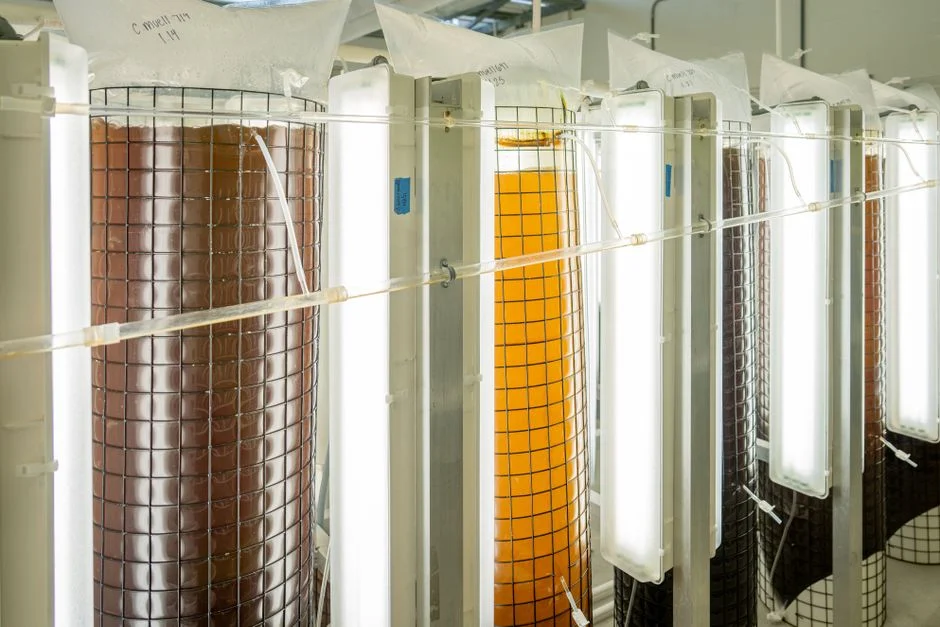
The WSZ process combines anoxic and aerobic biological contact oxidation, sedimentation and disinfection in one buried package, with a catalog capacity range of 1–80 m³/h. That configuration makes it a credible screening candidate for a residential community where surface landscaping must be retained and an underground biological treatment package is acceptable. The final civil design must still resolve access, ventilation, lifting, drainage, sludge removal and maintenance.
MBR provides membrane solids separation within a compact biological treatment train, with a catalog range of 10–2,000 m³/day and filtration below 1 μm. It is the stronger candidate where the project’s approved treatment objective, reuse requirement or landtake justifies membrane separation and a higher level of process control. Catalogue capacity is not proof of site suitability: the selected configuration must fit the verified flow curve and treatment duty.
| Decision condition | Leading route to investigate | Evidence to require |
|---|---|---|
| Public sewer is available and hydraulically acceptable | Conventional connection or approved pretreatment | DSD confirmation of route, capacity, connection conditions and programme |
| Compact underground package is preferred | WSZ | Peak, minimum and phased duty cases; civil envelope; access and sludge-removal method |
| Approved objective requires membrane solids separation | MBR | Process basis, membrane design assumptions, maintenance access and replacement provision |
| Site area is constrained | Compare WSZ and MBR on verified footprints | General arrangement, excavation, lifting zones, utilities and maintenance clearances |
| Reuse is required | MBR route subject to the approved reuse specification | Effluent quality basis, disinfection, monitoring and intended reuse conditions |
Published process data from other technologies helps explain biological behaviour but cannot define Hong Kong compliance. ClearFox reports SBR BOD removal of 85–95% and lists process guarantees below 10 mg/L BOD, 10 mg/L TSS, 5–8 mg/L total nitrogen and 1–2 mg/L total phosphorus. It also reports FBBR removal efficiencies up to 99% for configurations from 10–3,000 m³/day. These are the supplied ClearFox process references, not confirmed Hong Kong discharge standards.
Accordingly, ask bidders to map each proposed process stage to the consent conditions. Process guarantees should be stated against the project duty and applicable Hong Kong approval basis, not against a generic catalogue narrative. The underground WSZ package sewage treatment plant and MBR wastewater treatment system for reuse-oriented developments are useful equipment references for the preliminary comparison, not substitutes for a design-basis submission.
Compare the candidate package routes
WSZ and MBR should be compared on the same duty cases rather than on their broadest catalogue capacities. The WSZ catalogue spans 1–80 m³/h, while the MBR catalogue spans 10–2,000 m³/day; neither range represents a Hong Kong regulatory class or a ready-made selection for a particular estate.
| Comparison item | WSZ package | MBR system |
|---|---|---|
| Catalog capacity | 1–80 m³/h | 10–2,000 m³/day |
| Treatment configuration | Anoxic/aerobic contact oxidation, sedimentation and disinfection in an integrated buried package | Biological treatment with membrane solids separation and a project-specific downstream train |
| Initial screening position | Leading candidate where an integrated underground biological package, automatic operation and residential integration are priorities | Leading candidate where membrane separation, a smaller biological footprint or high-grade reuse objective is justified |
| Land and installation | Buried installation may preserve surface use, subject to excavation and access constraints | May suit constrained sites, but the complete treatment train and maintenance provisions must be assessed |
| Operating considerations | Resolve access, ventilation, lifting, drainage and sludge removal in the civil design | Resolve membrane access, monitoring, cleaning or replacement, electrical supply and downstream requirements |
| Phasing | Show treatment performance at first occupation, intermediate phases and final load | Show how membrane capacity and the complete train follow the phased demand curve |
For either route, require a duty curve covering peak flow, minimum flow, first-phase occupancy, intermediate occupancy, full occupancy and future expansion. A single nominal-capacity statement cannot demonstrate whether the process remains stable at the ends of that range. The hydraulic model should also identify whether equalisation is required and how the selected unit responds during commissioning or partial occupation.
Installation form is a civil and operational decision, not a marketing preference. ClearFox notes that containerized systems can support space-constrained sites and phased construction, while underground installation can preserve surface space. A modular container may therefore be easier to phase, but it does not remove the need to solve pumping, noise, odour, controls, access and effluent obligations. Require a whole-site general arrangement rather than comparing tank dimensions alone.
The commercial comparison should also separate equipment capacity from treatment quality. Ask each bidder to state the intended duty point, process stages, solids handling, automation, testing, maintainability, expansion provision and the evidence supporting the proposed guarantee. This makes the WSZ–MBR decision auditable and prevents a higher specification from being selected without a matching effluent or reuse need.
Check site, operations and commercial constraints before ordering
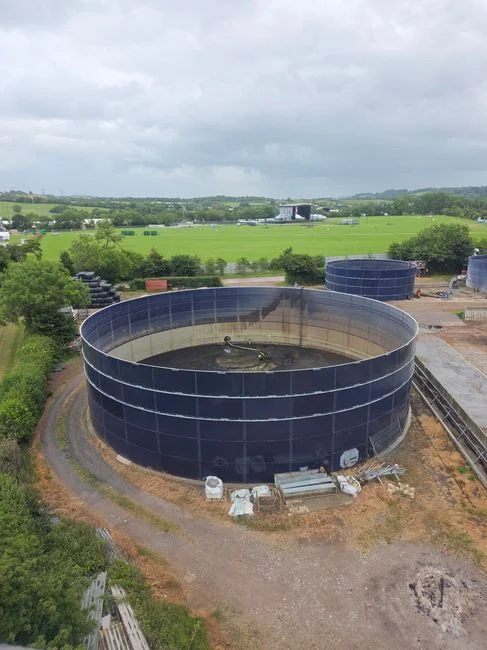
A technically capable plant can still be an unsuitable procurement if excavation, maintenance, pumping or phased commissioning is unresolved. Record the available footprint, practical excavation depth, construction access, soil and groundwater conditions, flood exposure, nearby receptors and the location of the approved discharge point. Confirm the removal route for sludge, equipment access arrangements, power and control locations, and any noise, odour or ventilation requirements.
Assess levels early. Gravity collection is possible only if the development sewer arrangement and treatment-plant inlet levels support it; otherwise, a pumping station adds electrical, mechanical, standby and maintenance obligations. A decentralized sewage treatment buyer’s guide provides a useful general structure for checking site and lifecycle issues, although its location-specific regulatory content is not evidence of Hong Kong requirements.
Compare whole-life cost components rather than accepting a generic plant price: deliveries, excavation and concrete works, electrical supply, remote monitoring, aeration, membrane replacement where applicable, routine maintenance and sludge handling. The supplied research does not provide a defensible Hong Kong price for these works, so a cost comparison remains invalid until quantities, site constraints, power arrangements, maintenance access and supplier scope are defined.
For a phased estate, require the supplier to state performance during first occupation, intermediate phases and final occupancy, and explain its capacity-reservation strategy for later phases. A modular installation may provide an expansion route, but the design must still demonstrate that the biological process, hydraulics, controls and discharge arrangement work at partial load.
Quotations should separate equipment, civil works, electrical works, commissioning, training, maintenance access, spare parts, warranty, performance testing and long-term service obligations. This allows the developer to compare like-for-like scope and identify whether a low equipment price is offset by unpriced excavation, pumping, controls, sludge removal or membrane servicing.
Turn the selection into a submission-ready procurement plan
The procurement sequence should begin before equipment tenders are issued. Appoint or coordinate the Hong Kong civil, environmental and M&E consultants so the public-sewer enquiry, approved discharge route, treatment objectives and electrical requirements remain aligned. Where on-site treatment is required, establish the consent pathway and the operating-entity responsibility at concept stage.
Issue a site-specific request for proposal containing the population basis, daily and hourly flow calculations, peak and minimum duty scenarios, wastewater characterisation, approved discharge route, available footprint, excavation constraints, power supply and development phasing. A request based only on unit count will produce non-comparable offers and may conceal unsuitable process assumptions.
Require each bidder to submit a preliminary process selection, hydraulic calculation, civil envelope, utilities schedule, automation and controls concept, maintenance-access plan, sludge-handling proposal, commissioning sequence and compliance evidence. Ask the bidder to identify the model, duty points, design assumptions, exclusions and any capacity reservation for future phases.
Treat the WSZ catalogue range of 1–80 m³/h and MBR range of 10–2,000 m³/day as screening information only. Final selection requires verified Hong Kong flow calculations, site-specific civil design and agreed discharge conditions. The package wastewater treatment supplier and compliance checklist provides useful document-control prompts, but no Nigerian cost, consent or supplier requirement should be presented as applicable in Hong Kong.
Close the process by recording authority comments, design changes, discharge conditions, operating responsibilities, training, commissioning acceptance and handover requirements. Those records should define what each party must deliver and which performance evidence the supplier must provide during first occupation, intermediate phases and final occupancy.
Frequently Asked Questions
How many housing units can one packaged sewage treatment plant serve?
There is no universal units-per-plant ratio. Calculate the development’s population equivalent, daily flow, residential peak flow, minimum flow, discharge route and site constraints, then test the proposed unit against first occupation, intermediate phases and full occupancy. The Hong Kong-specific flow and occupancy basis must come from the project civil or environmental designer.
Is an underground WSZ package suitable for a Hong Kong housing development?
It can be a strong candidate because the WSZ package integrates anoxic/aerobic contact oxidation, sedimentation and disinfection and is designed for below-grade installation. Suitability still depends on verified hydraulic capacity, geology, groundwater, maintenance access, power, lifting, sludge removal, discharge approval and the associated civil works.
Should a developer choose WSZ or MBR for a residential estate?
Choose WSZ when the priority is an integrated buried biological package with automatic operation. Investigate MBR where membrane separation, a compact biological footprint or a high-grade reuse objective justifies the added process complexity. Compare both against project flows, consent conditions, landtake, maintenance provisions and lifecycle cost rather than catalogue capacity alone.
How can I reduce the risk of an unsuitable supplier quotation?
Require the bidder to price the complete treatment objective and separately identify equipment, civil works, commissioning, training, maintenance access, sludge handling, spare parts, warranty and service obligations. The quotation should also present peak, minimum and phased-occupancy duty cases and identify the discharge and consent assumptions used in the offer.
Can published treatment efficiencies be used as Hong Kong compliance guarantees?
No. The supplied SBR, FBBR and product figures are technical or manufacturer-specific references, not confirmed Hong Kong discharge standards. Compliance must be demonstrated against the project’s applicable approved Hong Kong wastewater consent conditions using the selected process, site inputs and verified operating duties.