What the GlobalFoundries Malaysia transaction actually establishes
The wastewater requirements triggered by a GlobalFoundries acquisition in Malaysia depend on the acquired plant’s existing Malaysian approvals, receiving authority, discharge route, process inventory and proposed production changes; a change in ownership does not itself establish a new permit, but the buyer must verify whether approvals transfer, require amendment or must be replaced. GF confirmed a Malaysian operating presence, but the supplied evidence does not identify the relevant plant, permit or discharge route, so those items must be confirmed during due diligence.
GF’s primary-source announcement dated November 17, 2025 concerns Advanced Micro Foundry, a silicon-photonics foundry based in Singapore, not an identified Malaysian plant acquisition. The transaction combines AMF’s manufacturing assets, intellectual property and skilled talent with GF; expands GF’s silicon-photonics portfolio and production capacity; and expands research and development in Singapore.
GF also stated that AMF manufactures on a 200mm platform and plans to scale to 300mm as market needs grow. For a Malaysian asset, the relevant diligence question is whether the acquired site’s approved wastewater design basis reflects its actual process, flow, chemistry and any post-closing platform or volume change. A career page titled “GF Malaysia” returned a 504 Gateway Timeout in the supplied extraction; its title alone cannot establish a permit, plant type, wastewater flow or regulator.
The transaction map must identify the exact legal entity, physical site, manufacturing processes, permit holder, receiving authority and proposed operational changes. The separate framework for Malaysia plant acquisition wastewater requirements is useful only when each item is tied to an identified Malaysian asset.
| Evidence item | What the supplied source establishes | Diligence treatment |
|---|---|---|
| GF acquisition announcement | AMF is a Singapore-based silicon-photonics foundry; announcement dated November 17, 2025. | Do not characterize it as evidence of a Malaysian plant transaction. |
| Manufacturing platform | AMF uses a 200mm platform and plans to scale to 300mm, according to GF. | Compare any Malaysian platform or volume change with its approved wastewater basis. |
| Malaysia presence | A GF careers page is titled “GF Malaysia,” but the supplied extraction returned a 504 Gateway Timeout. | Confirm the legal entity, site, operations and regulator through primary records. |
| Malaysian permit and discharge route | Not established by the supplied research. | Obtain the approval register, receiving-authority consent and permit conditions. |
Determine which Malaysian permits and approvals control the site
Wastewater compliance must be mapped from the site’s actual Malaysian discharge route, because an ownership change alone does not tell the buyer which approvals must be transferred, amended or replaced.
Request the complete environmental approval register before signing. It should include permit or consent documents, conditions, annexes, approved process-water and wastewater flow assumptions, monitoring points, reporting frequency, the designated receiving authority and renewal dates. Confirm whether each approval is facility-specific, operator-specific or both. A change in corporate ownership, licensed operator, process chemistry, wastewater flow, discharge point or reuse arrangement may alter what must be notified or reapproved; the applicable consequence must be confirmed with the Malaysian regulator or receiving authority.
Map the final outlet before evaluating treatment. A discharge to a municipal sewer, a centralized industrial pretreatment plant, a Malaysian surface-water body, another controlled outlet or an onsite reuse system creates a different approval and performance test. If the plant discharges to a municipal sewer or centralized industrial sewer, obtain the sewer authority’s current discharge consent, prohibited-use rules, local limits, pretreatment agreement, trade-waste classification and hazardous-waste exclusion requirements.
The applicable Malaysia environmental quality regulations and industrial effluent discharge conditions must come from the site’s instruments and the receiving authority. The U.S. framework discussed in the commercial foreign wastewater acquisition reference is not Malaysian law. Its 40 CFR Part 469 framework may organize questions, but Malaysian applicability must be demonstrated from the site-specific permit and discharge consent.
| Discharge pathway | Primary approval evidence to obtain | Decision consequence |
|---|---|---|
| Municipal sewer | Discharge consent, local limits, prohibited-use rules and trade-waste requirements. | Determine whether industrial pretreatment approval and acceptance testing are required. |
| Centralized industrial pretreatment plant | Connection agreement, discharge criteria, pretreatment requirements and downstream acceptance conditions. | Define the required pretreatment performance and monitoring points. |
| Surface water | Current environmental consent, effluent limits, sampling points and discharge-flow basis. | Test whether the existing train can meet the consent at the permitted flow and proposed chemistry. |
| Onsite reuse | Approval basis, authorized end use and water-quality specification. | Define polishing requirements before selecting membranes or dosing systems. |
Build a source-by-source wastewater characterization
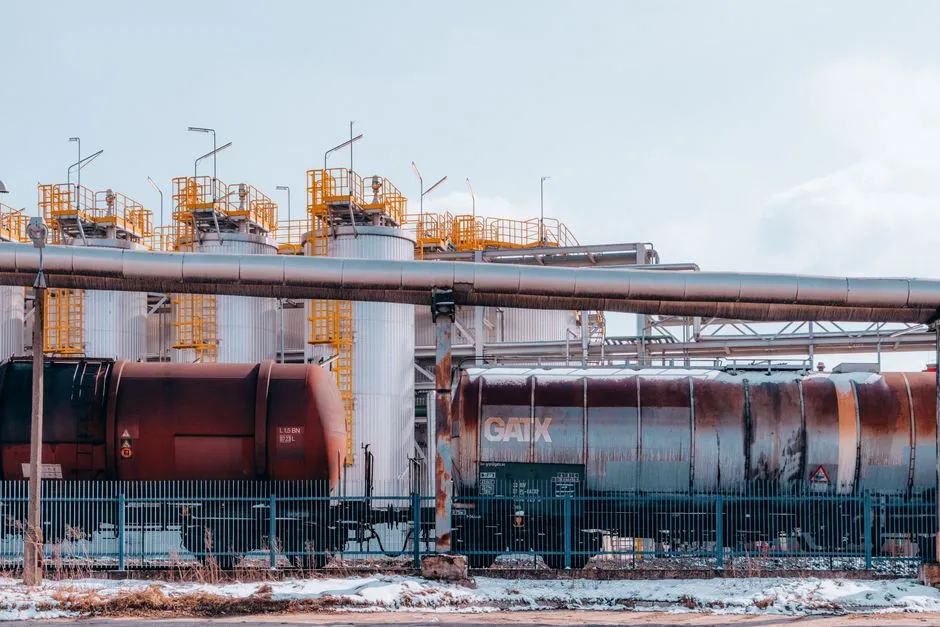
A semiconductor wastewater characterization must follow the plant’s segregated streams because a generic fabrication profile cannot establish the applicable treatment train or permit limits.
Request at least one representative campaign for each segregated stream. The data package should cover flow, pH, temperature, suspended solids, chemical oxygen demand, total organic carbon, fluoride, arsenic, copper, lead, zinc, silica, oils and greases, toxicity indicators and process-specific pollutants. Sampling methods, analytical laboratory, chain of custody, historical deviations, bypass events, sludge and hazardous-waste manifests, and any historical dilution or bypass route must also be disclosed.
For CMP slurry, evaluate colloids, silica, fluoride and metals according to the actual process. The supplied U.S. benchmark identifies DAF as effective for colloidal solids, oil and grease and suspended matter, followed by clarification where required. This is a treatment reference, not a Malaysian acceptance criterion.
For HF or buffered-oxide-etch streams, evaluate neutralization and fluoride-bearing solids generation. The Texas benchmark describes calcium precipitation or ion exchange as possible approaches, but the selected Malaysian train must be based on site chemistry and receiving-authority limits.
For TMAH developer wastewater, determine whether biological degradation, advanced oxidation or a combined train is required. The Texas benchmark describes acclimated activated sludge followed by ozone or UV/hydrogen peroxide and treats TMAH as a site-specific process pollutant rather than a listed categorical parameter.
For photoresist-stripper and spent-solvent streams, determine whether segregation for hazardous-waste management, solvent recovery or destruction is required. The supplied benchmark identifies possible D001, F003 and F005 applicability under U.S. RCRA rules; that is a due-diligence prompt, not a Malaysian legal classification. Separate these streams from the general wastewater train until the waste classification and treatment route are confirmed.
| Wastewater stream | Key characterization questions | Treatment decision that must remain open |
|---|---|---|
| CMP slurry | Colloids, silica, fluoride, metals, flow variability and solids properties? | Whether solids removal, clarification and further polishing are required. |
| HF and buffered oxide etch | Fluoride load, acidity, metals and precipitation chemistry? | Neutralization, fluoride-bearing solids handling and polishing sequence. |
| TMAH developer | COD, TOC, TMAH, toxicity and biodegradability? | Biological treatment, advanced oxidation or a combined train. |
| Photoresist stripper and spent solvent | Segregation, waste classification, recoverability and trace contamination? | Hazardous-waste route, solvent recovery or destruction outside the wastewater train. |
Match the treatment train to the required discharge outcome
The receiving authority’s required effluent or reuse outcome—not the available treatment technology—must determine equipment selection.
For sewer discharge, confirm whether the authority requires industrial pretreatment, local concentration or mass limits, metals removal, fluoride control, pH adjustment and flow equalization. Require a formal acceptance test before connection or discharge-path changes. For surface-water discharge, use the current Malaysian consent as the controlling basis and test whether the existing process can meet its limits at the permitted flow; evaluate production or chemistry changes before implementation.
For industrial wastewater reuse, define the end use and required water quality before selecting final polishing. The supplied U.S. benchmark states that ultrafiltration removes bacteria, colloids and suspended solids, while industrial reverse osmosis can produce permeate suitable for high-purity industrial applications. Neither should be specified without conductivity, silica, recovery and fouling data. An integrated MBR wastewater treatment system is one biological option; the product description identifies a combined activated-sludge and submerged-PVDF membrane system with effluent below 1 μm filtration and a smaller footprint than conventional systems.
For solids-heavy or oily pretreatment, a DAF system for semiconductor wastewater pretreatment is a candidate because the supplied product range addresses suspended solids, oil and grease and colloidal matter. Confirm peak and average hydraulic loading, polymer demand, recovered-solids handling and downstream polishing. The MBR versus conventional activated sludge comparison is relevant to footprint and reuse considerations, while the industrial ETP and DAF selection guide provides a broader selection framework.
For chemical dosing and pH control, evaluate skid-mounted automatic dosing against measured flow, chemical inventory, containment and fail-safe requirements. Do not carry a fixed dose from a benchmark into a purchase specification.
| Required outcome | Decision logic | Equipment implication |
|---|---|---|
| Municipal or industrial sewer | Acceptance criteria confirmed before final design. | Define pretreatment, equalization, pH control and monitoring from local limits and representative data. |
| Surface-water discharge | Existing process tested against the current Malaysian consent at permitted flow. | Add or modify treatment only after the compliance gap is demonstrated. |
| Industrial reuse | End use and water-quality matrix defined first. | Consider biological treatment, membrane polishing and water-quality monitoring as an integrated train. |
| Solids-heavy or oily stream | Hydraulic and contaminant loading established. | Assess DAF, solids handling and downstream polishing. |
Use a 100-day acquisition and integration plan
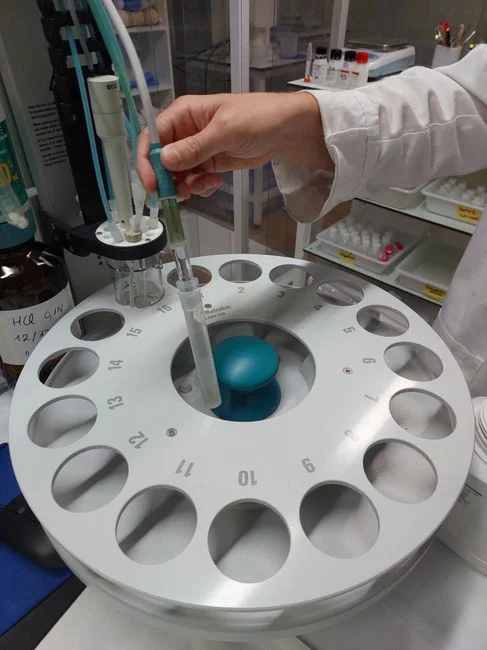
Wastewater equipment should be ordered only after the site’s approval basis, discharge outcome and representative wastewater data are documented.
- Before signing: collect permits, effluent analyses, sludge and hazardous-waste records, notice-of-violation files, monitoring reports, bypass logs, equipment condition records, operator credentials and outstanding regulator or sewer-authority correspondence.
- At closing: confirm which legal entity owns or operates each approval, assign environmental responsibility, preserve sampling and chain-of-custody procedures, and identify dependencies on seller personnel, laboratory data or shared treatment infrastructure.
- Days 1–30: notify the relevant regulator or sewer authority where required; establish the compliance owner; reconcile permit drawings and sample points with the installed process; commission metering and monitoring equipment.
- Days 31–100: perform a site-wide mass balance, confirm treatment performance through a representative campaign, close corrective actions, validate sludge and hazardous-waste routes, and document operating procedures for abnormal and bypass conditions.
- Capital gate: approve the wastewater-equipment specification only after the required outcome, representative wastewater data, flow basis, receiving-authority limits, future production plan and future-change process are documented.
This sequence supports the transaction-level review summarized in the wastewater acquisition diligence blueprint, keeping Malaysian site verification separate from assumptions borrowed from another jurisdiction.
Frequently Asked Questions
Does GlobalFoundries need a new wastewater permit merely because it acquires a Malaysian plant?
Not necessarily. The requirement depends on the existing Malaysian approval, permit holder, receiving authority, operating changes and the regulator’s transfer or amendment rules. The supplied evidence establishes no universal Malaysian rule, so the buyer must obtain the site-specific instruments and written confirmation from the relevant authority.
What wastewater data should be obtained before sizing an ETP for an acquired semiconductor plant?
Request stream-level flow and chemistry, permit limits, discharge route, historical variability, sludge properties, future production plans and acceptance-test requirements. Include sampling methods and chain of custody so the data can support regulatory and design decisions.