Start with the Alexandria discharge requirement, not a treatment skid
Industrial organic chemical plants near Alexandria meet pretreatment limits by first obtaining the local sewer authority’s written discharge requirements and characterizing each waste stream before designing equipment. They then use source control, equalization, pH adjustment, dissolved air flotation, clarification, biological treatment, and polishing as required by the wastewater characteristics. Compliance must be demonstrated through monitoring, operating records, and documented sampling. EPA’s Preliminary Effluent Guidelines Program Plan 15 also indicates that revised effluent limitations guidelines and pretreatment standards are warranted for selected industrial categories, so teams should verify the rules currently applicable to their process and discharge point.
The first task is to identify the receiving authority, the exact sewer connection, and whether the facility discharges to a publicly owned treatment works (POTW) or another permitted destination. For a POTW connection, obtain the current sewer-use ordinance, industrial user permit, local sewer discharge authorization, and any applicable federal categorical pretreatment standard. Request the currently effective language directly from the authority or an official regulatory source; an old summary or another plant’s permit does not establish this facility’s obligations.
EPA’s Preliminary Effluent Guidelines Program Plan 15 is a regulatory-watch reference, not an Alexandria permit. EPA says the plan was prepared under Clean Water Act section 304(m), identifies three rulemakings involving contaminants including PFAS and nutrients, and states that revised effluent limitations guidelines and pretreatment standards are warranted for selected industrial categories. The applicable permit controls, and the supplied research does not establish a universal organic-chemical discharge limit for Alexandria-area plants.
Create a compliance register before ordering equipment. For every requirement, record the source document, limit, averaging period, monitoring frequency, sampling method, reporting destination, approval authority, and effective date. A pretreatment compliance sequence for another industrial location can help structure the review, but its requirements cannot be transferred to Alexandria without confirmation from the receiving authority. A separate industrial pretreatment guide for plastics and rubber plants similarly illustrates the need to match rules to the regulated process and discharge point.
| Compliance register field | Information to obtain | Why it affects design |
|---|---|---|
| Controlling requirement | Current permit, sewer-use ordinance, discharge authorization, and applicable categorical standard | Defines the legal obligation and the pollutants covered |
| Limit and averaging period | Written concentration or mass limit and how compliance is calculated | Determines the required treatment endpoint |
| Monitoring and sampling | Frequency, sample type, method, preservation, and location | Sets the sampling system and laboratory program |
| Reporting | Form, recipient, deadline, and notification requirements | Connects operating data to regulatory records |
| Approval and revision control | Effective date, issuing authority, permit conditions, and change triggers | Prevents design against obsolete or inapplicable terms |
Characterize every wastewater stream before selecting process equipment
Industrial wastewater characterization should be stream-specific because a plant average can conceal the batch, cleaning, or upset conditions that determine treatment performance. Begin with a map of process origins, batch dumps, wash water, floor and equipment cleanup, storm-water exclusions, and combined or segregated discharge points. Then define representative samples rather than relying on a single production-day result.
Request analytical data for pH, total suspended solids, oil and grease, chemical oxygen demand (COD), flow, and any constituents identified by the local permit or product processes. Sampling should cover normal production, cleaning, shutdown, and upset conditions. Document the sampling point, flow represented, holding time, preservation, analytical method, and whether the result is grab or composite, using the authority’s instructions where specified.
The available tannery study is a useful warning about the number of treatment drivers that can coexist in industrial wastewater. Zero Liquid Discharge System for the Tannery Industry—An Overview of Sustainable Approaches, published by Recycling in 2022, reports water consumption of approximately 30–40 m³ for processing 1,000 kg of hide or skin, with about 300 kg of different chemicals entering the wastewater. It describes refractory organic compounds, high COD, total dissolved salts, chromium, ammonia, and sulfides. These values describe tannery processing only; they are not Alexandria limits and should not be used as design loads for an organic chemical plant.
The transferable lesson is methodological: a wastewater stream may contain several simultaneously limiting constituents, so one parameter cannot establish treatment suitability. Use the comparison of MBR and conventional activated sludge for chemical-industry wastewater to frame the biological-suitability questions that analysis must answer. Where plant data are sparse or highly variable, commission a supplemental sampling study through an independent laboratory. Its scope should include normal and upset conditions, the analytes required by the permit, and enough sampling events to identify variability rather than average it away.
| Characterization item | Minimum plant information to request | Design question answered |
|---|---|---|
| Wastewater origin | Process, batch or continuous source, cleaning method, and discharge route | Which streams can be segregated or pretreated separately? |
| Flow | Representative and peak flow, including batch dumps and cleanups | What flow basis should the treatment train handle? |
| Quality | pH, total suspended solids, oil and grease, COD, and permit-specific analytes | Which removal mechanisms are required? |
| Variability | Production, cleaning, shutdown, upset, and chemical-receipt conditions | How much equalization and control capacity are needed? |
| Sample quality | Method, preservation, holding time, point, and flow represented | Can the data support design and compliance reporting? |
Control the source before treating the combined flow
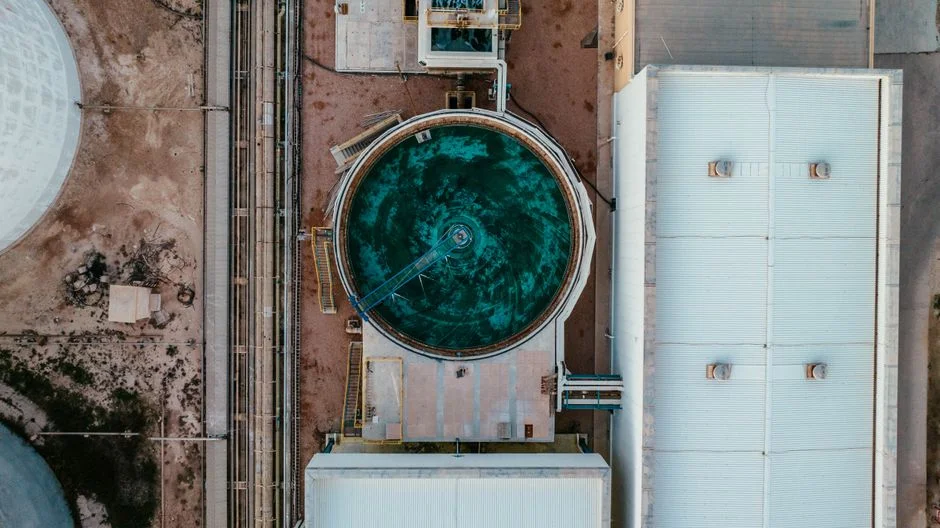
Source control reduces the load, flow variation, and shock events that would otherwise dictate the size and complexity of the treatment system. Segregate incompatible streams where practical, especially where one stream can cause a pH excursion, emulsify oil, release a concentrated organic batch, or interfere with biological treatment. Identify the plant’s largest organic, solids, oil, and pH contributors rather than assuming they occur in the combined flow in fixed proportions.
Start with production housekeeping, dry cleanup, controlled collection, and segregation. These measures can remove concentrated material before it enters dilution water and can reduce chemical demand downstream. Equalization then moderates flow and concentration variation, but it does not remove COD, make refractory organics biologically compatible, or correct an off-spec final discharge. It should therefore be designed around actual batch and upset data, with mixing, aeration, and containment requirements confirmed for the wastewater chemistry.
Tank management is part of source control for facilities storing organic chemicals. The Office of Scientific and Technical Information’s Corrective Action Strategy for Single-Shell Tanks Containing Organic Chemicals supports disciplined tank inspection, leak response, and corrective-action planning. Translate that discipline into site procedures covering tank inventory, inspection, leak detection, secondary containment, spill response, and the consequences of an off-spec discharge entering the treatment system.
Define operating alarms before commissioning the treatment train. At minimum, the response plan should address off-spec pH, excessive organic loading, visible oil, abnormal flow, chemical-use discrepancies, and bypass conditions. Each alarm should have a named operator action, an escalation path, and a record showing what happened. The industrial sludge dewatering design guide is relevant only to separated solids: sludge dewatering does not remove dissolved contaminants from the liquid stream.
Build a treatment train that matches the contaminant
A defensible treatment train assigns each process step to a specific contaminant or operating problem identified during characterization. No single process is a universal answer for organic chemical wastewater, and equipment performance claims do not establish compliance with an Alexandria permit. The final train should be reviewed against the wastewater profile, written permit, operating variability, and available utilities.
Use pH adjustment and chemical dosing only with a defined control objective, such as pH correction or floc formation before solids separation. A PLC-controlled wastewater chemical dosing system can support controlled injection of coagulants, flocculants, pH adjusters, and specialty chemicals, but chemical selection and dosage must follow wastewater testing rather than a generic recipe.
Use DAF as physical pretreatment where suspended solids, oil and grease, FOG, or colloidal material must be removed before biological or polishing equipment. The supplied industrial DAF wastewater pretreatment system is described as covering 4–300 m³/h across 13 standard models. That is a product range, not an Alexandria capacity or performance requirement; the selected capacity must follow plant flow and constituent data.
Use clarification after flocculation when denser solids require separation. The supplied Lamella clarifier product data specify 20–40 m/h surface loading rates and state that chemical consumption can be up to 30% lower. These are manufacturer product statements, not permit limits or independently established Alexandria performance data.
Use biological treatment only after screening for compatibility, toxicity, refractory organics, salinity, and other inhibition risks. Use MBR or another polishing step when the design basis requires a very low suspended-solids endpoint; the supplied MBR product is described as providing near-reuse-quality effluent with filtration below 1 μm. That product description does not show that the plant’s COD, pH, oil, or other regulated constituents will meet its permit. Use a plate-and-frame filter press for separated sludge when the objective is dewatering rather than dissolved-contaminant removal. No supplied source establishes that end-of-pipe treatment is always adequate or always inadequate for an organic chemical plant.
| Treatment problem | Potential step | Required basis before selection |
|---|---|---|
| Unstable pH | pH adjustment | Influent range, target condition, mixing, chemical demand, and downstream compatibility |
| Suspended solids, oil, FOG, or colloidal material | DAF | Representative load, flow, separability, and required pretreatment performance |
| Flocculated solids requiring higher-solids separation | Clarification | Floc characteristics, settling behavior, loading basis, and sludge handling |
| Biodegradable organics with compatible wastewater | Biological treatment | Toxicity, refractory fraction, salinity, inhibition, and loading variability |
| Very low suspended-solids endpoint | MBR or other polishing | Required endpoint, membrane or process basis, fouling controls, and reject handling |
| Separated solids requiring dewatering | Plate-and-frame filter press | Sludge characteristics, batch versus continuous operation, cake handling, and filtrate destination |
Prove performance before and after the sewer connection

Performance verification should test the design basis, not merely demonstrate that the equipment starts. Establish acceptance criteria for each unit using agreed influent and effluent parameters, documented test methods, operating conditions, and sampling points. The receiving authority should confirm which tests and records support commissioning and permit reporting before the system enters service.
During operation, record influent flow and quality, chemical use, energy use, sludge or skimmings removal, alarms, bypass events, and operator actions. Preserve the laboratory reports, chain-of-custody forms, instrument calibration, preventive maintenance, and corrective-action records associated with permit samples. These records connect a reported result to the wastewater that actually entered the treatment train.
Review trends against the assumptions used during design. Recurring excursions can indicate an overloaded unit, chemical imbalance, inappropriate waste receipt, equipment fouling, or a sampling error. A corrective-action record should identify the affected unit, the operator response, the restored operating condition, and any change to the process basis. Do not assume a successful single sample establishes stable performance.
For solids handling, equipment acceptance should address the separated sludge stream rather than the final liquid discharge. A plate-and-frame filter press for separated sludge must be evaluated against the actual sludge properties and dewatering objective. Confirm whether filtrate returns to the head of the works or requires separate handling.
Use a staged procurement plan to control compliance risk
Equipment selection should follow the permit and influent investigation, not precede them. Before requesting budgetary pricing, obtain the industrial user permit or local sewer discharge authorization, current sewer-use requirements, representative wastewater analyses, process and batch inventory, flow records, chemical-use records, and identified operating excursions. Ask the receiving authority to review the proposed basis before committing to a treatment train.
Use bench testing or a pilot trial when performance depends on variable emulsions, uncertain floc behavior, biological response, refractory organics, or variable organic loading. A trial should use representative wastewater and record the same variables expected during operation: flow, contaminant loading, chemical use, solids separation, biological response where applicable, and effluent quality.
Require equipment suppliers to state the guaranteed flow basis, process duty, control scope, utility demand, installation requirements, exclusions, and performance-test conditions. Do not accept a production claim as a guarantee of permit compliance. Include operator training, control narratives, spare parts, maintenance access, sampling provisions, and permit-support documentation in the procurement package. A mechanical screening approach such as the rotary mechanical bar screen should be included only if the wastewater map shows a screening or solids-control requirement, not as a generic pretreatment substitute. The integrated MBR wastewater treatment system should be evaluated against the actual solids endpoint and biological compatibility rather than selected by name alone.
Stage the work as requirements, characterization, concept selection, testing, final design, authority review, procurement, commissioning, and verification. Equipment selection is one part of the compliance submission, not the first step.
Frequently Asked Questions
What documents control an organic chemical plant’s pretreatment obligations near Alexandria?
The compliance basis consists of the receiving sewer authority’s written requirements, including the current sewer-use ordinance, industrial user permit or local sewer discharge authorization, and any applicable federal categorical pretreatment standard. EPA’s Preliminary Effluent Guidelines Program Plan 15 is a regulatory-watch document, not a plant permit. Obtain the currently effective local terms and confirm the applicable federal category for the plant’s actual processes and discharge point.
Is DAF a complete solution for organic chemical wastewater?
No. DAF is primarily a physical step for separating suspended solids, oil and grease, FOG, and some colloidal material. It does not by itself resolve refractory COD, salinity, toxicity, pH instability, or biological incompatibility. The wastewater characterization and written permit determine whether DAF is needed, where it belongs in the train, and what downstream treatment is required.
What information should I request before asking for equipment sizing or price?
Request the governing permit and sewer-use requirements, representative analyses across operating conditions, flow and batch records, waste-stream map, chemical inventory, and the required sampling and reporting methods. Also provide expected operating hours, utilities available, installation constraints, sludge-handling assumptions, and performance-test conditions. Without these inputs, a supplier can quote equipment geometry but cannot defensibly size the compliance system or establish its performance.
How should a supplier be selected when the wastewater varies or oil may emulsify?
Select through an evidence-based sequence: confirm the authority’s requirements, characterize representative and upset waste, define the removal objective, test the proposed process with actual wastewater, and then compare bids against stated performance conditions. Request the pilot or bench data, flow and loading basis, control scope, utilities, installation requirements, exclusions, training, maintenance access, and permit-support documentation. The supplied research does not provide a universal cost, lead time, or discharge-limit value for Alexandria-area organic chemical plants; those require a project-specific quotation.