What Changes When Activated Sludge Is Paired with Membrane Separation
Conventional activated sludge and a membrane bioreactor share the same core biological step, but they separate biomass in fundamentally different ways. CAS uses gravity-driven secondary clarification; MBR uses membrane filtration within the biological process. That difference changes plant layout, solids handling, hydraulic control, fouling exposure, and operating cost.
Conventional activated sludge treats biodegradable organics and, where appropriate, ammonia biologically, then separates the biomass in secondary clarifiers. Clarifier performance determines how much suspended solids carry into the effluent, while excess sludge requires thickening, dewatering, and disposal. MBR combines activated sludge with physical liquid-solid separation, retaining more biomass in the reactor and replacing the secondary clarifier with membrane modules.
The 2016 MBR fouling review, Membrane Bioreactor Technology for Wastewater Treatment and Reclamation: Membrane Fouling, reports that MBR can provide high-quality effluent, higher volumetric loading rates, shorter hydraulic retention time, longer solid retention time, less sludge production, and potential for simultaneous nitrification and denitrification at long SRTs. These are process characteristics, not guarantees for a mine-water stream.
The membrane changes how solids are separated; it does not remove every dissolved contaminant by itself. Dissolved metals, acidity, alkalinity, salinity, inhibitory organics, and precipitating species remain design inputs. The integrated MBR membrane bioreactor system should therefore be evaluated as part of a treatment train, not purchased as a substitute for metals removal or adequate pretreatment. The MBR wastewater treatment cost per m³ guide provides a separate framework for evaluating the associated operating and replacement costs.
How Mining and Metals Wastewater Changes the Comparison
Mining-water treatment has three separate duties: removing suspended solids, treating biodegradable organics or ammonia where applicable, and removing dissolved metals through dedicated chemical or physical processes. Assigning dissolved-metal removal to the biological stage is a common design error.
Variable flows complicate biological loading and equalization. Suspended solids can increase clarifier solids loading or foul membranes. Iron, manganese, calcium, aluminum, and other metals can precipitate as pH changes, creating solids in the clarifier or mineral scale on membrane surfaces. Process-water chemistry can also inhibit biology or change floc behavior.
The 2016 MBR fouling review provides a screening caution: moderate calcium concentrations up to 280 mg/L may aid bioflocculation, while concentrations above 800 mg/L can significantly increase inorganic fouling. These findings do not establish a mine-water operating limit; they show why hardness and precipitation data must be considered before membrane selection.
| Treatment duty | What it must address | Relevant decision |
|---|---|---|
| Physical solids removal | Suspended solids, grit, debris, and precipitated material | Determine whether screening, sedimentation, or DAF pretreatment for suspended solids is required upstream. |
| Biological treatment | Biodegradable organics and ammonia where treatment objectives require them | Compare CAS and MBR using actual load, temperature, pH, inhibition, and SRT requirements. |
| Dissolved-metal removal | Metals remaining in solution after physical treatment | Define precipitation, filtration, pH control, and residual-metal polishing requirements. |
For a Hartford-area evaluation, request flow records and peak factors, total suspended solids, pH, alkalinity, hardness, iron, manganese, and each target metal. Temperature, conductivity, and biodegradable COD or BOD are also needed. If pH or coagulation control is required, evaluate an automatic chemical dosing system sized around the measured chemistry and control response.
CAS may be adequate for a stable, lower-duty stream if its clarifier can meet the required solids separation and hydraulic conditions. MBR becomes more compelling when footprint, low effluent solids, or controlled solids separation outweigh the additional membrane, aeration, cleaning, and replacement exposure.
MBR and Conventional Activated Sludge Side by Side
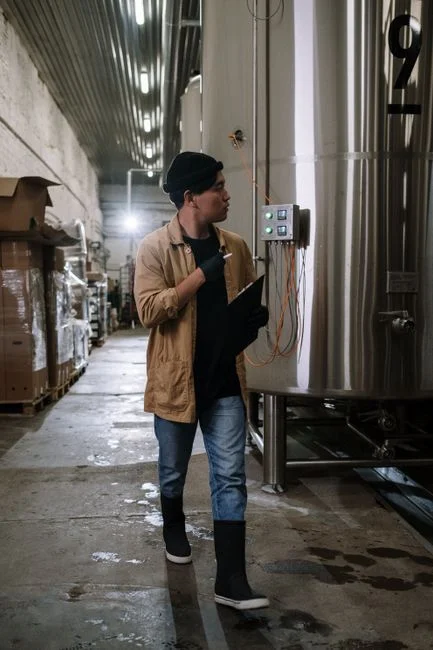
MBR earns consideration when it eliminates a process constraint that matters more than membrane-specific operating burden. The 2016 review reports shorter hydraulic retention time and reduced plant-area requirements compared with conventional systems because MBR removes the secondary clarifier; conventional activated sludge remains operationally familiar but carries clarifier, sludge, odor, and settling-performance risks.
| Design issue | Conventional activated sludge | MBR |
|---|---|---|
| Biological mechanism | Activated-sludge biology | Activated-sludge biology with retained biomass |
| Solids separation | Secondary clarification by gravity | Membrane filtration; no secondary clarifier |
| Hydraulic retention and area | Longer HRT and larger plant area are characteristic limitations identified in the 2016 review | Shorter HRT and reduced area requirements are reported by the 2016 review |
| Sludge | Requires biomass separation, handling, and disposal | The 2016 review reports less sludge production; no site-specific mass saving can be inferred. |
| Effluent solids | Dependent on clarifier performance and carryover | Filtration provides more controlled solids separation |
| Hydraulic response | Equalization, aeration, and clarifier capacity must cover peaks | Compact separation may help, but membrane flux, equalization, biology, and pretreatment still limit the operating envelope. |
| Main operating risk | Clarifier carryover, sludge handling, settling behavior, and odors | Biofouling, organic fouling, and inorganic fouling, with associated cleaning and membrane replacement exposure |
| Operator complexity | Conventional process familiar to many contractors | Requires membrane monitoring, controls, cleaning discipline, and replacement planning |
The municipal evidence must remain in its original scope. BDM Projects’ March 2015 report, Options for Improved Nutrient Removal and Recovery from Municipal Wastewater in the Canadian Context, found that biomass-retaining MBRs could offer up to 75% reduction in required volume compared with conventional biological nutrient-removal methods. That was a municipal nutrient-removal comparison, not a mining-water footprint guarantee.
For product-level screening, HydropureWater’s verified 2026 product catalog specifies an integrated MBR system with a 60% smaller footprint than conventional systems. Treat that as a manufacturer specification, not an industry-wide figure. Where solids dewatering is still required, the claim should be checked against the complete train, including a plate-and-frame filter press and handling of metal-containing residuals.
The 2016 review also reports that membrane fouling reduces performance and membrane life, increasing maintenance and operating costs. A comparison that counts only equipment price will therefore be incomplete. It should include aeration, cleaning chemicals, membrane replacement, labor, downtime, sludge handling, and the consequences of solids carryover or failed membrane operation.
Fouling, Metals, and Pretreatment Design
Membrane fouling is a chemistry-and-operation problem, not an automatic failure of MBR. The 2016 review classifies foulants as biofoulants, organic foulants, and inorganic foulants. Biofoulants include bacteria or flocs attached to and growing on the membrane; organic foulants include microbial polymers; inorganic foulants include precipitating ions such as calcium, magnesium, iron, aluminum, sulfate, phosphate, carbonate, and hydroxide.
Operationally, fouling lowers permeate flux at constant transmembrane pressure. At constant flux, a sharp TMP increase is a “TMP jump”; the review identifies this as severe fouling requiring membrane cleaning. The control response should therefore include normalized permeability, TMP trend review, and defined cleaning triggers—not just a scheduled wash interval.
| Monitoring item | What the 2016 review reports | Engineering implication |
|---|---|---|
| Biopolymer clusters | In a laboratory-scale submerged MBR, increases of 20% and 60% from about 3.5 mg/L raised the fouling rate by 120% and 300%, respectively. | Track mixed-liquor properties and investigate sudden fouling-rate changes. |
| Ozonation of biopolymer clusters | 0.03 mg O3/mg TOC reduced mean cluster size from 38 to 27 μm; 0.3 mg O3/mg TOC reduced it to 12 μm. | This is a reported laboratory finding, not a default design dose for a Hartford mine-water plant. |
| Calcium | Concentrations up to 280 mg/L may aid bioflocculation; concentrations above 800 mg/L can significantly increase inorganic fouling. | Measure hardness and model precipitation through the expected pH and chemistry cycle. |
| TMP behavior | At constant flux, a sharp TMP increase indicates severe fouling and requires cleaning. | Include instrumentation, trend alarms, cleaning acceptance criteria, and downtime in the operating plan. |
Physical separation and dissolved-metal removal must remain separate design questions. A jar or pilot test should examine solids settleability, membrane flux, TMP development, pH response, chemical consumption, and cleaned-water quality. If testing shows that precipitation or coagulation is necessary, evaluate an automatic chemical dosing system with defined control objectives. Where debris or coarse solids could reach the membrane train, include protective screening; a rotary mechanical bar screen may be evaluated, with final selection based on the actual solids stream.
Do not assume that a membrane removes dissolved metals because the final liquid passes through a very small pore. Metal removal depends on upstream chemistry, precipitation, filtration, and any dedicated polishing. A plate-and-frame filter press can dewater chemical sludge, but it does not change the dissolved-metal removal requirement.
Build the Treatment Train from the Discharge Objective
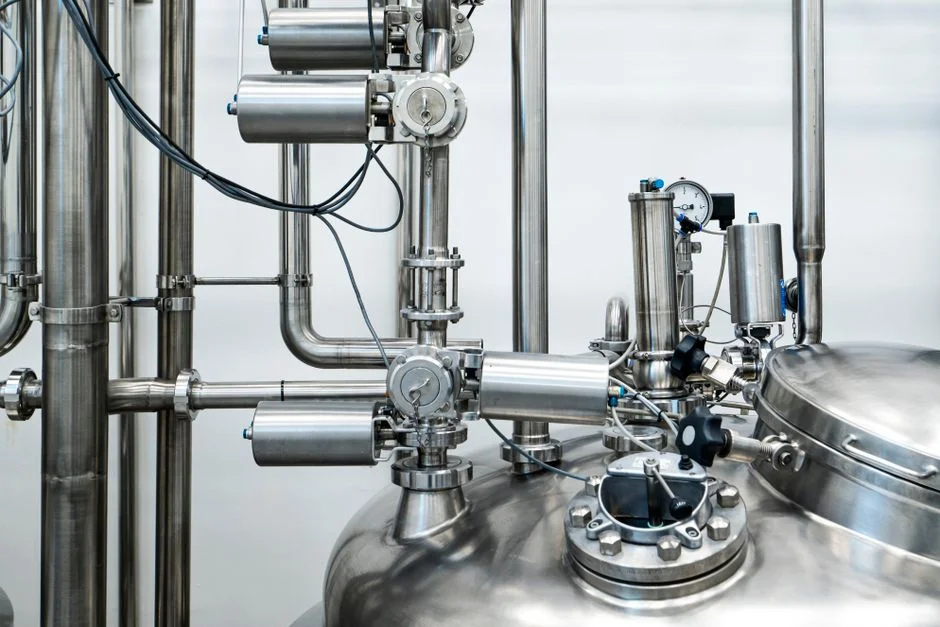
A defensible treatment train starts with the discharge or reuse objective and assigns each process a defined duty. The sequence is:
- Characterize the wastewater through a representative sampling program and obtain flow records.
- Equalize flow and load where the incoming stream varies materially.
- Remove debris and excessive suspended solids before biological treatment or membrane entry.
- Adjust pH and add treatment chemicals where required for precipitation, coagulation, or biological compatibility.
- Provide dedicated metal-removal pretreatment where dissolved-metal objectives require it.
- Apply either MBR or conventional activated sludge for the defined biological duty.
- Add polishing for reuse, desalination, or residual contaminant control.
- Monitor the parameters tied to permit requirements and process performance.
For a solids-tight route, HydropureWater’s verified 2026 catalog specifies submerged PVDF filtration below 1 μm in its integrated MBR system. That filtration specification does not replace downstream requirements for dissolved metals, salts, or other contaminants.
For industrial wastewater reuse, MBR effluent can serve as pretreatment ahead of ultrafiltration or reverse osmosis. MBR provides biological treatment and membrane separation; reverse osmosis and related polishing stages address different contaminants and must be evaluated separately.
The heavy-metal wastewater treatment design provides the upstream treatment context, while the RO membrane design guide addresses downstream pretreatment and recovery decisions. Final permit and pretreatment requirements must come from the applicable Hartford-area authority and the site’s discharge permit; the supplied research does not establish mining discharge limits for Hartford.
Select MBR or Conventional Activated Sludge for the Site
Select MBR when low suspended solids, a constrained footprint, frequent hydraulic variation, or poor tolerance for secondary clarification outweigh membrane cleaning and replacement risk. Select conventional activated sludge when simpler operation, broad contractor familiarity, lower membrane-specific capital exposure, and adequate clarifier performance are the priorities. Neither choice follows from nominal flow or membrane pore size alone.
| Site condition | Provisional direction | Required verification |
|---|---|---|
| Stringent solids separation or limited available footprint | Favor MBR for screening | Compare plant area, membrane area, equalization, polishing, and all auxiliary equipment. |
| Stable, lower-duty biological stream with adequate clarifier performance | Conventional activated sludge may be sufficient | Confirm peak hydraulic and solids loading, carryover, sludge handling, and treatment targets. |
| Variable chemistry, precipitation, or uncertain fouling behavior | Do not select from a catalog comparison | Run a site-specific pilot comparison under representative operating conditions. |
| Reuse or desalination objective | Use MBR as a potential pretreatment stage | Evaluate downstream UF, RO, polishing, recovery, and reject-management requirements. |
Request comparable lifecycle inputs from every supplier: design and peak flow, required effluent solids, predicted sludge production, aeration demand, cleaning frequency, membrane replacement assumptions, chemical use, labor, power, and disposal cost. Require membrane material and area, design flux, cleaning method, controls, spare elements, performance assumptions, and replacement terms. The regional mining-wastewater MBR comparison provides another location-specific frame, but the data still must be replaced with site measurements.
Include contingency for membrane cleaning, spare elements, downtime, equalization, pretreatment, and solids handling. An MBR quote that omits those items is not comparable with a CAS bid. The final equipment selection should align biological reactor volume, membrane area, equalization, pretreatment, and polishing with the actual water chemistry and operating envelope.
Frequently Asked Questions
How much will MBR cost compared with conventional activated sludge for a Hartford mine-water project?
There is no defensible project price without a flow and loading basis, treatment targets, water chemistry, and a scope boundary. The 2016 MBR fouling review identifies higher energy demand, fouling control, cleaning, and potential membrane replacement as material cost drivers. Ask each bidder to price the same scope—including aeration, chemicals, cleaning, labor, power, membrane replacement, downtime allowance, and sludge disposal—then use the MBR wastewater treatment cost per m³ guide to normalize the comparison. Do not accept a unit price without the underlying flow, service life, and fouling assumptions.
What data are needed to size an MBR or conventional activated sludge system?
Size against average and peak flow, hydraulic retention time, solids loading, membrane flux, water chemistry, fouling rate, and pretreatment—not one flow figure. For a mine or metals facility, provide flow records and peak factors, COD or BOD, ammonia where applicable, TSS, pH, alkalinity, hardness, temperature, conductivity, target metals, and precipitation behavior. Pilot data should establish flux and TMP development under representative chemistry, including the effect of cleaning.
How should a buyer select an MBR supplier for a metals-facility wastewater system?
Evaluate comparable technical and service commitments, not just membrane material. Request membrane area, design flux, cleaning protocol, chemical compatibility, controls, spare parts, replacement terms, performance assumptions, and lifecycle support. Require a defined response to upset conditions, off-spec effluent, TMP increase, and membrane failure. Confirm that the supplier’s performance basis matches the site’s actual metals, hardness, suspended-solids, and flow envelope.
Is MBR or conventional activated sludge more likely to satisfy a Hartford-area discharge permit?
Neither process is automatically compliant. The applicable Hartford-area permit and receiving requirements must be checked against the site’s treatment objectives, and conventional activated sludge may also require filtration or other solids controls where they apply. MBR can improve solids separation, but it does not automatically establish dissolved-metal compliance. Permit review should therefore sit alongside process selection, not follow it.
Can MBR effluent be reused directly for industrial wastewater reuse or desalination?
Not necessarily. MBR provides biological treatment and membrane-based solids separation; it does not replace reverse osmosis or other polishing for dissolved salts and specific contaminants. For a reuse project, define the end-use water quality first, then determine whether MBR effluent requires UF, RO, additional treatment, or a different pretreatment route. The industrial RO design guide can support that downstream assessment.