Why Kuwait City ETPs Are Now Designed for Reuse, Not Just Discharge
Kuwait treats freshwater as a scarce strategic resource, and the country's municipal wastewater infrastructure is already operated up to the tertiary level — a point confirmed by the 2018 evaluation of the Jahra Sewage Plant, which framed wastewater as "an important element in water management in Kuwait, where freshwater is limited and scarce" (地球科学与工程 / Geoscience and Engineering, 2018.03.004). That framing matters for any industrial buyer in Kuwait City: an effluent treatment plant is no longer specified only to satisfy a discharge permit, it is specified to produce a polished water stream that can be returned to the plant as cooling-tower make-up, landscape irrigation, or boiler feed.
Two Kuwait-specific realities push every design toward reuse readiness. First, the operating envelope: summer ambient temperatures in Kuwait City regularly exceed 45 °C, which accelerates biological kinetics but also strips dissolved oxygen and stresses open-tank processes — so enclosed, automated, and where possible buried or sheltered reactor geometry is now the default. Second, the influent envelope: brackish feed water and saline process streams from refinery, food, and textile parks push total dissolved solids (TDS) high enough that any reuse target has to be designed in from the headworks onward, not retrofitted at the polish stage.
The rest of this article leans on the only two Kuwait-quantified ETP datasets in the public research record: the contact-stabilization slaughterhouse plant at Hawalli, and the tertiary stage of the Jahra Sewage Plant. Both anchor the numbers a design engineer in Kuwait City can reasonably specify against.
Kuwait-Specific ETP Performance Benchmarks You Can Specify Against
The strongest Kuwait-specific data point for an industrial ETP comes from a contact-stabilization slaughterhouse plant in Hawalli City processing 1,100 livestock heads per day. The study reported influent COD of 3,335–7,580 mg/L, with approximately 30% of that COD present as suspended solids, and demonstrated 77% removal of soluble COD and 82% removal of insoluble COD at a volumetric loading of 1.8 kg COD/m³/d (Journal of Environmental Science and Health Part A, 2003). The same study derived biokinetic coefficients (floc uptake and substrate removal rate) that a designer would feed directly into an anoxic/aerobic or contact-stabilization sizing calculation rather than relying on textbook defaults.
The second anchor is the Jahra Sewage Plant tertiary evaluation, which measured the performance of the tertiary stage against four parameters — biochemical oxygen demand (BOD), total suspended solids (TSS), total nitrogen (TN), and total phosphorus (TP) — and reported a significant reduction across all four (地球科学与工程 / Geoscience and Engineering, 2018.03.004). For an industrial designer, that envelope defines what the polishing stage of a Kuwait City ETP has to match if the effluent is to be blended with, or discharged alongside, treated municipal wastewater.
These are the only two Kuwait-quantified ETP datasets in the supplied research. Before final sizing, a buyer should request a site-specific influent characterization — COD (soluble and total), BOD, TSS, FOG, TN, TP, TDS, and a temperature profile across the production day — rather than extrapolate the Hawalli or Jahra numbers to an unrelated feed.
| Reference | Source / date | Influent | Loading | Removal / output |
|---|---|---|---|---|
| Hawalli slaughterhouse ETP, Kuwait | Journal of Environmental Science and Health Part A, 2003 | COD 3,335–7,580 mg/L; ~30% as suspended solids; 1,100 livestock heads/day | 1.8 kg COD/m³/d | 77% soluble COD removal; 82% insoluble COD removal |
| Jahra Sewage Plant, tertiary stage, Kuwait | 地球科学与工程 / Geoscience and Engineering, 2018.03.004 | Municipal secondary effluent | Not reported in supplied research | Significant reduction in TSS, BOD, TN, TP |
Anatomy of a Modern Effluent Treatment Plant in Kuwait City
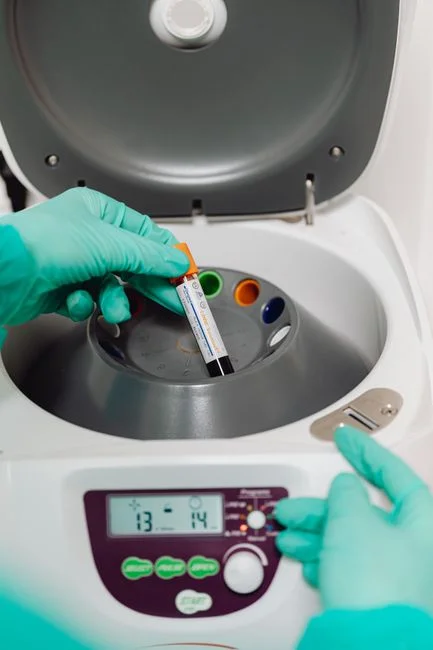
The process train that matches both the Hawalli and Jahra envelopes, and that a Kuwait City EPC consultant can specify stage by stage, runs in this order: headworks → equalization and pH correction → physico-chemical separation → biological treatment → tertiary polish → disinfection. Every stage is doing a specific job, and skipping one of them is what produces plants that meet the influent numbers but fail the reuse numbers.
Headworks is the first non-negotiable. A rotary mechanical bar screen removes rags, plastics, and fibrous debris before they reach the pumps and downstream membranes — particularly important at food and textile sites where fibrous carry-over will blind a dissolved air flotation (DAF) unit or a membrane bioreactor (MBR) module within days. Equalization follows, with flow and load balancing plus chemical dosing for pH correction and coagulant addition. The Hawalli case shows influent COD swinging by more than a factor of two across a production day, so equalization is what makes the downstream biological stage operable at a single design loading rather than a worst-case loading.
The physico-chemical stage is a DAF system for FOG and suspended solids, or a lamella clarifier, used to strip fats, oils, and grease (FOG) and the suspended fraction of the COD. The Hawalli data shows about 30% of the COD arriving as suspended solids, which makes this stage non-optional for any high-strength industrial feed. The biological stage is either conventional activated sludge (CAS) / contact stabilization, in the form proven at the Hawalli ETP, or a submerged MBR system for sites targeting near-reuse effluent. The tertiary polish is a sand or multi-media filter followed by a UF polishing stage and, where reuse demands low TDS, reverse osmosis. Disinfection is the final microbial barrier, typically a chlorine dioxide generator or a UV sterilizer, selected for compatibility with the downstream cooling or irrigation reuse point.
| Stage | Function | Typical equipment | Kuwait-specific driver |
|---|---|---|---|
| Headworks | Remove rags, plastics, fibers | Rotary mechanical bar screen | Protects DAF and MBR modules from fibrous carry-over |
| Equalization & pH correction | Flow/load balancing, pH adjust | Equalization basin, chemical dosing | Smooths COD swings documented at Hawalli (3,335–7,580 mg/L) |
| Physico-chemical | Strip FOG and suspended COD | DAF system or lamella clarifier | ~30% of Hawalli COD arrives as suspended solids |
| Biological | Dissolve soluble organics | CAS / contact stabilization or submerged MBR | Hawalli proves CAS at 1.8 kg COD/m³/d; MBR fits footprint-constrained sites |
| Tertiary polish | TSS, BOD, TN, TP, TDS reduction | Multi-media filter, UF, RO | Matches Jahra tertiary envelope for TSS, BOD, TN, TP |
| Disinfection | Final microbial barrier | Chlorine dioxide generator or UV | Compatible with cooling-tower or irrigation reuse |
MBR vs Conventional Activated Sludge for Kuwait City Sites
Conventional activated sludge, in its contact-stabilization form, is the historically proven Kuwait route: the Hawalli slaughterhouse ETP removed 77% of soluble COD and 82% of insoluble COD at a volumetric loading of 1.8 kg COD/m³/d using this approach (Journal of Environmental Science and Health Part A, 2003). It is a cost-driven choice that works well when the endpoint is discharge to sewer and the influent is relatively stable.
A submerged MBR replaces the clarifier with an ultrafiltration membrane cassette, which means the mixed-liquor suspended solids can run much higher, the effluent turbidity drops to near-reuse quality without a separate tertiary stage, and the biological tank footprint shrinks by roughly 60% compared with CAS at the same loading. For Kuwait City sites that are plot-constrained, targeting reuse, or running unattended shifts, that footprint and automation advantage is decisive. The trade-off is that the MBR module is sensitive to upstream screening and to aeration consistency, and it adds a membrane-cleaning chemistry burden that CAS does not have.
The decision rule a buyer can carry into a vendor meeting: choose MBR when the project targets reuse, has a small plot, or requires unattended operation; choose CAS plus a tertiary UF when the project is cost-driven, the influent is highly variable, and discharge to sewer is the endpoint. The submerged MBR system and the MBR membrane bioreactor module are the two pieces of equipment that anchor the MBR option; the CAS option typically reuses a conventional aeration basin plus the same UF polish used in the MBR train.
| Criterion | CAS / contact stabilization + tertiary UF | Submerged MBR + UF polish |
|---|---|---|
| Kuwait precedent | Hawalli slaughterhouse: 77% soluble / 82% insoluble COD removal at 1.8 kg COD/m³/d (2003) | No Kuwait-quantified full-scale MBR data in the supplied research |
| Footprint | Larger aeration basin + clarifier + tertiary | ~60% smaller biological footprint; clarifier replaced by membrane cassette |
| Effluent quality | Typical secondary + UF polish; suitable for sewer discharge | Near-reuse quality directly from biological stage |
| Operating envelope | Tolerates influent swings when paired with equalization | Requires screened inlet and consistent aeration to prevent fouling |
| Best fit | Cost-driven, discharge-to-sewer, variable flow | Reuse-driven, plot-constrained, unattended operation |
Designing for Kuwait's Climate and Discharge Rules
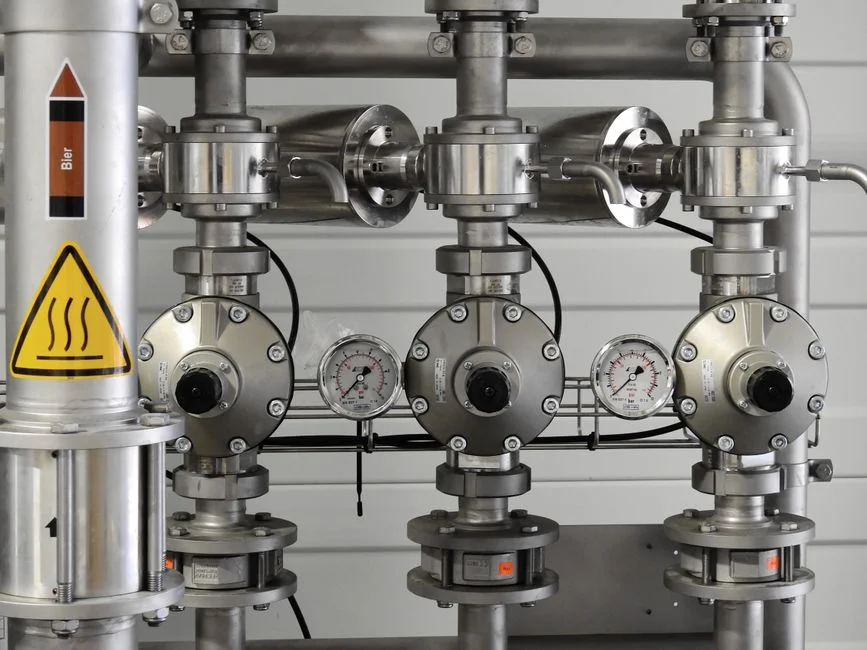
High ambient temperatures in Kuwait City accelerate biological kinetics but also reduce oxygen solubility in open tanks, so equalization basins and covered or buried reactors are used to stabilize temperature across the diurnal cycle and protect downstream biology. Brackish feed water and saline process streams push TDS into the tertiary stage; a reverse-osmosis polish should be specified only after a multi-media filter and a UF guard, and silt density index (SDI) targets should be set explicitly so the RO train is not run on a fouled feed.
Sludge handling is the line item most often under-scoped in a Kuwait City ETP. A plate and frame filter press sized to the sludge load keeps haul-off volumes manageable and produces a cake that is easier to transport off-site than a wet sludge. The multi-media filter ahead of the UF, and the RO water purification unit where reuse requires low TDS, complete the polish train.
For compliance, align effluent targets with the parameters measured at Jahra — TSS, BOD, TN, and TP (地球科学与工程 / Geoscience and Engineering, 2018.03.004) — and the soluble/insoluble COD split from the Hawalli case (Journal of Environmental Science and Health Part A, 2003). A design that maps to both is far easier to defend at commissioning than a design anchored to a textbook default.
How to Choose the Right ETP Configuration: A 2026 Buyer's Checklist
Every Kuwait City ETP specification should start with three numbers: peak flow, average flow, and a full influent characterization (COD, BOD, TSS, FOG, TN, TP, TDS, temperature profile). A process train selected from flow alone will fail the reuse test; the influent profile decides whether DAF is required, whether MBR is justified, and whether RO is needed.
Match the biological stage to the plot and the endpoint. A submerged MBR system is the right call for footprint-constrained or reuse-driven sites; CAS plus UF is the right call for discharge-driven sites. Specify headworks, a DAF or clarifier, and an automatic chemical dosing system as standard, because influent variability and oil or FOG are common across Kuwait City industrial parks. Plan sludge dewatering with a plate and frame filter press and pair it with a high-efficiency sedimentation tank early, so the ETP scope is balanced and not dominated by hidden downstream costs.
| Checklist item | What to confirm before vendor meeting | Equipment to specify |
|---|---|---|
| Flow basis | Peak and average flow, diurnal profile | Equalization basin sized to peak/average ratio |
| Influent characterization | COD (soluble/total), BOD, TSS, FOG, TN, TP, TDS, temperature | Compare against Hawalli (3,335–7,580 mg/L COD) and Jahra envelopes |
| Endpoint | Sewer discharge vs cooling-tower / irrigation / boiler reuse | Drives MBR vs CAS, and RO inclusion |
| Plot and climate | Footprint available, ambient temperature, indoor vs outdoor | Drives enclosed MBR vs open CAS; covered or buried reactors |
| Sludge handling | Daily sludge mass, haul-off logistics | Plate and frame filter press, high-efficiency sedimentation tank |
Frequently Asked Questions
What is the typical process train for an industrial ETP in Kuwait City?
The Kuwait-anchored train runs headworks → equalization and pH correction → DAF or clarifier → biological treatment (CAS or submerged MBR) → tertiary polish (multi-media filter, UF, and RO where reuse demands low TDS) → disinfection (chlorine dioxide or UV). The Hawalli slaughterhouse case shows about 30% of the COD arriving as suspended solids (Journal of Environmental Science and Health Part A, 2003), which makes the DAF stage non-optional for high-strength industrial feeds, and the Jahra tertiary study defines the TSS, BOD, TN, and TP envelope the polish stage has to match (地球科学与工程 / Geoscience and Engineering, 2018.03.004).
How much does an industrial ETP in Kuwait City cost to build and operate?
The supplied research does not include a Kuwait-quantified capital or operating cost figure for an industrial ETP, and any number quoted without a site-specific influent characterization and flow basis would be misleading. The honest input a buyer should request from each vendor is a priced process train tied to: average and peak flow, influent characterization (COD, BOD, TSS, FOG, TN, TP, TDS, temperature), discharge versus reuse target, and the automation level — and those four inputs, not a generic per-cubic-meter price, are what makes a Kuwait City ETP quotation comparable across vendors.
How do I choose between an MBR and a conventional activated sludge ETP for a Kuwait City site?
Use the rule: MBR for reuse-driven, footprint-constrained, or unattended-operation sites; CAS plus a tertiary UF for cost-driven, variable-flow, discharge-to-sewer sites. The Hawalli slaughterhouse ETP proves CAS at 1.8 kg COD/m³/d with 77% soluble and 82% insoluble COD removal (Journal of Environmental Science and Health Part A, 2003); the submerged MBR system option trades that lower capital cost for a roughly 60% smaller biological footprint and near-reuse effluent quality.
What should I check when selecting an ETP supplier in Kuwait City?
Confirm that the supplier can provide a Kuwait-relevant reference list (industrial, not just municipal), a process train that maps to either the Hawalli soluble/insoluble COD split or the Jahra tertiary envelope, a delivery and commissioning plan that fits a Kuwait City industrial-park shutdown window, and a documented compliance pathway against KEPA discharge parameters. For related context, see our guides on decentralized sewage treatment in Kuwait and hotel and resort wastewater treatment in Kuwait.