Why Standard DAF Is Not an Option for Petroleum Wastewater
Air-saturated dissolved air flotation is excluded from petroleum service because the flotation medium itself — not just the motors — creates a flammable atmosphere. Per Wikipedia's entry on dissolved air flotation, "In the oil industry, dissolved gas flotation (DGF) units do not use air as the flotation medium due to the explosion risk. Nitrogen gas is used instead to create the bubbles" (Wikipedia, 2026). NFPA 30 (Flammable and Combustible Liquids Code) and API RP 2015 (Safe Entry and Cleaning of Petroleum Storage Tanks) classify wastewater headworks containing free hydrocarbons as Class I Division 1 or Division 2 hazardous locations, where ignition sources — including the vapor space above an aerated basin — must be eliminated.
Any vendor quoting an air-based DAF for refinery, terminal, or petrochemical service is non-compliant with both fire codes and insurance carrier requirements. The remedy is straightforward but not free: pressure vessels must be charged with nitrogen generated on-site or delivered, gas recycle loops must be leak-checked, and vent stacks must discharge to a safe location. Engineers specifying equipment should require documented ASME U-stamp certification on the pressure vessel and 304SS or 316L wetted construction compatible with nitrogen service. Explosion-proof motor enclosures (Class I Div 1) address electrical ignition risk but do nothing for the explosion hazard introduced by dissolving air into hydrocarbon-laden water.
Petroleum Wastewater Characteristics That Drive Technology Selection
Refinery and terminal wastewater contains a pollutant mix that dictates which separation mechanism will actually work. The feed typically carries free oil greater than 150 microns, emulsified oil in the 1-50 micron range, BTEX compounds, and suspended solids coated with hydrocarbon. Chemical conditioning is mandatory for either flotation or sedimentation to perform: coagulants such as ferric chloride or aluminum sulfate neutralize surface charge, while anionic or cationic polymers bridge destabilized droplets and fines into settleable or floatable floc. PLC-controlled injection of these reagents is the norm, and suppliers such as those offering PLC-controlled coagulant and flocculant dosing integrate dose trimming on flow and streaming current signals.
DGF microbubbles in the 30-50 micron range (SigmaDAF USA / Clearwater Industries product literature, 2026) attach to oil droplets and produce rapid separation in roughly 3 minutes for circular units per Wikipedia. Lamella clarifiers rely on gravity settling enhanced by inclined plates operating at 20-40 m/h surface loading, and they are ineffective for emulsified oil below 20 microns unless aggressive chemical demulsification is applied upstream. Both technologies require a preceding API 421 separator to skim free oil before the main clarifier — without that step, neither DGF nor lamella will meet discharge limits consistently.
| Parameter | Typical Petroleum Influent | Driver for Technology Choice |
|---|---|---|
| Free oil | 50-500 mg/L (droplets >150 μm) | Removed by API 421 separator upstream of either DGF or lamella |
| Emulsified oil | 100-1500 mg/L (1-50 μm droplets) | Requires chemical demulsification; DGF microbubbles (30-50 μm) attach effectively; lamella struggles below 20 μm |
| FOG (total) | 200-2,000 mg/L | Determines DGF vs lamella selection and downstream polishing needs |
| TSS | 100-800 mg/L | Both technologies handle, but DGF float is drier than lamella sludge |
| BTEX | 5-50 mg/L | Volatilization risk; covered DGF tanks or enclosed lamella preferred; downstream carbon polishing often required |
Head-to-Head: DGF (Nitrogen) vs Lamella Clarifier for Petroleum Service
At petroleum-relevant loadings, DGF consistently delivers 90% or higher FOG and TSS removal, handles variable influent, and tolerates the emulsified oil fraction that defeats gravity settlers. Lamella clarifiers achieve 60-70% FOG removal and 80-90% TSS removal at 20-40 m/h surface loading per the Dongguan Shenglong product listing (Made-in-China.com, 2026), and they consume roughly 30% less polymer because floc only needs to settle, not float. Both require chemical conditioning; neither replaces an upstream API separator.
Footprint differs by geometry. DGF circular units span 3-12 m diameter with 3-minute retention, well suited to greenfield pads. Lamella clarifiers are rectangular, typically 2-6 m wide by 4-15 m long, and often retrofit into existing tankage or constrained brownfield footprints. Sludge characteristics matter for downstream dewatering: DGF float sludge runs 2-5% solids and skims cleanly, while lamella bottom sludge runs 1-3% solids and requires rake or scraper removal. Either stream feeds a plate and frame filter press for volume reduction.
Materials selection drives capital cost. DGF pressure vessels in nitrogen service require 304SS minimum, often 316L for chloride exposure. Lamella tanks are available in Q235 carbon steel with epoxy zinc-rich coating per the Dongguan Shenglong product listing (Made-in-China.com, 2026) at materially lower cost, or in 304SS where corrosion or product quality justify the upgrade. Nitrogen-compatible DGF systems for petroleum wastewater from established fabricators are typically quoted as skid-mounted packages with PLC controls, while lamella clarifiers with 20-40 m/h surface loading are available in either coated carbon or stainless configurations.
| Criterion | DGF (Nitrogen) | Lamella Clarifier |
|---|---|---|
| FOG removal | ≥90% (SigmaDAF USA / Clearwater Industries, 2026) | 60-70% |
| TSS removal | ≥90% (SigmaDAF USA / Clearwater Industries, 2026) | 80-90% |
| Retention time | ~3 min circular, 20-30 min rectangular (Wikipedia, 2026) | 20-40 m/h surface loading |
| Flow range | 5-100 m³/h standard, modular above (Dongguan Shenglong, 2026) | 10-200 m³/h typical |
| Construction | 304SS or 316SS standard (SigmaDAF USA / Clearwater Industries, 2026) | Q235 + epoxy zinc-rich coating, or 304SS upgrade (Dongguan Shenglong, 2026) |
| Chemical use | Baseline polymer + coagulant | ~30% less polymer than DGF (Dongguan Shenglong, 2026) |
| Sludge form | Float 2-5% solids, skimmed | Settled 1-3% solids, raked |
| Footprint | Circular 3-12 m dia | Rectangular 2-6 m × 4-15 m |
| Nitrogen required | Yes — non-negotiable for petroleum service | No |
Utah Division of Water Quality Pretreatment Requirements for American Fork
Utah implements the EPA pretreatment program under Utah Administrative Code R317-8, which mirrors 40 CFR 403 and delegates local limits to the receiving POTW. For American Fork, pretreatment is administered through the local sewer authority serving petroleum dischargers. The standard petroleum discharge envelope applied to Utah refineries and terminals includes FOG below 100 mg/L (daily maximum), TSS below 250 mg/L, BOD5 below 300 mg/L, benzene below 0.5 mg/L, total BTEX below 1.0 mg/L, and pH between 6 and 9 SU. These are the permit triggers — not suggestions — and any primary treatment technology must be sized to meet them with margin under variable influent.
DGF with nitrogen, proper chemical conditioning, and an upstream API 421 separator consistently produces effluent below 50 mg/L FOG and below 50 mg/L TSS, giving a comfortable compliance margin. Lamella clarification alone typically yields 80-150 mg/L FOG, which can exceed the 100 mg/L daily maximum and almost always requires downstream polishing — organoclay media, activated carbon, or ultrafiltration — to guarantee permit compliance. Pretreatment permit modifications typically run 90-120 days, and the application should include the technology basis, expected effluent quality, and any pilot or treatability data. Treatability studies for new petroleum discharges are a common local requirement; budget accordingly and request a written scoping letter from the local authority before final equipment selection.
| Parameter | Typical Utah POTW Limit (Petroleum Discharger) | DGF Achievable Effluent | Lamella Achievable Effluent |
|---|---|---|---|
| FOG | <100 mg/L daily max | <50 mg/L with chemical conditioning | 80-150 mg/L; often needs polishing |
| TSS | <250 mg/L | <50 mg/L | 50-100 mg/L |
| BOD5 | <300 mg/L | <100 mg/L | 100-200 mg/L |
| Benzene | <0.5 mg/L | Variable — downstream carbon or stripping typical | Variable — polishing required |
| Total BTEX | <1.0 mg/L | Requires covered tank + carbon | Requires polishing |
| pH | 6-9 SU | Adjusted at chemical dosing stage | Adjusted at chemical dosing stage |
2026 Sizing, Cost, and Installation Realities for American Fork Facilities
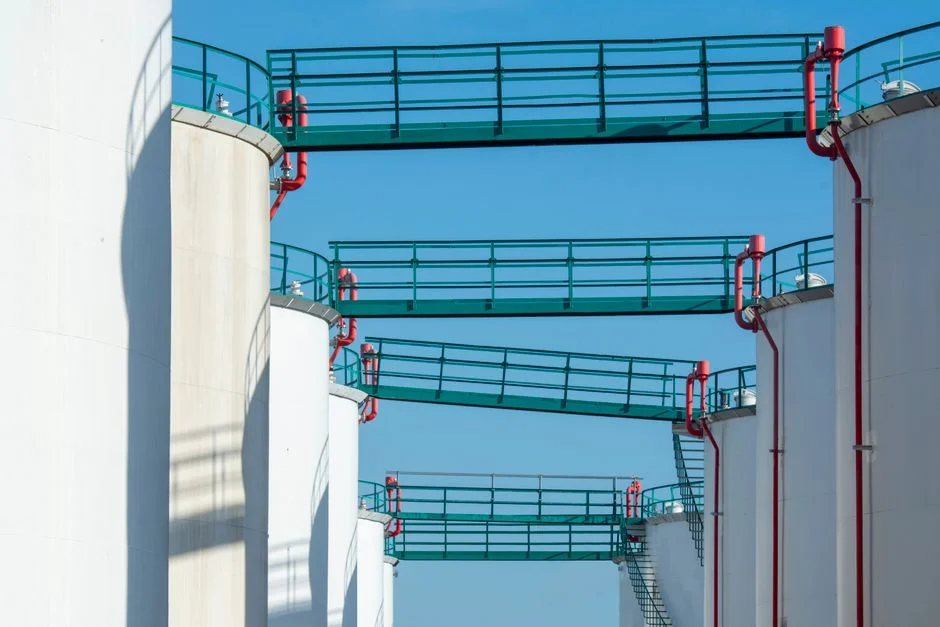
For 10-200 m³/h projects in 2026, installed cost ranges cluster around $180K-$650K for nitrogen-capable DGF (304SS pressure vessel, nitrogen generator, PLC controls, skid-mounted per the SigmaDAF COMPACT concept in the Clearwater Industries product literature, 2026) and $90K-$320K for lamella clarifiers in coated carbon steel with chemical dosing and PLC. Lead times for DGF run 14-18 weeks because of ASME-coded pressure vessel fabrication; lamella clarifiers in standard materials typically ship in 10-14 weeks. These are budgetary envelopes derived from the published equipment specifications in the cited supplier literature; final pricing requires a formal RFQ with site-specific flow, FOG loading, and utility drawings.
American Fork sits in seismic zone D per the 2021 IBC, so all basins and pressure vessels require engineered anchorages and pad reinforcement — a line item easily missed in distant vendor quotes. Winter design temperature of -10°F mandates heat tracing and insulation on nitrogen supply lines, chemical dosing skids, and any outdoor pump manifolds; the same climate drives the need for enclosed or heated control panels. Utah County has a limited pool of mechanical contractors qualified to install and certify ASME U-stamp pressure vessels, and that constraint should be reflected in the construction schedule.
Operating cost in 2026 separates sharply by technology. DGF nitrogen generation consumes 0.8-1.2 kWh/m³ of treated flow on membrane or PSA generators, plus $0.15-0.30/m³ in coagulation and flocculation chemicals. Lamella clarifiers use roughly 30% less polymer per the Dongguan Shenglong product listing (Made-in-China.com, 2026) and avoid nitrogen generation, with chemical costs of $0.10-0.22/m³ and sludge disposal at $45-65/wet ton. Rocky Mountain Power's industrial schedule for 2026 is the local utility benchmark and should be confirmed at the time of bid, since it materially shifts the 20-year lifecycle cost analysis when nitrogen generation runs continuously.
| Cost Element | DGF (Nitrogen), 10-200 m³/h | Lamella Clarifier, 10-200 m³/h |
|---|---|---|
| 2026 installed CAPEX | $180K-$650K (SigmaDAF COMPACT concept, 2026) | $90K-$320K (Dongguan Shenglong, 2026) |
| Lead time | 14-18 weeks | 10-14 weeks |
| Nitrogen power | 0.8-1.2 kWh/m³ | N/A |
| Chemical cost | $0.15-0.30/m³ | $0.10-0.22/m³ (~30% less polymer) |
| Sludge disposal | Float 2-5% solids, skimmable | Settled 1-3% solids, raked |
| Local installation risk | ASME U-stamp vessel certification, seismic anchorage | Lower certification burden; still seismic anchorage |
Decision Framework: Match Your Facility Profile to the Right Technology
Select DGF (nitrogen) when FOG consistently exceeds 300 mg/L, flow rates are above 50 m³/h, emulsified oil is present, benzene or BTEX limits are tight, the site can accommodate a circular basin, and the 20-year LCCA favors compliance certainty over first cost. Select a lamella clarifier when FOG stays below 300 mg/L, flow rates are under 50 m³/h, the upstream API 421 separator removes most free oil, the available footprint is rectangular, capital is constrained, and the team is prepared to add organoclay, carbon, or membrane polishing downstream.
A third path exists for storage terminals and product terminals with lower hydrocarbon loads: API 421 separator followed by a lamella clarifier followed by an organoclay polishing stage. This hybrid avoids the nitrogen generation cost while still meeting FOG limits. In every case, run a jar test and a bench-scale DGF or clarifier trial on actual wastewater before locking the specification — petroleum influent variability is too high to rely on generic removal curves. For readers weighing similar decisions in other industries, see a head-to-head DAF vs clarifier comparison for fabricated metals or a comparison of DAF vs induced air flotation for industrial plants.
Frequently Asked Questions
Can I use a standard air DAF for petroleum wastewater if I add explosion-proof motors?
No. NFPA 30 and API RP 2015 prohibit the use of air as the flotation medium in petroleum wastewater headworks because dissolved air itself creates a flammable vapor mixture. The flotation gas must be nitrogen. Explosion-proof enclosures address electrical ignition sources but do not eliminate the explosion hazard from air-saturated water. Vendor quotes that propose air-based DAF for petroleum service should be rejected; the correct specification is a nitrogen-compatible DGF with ASME U-stamped pressure vessels (Wikipedia, 2026; Clearwater Industries, 2026).
What is the 2026 installed cost difference between DGF and lamella clarifier for a 100 m³/h petroleum plant?
Based on the published equipment specifications in the cited supplier literature, a 100 m³/h DGF (nitrogen) system with PLC controls and skid mounting typically falls in the $380K-$450K range, while a 100 m³/h lamella clarifier in coated carbon steel with chemical dosing and PLC falls in the $180K-$220K range. A lamella-only system at this scale may need $60K-$100K of downstream polishing (organoclay or carbon) to guarantee FOG below 100 mg/L, which narrows the gap. Request site-specific budgetary quotes from qualified vendors and include installation, seismic anchorage, and insulation before comparing totals (Dongguan Shenglong, 2026; SigmaDAF USA / Clearwater Industries, 2026).
Does Utah DWQ require pilot testing before pretreatment permit approval?
Not universally, but the local sewer authority serving American Fork typically requires treatability study data for new petroleum discharges, including jar testing and bench-scale DGF or clarifier runs on actual wastewater. Budget $15K-$25K for a properly instrumented treatability study; the data package should include polymer and coagulant dose optimization, FOG and TSS removal curves, and any BTEX volatilization data. Submit the treatability report with the permit application to shorten the 90-120 day review window.
What nitrogen purity do DGF systems require?
Petroleum DGF systems typically operate with 95-99% nitrogen, balance argon and residual oxygen, generated on-site by membrane or PSA nitrogen generators fed from compressed air. The Clearwater Industries COMPACT DAF concept (2026) integrates the nitrogen generator into the skid package; power consumption runs 0.8-1.2 kWh/m³ of treated flow. Lower purity is acceptable in some low-hydrocarbon polishing applications but should not be specified for primary treatment of refinery or terminal wastewater without vendor validation against the BTEX envelope.