The Two-Rule Reality: EPA Standards Plus Bessemer-Area Sewer Limits
Food and beverage plants discharging to sanitary sewers in the Bessemer industrial corridor operate under a two-tier pretreatment regime, and the local limit is almost always the binding number for design. The federal floor is the EPA's categorical pretreatment standard for food processing at 40 CFR Part 405, which sits inside the broader general pretreatment regulations at 40 CFR Part 403; the categorical standard defines subcategory-specific limits for facilities in scope.
Alabama implements pretreatment and the NPDES program through the Alabama Department of Environmental Management (ADEM), which holds delegated authority from EPA and is the state agency plants interact with for permits and inspections. The corridor drains into collection systems served by the Jefferson County sewer authority and, in overlapping service areas, the Birmingham Water Works Board; each POTW enforces its own discharge ordinance that, in practice, runs tighter than the federal categorical limits. Crystal Clean, describing the framework generically, observes that "local sewer districts typically impose limits stricter than the federal floor, with BOD caps in the form of total suspended solids (TSS) limits" and that the specifics depend entirely on the local authority, so two identical facilities twenty miles apart can face different numbers. The practical consequence is that a Bessemer-area design has to clear the stricter of the two bars, and that the local ordinance is the one to engineer against first.
What Comes Out of a Food and Beverage Line — and Why It Matters for Pretreatment
Translating process water into the parameters a regulator will measure is the step most often skipped before a unit-operation list is written. BOD and COD are the headline parameters: Crystal Clean states that "BOD levels 10 to 20 times higher than domestic sewage" are routine in food processing wastewater, with dairy operations and breweries cited as typical examples that can easily generate wastewater at those concentrations. pH is the parameter most likely to fail on a single bad batch — caustic cleaners from clean-in-place (CIP) systems swing the stream alkaline, while citric and other organic acids from fruit and beverage processing swing it acidic, and both ends damage sewer infrastructure and disrupt the receiving POTW's biological population. FOG is a separate discharge concern with its own trap and limit: Integrated Water Services lists "varying pH levels, organic load, and the presence of fats, oils, and grease (FOG)" as the defining food and beverage stream characteristics, and JWC and Crystal Clean both highlight FOG as a parameter that must be removed before the sewer to avoid line blockages and POTW disruption. Solids come from raw material washing, cooking, cooling, and packaging, and Crystal Clean notes that organic solids accumulate in sewer lines and that pH extremes damage infrastructure and kill the microorganisms that make biological treatment work — which is the chain a pretreatment program has to interrupt. Volume compounds the challenge: peak flows during washdowns and shift changes can overwhelm systems sized for average conditions, so any treatment program built around averages fails at the moments that matter most.
The Staged Treatment Train Plants Actually Use to Comply
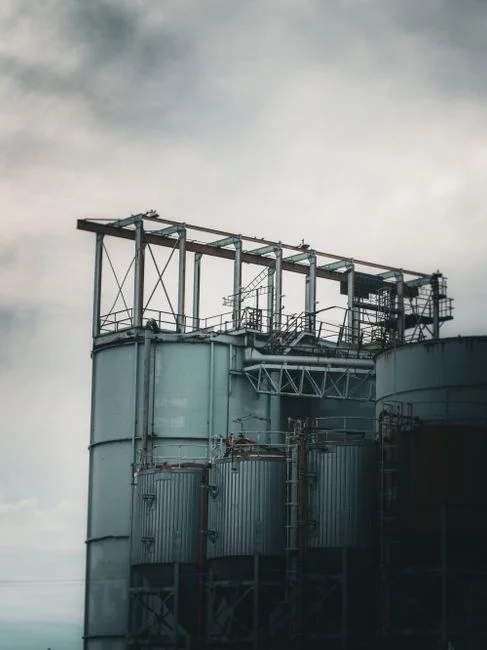
A compliant pretreatment train sequences unit operations so each one removes the fraction the next one cannot. The five-step sequence below is what food and beverage plants in the Jefferson County sewer authority service area typically deploy, and it lines up with the unit-operation links integrated into this article.
| Step | Unit Operation | Parameter Targeted | Design Logic |
|---|---|---|---|
| 1 | Rotary drum screening | Coarse TSS, debris, process solids | Captures spent grains, hops, seeds, fruit solids, packaging fines before they overload downstream units; sized to the debris, not the flow. |
| 2 | Flow equalization with pH correction | Flow surges, pH swings | Blends batch peaks and shift-change surges; active neutralization brings pH into the local authority's accepted band before downstream biology. |
| 3 | Dissolved air flotation (DAF) | Emulsified and free FOG, colloidal TSS | Removes the fraction that screening and equalization cannot address; micro-bubble saturation floats FOG and fines for skimming. |
| 4 | Biological treatment, often an MBR | Soluble BOD/COD, residual organics | Microbial breakdown combined with membrane filtration for a tight effluent quality; Integrated Water Services describes MBRs as combining biological treatment processes with membrane filtration to achieve higher removal rates of contaminants. |
| 5 | Solids handling — plate and frame filter press | Float sludge, waste activated sludge | Dewaters sludge so solids pass the paint-filter test for disposal rather than re-entering the waste stream; cloth and plate pattern matched to sludge characteristics. |
Step 1 is screening, and the rationale is direct: JWC documents that "rotary drum screens are an effective and efficient method to remove organic waste from food and beverage wastewater" and that "screening out of organic matter can substantially reduce the TSS levels in the waste stream." JWC's IPEC screens are explicitly applied to capture spent grains, hops, seeds, and other process debris, with wedge-wire apertures selected to the target material — and a rotary drum screen for coarse solids capture sized to the debris composition is the typical specification. Step 2 is flow equalization and pH correction; Crystal Clean notes that facilities need "either equalization basins to blend flows and moderate pH, or active neutralization systems that adjust pH before discharge," which addresses the peak flows during washdowns and shift changes that overwhelm systems sized for averages. Step 3 is dissolved air flotation, the unit operation that takes out emulsified and free FOG plus the fine suspended solids that would otherwise pass straight to the sewer; a DAF system for FOG and TSS removal rated for peak hourly load, not daily average, is the standard specification. Step 4 is biological treatment, often an MBR, the unit operation that takes residual soluble BOD/COD down to the levels a local POTW will accept; a MBR for residual BOD/COD polishing is the right call where footprint is constrained or local limits are tight. Step 5 is solids handling, where a filter press for float and waste activated sludge dewaters the float and waste activated sludge upstream so the solids pass the paint-filter test and can be disposed of. For background on the beverage side of the stream, the beverage wastewater treatment process guide covers the same train from a different angle, and the filter press selection for beverage sludge walks through cloth and plate selection.
Parameter-to-Unit-Operation Map for Bessemer Pretreatment Design
The map below pairs each discharge parameter with the unit operation that targets it, the source governing the limit, and the equipment family to specify. Use it as a single-page reference when sizing a new train or auditing an existing one.
| Discharge Parameter | Primary Unit Operation | Governing Source | Specification Note |
|---|---|---|---|
| BOD / COD | Biological treatment train (often MBR) | Categorical limit under 40 CFR Part 405; tightened locally by the Jefferson County sewer authority discharge ordinance | Specify an MBR for plants with constrained footprint or tight local limits; design for peak organic loading, not average. |
| TSS | Rotary drum screen followed by DAF | Local limit varies by POTW; tightened locally by the Jefferson County sewer authority discharge ordinance | Specify a rotary drum screen with aperture matched to the debris, then a DAF with micro-bubble saturation for the fines. |
| FOG | DAF primary, with an upstream grease interceptor where the sewer district requires | Local FOG limits per the Jefferson County sewer authority discharge ordinance | Specify a DAF rated for the peak hourly FOG load, not the daily average, since washdowns concentrate the load. |
| pH | Equalization basin with active neutralization dosing | Local authority band, typically 6.0–9.0 | Specify a PLC-controlled pH neutralization skid tied to a pH probe in the equalization tank. |
| Solids handling | Plate and frame filter press for float sludge and waste activated sludge | Disposal requirements under ADEM and the receiving POTW | Specify cloth and plate pattern matched to the sludge characteristics and target cake dryness; confirm the disposal path before specifying. |
| Flow surges | Equalization basin, often paired with a high-efficiency sedimentation tank | Local permit flow-loading limits | Specify a high-efficiency sedimentation tank ahead of the DAF for plants with high washdown surges. |
The same unit-operation logic shows up in other Alabama industrial pretreatment contexts, and the Alabama industrial pretreatment parallel in textile discharges makes the point that local ordinance, not the federal categorical standard, is the binding number in most designs.
What an Inspector Will Check First — and How to Stay Ahead of It
Anticipating the compliance audit means focusing documentation and monitoring effort where the inspector will look first. Sampling and monitoring frequency is set by the local discharge permit, not by the plant — Crystal Clean notes that permits specify monitoring requirements, sampling frequencies, and reporting obligations that depend on the local authority. The documentation chain of custody is what auditors actually examine: manifests, service records, and treatment verification for any off-site waste hauler create the record that proves proper handling, which is why a single-vendor waste management program is often the cleanest answer. Crystal Clean explicitly warns that penalties escalate beyond fines: "repeated violations can trigger increased monitoring requirements, mandatory pretreatment system installation, or revocation of the discharge permit entirely," and notes that some facilities have faced production shutdowns when discharge problems threatened the receiving POTW's compliance posture. For a Bessemer-area plant, that means the audit trail on the float sludge, the waste activated sludge, the pH log, and the DAF skimmings disposal is the first thing to tighten before any new equipment is ordered.
Frequently Asked Questions
Which pretreatment rule applies to a food or beverage plant near Bessemer, and who enforces it?
Two rules apply: the federal EPA categorical pretreatment standard for food processing at 40 CFR Part 405 (within the general framework of 40 CFR Part 403) and the local discharge ordinance enforced by the Jefferson County sewer authority — and, in overlapping service areas, the Birmingham Water Works Board. The Alabama Department of Environmental Management (ADEM) holds delegated NPDES authority and is the state agency plants interact with for permits and inspections. In practice, the local ordinance is the binding number for design because it is almost always stricter than the federal categorical floor. A buyer should request a copy of the local discharge ordinance and the current permit from the Jefferson County sewer authority before specifying equipment.
What BOD range should a food and beverage plant expect, and how does that drive biological treatment sizing?
Crystal Clean states that BOD in food processing wastewater routinely runs "10 to 20 times higher than domestic sewage," with dairy operations and breweries cited as typical examples. That concentration range is what makes biological treatment the load-bearing step in the train, and why an MBR is often the right unit operation where footprint is constrained or local limits are tight. A buyer should request a current 24-hour composite sampling campaign on the actual discharge — average BOD, peak BOD, and peak flow — and supply those numbers to the equipment vendor for biological-stage sizing. The local authority's BOD cap then sets the MBR effluent target.
How is a dissolved air flotation (DAF) unit sized for a food and beverage plant?
DAF sizing for a food and beverage plant is driven by peak hourly FOG and colloidal TSS load, not by daily average flow, because washdowns and shift changes concentrate the load at the moments that matter most. JWC's IPEC screen and a DAF with micro-bubble saturation handle the coarse and fine fractions in sequence. A buyer should request peak hourly flow, peak hourly FOG concentration, and a target removal efficiency from the local discharge ordinance, and confirm the DAF is rated against the peak, not the average.
What budget range should a plant expect for a staged pretreatment train, and what drives the cost?
The research does not provide a quoted price for a staged pretreatment train, so no numeric budget can be cited honestly. The cost drivers that show up in the sources are the local discharge ordinance limits (which set how tight the biological stage has to be), the peak versus average flow ratio (which sets equalization and DAF sizing), and the solids-handling endpoint (which sets dewatering and disposal cost). A buyer should request a written scope from the equipment vendor that prices each unit operation against the permit's actual limits and the facility's measured peak flows, and that quotes the disposal path for float sludge and waste activated sludge before any PO is signed. Comparing two such scopes side by side is the cleanest way to evaluate suppliers without inventing a budget number.