What an Effluent Treatment Plant in Sohar Has to Do in 2026
An effluent treatment plant in Sohar is a sequenced primary, secondary and tertiary system designed to meet one of three Omani consent regimes in 2026: the Royal Decree 18/2018 national wastewater limits, the Sohar Port Authority harbour consent, or the Sohar Freezone (SOFZA) tenant discharge consent, with Majis Industrial as the typical receiving utility for off-tenant disposal. Sohar's loadings are dominated by petrochemical, food and dairy, steel, and downstream chemicals, and the Majis / Sohar case study by Headworks International confirms that enhanced petrochemical treatment — including screening upgrades and membrane polishing — is an active 2026 duty. The right package therefore combines flow- and load-equalised primary treatment, biological secondary, and a tertiary polish sized to the chosen discharge or reuse target.
The design-driver decision is not the equipment list — it is which of the three consent boxes the plant sits in. A petrochemical tenant discharging inside Sohar Port boundary is consenting against a different envelope than a SOFZA-located food plant sending effluent to Majis. Get the consent frame wrong and the rest of the engineering is wasted.
The verified Headworks International Sohar / Majis case study "Enhanced Treatment of Petrochemical Wastewater" is the in-service reference that a Sohar-spec ETP is a live 2026 duty, not a hypothetical scope. The case study is the only public reference in the supplied research tying a named vendor scope to the Majis / Sohar envelope, and it is the document a Sohar buyer should put on the table when a vendor claims local experience.
Tertiary polishing — nanofiltration or constructed wetlands — is the route from discharge compliance to reuse, and the rest of this article resolves which consent frame applies, how to match the train to the loading, and what a 2026 buyer should put in the cost envelope and supplier shortlist.
Oman and Sohar Regulatory Frame for 2026
A Sohar buyer must first place the project in one of three consent boxes, because the wrong frame invalidates the rest of the engineering. Royal Decree 18/2018 sets the national wastewater discharge limits that any industrial discharger in Oman must satisfy. Inside the port boundary, the Sohar Port Authority issues its own harbour consent, which typically adds marine-water-quality parameters on top of the national limits. Inside the free-zone boundary, Sohar Freezone (SOFZA) issues a tenant discharge consent for plants operating in its zone.
For tenants that dispose off-tenant, Majis Industrial is the typical receiving utility. Majis' published acceptance parameters will set a tighter envelope than the national limits, and the Headworks Sohar / Majis case study is the in-service example of a petrochemical ETP being designed against Majis' acceptance envelope, not only against the national decree. A SOFZA-located plant sending effluent to Majis is therefore consenting against three overlapping frames simultaneously: national, free-zone, and utility.
The supplied research does not contain the numeric 2026 consent limits for any of the three frames. These are inputs the buyer must request from the issuing authority — typically the Sohar Port HSE office, SOFZA environment desk, or Majis Industrial operations — before any vendor quotation is frozen. Any vendor quoting a Sohar project without a written consent reference is guessing.
| Consent frame | Issuer | Typical scope | Reference point in supplied research |
|---|---|---|---|
| National wastewater discharge limits | Royal Decree 18/2018 | Baseline parameters for all industrial discharges in Oman | Named in supplied research as the governing national decree |
| Sohar Port harbour consent | Sohar Port Authority | Marine-water-quality envelope for port-boundary tenants | Distinct from SOFZA and national frames; numeric limits not in supplied research |
| SOFZA tenant discharge consent | Sohar Freezone Authority | Free-zone envelope for SOFZA-located plants | Distinct from Port and national frames; numeric limits not in supplied research |
| Majis Industrial acceptance | Majis Industrial | Utility acceptance for off-tenant disposal | Headworks Sohar / Majis case study (2018) is the verified reference scope |
Matching the ETP to the Sohar Sector
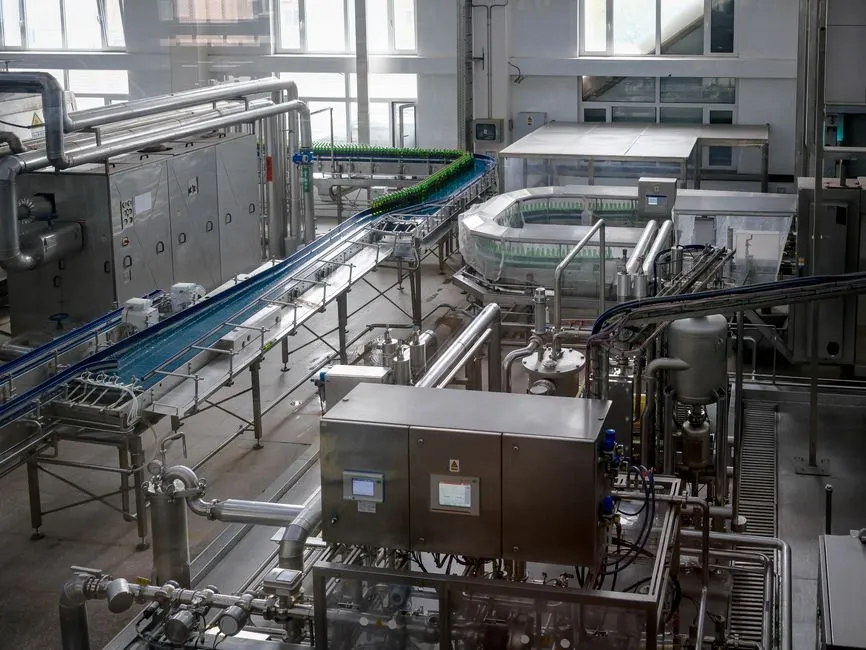
Sohar's four dominant 2026 loadings — petrochemical, food and dairy, steel and metal finishing, and downstream chemicals — each drive a different primary/secondary train. The Headworks Sohar / Majis case study is the petrochemical reference scope, and it sets the screening and DAF front-end that downstream chemicals typically share. Food and dairy plants add high FOG loading, which routes through a DAF front-end before biological secondary. Steel and metal finishing loadings bring heavy metals, which change the secondary chemistry and the sludge-handling envelope; the supplied research does not provide Sohar-specific steel or mining removal figures, so those benchmarks are vendor data requests, not fabricated numbers.
For food and dairy secondary, the RJLBPCS dairy study reports 88.5% BOD reduction with isolate VDLL5, 82.4–82.8% TSS reduction with isolates HDUL4 and HDUL3, and 82.6–82.8% oil and grease reduction with isolates VDLL6 and VDLL7 (RJLBPCS, 2019, enhanced edition 2026). Those are the biological-secondary benchmarks a Sohar dairy buyer should hold a vendor against, and they apply as an order-of-magnitude reference for any FOG-led Sohar loading. Downstream chemicals typically need the same screening and DAF front-end as petrochemical, plus extra flow and load equalisation to handle batch discharges.
Steel and mining loadings sit outside the supplied research; the buyer must request vendor pilot data for the specific influent characterisation, and must not accept a generic "heavy-metal removal" percentage without a matched influent profile.
| Sohar sector | Typical front-end | Biological secondary benchmark | Reference point in supplied research |
|---|---|---|---|
| Petrochemical | Screening, grit, DAF, flow/load equalisation | Membrane bioreactor or activated sludge; polishing via Headworks Sohar / Majis case study | Headworks case study (2018) is the verified scope |
| Food and dairy | Screening, DAF system for Sohar FOG and suspended-solids removal, equalisation | Activated sludge or biofilm; 88.5% BOD, 82.4–82.8% TSS, 82.6–82.8% oil and grease (RJLBPCS 2019/2026) | RJLBPCS dairy study, isolate-specific reductions |
| Steel and metal finishing | Screening, equalisation, pH correction, automatic chemical dosing for Sohar coagulation and pH control | Benchmarks not in supplied research; request vendor pilot data | No Sohar-specific removal figures in supplied research |
| Downstream chemicals | Screening, grit, DAF, flow/load equalisation | Same as petrochemical; expect batch-driven equalisation | No dedicated case study in supplied research |
Primary and Secondary Treatment Train for Sohar Duty
The typical 2026 Sohar primary chain is rotary bar screening, grit removal, flow and load equalisation, and DAF for high-FOG or high-suspended-solids loadings — including petrochemical, where the Headworks Sohar / Majis case study is the reference scope. The primary chain exists to protect downstream biological and membrane equipment from rags, grit, oil and shock loads, and skipping any of these steps typically shows up as membrane fouling or biological upset within the first year.
The typical secondary chain is biological treatment using activated sludge, biofilm reactors, or an MBR, with the RJLBPCS 88.5% BOD reduction (2019, enhanced edition 2026) as the design expectation for food and dairy secondary and as an order-of-magnitude reference for other sectors. Sludge handling — typically a plate and frame filter press for the Sohar duty envelope — and automatic chemical dosing are part of the standard secondary envelope, not optional add-ons. A Sohar buyer who sees a vendor quotation that separates sludge handling into a "future phase" should treat that as a red flag on the operating-cost model.
Primary screening is typically delivered by a rotary mechanical bar screen sized to the peak hourly flow with a 6 mm or finer aperture for downstream membrane protection. The supplied research has no specific Sohar secondary-stage hydraulic retention time or MLSS figures; those are parameters to be sized to the influent characterisation, not fixed numbers. A Sohar buyer should expect a vendor to justify HRT and MLSS against the specific influent profile, not against a generic text-book default.
Tertiary Polishing: Disinfection, Nanofiltration and Constructed Wetlands
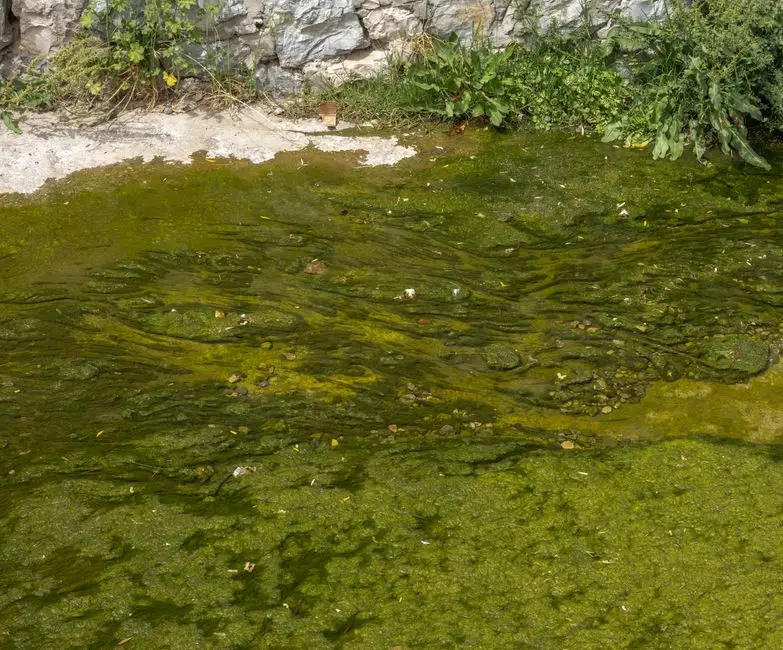
Tertiary polishing is the Sohar differentiator between compliant discharge and reuse-grade water. Disinfection is typically delivered by chlorine dioxide generation or UV steriliser for Sohar tertiary disinfection to satisfy microbial consent limits, and is also the precondition for any downstream membrane or wetland polish. Without a working disinfection step upstream, a membrane polish fouls faster and a constructed wetland carries residual pathogen risk.
For reuse duty, two technologies have published academic support. Schrader (University of Twente, 2014) concludes that "Membrane technology, especially nanofiltration, is seen as a suitable technology to polish WWTP effluent to EU WFD standards and consequently produce an effluent quality suitable for agricultural or (in)direct potable usage." That is the documented case for nanofiltration as a reuse polish, and it is the academic backing for an MBR-to-nanofiltration reuse train in a Sohar free-zone reuse project. An MBR membrane bioreactor for Sohar secondary and reuse duty is the standard biological-then-membrane configuration to feed such a nanofiltration stage.
Lei (Wageningen University, 2022) — "Removal of micropollutants from wastewater treatment plant effluent by constructed wetlands" — is the documented case for constructed wetlands as a low-energy micropollutant polish, awarded 23 September 2022. That is the academic backing for a constructed-wetland tertiary stage in a Sohar free-zone reuse project where land is available and energy is constrained. The supplied research does not provide percent-removal figures for either tertiary stage; those are project-specific pilot data the buyer must request from a vendor before committing.
| Tertiary technology | Function | Documented role in supplied research | Sohar applicability |
|---|---|---|---|
| Chlorine dioxide | Microbial disinfection, residual control | Standard disinfection, no specific Sohar number in supplied research | Required for microbial consent compliance; upstream of membrane polish |
| UV steriliser | Microbial disinfection, no residual | Standard disinfection, no specific Sohar number in supplied research | Alternative or complement to chlorine dioxide; see chlorine dioxide generator for chemical-disinfection option |
| Reuse polish, salinity and micropollutant reduction | Schrader (Univ. of Twente, 2014) — suitable to polish WWTP effluent to reuse grade | Reuse-duty option for SOFZA tenants; pilot data required | |
| Constructed wetlands | Low-energy micropollutant polish | Lei (Wageningen Univ., 2022) — removal of micropollutants from WWTP effluent by constructed wetlands | Reuse-duty option where land is available; pilot data required |
2026 Cost, Footprint and Lead-Time Envelope for Sohar
The 2026 Sohar cost envelope breaks into two bands: primary/secondary-only packages aimed at discharge compliance, and full primary–secondary–tertiary packages aimed at reuse. The cost step from discharge compliance to reuse grade is driven by the tertiary stage — nanofiltration skids, constructed-wetland land take, or both — and by the additional dosing and sludge-handling capacity the tertiary stage imposes upstream. A Sohar buyer writing a board paper should present the cost envelope as two bands, not as a single number, and should tie each band to a specific consent frame.
Lead time is driven by fabrication model. Skid-built packages reduce on-site civil work to foundations and pipework and are the faster route; site-built concrete tanks are slower but give a lower packaged cost for larger duties. Sohar Port and SOFZA site logistics — port gate access, free-zone import procedures, Majis tie-in approvals — are real schedule variables that a vendor quotation does not normally include.
The supplied research contains no 2026 Sohar cost or lead-time numbers. These are "request vendor proposal" inputs; any quotation presented without a written consent reference and an influent characterisation is not a defensible 2026 budget. The 50–2,000 m³/day duty envelope mentioned in the article brief is a typical Sohar tenant range, but the supplied research does not contain a Sohar-specific price-per-m³ benchmark. A Sohar buyer should ask vendors for a written budget envelope against the actual influent data, the actual consent frame, and the actual reuse end-use.
| Package band | Scope | Cost driver | Lead-time driver | 2026 data in supplied research |
|---|---|---|---|---|
| Primary + secondary only | Discharge-compliance target | Civil, bioreactor, DAF, sludge handling | Skid vs site-built choice | No public Sohar cost benchmark |
| Primary + secondary + tertiary (reuse) | Reuse-grade target | Above + nanofiltration or constructed-wetland polish + larger dosing/sludge envelope | Above + membrane delivery or wetland establishment | No public Sohar cost benchmark |
| Consent and tie-in | Off-tenant disposal to Majis | Majis tie-in approval and connection | Majis approval cycle is a schedule risk | Headworks Sohar / Majis case study (2018) confirms the tie-in path is in service |
How to Shortlist an ETP Supplier for Sohar in 2026
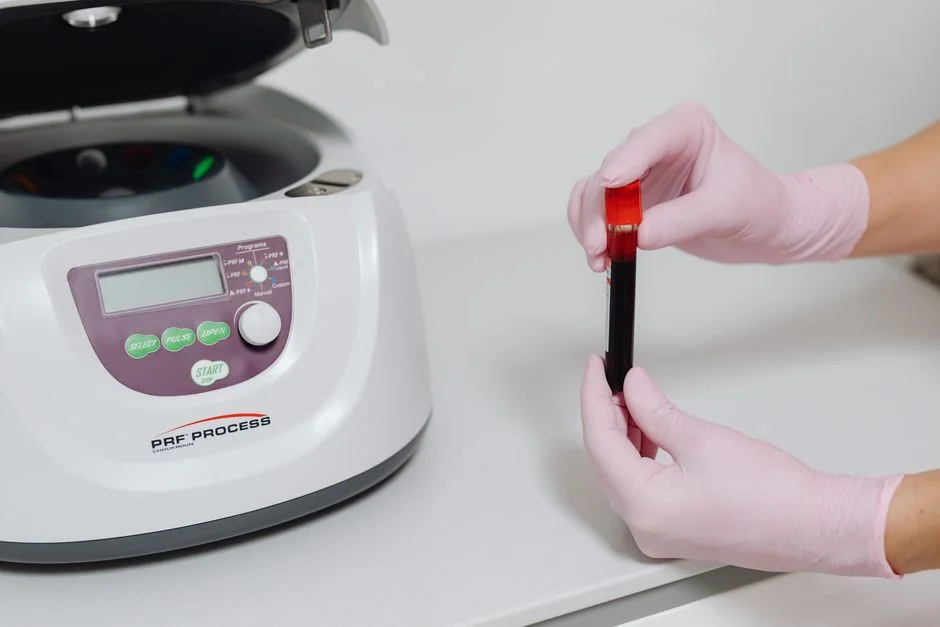
A defensible 2026 Sohar shortlist runs on four checks, and a vendor that fails any of them drops off the list. First, a documented Sohar or Oman reference — the Headworks International Sohar / Majis case study is the public example of a vendor with a published Sohar petrochemical reference, and the absence of any named Omani reference is a disqualifying gap. Second, in-house primary, secondary and tertiary scope — a vendor that sub-contracts the membrane polish or the sludge handling is exposing the buyer to interface risk. Third, valid Omani after-sales coverage — written commitment to a response window and to spares holding in the Sultanate of Oman, not a regional desk. Fourth, willingness to pilot tertiary polishing on site — vendor-funded or co-funded pilot data on the actual influent, against the actual consent frame, is the only credible basis for sizing a reuse train.
For a 2026 Sohar EPC assembling the equipment stack, the matched product line is an MBR membrane bioreactor for Sohar secondary and reuse duty, a DAF system for Sohar FOG and suspended-solids removal, automatic chemical dosing, and a UV or chlorine dioxide disinfection stage. That stack covers the primary-to-tertiary envelope across the four dominant Sohar loadings and matches the consent frames the buyer is consenting against. The supplier shortlist is the engineering test, not a brand test: a vendor that can deliver that stack with a Sohar reference and a pilot commitment outranks a vendor that cannot.
The checklist below is what a Sohar EPC runs against incoming bids. Any "yes" without documentary support should be treated as a "no" pending evidence.
| Shortlist check | What the buyer requests | What disqualifies a vendor |
|---|---|---|
| Documented Sohar / Oman reference | Named project, year, influent, consent frame | Generic "Oman experience" with no project |
| In-house primary/secondary/tertiary scope | Written scope matrix; named sub-suppliers if any | Two or more stages sub-contracted to third parties |
| Omani after-sales coverage | Local response window, spares holding, service team in Oman | Regional desk only, no Sultanate of Oman service team |
| Willingness to pilot tertiary on site | Vendor-funded or co-funded pilot protocol | Refusal to pilot or "pilot after order" without protocol |
Frequently Asked Questions
What does an effluent treatment plant in Sohar typically cost in 2026?
The supplied research does not contain a public 2026 Sohar cost benchmark. A defensible 2026 budget must be requested as a written vendor proposal against the actual influent characterisation, the actual consent frame (Royal Decree 18/2018, Sohar Port, or SOFZA), and the actual end-use (discharge or reuse). For reuse duty, the tertiary stage is the main cost step; for discharge duty, the bioreactor and sludge handling dominate. A Sohar buyer should ask for a two-band quotation (discharge-only and reuse) so the board can see the cost step explicitly.
Which Omani consent applies to a SOFZA-located plant versus a Sohar Port-located plant?
Royal Decree 18/2018 is the national baseline that applies to both. A SOFZA-located plant is also consenting against the Sohar Freezone (SOFZA) tenant discharge consent. A Sohar Port-located plant is consenting against the Sohar Port Authority harbour consent. If the plant also disposes off-tenant, Majis Industrial acceptance applies on top. The three frames are separate envelopes and a Sohar buyer must request each issuer's numeric limits before any vendor quotation is frozen.
How long does a 2026 Sohar ETP build take?
Lead time is driven by the fabrication model. Skid-built primary/secondary packages are the faster route; site-built concrete tanks take longer but lower the packaged cost for larger duties. Sohar Port and SOFZA site logistics, and the Majis tie-in approval cycle for off-tenant disposal, are real schedule variables. A Sohar buyer should ask the vendor to break lead time into fabrication, shipping, site civils, commissioning, and Majis tie-in, and to write each as a separate line in the project schedule.
Should a Sohar plant target reuse or discharge compliance in 2026?
Schrader (University of Twente, 2014) and Lei (Wageningen University, 2022) both show that reuse polishing is technically feasible, but only after the consent frame is fixed and a pilot has confirmed the actual influent. Discharge compliance is the lower-cost, lower-risk 2026 default. Reuse becomes the right answer when the free-zone end-use, the inlet-water cost, or the regulator pressure makes the tertiary cost recoverable. The decision is commercial and consent-led, not equipment-led.