Why the DAF-or-Clarifier Question Is Different in Pago Pago
Mainland buyer guides assume a DAF-default answer, but Pago Pago is a U.S. territory in the South Pacific with its own procurement, logistics, and compliance physics. A factory engineer here is not choosing between two units on a flatbed truck; they are choosing between a containerized skid that survives a barge window and a cast-in-place basin that requires a construction crew the island may not have on a 2026 schedule.
The plant runs on a small 60 Hz island grid with frequent diesel-backed outages, intake water that is warm and often brackish, and a thin technical labor pool. Federal discharge rules under the 40 CFR Part 405–432 food-processing family apply because American Samoa is U.S. territory, and the territory layers its own American Samoa Environmental Protection Act rules on top of those EPA reference limits. These realities change which separator type is actually cheaper once you add ocean freight, civil work, and operator availability to the spreadsheet.
Food and Beverage Effluent: What DAF and Clarifiers Are Actually Doing
Dissolved air flotation clarifies wastewater by releasing air from a pressurized recycle stream so it forms 30–50 micron microbubbles (per a 2026 commercial DAF manufacturer page) that attach to suspended solids, oils, and greases, lifting them to the surface where a paddle skimmer removes them. A conventional gravity clarifier uses the opposite physics: density difference and long residence time drop heavier suspended solids to the floor; light FOG and colloidal matter either escape over the weir or sit as a stubborn surface scum. Both units depend on upstream coagulation and flocculation — two commercial sources (2026 and undated) both list pH adjustment, coagulant, and flocculant dosing as the prerequisite for the separator to work. EPA's 1974 development document for the canned and preserved seafood category (EPA-440/1-74-Q20-a, June 1974) names dissolved air flotation alongside aerated lagoons and activated sludge as the Best Practicable Control Technology reference train, which is the framing a compliance team will compare any 2026 proposal against. The right mental model is "DAF plus a clarifier that has a specific job," because the two technologies separate different fractions of the same waste.
For a Pago Pago tuna or copra processor, the practical question is which technology handles the dominant load: emulsified cooking oils, blood and protein, or settleable pulp. A factory-skid DAF system addresses the FOG-and-colloid fraction; a lamella clarifier / gravity sedimentation unit handles the settleable fraction and doubles as a sludge thickener. Most reference treatment trains for food and seafood use both in series rather than either alone.
DAF vs Gravity Clarifier: A 2026 Decision Matrix for Food and Beverage Plants
The table below is built to be lifted straight into a procurement memo. The mechanism and footprint rows cite the supplied research; the Pago Pago column is the qualitative layer the matrix exists to support.
| Dimension | Dissolved Air Flotation (DAF) | Gravity Clarifier | Pago Pago Implication |
|---|---|---|---|
| Separation mechanism | 30–50 µm microbubbles attach to and float FOG and colloids (Clearwater/SigmaDAF, 2026) | Stokes-law settling of heavier particles; largely blind to emulsified FOG | Tuna cookers, dairy, and oil processors produce emulsified FOG; DAF wins the headline separation |
| Regulator recognition (food & seafood) | Named reference technology in EPA-440/1-74-Q20-a (June 1974) and discussed in the 1977 EPA Eighth National Symposium on Food Processing Wastes (EPA-600/2-77-184, August 1977) | Appears in the same EPA documents as a polishing step, not the headline separator | A DAF-first train is the easier conversation with U.S. territorial reviewers on a 2026 permit |
| Reference loading it was designed for | Reference food-processing loadings cited in the 1977 symposium include the Snokist Growers cannery at 2.5 mgd and 28,000 lb/day BOD (EPA-600/2-77-184, August 1977) | Better suited to lower-strength streams where settleable solids dominate | High-strength, variable food and beverage streams favor DAF; weak streams can go either way |
| Footprint & civil work | Factory-built skids (4–300 m³/h class per product card) ship in containers; no cast-in-place basin | Requires cast-in-place concrete or large field-erected steel tank with rake and skimmer | Pacific-island construction cost and barge windows penalize heavy civil work |
| Operator profile | PLC-controlled, plug-and-play, automated skimmer and sludge discharge (Clearwater/SigmaDAF, 2026) | Needs routine hands-on attention to rake, scum skimmer, and weir | Thin local operator pool favors an automated skid |
| Upstream chemistry dependency | Requires coagulant and flocculant dosing to condition the floc (Clearwater/SigmaDAF, 2026; Kemco) | Also benefits from coagulation; less sensitive to fine bubble chemistry | Both units need a dosing skid; plan one regardless of separator choice |
The matrix translates the question "DAF or clarifier?" into "DAF first, then what job does a clarifier still do?" — which is the framing EPA's 1974 and 1977 documents already use.
Pago Pago Site Constraints That Tip the Decision
A Pago Pago factory engineer must layer site-specific weights on top of the head-to-head comparison, as four constraints reliably swing the answer.
| Constraint | What it penalizes | What it favors | How to score it |
|---|---|---|---|
| Ocean freight and barge window | Cast-in-place concrete, oversized skids, anything needing a heavy lift | Factory-built, containerized, pre-assembled skids | Confirm the unit fits a standard ISO container and that the pier-side crane can lift it |
| Island grid and intake water | Processes that lose performance on warm, salt/brackish intake water; equipment that cannot ride through diesel-backed outages | DAF with robust pH control and a PLC-controlled coagulant and pH dosing skid | Request a control philosophy that tolerates warm, variable intake and short power dips |
| Operator pool | Units that need daily hands-on tuning, specialist vendor visits, or imported consumables | Automated PLC skids with onboard sensors and alarms | Confirm the local crew can run, alarm-troubleshoot, and chemically clean the unit |
| Territorial compliance | Settling-only trains that cannot meet FOG or BOD limits for a food-processing point source | DAF-first train aligned with the EPA reference (EPA-440/1-74-Q20-a, June 1974) | Match the proposed train against the EPA reference technology list before the permit meeting |
A simple weighted scorecard — logistics weight 30%, operator weight 25%, power/water weight 20%, compliance weight 25% — usually returns a DAF-first outcome for a tuna or dairy duty in Pago Pago, and a clarifier-first outcome for a low-FOG beverage rinse stream. The scorecard is qualitative by design; the buyer should ask the vendor for the inputs needed to score it, not invent numbers.
Building the Right Train Around the Chosen Clarifier
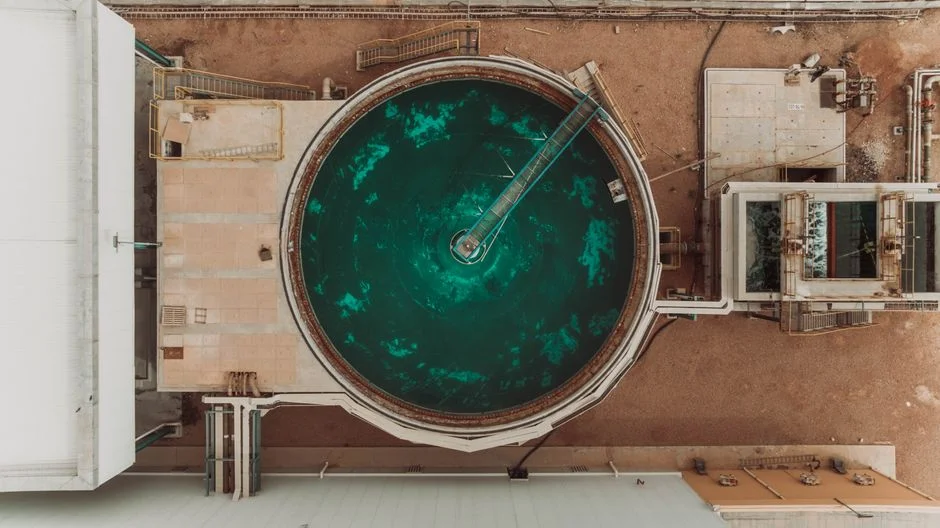
Selecting the separator is roughly half the engineering. A 2026 treatment train for a Pago Pago food and beverage plant should be planned as a stack, with each unit protecting the next.
1. Pretreatment. Coarse screening and grit removal come first. A rotary mechanical bar screen and a hydrocyclone strip rags, lint, and sand that would otherwise rag the DAF or settle as an abrasive sludge bed in a clarifier (Kemco).
2. Chemistry. pH adjustment, coagulant, and flocculant dosing are the non-negotiable enablers; both the Clearwater/SigmaDAF 2026 page and the Kemco page list chemical conditioning before the separator itself. A PLC-controlled coagulant and pH dosing skid should be specified with the separator, not after it.
3. Primary separation. Either the factory-skid DAF (4–300 m³/h class per product card) or a gravity clarifier, sized to the reference loading in the 1977 EPA symposium (e.g., the Snokist Growers cannery at 2.5 mgd and 28,000 lb/day BOD, EPA-600/2-77-184, August 1977) for high-FOG streams, and to a lower strength for beverage rinse water.
4. Sludge handling. A plate-and-frame filter press dewaters the floated or settled sludge to cut hauling mass — significant on an island where sludge must be barged off or landfilled. A lamella clarifier can also pre-thicken sludge upstream of the press.
5. Discharge polishing. A UV sterilizer or chlorine dioxide step is typically required for any food and beverage discharge that re-enters the environment or a reuse loop. For a 2026 capital decision, this step is where the reuse-to-cannery water case (also discussed in the 1977 symposium) becomes financially interesting.
Engineers familiar with a parallel DAF-vs-clarifier decision guide for fabricated metals will notice the same logic applies here, but the chemistry package and the freight penalty are heavier in Pago Pago than in East Hempfield.
Sizing and Spec Checklist Before You Buy in 2026
Bring the following to any vendor conversation so the proposal is sized to your site instead of a catalog default.
- Site inputs to gather: average and peak flow (m³/h), influent BOD₅ and COD, FOG concentration, TSS, pH, temperature, and salinity — the last two matter specifically for tropical Pago Pago intake water.
- For a DAF vendor: confirm skid versus field-built, material of construction (304SS / 316SS / polypropylene, per the Clearwater/SigmaDAF 2026 product page), chemical conditioning package, PLC versus manual controls, and whether the unit ships pre-assembled in a standard ISO container.
- For a clarifier vendor: confirm civil basin construction cost on island, rake and skimmer spare-parts availability and lead time, and the sludge pre-thickening strategy upstream of the filter press.
- For both: confirm the control philosophy tolerates warm, brackish intake water, short grid outages, and a small operator crew, and that the unit aligns with the EPA reference train for the food and seafood category (EPA-440/1-74-Q20-a, June 1974).
The 1977 EPA symposium proceedings (EPA-600/2-77-184, August 1977) are a useful place to ask a vendor to validate their sizing against a published reference loading rather than their in-house curve. For a separate decision on downstream dewatering, the filter press sizing guide for beverage wastewater walks through cloth spec and cycle time in more detail.
Frequently Asked Questions
Is DAF worth the higher capital cost over a clarifier for a Pago Pago food and beverage plant?
For high-FOG or high-BOD streams at the reference food-processing loadings cited in the supplied research, yes: the DAF freight penalty is offset by lower civil
Frequently Asked Questions
Is DAF worth the higher capital cost over a clarifier for a Pago Pago food and beverage plant?
For high-strength food and beverage effluent, a Dissolved Air Flotation (DAF) unit typically achieves 80% to 95% removal of Fats, Oils, and Grease (FOG) and suspended solids, whereas a conventional clarifier often struggles to exceed 50% to 60% in the same applications. Given the high cost of utility transport and waste disposal in American Samoa, the DAF’s ability to produce a significantly drier sludge—often 3% to 5% solids concentration compared to 1% in clarifiers—drastically reduces hauling volumes and associated operational expenditures.
Can a DAF system be shipped in a container to American Samoa?
Yes, most modern DAF systems designed for food and beverage throughputs up to 200 gallons per minute (GPM) are manufactured on modular, skid-mounted frames that fit within standard 20-foot or 40-foot high-cube shipping containers. This modular design facilitates direct sea freight to the Port of Pago Pago, minimizing on-site assembly time and protecting sensitive components like air-saturation pumps and skimmer drives from salt air corrosion during transit.
What BOD level justifies a DAF instead of a clarifier?
A DAF unit is generally justified when the influent Biological Oxygen Demand (BOD) consistently exceeds 1,000 mg/L or when the wastewater contains high levels of emulsified fats that do not settle via gravity. While a primary clarifier is effective for simple sedimentation of inorganic solids, it cannot adequately process the buoyant organic loads common in meat, dairy, or beverage processing, which necessitate the micro-bubble attachment and physical flotation provided by DAF technology.
Does a clarifier become obsolete if I install a DAF?
A clarifier does not become obsolete but rather serves a different function within a multi-stage treatment train. In many high-load facilities, a primary clarifier is still utilized for the removal of heavy, non-organic grit and settleable solids to protect downstream DAF pumps from abrasion. The DAF should be viewed as a secondary or tertiary polishing step specifically engineered for the removal of lighter, hydrophobic organic particles that gravity alone cannot capture.
What compliance risk do I face if I pick the wrong clarifier type in 2026?
Selecting an undersized or improperly specified clarifier for high-strength organic wastewater in 2026 risks non-compliance with local American Samoa Environmental Protection Agency (ASEPA) discharge permits and potential Clean Water Act violations. If the clarifier fails to reduce BOD and Total Suspended Solids (TSS) to meet the facility's specific National Pollutant Discharge Elimination System (NPDES) limits, the plant may face daily fines, mandatory production curtailment, or forced investment in emergency supplemental chemical treatment to mitigate excessive effluent toxicity.