
Why a La Paz Factory ETP Cannot Use a Sea-Level Design
A factory effluent treatment plant designed at sea level will underperform in La Paz because the physics of dissolved-air flotation and aerobic biological treatment depend on atmospheric pressure. La Paz sits at roughly 3,640 m above sea level, where ambient pressure is well below the 101.3 kPa baseline, so the mass of air a DAF saturator can hold at a given gauge pressure is lower than a sea-level vendor's standard curve. According to a 2026 engineering article on how DAF systems work, micro-bubbles are formed by pressurising a sidestream, saturating it with air, and releasing it at atmospheric pressure; any drop in atmospheric pressure reduces the air that flashes out of solution and weakens bubble formation. The same article confirms the saturator typically runs at 40–70 psi, a range that must be re-validated for a La Paz plant rather than copied from a coastal reference.
Secondary biological stages are similarly affected by these altitude constraints. Activated sludge and MBR systems rely on oxygen transfer from diffused air into mixed liquor, and the standard oxygen transfer rate (SOTR) drops when the partial pressure of oxygen in the supply air falls. Cold influent temperatures common at altitude slow biological kinetics, so tank volume, MLSS, or residence time must increase to maintain BOD removal. Pump hydraulics also shift: head curves and NPSH margins behave differently in thin air, so a centrifugal pump selected against a sea-level curve may not deliver the rated flow at La Paz. The engineering response is a re-rating of saturator pressure, air-to-solids ratio, blower power, biological volume, and pump selection for altitude.
| Parameter | Sea-level baseline | La Paz (~3,640 m) effect | What the engineer must re-check |
|---|---|---|---|
| Atmospheric pressure | ~101.3 kPa | Significantly below baseline | Saturator output, air-to-solids ratio, blower sizing |
| DAF saturator gauge pressure | 40–70 psi (standard) | Same setpoint, lower absolute mass of air dissolved | Recycle rate or vessel size; confirm with vendor |
| Micro-bubble size | 10–100 μm (standard) | Same range, lower driving force for release | Skim rate and float sludge quality |
| Standard oxygen transfer rate (SOTR) | Rated at sea-level air | Reduced by lower pO₂ and thin air column | Blower power, aeration time, biological volume |
| Cold influent temperature | Site-specific | Commonly low at altitude | Increase MLSS or HRT to hold BOD removal |
| Pump NPSH and head | Selected for 101.3 kPa | Curve shifts in thin air | Re-select pump and recheck NPSH margin |
The Three ETP Stages a La Paz Factory Will Use
An ETP operates in three levels: primary treatment using physical and chemical methods to settle suspended solids and adjust pH, secondary treatment using biological processes, and tertiary treatment with chlorine, alum, UV, or membranes for final polishing. This three-level framework is the standard scaffold a 2026 La Paz factory should specify, with each level filled by unit operations matched to the local effluent.
At the primary stage, headworks start with a rotary bar screen for headworks to remove rags and large solids, followed by grit removal, flow equalization, and pH adjustment. Coagulant and flocculant dosing is handled by an automatic coagulant and flocculant dosing skid, sized for the peak influent load. A DAF unit typically sits at the end of primary treatment when emulsified oil, FOG, or colloidal solids are present. At the secondary stage, the choice splits between aerobic options—activated sludge, sequencing batch reactor (SBR), MBR—and anaerobic options such as UASB or anaerobic lagoon; selection is driven by influent strength, ambient temperature, and any reuse goal. The tertiary stage adds chlorination, UV, media filtration, or membrane polishing to meet PPOA limits. For municipal-strength low-flow sites, a packaged A/O plant can substitute for the secondary stage, but most La Paz factories will still need a true secondary biological reactor with sludge wasting to a filter press.
Choosing Between DAF, Clarifier, and MBR for the Primary–Secondary Boundary
The most significant technical decision on a La Paz ETP is the selection between DAF, a lamella clarifier, or an MBR for the primary–secondary boundary. DAF systems take a sidestream of clarified effluent, pressurise and saturate it with air, and return it to the flotation tank where the pressure drop releases micro-bubbles of 10–100 μm that attach to oil droplets and suspended solids, floating them for skimming. This micro-bubble mechanism makes DAF the right tool for FOG, emulsified oil, and fine colloidal TSS in food, beverage, and metalworking plants.
A lamella clarifier is the alternative when particles settle readily, FOG is absent, and the effluent is dominated by inert settleable solids. It produces a settled sludge rather than a float, has a smaller footprint than a conventional clarifier, and avoids saturator and recycle pumping. An MBR membrane bioreactor replaces a separate clarifier and tertiary filter with sub-micron membrane filtration, delivering low BOD and TSS in a small footprint—the right choice when the factory is space-constrained or requires reuse water. For very high-strength food or distillery wastewater, an anaerobic stage such as UASB upstream of a DAF or MBR cuts aeration energy and generates biogas, but requires careful attention to temperature and alkalinity at altitude. The selection is driven by influent character: high FOG or emulsified oil points to DAF, settleable inerts point to a clarifier, and reuse or strict BOD/TSS targets point to MBR.
| Effluent character | Primary–secondary choice | Why | Operational risk if misapplied |
|---|---|---|---|
| High FOG, emulsified oil, fine TSS, colloids | Industrial DAF system | Micro-bubbles 10–100 μm lift oil and colloids a clarifier cannot | Oil-coated biomass and biological stage failure |
| Settleable inert solids, no FOG | Lamella clarifier | Gravity settling is sufficient, lower capex and no saturator | Emulsified oil passes through if it appears later |
| Strict BOD/TSS limit, reuse target, tight space | MBR membrane bioreactor | Sub-micron filtration, small footprint, sludge retention | Membrane fouling without upstream screening |
| Very high COD, food/distillery, reuse goal | Anaerobic (UASB) + DAF + MBR | Cuts aeration energy, lifts residual FOG, polishes for reuse | Capital intensity and operator skill demand |
Sizing the DAF for a La Paz Factory in 2026
DAF sizing begins with influent data: design flow in m³/h, peak factor, influent TSS, FOG, pH, temperature, and the discharge limits set by the PPOA permit. The 2026 DAF engineering spec and cost framework explains that the air-to-solids ratio is set by the saturator pressure (about 40–70 psi) and the recycle rate, while surface hydraulic loading is set by whether the unit runs as a clarifier or thickener. At La Paz altitude, the effective mass of air dissolved at a given saturator pressure is lower than at sea level, so the engineer must either raise the saturator setpoint, increase recycle rate, or accept a larger unit for the same solids duty.
Vendor confirmation is required for sizing because saturator geometry, retention time, and recycle pump head interact. HydropureWater DAF units are available in a range that covers 4–300 m³/h across 13 standard models; flows outside that band require engineered selection. For most food, beverage, and metalworking plants in the El Alto / La Paz industrial corridor, 10–50 m³/h is a typical design band, but the final pick is driven by measured TSS and FOG loads rather than headline flow. Sludge handling is a related sizing question: DAF float sludge and biological waste activated sludge are both dewatered with a filter press for DAF float sludge, with plate area selected from the dry solids mass rather than the wastewater flow.
2026 Cost Bands and Procurement Realities for Bolivia
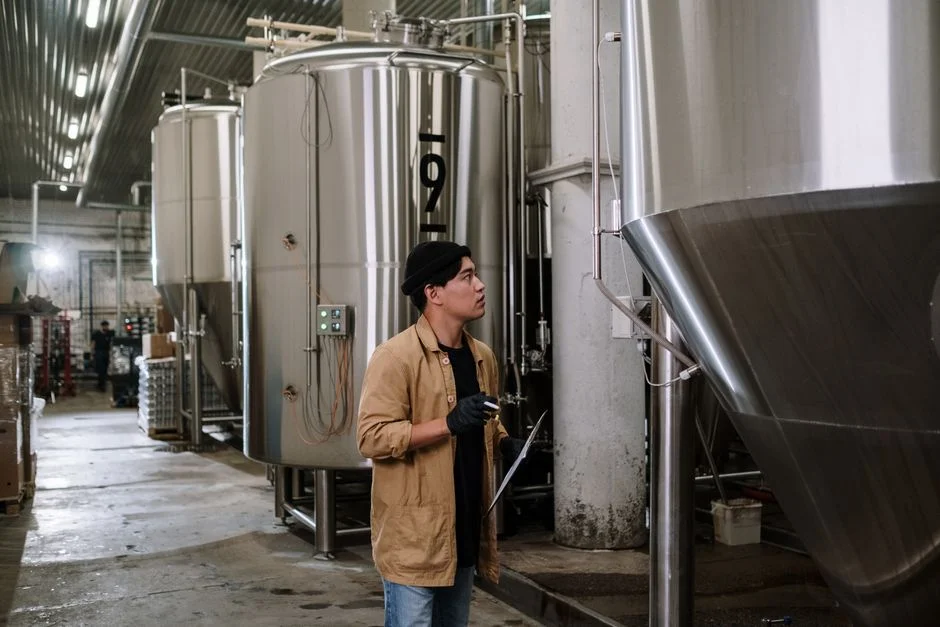
A standard skid-mounted DAF unit in the 5–50 m³/h band typically falls in a low-to-mid five-figure USD range, though exact pricing must come from an itemized vendor quote. Engineered turnkey ETPs that include MBR membranes, stainless-steel tanks, and full automation scale upward because membrane area, stainless content, and control scope dominate cost. Shipping into La Paz is an operational reality: the route runs overland from the port of Arica in northern Chile or Matarani in southern Peru, with customs handled through AGIT/ANB and inland trucking to the plant site; the RFQ should itemize freight, customs duties, and inland transport separately from the equipment. Lead time for skid-mounted equipment is typically 6–12 weeks ex-works, plus 8–10 weeks of ocean and inland transit to La Paz, so a 3–6 month total project window is realistic for a packaged plant. Spare parts stocking—saturator pumps, bubble diffusers, polymer pumps, and membrane modules—is critical to prevent extended plant downtime.
Frequently Asked Questions
What Bolivian regulation governs industrial discharge from a La Paz factory?
Industrial discharge in Bolivia is governed by the Reglamento en Materia de Contaminación Hídrica (Regulation on Water Pollution) issued under Law 1333, enforced by the Ministerio de Medio Ambiente y Agua (MMAyA) through the PPOA (Programa de Prevención y Protección al Medio Ambiente) discharge permit. The PPOA permit sets the effluent limits the ETP must meet and is the operative compliance document a 2026 factory engineer must obtain before commissioning.
Do I need a DAF if my effluent has no visible oil?
Visible oil is not the sole deciding factor. A DAF is justified when emulsified oil, FOG, high TSS, or fine colloids are present, even at low concentrations, because the 10–100 μm micro-bubbles described in DAF engineering sources lift particles that gravity settling cannot. If the effluent is dominated by settleable inerts and is free of emulsified oil, a lamella clarifier is usually sufficient.
How long does it take to deliver and install an ETP in La Paz?
A packaged skid-mounted plant typically takes 3–6 months from purchase order to commissioned operation, comprising 6–12 weeks of factory build, 8–10 weeks of ocean and inland transit through Arica or Matarani, customs clearance, and on-site assembly. Engineered turnkey ETPs with civil works and biological reactors require longer timelines.
Should I buy from a Bolivian integrator or import directly from the equipment manufacturer?
A Bolivian integrator reduces commissioning risk, provides local warranty support, and manages the regulatory requirements for the PPOA permit process. Direct import from the manufacturer lowers unit cost but shifts commissioning, spares logistics, and warranty enforcement onto the buyer, which presents a significant risk at La Paz given the long freight route and limited local stock of specialty parts.