
The Three-Layer Pretreatment Framework That Governs a Fowlerville Chemical Plant
A chemical plant discharging to a sanitary sewer near Fowlerville, Michigan operates inside three overlapping legal layers, and each one writes a different piece of the same permit envelope. The federal layer starts with the Clean Water Act, originally the 1972 Water Pollution Control Act and renamed in 1977, which authorizes EPA to limit the types and concentrations of pollutants industries may discharge to sanitary sewer (PCWRA, 2025). EPA implemented that authority in 1978 through the General Pretreatment Program Regulations at 40 CFR Parts 122, 123, 124, and 403 (PCWRA, 2025; EPA Local Limits Development Guidance, 2015-10).
The state layer sits on top of that federal authority. Under CWA Section 402(b), EPA may authorize a state to run its own NPDES program, and the authorized state then oversees the POTW's pretreatment program and reviews its local limits for technical adequacy (EPA Local Limits Development Guidance, 2015-10). In Michigan, the Department of Environment, Great Lakes, and Energy (EGLE) holds that delegation and confirms that POTW pretreatment programs meet the federal baseline.
The local layer is where the actual number in your permit gets written. EPA delegates day-to-day implementation and enforcement to either the state or the local POTW authority; once approved, the POTW must monitor, permit, and enforce industrial pretreatment regulations (PCWRA, 2025). Where EPA has not delegated, EPA itself is the default Control Authority, and the receiving POTW still operates its own sewer-use ordinance and local limits (PCWRA, 2025). Categorical standards under 40 CFR 403 set the industry-specific numerical floor for organic chemicals, plastics, and synthetic fibers, and the POTW's local limits close the gap between those categorical numbers and the specific loading the receiving plant can absorb (EPA Local Limits Development Guidance, 2015-10).
The framework is built around two failure modes the plant must keep out of the receiving POTW: pass-through, where a pollutant survives the POTW and reaches the receiving stream, and interference, where a pollutant disrupts the POTW's biological or sludge process (PCWRA, 2025; EPA Local Limits Development Guidance, 2015-10). Every local limit, categorical standard, and prohibited-discharge rule exists to prevent one of those two outcomes.
How a POTW Develops the Local Limits Your Plant Has to Hit
Local limits are not arbitrary numbers; they are the output of EPA's five-step Maximum Allowable Headworks Loading (MAHL) method, documented in the EPA Local Limits Development Guidance (EPA, 2015-10). Understanding the five steps lets a chemical-plant engineer anticipate what the POTW is actually calculating when it sets a permit value.
Step 1 — Pollutants of concern (POCs). The POTW assembles a list of POCs from its NPDES permit conditions, water quality criteria, sludge quality standards, air emissions, hauled waste, and scans of influent, effluent, and biosolids (EPA Local Limits Development Guidance, 2015-10). For a Fowlerville chemical plant, expect priority pollutants and any chemical listed in 40 CFR Parts 414, 415, 417, or 419 to land on that list.
Step 2 — Data collection and removal efficiencies. The POTW samples at the headworks, in the collection system, and at industrial users, then models how each POC behaves through the plant (EPA Local Limits Development Guidance, 2015-10).
Step 3 — MAHL calculation. For each POC, the POTW calculates separate Allowable Headworks Loadings (AHLs) using effluent-quality, sludge-quality, inhibition-based, and air-quality criteria, then takes the most restrictive value as the MAHL (EPA Local Limits Development Guidance, 2015-10).
Step 4 — MAIL allocation. The POTW converts the MAHL into a Maximum Allowable Industrial Loading (MAIL), reserving a safety factor, an expansion/growth allowance, and capacity for hauled waste and uncontrolled sources before allocating the remainder to Significant Industrial Users (EPA Local Limits Development Guidance, 2015-10).
Step 5 — Implementation. The POTW writes local limits, applies Best Management Practices, and runs control mechanisms (permits, SIU self-monitoring, Enforcement Response Plans) to keep actual loadings under the MAHL (EPA Local Limits Development Guidance, 2015-10; CWS, 2025).
The practical output for the chemical plant is a discharge permit that lists each regulated parameter, its numerical limit (typically a daily maximum and a monthly average), the monitoring frequency, and the required sample type, either grab or composite (CWS, 2025). That single page is the contract the on-site pretreatment train has to honor.
| Step | What the POTW does | Output the plant sees |
|---|---|---|
| 1. Pollutants of concern | Pulls POCs from NPDES permit, water quality, sludge quality, air, hauled waste, and influent/effluent scans (EPA, 2015-10) | List of parameters the plant will be sampled for |
| 2. Data collection | Samples headworks, collection system, and industrial users; computes removal efficiencies (EPA, 2015-10) | Basis for any mass-based limit |
| 3. MAHL calculation | Calculates AHLs from effluent, sludge, inhibition, and air criteria; takes the most restrictive as the MAHL (EPA, 2015-10) | Total mass each POC allowed at the headworks |
| 4. MAIL allocation | Reserves safety factor, growth allowance, hauled waste, and uncontrolled sources; allocates remainder to SIUs (EPA, 2015-10) | The numerical limit written into the plant's permit |
| 5. Implementation | Adopts limits, runs BMPs, issues permits, requires self-monitoring, and enforces via the Enforcement Response Plan (EPA, 2015-10; CWS, 2025) | Monitoring frequency, sample type, and enforcement triggers |
Conventional Pollutants Chemical Plants Have to Plan Around
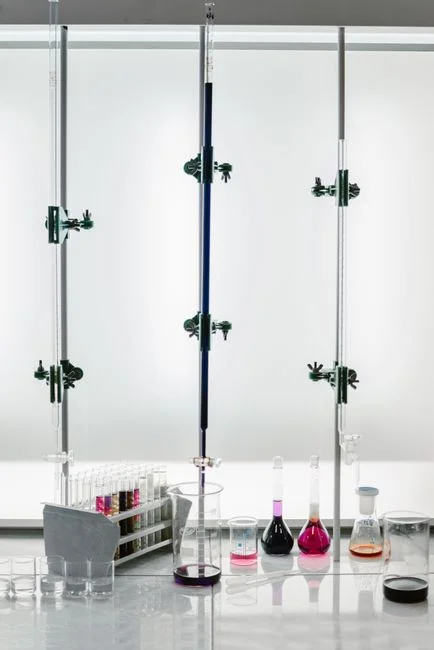
Categorical standards differ by subcategory, but the conventional and non-conventional parameters the MAHL exercise always returns are remarkably consistent across chemical plants, and the equipment train has to be sized against the most restrictive of them. The EPA Local Limits Development Guidance treats BOD, TSS, ammonia, and oil and grease as the conventional parameters that almost every local-limits analysis includes (EPA, 2015-10).
BOD and TSS drive the size of the biological and solids-separation steps, and they trigger strength surcharges when the discharge exceeds domestic strength (CWS, 2025; EPA, 2015-10). Ammonia is regulated both for effluent toxicity and for inhibition of the POTW's nitrification biomass, so chemical plants that handle ammonia-bearing process streams must plan for on-site ammonia reduction or equalization before discharge (EPA, 2015-10). Oil and grease is the primary reason chemical, petrochemical, and metalworking plants install dissolved air flotation pretreatment (EPA, 2015-10). Categorical pollutants for chemical manufacturers under 40 CFR Parts 414, 415, 417, 419, and similar subcategories add metals, COD, specific organics, and pH ranges that the POTW layers on top of its conventional parameters (EPA, 2015-10).
| Parameter | Why the POTW regulates it | What the chemical plant has to plan for |
|---|---|---|
| BOD / TSS | Drives biological loading and biosolids production; triggers strength surcharges (CWS, 2025) | Biological reactor sizing and solids-separation step |
| Ammonia | Effluent toxicity and inhibition of POTW nitrification (EPA, 2015-10) | Equalization or on-site ammonia reduction |
| Oil and grease | Conventional pollutant, surface blanket risk, pass-through (EPA, 2015-10) | DAF or equivalent oil-removal step |
| Categorical pollutants (metals, COD, specific organics, pH) | Industry-specific standards under 40 CFR Parts 414, 415, 417, 419 (EPA, 2015-10) | Source control, segregation, and dedicated treatment train |
The On-Site Pretreatment Train Most Chemical Plants Specify
Once the chemical plant knows which parameters the POTW will enforce, the on-site pretreatment train is specified to meet them in the order the wastewater actually arrives. Pretreatment is the treatment an industrial discharger must conduct prior to discharging to the sanitary sewer, and the goal is to control pollutants at the source (CWS, 2025). The unit operations below are the ones a chemical plant engineer typically sees in a defensible design, in the order they appear in the flow.
Source control and segregation. Keep acid/alkaline cleaners, solvent rinses, and batch dumps separate from sanitary flows so the rest of the train is not forced to treat slug loads (CWS, 2025; EPA, 2015-10). Segregation is the cheapest control available and the one most often skipped.
Screening. A rotary mechanical bar screen protects downstream pumps and biological reactors from rags, plastics, and fibrous debris that ride in with the waste stream (CWS, 2025; EPA, 2015-10). Screening is also where the plant first demonstrates it is controlling solids at the source.
Flow and load equalization. An equalization basin smooths BOD, pH, and TSS spikes before biological or physical-chemical treatment, which is the difference between a permit compliance graph that looks like a heartbeat and one that looks like a flat line (EPA, 2015-10).
pH adjustment and chemical dosing. A PLC-controlled chemical dosing skid doses coagulants, flocculants, and pH adjusters so the stream is ready for solids separation and the downstream biology is not exposed to pH excursions (CWS, 2025; EPA, 2015-10).
Solids separation. A dissolved air flotation (DAF) system handles oil and grease and free-floating solids. Where footprint is the constraint, a high-efficiency sedimentation tank (lamella clarifier) is the alternative, and lamella designs can cut coagulant consumption compared with a conventional clarifier (EPA, 2015-10). The choice between them is a site-specific decision discussed in detail in a DAF vs clarifier decision guide for chemical plants.
Biological treatment. An MBR membrane bioreactor or conventional activated-sludge system reduces soluble BOD, COD, and ammonia so the plant can hold its MAHL allocation (EPA, 2015-10). MBR is the higher-capital option with a smaller footprint and tighter effluent; activated sludge is the lower-capital option with a larger basin.
Disinfection. A chlorine dioxide generator or UV polishing addresses any residual microbial limits written into the permit (CWS, 2025).
Sludge handling. A plate-and-frame filter press stabilizes the waste solids before off-site disposal, which closes the loop on the sludge-quality side of the MAHL calculation (EPA, 2015-10). For plants in adjacent food or transportation segments, the equipment train logic is similar and is covered in a food and beverage pretreatment case study and a transportation-equipment pretreatment case study.
Permitting Path, Monitoring, and the Real Cost Stack

Before any discharge, the chemical plant submits a nondomestic waste survey; if the POTW flags it, a formal discharge permit application follows, and the application must be submitted at least 90 days before discharge (CWS, 2025). Significant Industrial Users and Non-Significant Users must submit regular compliance reports to the POTW, and facilities in significant noncompliance are named publicly in the POTW's annual report (CWS, 2025). Enforcement escalates from a warning letter to an administrative penalty and, ultimately, a stop-discharge order under the POTW's Enforcement Response Plan (CWS, 2025).
The cost stack a chemical plant should plan around has three pieces (CWS, 2025). First, a discharge permit fee that varies by user type and permit type. Second, a one-time industrial connection/capacity fee sized in Equivalent Dwelling Units (EDUs), with one industrial EDU equal to 625 gallons per day. Third, a monthly sewer usage fee that adds a strength surcharge when COD or TSS exceed the domestic baseline. The capacity fee is sized against the average monthly industrial process wastewater volume the plant plans to release, so over-declaring flow at the application stage locks in capital cost for the life of the connection.
Sampling frequency in the permit is set by the POTW and ties back to the MAHL allocation methodology in EPA's Local Limits Guidance (EPA, 2015-10; CWS, 2025). Plants that have already collected representative influent data and removal-efficiency data shorten the data-collection phase of any future local-limits re-evaluation.
Frequently Asked Questions
What does a chemical plant near Fowlerville actually have to submit to get a discharge permit?
The plant first submits a nondomestic waste survey to the receiving POTW. If the survey flags the discharge, the POTW asks for a formal Nondomestic Waste Discharge Application, and the application must be submitted at least 90 days before any discharge (CWS, 2025). Required inputs the buyer should gather before submitting include a process wastewater inventory, expected average and peak daily flows, categorical standard applicability (for example, 40 CFR Parts 414, 415, 417, 419), and any prior self-monitoring data.
How is the cost of a discharge permit and the strength surcharge structured?
The cost stack typically has three pieces: a discharge permit fee that varies by user type and permit type, a one-time industrial connection/capacity fee sized in EDUs (one EDU equals 625 gpd per CWS, 2025), and a monthly sewer usage fee that adds a strength surcharge when COD or TSS exceed the domestic baseline (CWS, 2025). Because the capacity fee is locked in by the average monthly process wastewater volume declared at application, request a written fee schedule from the receiving POTW and confirm the surcharge thresholds before finalizing the design flow.
How do we choose a pretreatment equipment supplier without inheriting a compliance risk?
Ask the supplier for reference installations in the same 40 CFR subcategory as your plant, for a control narrative that maps each unit operation to the specific local limit it is meant to meet, and for a performance test plan that ties effluent values to the MAHL allocation methodology in EPA's Local Limits Guidance (EPA, 2015-10). Confirm the supplier will support the self-monitoring reporting cadence the POTW sets, and ask for a written warranty on the biological system's ammonia-removal efficiency if ammonia is one of your regulated parameters.
What changes in 2026 should a Fowlerville chemical plant plan around in pretreatment design?
Two structural changes are visible in the current research base. First, EPA's Local Limits Development Guidance continues to anchor MAHL allocation to effluent, sludge, inhibition, and air criteria, so any plant sized against older single-criterion limits is exposed when the POTW re-runs the analysis (EPA, 2015-10). Second, strength surcharges for COD and TSS remain the dominant variable cost on the sewer bill, which means the design should be evaluated against a realistic COD/TSS envelope rather than a best-case one (CWS, 2025). The specific 2026 enforcement priorities for the Fowlerville-area POTW should be requested directly from the receiving utility before equipment selection is finalized.