Why 'Closed-Loop' Cooling in Karbala Still Generates a Blowdown Problem
A "closed-loop" data center cooling system reuses the same water inside the loop, but heat is still rejected by evaporation, so dissolved salts concentrate and a purge — the blowdown — is unavoidable (S5, Life in La Plata community explainer, 2025-01). The blowdown ratio is set by cycles of concentration (CoC): at 4 CoC the ratio 1/(CoC−1) equals 25% of makeup, and at 6 CoC it drops to 20%, a 5-percentage-point gain, not the 50% gain that simple intuition suggests (S1, Genesis Water Technologies, 2025).
In conventional systems 20–40% of intake water leaves as blowdown, and Genesis Water Technologies reports that actual measured blowdown is typically 15–30% higher than theoretical values because of leaks, drift and emergency dumps (S1, 2025). IDE Tech puts the scale on a 100 MW facility at up to 2 million liters of water per day in cooling demand, so a 20–25% blowdown fraction is a major design stream rather than a nuisance stream (S3, IDE Tech, 2026). Karbala's hot, dry climate raises evaporative loss per MWh relative to a temperate site, so the same IT load produces more blowdown per liter of Euphrates-sourced makeup than the same plant in northern Europe or the U.S. Pacific Northwest.
Karbala's Climate and Water Reality: What Changes Versus a Temperate Site
Industry sources flag the Middle East — alongside the U.S. Southwest — as a region where data centers may compete directly with municipal and agricultural users for dwindling freshwater resources (S3, IDE Tech, 2026). The same source identifies the mid-2020s as the turning point when water availability, treatment capacity and regulatory scrutiny will directly influence where data centers can be built and how they can operate (S3, 2026). Genesis Water Technologies makes the same point from a different angle: a sustainable roadmap "that works in Arizona fails in Oregon or Tennessee," because water scarcity, discharge limits, makeup cost and reuse incentives all vary by location (S1, 2025). For a Karbala site the design questions become concrete: what is the TDS and silica of Euphrates-sourced makeup, what is the marginal cost of that makeup, what discharge pathway is available, and is there a downstream reuse demand (irrigation, district cooling, construction) that could absorb treated blowdown. Power reliability and ambient wet-bulb temperature in central Iraq favor hybrid wet/dry or adiabatic architectures over pure evaporative systems for hyperscale loads, which in turn changes blowdown quantity and quality — and therefore the entire downstream treatment train.
Choosing the Cooling Architecture Before Choosing the Treatment Train
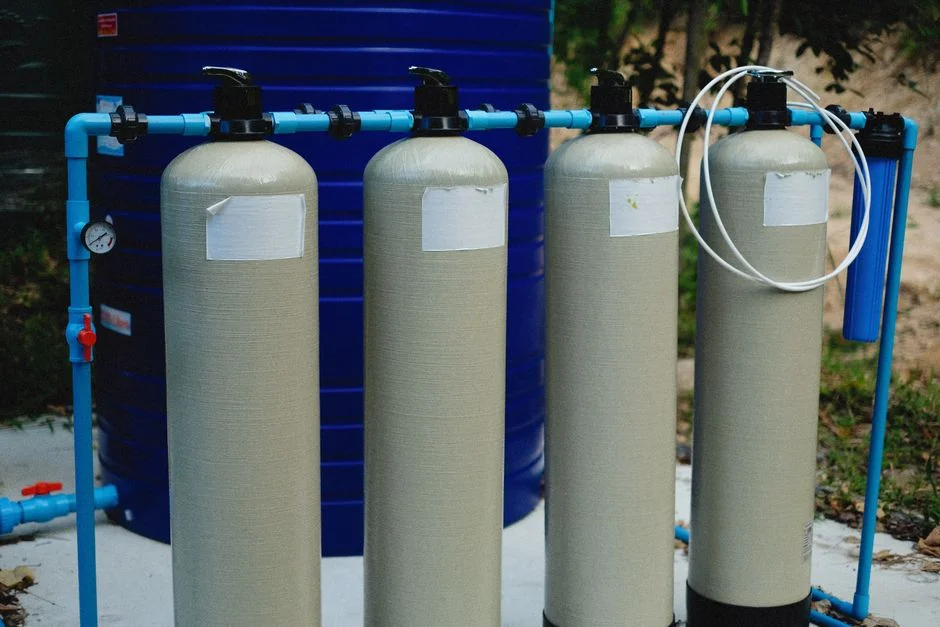
Three families dominate data center cooling: full evaporative (cooling towers, highest water use), hybrid wet/dry (lower evaporative loss, lower blowdown volume) and adiabatic or closed-loop liquid-to-liquid with trim cooling (lowest evaporative loss, tightest water budget). Selection is set by ambient wet-bulb, water cost and power cost (S3, IDE Tech, 2026; S1, Genesis Water Technologies, 2025). Genesis Water Technologies explicitly warns that hyperscale water-reuse technology — multi-stage RO, ion exchange, dedicated operators — is uneconomic at 5 MW scale, with capital cost per gallon 3–4× higher than at hyperscale (S1, 2025). The same source's right-sizing guidance points to modular 100–300 GPM blowdown treatment systems for most enterprise and colocation facilities, not hyperscale plants (S1, 2025). For a Karbala hyperscale campus the realistic envelope is evaporative cooling with aggressive cycles of concentration plus modular blowdown treatment; for mid-size colocation in Karbala, hybrid wet/dry with a smaller blowdown skid is typically the right economic match. The cooling choice dictates blowdown TDS, temperature and silica load — and those three parameters are what the rest of the process train is designed around.
The Process Train a Karbala Data Center Should Specify
The treatment chain below is the typical six-step layout an EPC in Karbala would write into a process spec and price against supplier bids. Each step is sized by the cooling-architecture choice and the blowdown quality it produces.
- Intake screening and cooling-tower makeup pretreatment. A rotary mechanical bar screen for debris and grit, followed by a multi-media filter and an industrial water softener to drop hardness and protect both towers and downstream membranes from scaling fouling.
- Cooling-tower chemistry. Operate the tower at the highest safe cycles of concentration using non-oxidising microbiological control so the blowdown stays cleaner for downstream recovery rather than being loaded with biocide residuals (S1, Genesis Water Technologies, 2025).
- Blowdown pretreatment. A DAF system or lamella clarifier for suspended solids, oil and tower carry-over, then media filtration to drop the Silt Density Index to membrane-friendly levels.
- High-recovery membrane stage. Target the 75–80% recovery ceiling imposed by silica, CaCO3 and CaSO4 on conventional BWRO (S3, IDE Tech, 2026), using either a controlled-precipitation reactor ahead of an industrial RO system or a dynamic-RO operating mode — published designs have reached about 95% overall recovery with permeate silica near 1 mg/L (S3, 2026).
- Polishing and disinfection. A UV sterilizer or chlorine dioxide generator for microbial control on the reuse loop, with a small chemical dosing skid for pH and corrosion inhibitor trim.
- Reuse routing. Permeate back to cooling-tower makeup; clarified blowdown or RO concentrate to irrigation, construction dust control or toilet flushing, depending on what the Karbala site can accept.
| Stage | Unit operation | Design driver | Karbala-specific note |
|---|---|---|---|
| 1 | Bar screen + multi-media filter + softener | Tower makeup quality, hardness | Euphrates silica and seasonal TDS swings set softener capacity |
| 2 | Cooling-tower chemistry control | Highest safe CoC | Avoid biocide residuals that poison downstream RO |
| 3 | DAF + media filtration | SDI < 3 for RO feed | Dust load raises TSS in tower basins |
| 4 | High-recovery RO (or precipitation + RO) | 75–80% → ~95% recovery | Silica and CaSO4 set the ceiling (S3, 2026) |
| 5 | UV or ClO2 + dosing | Reuse-loop microbiology | Hot climate accelerates biofilm growth |
| 6 | Reuse routing | Offset makeup, comply with discharge | Match reuse to local acceptance |
Comparing Three Blowdown Treatment Routes for an Iraq Site
The table below compares the three realistic routes a Karbala EPC would price. The choice is driven less by technology preference and more by the site's discharge pathway, makeup TDS and the value placed on avoided water.
| Parameter | Route A: Conventional two-stage BWRO | Route B: High-recovery precipitation + RO | Route C: Brine polisher / ZLD-leaning |
|---|---|---|---|
| Overall recovery | ~75–80%, capped by silica, CaCO3, CaSO4 (S3, IDE Tech, 2026) | ~95% in published industrial case (S3, 2026) | Liquid discharge minimised; thermal or membrane concentration on residual brine |
| Permeate silica | Variable, often 5–20 mg/L without polish | ~1 mg/L reported (S3, 2026) | Similar to B with added polish |
| Brine handling | 20–25% of feed as liquid concentrate | NaCl-rich concentrate processed in a closed loop; sparingly soluble salts removed as dense pellets (S3, 2026) | Brine volume to pond or crystalliser |
| OPEX character | Antiscalant, CIP chemicals, membrane replacement | Reduced chemical complexity; pellets as solid waste (S3, 2026) | High energy use, thermal OPEX |
| Best fit in Iraq | Where discharge limits tolerate 20–25% liquid waste and reuse is non-critical | Where makeup water is metered and discharge rules are tight — the typical Karbala envelope | Where evaporation ponds are feasible or liquid discharge is effectively banned |
Route A is the simplest, but recovery is capped near 75–80% on cooling-tower blowdown because silica and calcium salts reach scaling thresholds (S3, IDE Tech, 2026). Route B intentionally de-activates scale inhibitors in a fluidized-bed reactor so silica, CaCO3 and similar salts precipitate as dense pellets, leaving a NaCl-rich brine that can be processed in a closed loop (S3, 2026). Route C adds thermal or membrane concentration on the residual brine; it carries the highest OPEX and energy use, but is valuable where Iraq discharge limits are tight or evaporation ponds are feasible. Genesis Water Technologies' experience base is that right-sized modular systems in the 100–300 GPM range outperform hyperscale packages at sub-50 MW facilities (S1, 2025), which is the typical Karbala colocation and edge-data-center envelope.
Sizing the Modular Skid for a 5–15 MW Karbala Site
Genesis Water Technologies frames the right-sizing band for most enterprise and colocation facilities as modular 100–300 GPM blowdown treatment systems (S1, 2025). The same source's worked example for a 15 MW water-stressed facility sizes the recovered stream at 60% of blowdown (3 million gallons/year) against roughly $200,000 in capital cost, with total-cost-of-water adjustments typically bringing simple payback into a 3–5 year range once avoided wastewater, regulatory and resilience costs are included (S1, 2025). A 10 MW facility on evaporative cooling at 4 CoC can discharge on the order of 3.75 million gallons per month — that is the gross flow a Karbala skid train must handle, not the net permeate flow (S1, 2025). For a 5–15 MW Karbala site the realistic envelope is therefore a single modular blowdown treatment skid with a DAF system or clarifier, a multi-media filter, a softener, an industrial RO system sized in the low hundreds of GPM, and a packaged UV or ClO2 polishing step. Operator skill matters: Genesis Water Technologies warns that complex chemistry-driven programs create execution risk at sites without specialist staff, which favours packaged modular skids with PLC control and a small automatic chemical dosing skid over custom multi-stage RO trains (S1, 2025).
Reuse Pathways, Discharge Compliance and ROI in Iraq
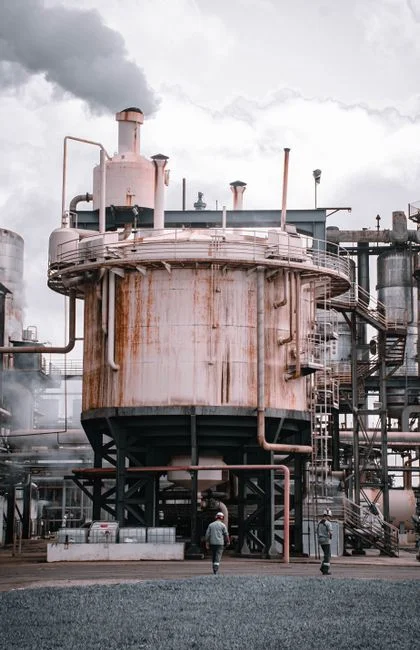
Treated blowdown can be reused as cooling-tower makeup, irrigation, toilet flushing or outdoor equipment washing; for data centers the highest-value reuse is closing the loop back to the cooling tower so that only evaporative losses need fresh makeup (S1, Genesis Water Technologies, 2025; S3, IDE Tech, 2026). Genesis Water Technologies reports that deploying modular blowdown treatment typically reduces makeup water demand by 15–25% when reused for non-critical applications (S1, 2025). The same source's ROI example shows a 15 MW facility in a water-stressed region achieving a 6.7-year simple payback on blowdown recovery at 60% recovery and $200,000 capex, improving to 3–5 years once avoided wastewater, regulatory and resilience costs are added (S1, 2025). For Iraq, ROI is highly sensitive to whether makeup is metered municipal water or self-extracted, to discharge fees versus reuse acceptance, and to the value of avoided downtime under tighter water-resilience contracts. A defensible Karbala business case should present at least three scenarios — 40%, 60% and 80% blowdown recovery — rather than a single point estimate, because the recovery ceiling is set by feedwater chemistry and RO configuration (S1, 2025). For solids handling, a packaged plate-frame filter press on the clarification step keeps the waste stream truckable rather than a free-liquid hauling problem.
Frequently Asked Questions
How much does a cooling-blowdown treatment skid for a Karbala data center actually cost?
Genesis Water Technologies publishes a single worked example: a 15 MW facility in a water-stressed region, recovering 60% of blowdown (3 million gallons/year), with about $200,000 of capital cost and a 6.7-year simple payback before avoided-cost adjustments, improving to 3–5 years once avoided wastewater, regulatory and resilience costs are included (S1, 2025). For a Karbala bid you should ask each supplier for a 40%, 60% and 80% recovery price against your measured blowdown flow, because the same skid hits very different capex and OPEX at each recovery target.
How do I pick a supplier for a modular 100–300 GPM blowdown skid?
Use Genesis Water Technologies' right-sizing test as a filter: a 5 MW site should not be quoted a hyperscale RO package, because the same source reports that capital cost per gallon at 5 MW is 3–4× higher than at hyperscale and the operational complexity exceeds available staff (S1, 2025). Shortlist vendors who can supply a packaged modular skid with PLC control and a dosing package, and request a reference list of sub-50 MW sites in arid or water-stressed regions. The industrial wastewater solutions providers guide is a useful starting point for the supplier shortlist.
What size skid does a 5–15 MW Karbala site actually need?
Genesis Water Technologies' right-sizing band for most enterprise and colocation facilities is 100–300 GPM modular blowdown treatment (S1, 2025), and a 10 MW evaporative site at 4 CoC can discharge on the order of 3.75 million gallons per month (S1, 2025). Check that your supplier's bid sizes DAF, multi-media filter, softener and RO to the gross blowdown flow, not the net permeate flow, and confirm they have included a polishing and disinfection stage sized to the permeate reuse rate.
What is the compliance risk if we keep discharging blowdown untreated in Iraq?
IDE Tech and Genesis Water Technologies both treat water availability and discharge rules as a turning-point constraint: water availability, treatment capacity and regulatory scrutiny are now directly influencing where data centers can be built and how they can operate, with the mid-2020s identified as the inflection (S3, IDE Tech, 2026; S1, Genesis Water Technologies, 2025). Before bidding, request the local discharge limits for temperature, TDS and total suspended solids from the Karbala permitting authority, and confirm whether the site falls inside an irrigation-reuse catchment — those three inputs decide whether Route A is acceptable or whether Route B or C is effectively mandatory.