Why the DAF-vs-Clarifier Question Matters for Penn Yan Chemical Plants in 2026
Penn Yan, NY sits in Yates County in the Finger Lakes, and its municipal wastewater treatment plant discharges to the Keuka Lake watershed, a public drinking-water source where any permit excursion carries significant political and financial weight. NYSDEC Region 8 actively enforces industrial pretreatment standards, and local sewer-use ordinances in the Yates County sewer district are typically stricter than federal requirements regarding pH, flow equalization, and surcharge triggers.
Chemical-industry wastewater in this corridor often contains aggressive pH swings, solvents, surfactants, and high TDS mixed with high BOD/COD. This matrix aligns with the core industries—chemical, petrochemical, pulp & paper, textile, metalworking—served by the Clearwater/SigmaDAF and Kemco DAF systems, positioning DAF as a standard primary step rather than a niche option. The 40 CFR Part 413 categorical standards for the Organic Chemicals, Plastics, and Synthetic Fibers (OCPSF) point source category set the federal floor for compliance, and equipment choices must be validated against influent characterization data, such as the DeZURIK/Worley table, which lists surface-water suspended solids at 60–2,000 mg/L and TDS at 100–2,000 mg/L.
Influent characterization and binding discharge limits—both federal categorical floors and local POTW ceilings—drive the technology choice rather than manufacturer preference. This framing matches the compliance path documented in the 40 CFR Part 413 categorical standards for chemical plants, where the basis-of-design narrative relies on jar-test results and local limits.
How DAF and Clarifiers Actually Treat Chemical Wastewater
Dissolved air flotation (DAF) systems operate by pressurizing a clean-water recycle stream with air, saturating it, and releasing it into a flotation tank at atmospheric pressure to generate 30–50 micron micro-bubbles. These bubbles attach to flocculated particles, floating them to the surface for removal by a paddle skimmer, while heavier solids are augered from the bottom (Clearwater/SigmaDAF, 2026-04-27). DAF requires chemical conditioning, including coagulant, pH adjustment, and polymer flocculant, delivered through serpentine flocculation tubes or impeller mix tanks defined by jar testing (Clearwater Industries).
Conventional and lamella clarifiers rely on gravity settling, with lamella plates increasing the effective settling area within a smaller footprint by forcing water between inclined surfaces. The lamella clarifier referenced here is rated at 20–40 m/h surface loading with sludge recirculation, and its design claims up to 30% chemical savings compared to conventional units, a value that should be verified against the actual chemical-stream matrix.
These mechanisms dictate the appropriate application: streams containing oils, FOG, surfactants, solvents, and low-specific-gravity flocs favor a DAF system for chemical wastewater, while streams with heavy inorganics, metal hydroxides, and high-TDS brines favor a clarifier. Many Penn Yan chemical plants operate both in series, using a DAF primary to strip FOG and floated colloids, followed by a lamella clarifier for chemical wastewater as a polishing step to catch carry-over floc and fine TSS.
DAF vs Clarifier: A 2026 Decision Matrix for Chemical Wastewater

Defending a technology choice in a capex package is most effective when scoring influent against a side-by-side matrix. The matrix below incorporates the Clearwater/SigmaDAF specification (2026-04-27), the DeZURIK/Worley influent-characterization table, and lamella clarifier catalog data, linking jar-test results to 40 CFR Part 413 parameters for compliance documentation.
| Decision parameter | DAF (dissolved air flotation) | Lamella / conventional clarifier | Driven by |
|---|---|---|---|
| Target pollutants | FOG, oils, floated colloids, surfactants, low-specific-gravity flocs | Settleable inorganics, metal hydroxides, dense TSS | Influent characterization, 40 CFR Part 413 oil & grease and TSS limits |
| Footprint vs. conventional clarifier | Compact DAF: single skid to 66 GPM, two-skid modular above 66 GPM (Clearwater/SigmaDAF) | Lamella clarifier: 20–40 m/h surface loading per catalog data; smaller than equivalent conventional | Available brownfield footprint, peak flow |
| Chemical demand | Coagulant + pH adjustment + polymer flocculant; serpentine tubes or mix tanks required | Often coagulant/polymer only; up to 30% chemical savings claimed vs. conventional (lamella catalog) | Jar-test polymer dose, sludge yield target |
| Materials of construction | 304SS standard; 316SS or polypropylene available for chloride, acid, or solvent service (Clearwater/SigmaDAF) | Lamella plates commonly PVC or PP; gaskets and wipers per chemical matrix | Chloride, pH extremes, solvent content in influent |
| OPEX driver | Polymer dose, saturator pump power, float-sludge handling | Sludge pumping, polymer for floc blanket, sludge recirculation | Site electricity tariff, polymer unit cost |
| Best fit for Penn Yan chemical matrix | Agrochemical and specialty-chemical streams with FOG, surfactants, solvents | Inorganic-heavy or salt-rich process wastewater; metal-bearing waste | Influent characterization against 40 CFR Part 413 limits |
For a typical Penn Yan specialty-chemicals or agrochemical plant with mixed FOG, surfactants, and dissolved organics, DAF as a primary stage followed by lamella polishing is the 2026 default. For inorganic-heavy streams, including metal-bearing or salt-rich process wastewater, a lamella clarifier serves as the better primary, with DAF reserved for downstream FOG removal. Connect this matrix to a PLC-controlled coagulant and polymer dosing system sized to the worst-case flow to ensure jar-test dosing is delivered reproducibly under load.
Sizing a DAF or Clarifier for a Penn Yan Chemical Plant: Parameters to Confirm
Sizing accuracy depends on providing suppliers with a complete parameter sheet rather than just a flow rate. The following data set is the minimum requirement for a supplier to provide an accurate proposal; missing entries should be treated as site-specific data gaps rather than estimates.
| Parameter | Why it matters | Source / scope |
|---|---|---|
| Design flow (m³/h or GPM) | Sets hydraulic loading on either technology | Site daily-average and peak instantaneous flow |
| Influent TSS (mg/L) | Drives solids loading and float/sludge yield | DeZURIK/Worley: surface water 60–2,000 mg/L; industrial WWTP effluent site-specific |
| Influent FOG (mg/L) | Determines whether DAF primary is required | Site jar-test and 40 CFR Part 413 oil & grease limit |
| BOD / COD | Sets downstream biological load; DAF removes a fraction as float | Site jar-test against 40 CFR Part 413 BOD/COD limits |
| pH range and temperature | Drives materials of construction and coagulant choice | Site log; Clearwater/SigmaDAF: 316SS or PP for pH extremes |
| TDS (mg/L) | Affects floc behavior and clarifier sludge density | DeZURIK/Worley: surface water 100–2,000 mg/L |
| DAF-specific: air-to-solids ratio, microbubble contact efficiency, flocculation residence time, skimmer speed | DAF sizing and process control | Clearwater/SigmaDAF: 30–50 µm micro-bubbles; serpentine 15–45 s flash mix; 66 GPM skid threshold |
| Lamella-specific: surface overflow rate, plate spacing, sludge recirculation rate | Lamella sizing and floc-blanket control | Lamella clarifier catalog: 20–40 m/h surface loading |
| Local POTW limits | Often tighter than 40 CFR Part 413; pH, flow, surcharge triggers | Yates County sewer-use ordinance and NYSDEC Region 8 |
Yates County sewer-use ordinances and NYSDEC Region 8 enforcement actions frequently impose pH, instantaneous-flow, and surcharge triggers that exceed federal categorical limits. The 2026 capex basis-of-design must reference the more stringent of the two. The 2026 industrial effluent discharge guidelines summarize federal rules, but local POTW enforcement dictates the final compliance number.
Chemical Compatibility and Materials of Construction
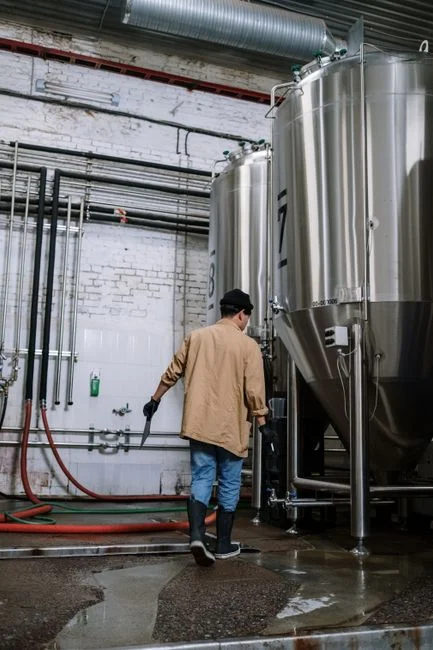
304SS is often insufficient for chemical-plant wastewater, and specifying the correct material at the RFQ stage prevents long-term corrosion. The Clearwater/SigmaDAF specification (2026-04-27) identifies 304SS as standard, with 316SS and polypropylene available for corrosive service; the selection depends on chloride concentration, pH extremes, and solvent content rather than cost or aesthetics.
Lamella plates in chemical service are typically PVC or polypropylene, which resist broad pH ranges but may be susceptible to specific organics. Confirm solvent compatibility with the manufacturer, as certain ketones, aromatics, and chlorinated solvents can cause swelling or embrittlement in standard plastics. Specify gasket and wiper materials to match the matrix: EPDM for caustics and many acids, Viton for solvents and high-temperature service, and PTFE for aggressive combinations, ensuring these are documented on the equipment data sheet.
Operating Cost: Polymer, Power and Sludge Handling in 2026
Polymer and coagulant consumption represents the largest variable OPEX for a DAF system. Chemical preconditioning—including coagulant, pH adjustment, and polymer flocculant—is mandatory, with serpentine tubes providing 15–45 s flash mix and mix tanks used for longer-contact chemistries (Clearwater Industries; Kemco Systems). Polymer doses are defined by jar testing and maintained by a PLC-controlled coagulant and polymer dosing system linked to flow and influent TSS; inaccurate dosing compromises float quality and increases waste.
Lamella clarifier chemical demand is generally lower, with some designs claiming 30% savings over conventional clarifiers, though site-specific jar tests should confirm these values. Sludge handling also impacts OPEX: DAF float sludge is typically thicker and easier to dewater than the wetter sludge produced by clarifiers. Regardless of the primary technology, pair the system with a filter press for DAF or clarifier sludge to reduce hauling costs, as Kemco notes this as standard practice. Power requirements scale with flow, but do not dominate OPEX if the system is sized correctly.
2026 Selection Checklist for a Penn Yan Chemical Factory
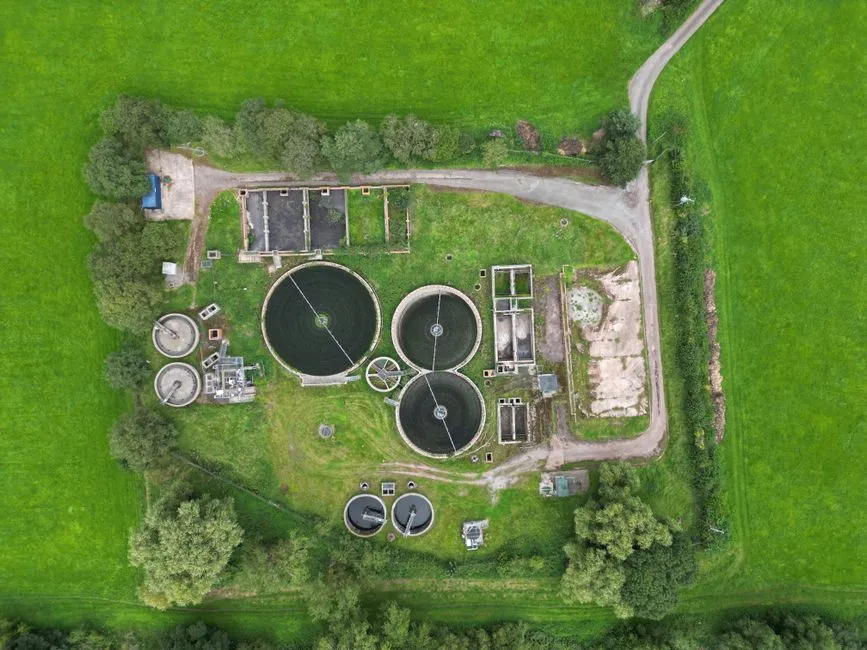
Compile the full influent characterization—including design flow, peak flow, TSS, FOG, BOD, COD, pH range, TDS, and temperature—alongside the 40 CFR Part 413 limits. Verify binding discharge limits with the Yates County POTW and NYSDEC Region 8 before finalizing the design. Match the technology to the influent: FOG and surfactants favor DAF, while settleable inorganics and metal hydroxides favor lamella clarifiers; mixed matrices often require DAF primary with lamella polishing. Specify materials of construction—304SS, 316SS, or polypropylene—based on chloride, pH, and solvent content, and validate polymer chemistry via jar testing. Finally, plan for sludge dewatering using a plate and frame filter press sized to specific sludge yields, and budget polymer OPEX based on jar-test data rather than generic estimates.
Frequently Asked Questions
What budget line items should a Penn Yan chemical plant plan for in a 2026 DAF or clarifier capex?
Budget for five primary buckets: the clarifier unit (DAF or lamella), chemical conditioning equipment (coagulant, pH adjustment, polymer dosing skid), sludge dewatering (plate and frame filter press), materials of construction upgrades (316SS or PP), and instrumentation/controls (pH sensors, flow meters, PLC panel). Base the polymer OPEX
Frequently Asked Questions
For a Penn Yan chemical plant, is a DAF system or a lamella clarifier the better primary clarifier for FOG and surfactant-laden wastewater in 2026?
For wastewater characterized by high concentrations of Fats, Oils, and Grease (FOG) and surfactants, a Dissolved Air Flotation (DAF) system is technically superior to a lamella clarifier. Surfactants significantly lower the specific gravity of emulsified oils, causing them to remain suspended rather than settling; DAF systems utilize micro-bubbles to buoy these contaminants to the surface for mechanical skimming, achieving removal efficiencies often exceeding 90% for emulsified FOG.
While lamella clarifiers are efficient for high-density inorganic solids, they struggle with buoyant particles common in chemical manufacturing. In 2026, the industry standard for chemical plants with variable surfactant loading is the DAF, as it provides a smaller footprint and handles low-density solids that would otherwise bypass a gravity-based lamella system.
What is the typical flow range for a packaged DAF system, and how do I know if a single-skid or two-skid modular design applies to my site?
Packaged DAF systems generally range from 10 GPM to 500 GPM. A single-skid design is typically recommended for flows under 150 GPM, where the entire process—including the saturation tank, air compressor, and skimmer assembly—can be integrated into a compact unit that fits standard shipping dimensions.
A two-skid modular design is required when flows exceed 200 GPM or when the site footprint dictates a split between the primary flotation tank and the chemical conditioning/flocculation stage. Two-skid configurations are also preferred for 2026 industrial projects to allow for easier maintenance access to the saturation pump and compressor without requiring a full system shutdown of the main process tank.
Which materials of construction should a chemical plant specify for a DAF or lamella clarifier handling acidic or solvent-bearing wastewater?
For acidic wastewater (pH < 5.0) or streams containing aggressive solvents, standard 304 stainless steel is insufficient. You should specify 316L stainless steel for wetted parts to provide superior pitting and crevice corrosion resistance. If the pH consistently drops below 3.0, high-density polyethylene (HDPE) or fiberglass-reinforced plastic (FRP) tanks are recommended to prevent long-term structural degradation.
Additionally, all seals, gaskets, and pump elastomers must be specified as Viton or PTFE to ensure chemical compatibility with solvent-bearing streams. Avoid standard EPDM or Buna-N materials, as these will swell and fail rapidly when exposed to organic solvents common in chemical manufacturing processes.
What is the realistic OPEX split between polymer consumption and power for a DAF system treating chemical-industry wastewater?
In a typical 2026 industrial DAF application, polymer consumption accounts for approximately 60% to 70% of the total daily OPEX, while electrical consumption for the recycle pump and compressor accounts for 30% to 40%. Chemical demand is highly dependent on the influent chemical oxygen demand (COD) and the stability of the emulsion, often requiring dosages ranging from 5 to 50 mg/L of coagulant and 1 to 10 mg/L of flocculant.
Electrical usage is largely fixed based on the recycle pump motor size, typically operating at 5 to 15 HP depending on the flow rate. To optimize OPEX, chemical plants should prioritize automated dosing systems that adjust polymer injection rates based on real-time turbidity or TSS sensors rather than relying on manual flow-proportional dosing.
How long does it take to design, build and ship a DAF system for a US chemical plant in 2026, and what documentation should I expect from the supplier?
As of 2026, the standard lead time for a custom-engineered DAF system in the US is 16 to 24 weeks, depending on the availability of specialty alloys and control system components. This timeline includes the initial engineering approval phase, fabrication, factory acceptance testing (FAT), and logistics.
Upon delivery, your supplier must provide a comprehensive documentation package, including a complete set of stamped P&IDs, a control logic narrative, a Bill of Materials (BOM), and a detailed Operations and Maintenance (O&M) manual. You should also require a final FAT report, material mill certificates for all wetted stainless steel components, and a certified performance curve for the recycle pumps to ensure compliance with site-specific discharge permits.