Why a Kananga Data Center Needs Two Wastewater Streams, Not One
A data center in Kananga, Kasaï Central (tropical DRC, ~5°53′S) needs a treatment train sized for two distinct streams: cooling-tower blowdown and server-hall sanitary/humidifier wastewater. At 4 cycles of concentration, blowdown equals 25% of makeup water (ratio = 1/(CoC−1), per Genesis Water Tech), and actual discharge typically runs 15–30% above theory from unmeasured losses. Treatment must be modular, low-operator, and tolerant of intermittent inlet quality — a screening → DAF or lamella → multimedia filter → UF (0.03 μm PVDF) → ClO₂ or UV train for blowdown, with a packaged MBR or WSZ biological unit for sanitary flow. Reuse targets should plan for 15–25% makeup reduction in Stage 4 of a staged roadmap.
Cooling-tower blowdown is the larger of the two streams and the one that determines whether a 2–10 MW facility in Kasaï Central hits a defensible water budget. At 4 CoC it represents 25% of makeup water; at 6 CoC it drops to 20%. The absolute reduction from pushing CoC is only 5 percentage points, and biological plus scaling risks increase exponentially above 5–6 CoC without advanced treatment — which often forces operators back down anyway (Genesis Water Tech, 2025). The practical reading: blowdown is already conditioned water, warm and dosed, and therefore recoverable as process water rather than treated as a liability.
The second stream — staff washrooms, pantries, and humidifier/dehumidifier condensate drains — is a low-TDS, high-BOD flow that does not benefit from the same polishing as blowdown and would be penalised if forced through the same high-recovery membrane train. Compressing both streams into a single combined train raises the chemical load on the biological stage and forces the membrane stage to handle solids it was never sized for, which is the same physical-separation-plus-targeted-treatment logic that drives the Genesis Stage 4 framework. The two streams therefore need separate unit operations, separate sludge handling, and separate reuse targets.
Kananga-Specific Site Constraints That Change the Treatment Choice
Kananga sits at approximately 5°53′32″S, 22°24′10″E in Kasaï Central, in a tropical climate zone (Notre Dame du Kasaï / UKA study baseline, Research Square). The site conditions that matter for a treatment train are not the ambient dry-bulb temperature but the ambient wet-bulb: high wet-bulb pushes evaporative cooling duty harder, which raises both cycles-of-concentration stress and the salinity of the circulating water. The CRS report on data centers and water (CRS R49057, 2025) confirms that data centers using water-cooled chiller systems and cooling towers have the highest water usage effectiveness values, with the cooling tower itself being the dominant water consumer. In a tropical Central-African site, that dominance is amplified, which means the blowdown stream is bigger and the chemistry is more aggressive than in a temperate U.S. colocation baseline.
Municipal water supply in Kananga is intermittent, and the CRS report notes that 97% of U.S. data centers draw from public water systems (Bluefield Research, June 2025). A Kananga facility will more often self-source from boreholes, rainwater, or trucked supply, which raises the value of on-site reuse — every cubic metre of blowdown recovered is a cubic metre that does not have to be trucked in during a supply interruption. This is a direct reversal of the temperate U.S. assumption where makeup is cheap and reliable.
DRC grid instability pushes the specification toward PLC control with battery or UPS buffering on the control loop, automatic chemical dosing, and a low operator count. The Genesis note that hyperscale water-reuse technology (RO, ion exchange, multi-stage filtration requiring dedicated operators) fails at smaller facilities is directly applicable here: a 5 MW colocation facility attempting hyperscale treatment infrastructure will find capital costs per gallon treated are 3-4× higher than hyperscale facilities, while operational complexity exceeds available staff expertise (Genesis Water Tech, 2025). Modular, pre-engineered skids with automatic backwash and chemical dosing are the realistic fit, not custom-built RO/IX trains.
One further sizing input that is easy to miss: actual blowdown typically exceeds the theoretical 1/(CoC−1) calculation by 15–30% because of unmeasured leaks, drift, and emergency dumps (Genesis Water Tech, 2025). In Kananga, where unmeasured losses compound with intermittent supply, sizing the treatment train on the theoretical number alone is a guaranteed under-spec.
Blowdown Chemistry, Cycles of Concentration, and Reuse Targets
The blowdown ratio is set by cycles of concentration: blowdown as a fraction of makeup equals 1/(CoC−1). At 4 CoC that fraction is 25%; at 6 CoC it is 20% (Genesis Water Tech, 2025). The reduction from 4 to 6 CoC is 5 percentage points absolute — a 20% relative improvement in blowdown volume, not the 50% that operations teams often assume. Above 5–6 CoC, scaling and microbiologically influenced corrosion risks rise exponentially, and operators are frequently forced back down to a manageable CoC without advanced chemical or physical treatment.
Genesis's Stage 4 framework targets a 15–25% reduction in makeup water demand through blowdown treatment and reuse. The reference scale used in that framework is a 10 MW facility using evaporative cooling at 4 CoC, which may intake ~15 million gallons per month; at a 25% blowdown ratio that yields ~3.75 million gallons of recoverable water per month (Genesis Water Tech, 2025). A 2–5 MW Kananga site should be re-scaled against this number as a sanity check rather than accepted at face value — the actual figure depends on local wet-bulb, load factor, and tower efficiency, all of which the buyer must measure.
Blowdown chemistry matters even when the recovered water is discharged rather than reused. The CRS report (R49057, 2025) flags that the quality of water discharged from data centers may affect wastewater treatment processes and the receiving aquatic ecosystem, and notes that data center water use is difficult to quantify comprehensively. In Kasaï Central, where the receiving environment is a tropical surface-water system, the polishing bar for any discharge route cannot be assumed away.
| Parameter | Value / Range | Source / Date |
|---|---|---|
| Blowdown ratio at 4 CoC | 25% of makeup (1/(CoC−1)) | Genesis Water Tech, 2025 |
| Blowdown ratio at 6 CoC | 20% of makeup | Genesis Water Tech, 2025 |
| CoC step (4 → 6) absolute reduction | 5 percentage points (20% relative) | Genesis Water Tech, 2025 |
| Actual vs theoretical blowdown gap | 15–30% above theory (unmeasured losses) | Genesis Water Tech, 2025 |
| Stage 4 reuse target | 15–25% makeup reduction | Genesis Water Tech, 2025 |
| Reference facility scale | 10 MW, ~15 million gal/month intake, ~3.75 million gal/month recoverable | Genesis Water Tech, 2025 |
| Sustainable CoC ceiling (no advanced treatment) | 5–6 CoC before scaling/MIC risk escalates | Genesis Water Tech, 2025 |
The Treatment Train: Screening, DAF, Multimedia Filtration, UF, Disinfection
The blowdown train for a Kananga-scale facility is a five-step sequence plus a sludge endpoint. Each step is a modular unit operation that can be containerised and serviced by a small on-site team.
- Coarse screening. A rotary mechanical bar screen protects downstream pumps and biological units from rags, plastics, and debris carried in tower basin water — a real risk in tropical open sumps where leaves and insects accumulate.
- Dissolved air flotation or lamella clarification. A DAF unit for suspended solids removal strips suspended solids, oils, and coagulated colloids before they reach the membrane stage. DAF handles 4–300 m³/h across 13 standard models and is proven in industrial pre-treatment duty, which makes it a flexible fit for the 100–300 GPM blowdown envelope typical of a 2–10 MW site.
- Multimedia filtration. A multi-media filter drops turbidity and SDI to a level that protects downstream membranes and lets the RO/UF stage run at design flux without fouling.
- Ultrafiltration at 0.03 μm. A PVDF hollow-fibre ultrafiltration system is the workhorse stage. PVDF UF removes bacteria, colloids, and residual suspended solids, accepts up to 300 ppm turbidity on the inlet, and runs automatic backwash plus air scour. For a tropical site with variable inlet quality and intermittent raw-water supply, this tolerance envelope is decisive — fragile RO membranes upstream of a stable UF barrier will not survive a feedwater excursion.
- Disinfection. An on-site chlorine dioxide generator (50 g/h to 20,000 g/h, operating to EPA and EU Drinking Water Directive 98/83/EC and WHO-aligned dosing) or a pipeline UV steriliser provides the residual-free polish. UV is effective against chlorine-resistant Cryptosporidium and Giardia, which is a real risk where the supply is surface-influenced or where the borehole is shallow.
Sludge from the DAF stage and any clarifier underflow must be routed to a plate-and-frame filter press for sludge dewatering. Tropical ambient temperature accelerates biological growth in clarifier underflow; an uncontrolled sludge stream will rapidly undermine the rest of the train and create a vector for biofilm re-entry into the recycled water.
Sanitary and Humidifier Wastewater: A Separate Biological Train
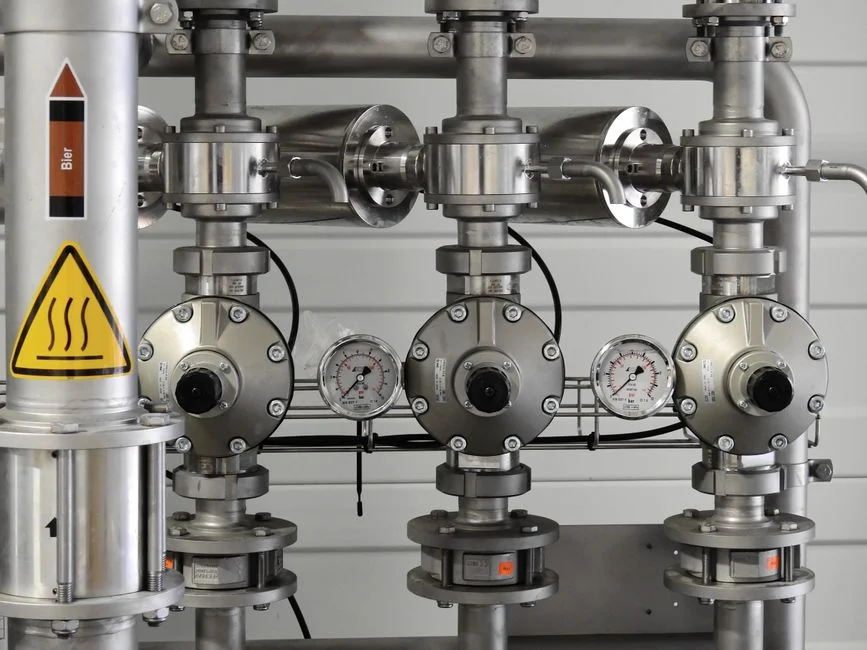
Staff washrooms, pantries, and humidifier/dehumidifier drain lines produce a low-TDS, high-BOD stream that does not need membrane polishing but does need biological oxidation, solids capture, and disinfection before reuse for toilet flushing or landscape irrigation. Treating this stream through the blowdown train is a misapplication: the chemistry is different, the load profile is different, and the reuse envelope is different (qualitative inference grounded in the CRS R49057, 2025, listing of data center water uses and the Genesis Stage 4 two-stage physical-plus-targeted approach).
A packaged MBR for sanitary and humidifier wastewater delivers near-reuse-quality effluent at <1 μm membrane filtration with roughly 60% smaller footprint than conventional activated sludge, and operates across 10–2,000 m³/day — well-matched to sanitary plus humidifier flow at a 2–10 MW site. The MBR combines biological oxidation and membrane separation in a single tank, which removes the need for a separate clarifier and reduces operator touch points.
For very small or trailer-mounted deployments, a WSZ underground integrated sewage treatment unit handles 1–80 m³/h with no dedicated operator, can be buried with landscaping above (useful where the data hall is on a constrained urban plot), or mounted on a trailer for a phased build-out. MBR or WSZ effluent should be polished with UV or ClO₂ before any on-site reuse so that the same makeup water the blowdown train is also trying to reduce is not contaminated by a poorly treated sanitary stream.
Decision Framework: Which Modular Configuration Fits Which Kananga Site
The procurement decision comes down to three site variables: IT load, grid stability, and operator depth. The Genesis framework makes clear that hyperscale RO/IX stacks are the wrong economic fit for facilities under 10 MW without specialist staff (Genesis Water Tech, 2025), and that holds even more strongly in Kananga where the logistics of importing, installing, and staffing such a train are unfavourable.
| Site Profile | Blowdown Train | Sanitary Train | Target |
|---|---|---|---|
| 2–5 MW, grid-unstable, no membrane-trained operator | Screening → DAF → MMF → UF → UV or ClO₂ | Packaged MBR or WSZ + UV | 15–25% makeup reduction; polish and discharge to local receiving system |
| 5–10 MW, stable power, ≥1 trained operator | Add RO polishing after UF to enable blowdown-to-makeup reuse; EDI only if downstream ultrapure need exists (e.g., semiconductor hall) | Packaged MBR + UV/ClO₂ | Close the loop on cooling water; only evaporative losses require makeup |
| Any size, Kasaï Central discharge rules unverified or strict | UF + RO + ClO₂ for higher polishing bar | MBR + UV | Both reuse and compliance routes remain open |
| Any size, tropical biofilm risk | Include automatic chemical dosing and, if hardness is high, an industrial water softener upstream of the tower | Standard | Stable CoC and lower biological fouling |
Containerise the entire train in ISO skid format with PLC control, automatic chemical dosing, and battery/UPS on the control loop so the system rides out grid events. Right-size to 100–300 GPM equivalent blowdown flow as a starting envelope (Genesis modular 100–300 GPM benchmark, 2025). Always include a sludge dewatering endpoint — tropical ambient temperature accelerates biological growth in clarifier underflow, and uncontrolled sludge will undermine the rest of the train.
Cost, ROI, and the Local Data You Still Need to Collect
No DRC-specific equipment cost or water tariff was found in the supplied research, so any quoted figure for this site would be invented. What the research does support is the ROI logic: at a reference 15 MW facility recovering 60% of blowdown (3 million gallons/year) at a $200,000 capital cost, simple payback is 6.7 years, dropping to 3–5 years once avoided wastewater discharge fees, regulatory compliance costs, and corporate sustainability targets are included (Genesis Water Tech, 2025). The reference also notes that this is "marginal for most finance committees" on simple payback alone and that the business case must reflect total cost of water, not just utility charges.
| Buyer Input | Why It Matters | Source |
|---|---|---|
| Local makeup water cost (trucking, treatment, or municipal tariff) | Drives the value of every cubic metre of blowdown recovered | Genesis Water Tech, 2025 (total cost of water framing) |
| Local discharge permit limits and receiving-water sensitivity | Sets the polishing bar for any non-reuse discharge route | CRS R49057, 2025 (discharge quality and aquatic ecosystem) |
| Site wet-bulb and load factor | Determines blowdown volume and CoC ceiling | Genesis Water Tech, 2025; CRS R49057, 2025 |
| Operator depth on-site | Excludes hyperscale RO/IX at sites without specialist staff | Genesis Water Tech, 2025 |
| Unmeasured-loss audit (drift, leaks, emergency dumps) | 15–30% above theoretical blowdown is common | Genesis Water Tech, 2025 |
| Sanitary and humidifier flow profile | Sizes the MBR/WSZ train independently of blowdown | CRS R49057, 2025 (data center water uses) |
For a 2–5 MW Kananga site, the most defensible position to take to a finance committee is the qualitative one: at intermittent supply and intermittent discharge, on-site recovery is an operations resilience investment first and a sustainability metric second. A comparable 2–5 MW reference could not be drawn from the supplied research with defensible numbers, so the table above lists the inputs the supplier will need to quote — not assumed costs.
Frequently Asked Questions
What is the realistic payback on blowdown treatment for a small Kananga data center?
Research on a 15 MW reference site shows 6.7-year simple payback on a $200,000 capital cost recovering 60% of blowdown, improving to 3–5 years once avoided discharge fees and compliance costs are included (Genesis Water Tech, 2025). A 2–5 MW Kananga site should not assume a smaller absolute spend per kW without local quotes, because logistics, power conditioning, and freight to Kasaï Central materially affect installed cost. Ask the supplier for a total-cost-of-water breakdown specific to your site tariff, discharge permit, and makeup source before committing to a payback figure.
Is RO polishing worth adding to a 2–10 MW site in Kasaï Central, or is UF enough?
UF alone targets the Stage 4 reuse band of 15–25% makeup reduction (Genesis Water Tech, 2025). RO polishing closes the cooling loop and is worth adding only where stable power, a trained operator, and a downstream reuse need exist; hyperscale RO/IX is explicitly flagged as failing economically at facilities under 10 MW without specialist staff (Genesis Water Tech, 2025). For a grid-unstable 2–5 MW site, default to UF-led and add RO only if you can guarantee both power and operator depth.
How should sanitary and humidifier wastewater be handled on a small data center site?
Run it on a separate biological train — a packaged MBR or a WSZ underground unit — rather than mixing it with high-TDS blowdown (CRS R49057, 2025, on data center water uses; Genesis Stage 4 two-stage logic, 2025). Polished effluent can offset a portion of the same makeup water the blowdown train is also trying to reduce, but only if disinfection (UV or ClO₂) is in place before any on-site reuse.
How do I choose a supplier for a containerised, low-operator treatment train in DRC?
Shortlist vendors who can deliver an ISO-skid-mounted, PLC-controlled train with battery/UPS on the control loop and pre-engineered automatic backwash — these are the specifications that match grid-unstable tropical operation rather than a temperate U.S. colocation baseline. Confirm that the supplier's DAF and UF skids are sized to your measured blowdown (including the 15–30% unmeasured-loss buffer, per Genesis Water Tech, 2025) and that they will provide on-site commissioning plus remote support, since specialist staff are not locally available in Kasaï Central. Cross-check the reference list for a comparable tropical or off-grid deployment, not a temperate hyperscale build.