
Why Textile Effluent in Morocco Is a Compliance Problem, Not Just a Hygiene Problem
The European Union absorbs 93% of Morocco's textile exports, according to the IFC Morocco Textile Circularity program announcement dated 9 June 2026, and those EU buyers are tightening sustainability, traceability, and recycled-content requirements in lockstep with two regulatory cliffs: the EU Digital Product Passport enters into force in 2027, and mandatory extended producer responsibility schemes for textiles are expected across all EU member states by 2027 (IFC, 9 June 2026). For a mill in Casablanca, Fez, Tangier, or Marrakech, the consequence is that treated-water quality, water-trace data, and reuse performance are now product-specification inputs to EU customer compliance, not internal EHS metrics reviewed once a year.
Moroccan lab data shows the toxicity that EU auditors and buyers will eventually see. A physico-chemical and toxicological characterization of a Marrakesh-region textile unit, published in Water Science & Technology (IWA Publishing, DOI 10.2166/wst.2013.205), reported "considerable values" relative to the EU standard limit and the Moroccan guide level, with acute toxicity to Daphnia magna used as the sensor organism. The receiving water hazard is documented, not theoretical. A mill exporting to EU buyers in 2027 and beyond needs an on-site treatment train and a digital log of treated-water quality that can populate a Digital Product Passport field, which is why a 2026 industrial effluent discharge limits and compliance framework should be referenced alongside the EU-Passport planning.
What's Actually in Moroccan Textile Effluent: A 2026 Lab Snapshot
Two pieces of Moroccan lab evidence provide the foundation for an EPC or supplier specification: the IWA Publishing 2013 characterization of a Marrakesh-region textile unit and the March 2026 Chitosan@EDTA study from Sidi Mohamed Ben Abdellah University, Fez. The IWA study reported a textile effluent with "considerable values" versus the EU standard limit and the Moroccan guide level, and showed lethal-concentration toxicity to Daphnia magna (Water Science & Technology, DOI 10.2166/wst.2013.205). That result puts the mill's stream in the same conversation as EU discharge compliance, because the EU limit and the Moroccan guide level are the two reference lines the buyer must clear.
The 2026 Environ Sci Pollut Res study (Bourachdi et al., 27 March 2026, DOI 10.1007/s11356-026-37687-y) demonstrated 98.2% Cu²⁺ removal from real textile wastewater using Chitosan@EDTA adsorbent beads, with a Langmuir monolayer capacity of 184.16 mg/g at pH 5. The research confirms copper and other heavy-metal residues are present in real Moroccan textile streams and respond to a chelating/adsorbent step; any biological-only design will leave a metal and refractory fraction that an EU-spec reuse loop cannot absorb.
A defensible pollutant checklist for an RFQ in 2026 covers: residual dyes, salts from dyeing and finishing, sizing and finishing chemicals, COD and BOD, suspended solids, and trace metals including the Cu²⁺ fraction measured in the 2026 study. The supplied research confirms the presence of metals and toxicity but does not provide a single national average value for COD, salinity, or color; the next step is a site-specific characterization, not a literature average.
The 2026 Process Train That Satisfies Both Moroccan Sewer Rules and the EU Buyer
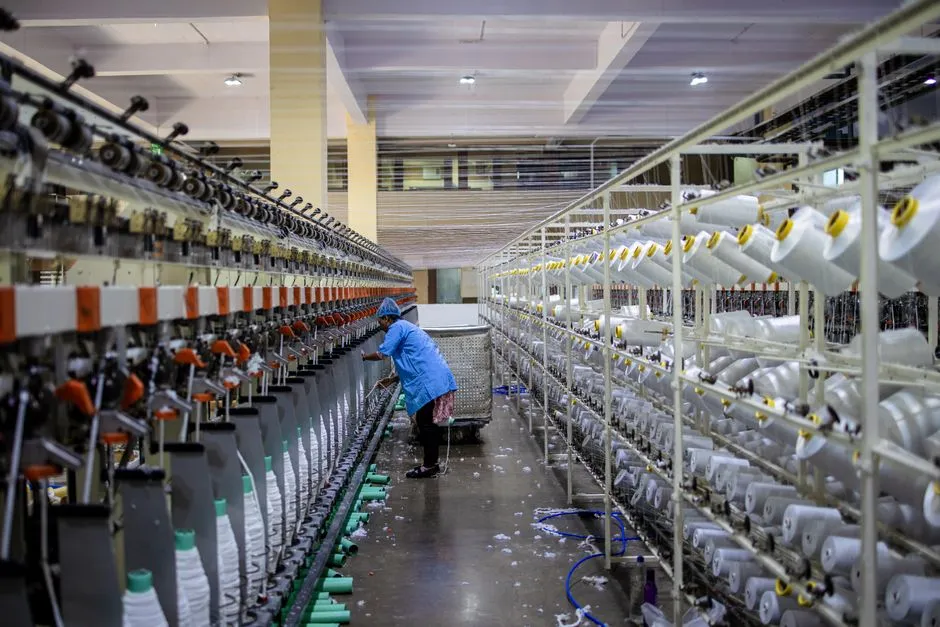
A deployable train for a Moroccan textile mill in 2026 has four stages, each with a defined duty against the pollutants named above.
Stage 1 — Screening and equalization. A rotary mechanical bar screen for textile headworks removes fibers, lint, and grit; an equalization basin damps hydraulic and organic peaks so downstream chemistry and biology see a stable feed. This is the insurance against fouling further down the train.
Stage 2 — Coagulation/flocculation and Dissolved Air Flotation. A Dissolved Air Flotation (DAF) system for textile effluent is the standard for textile streams, removing suspended solids, colloidal dye, and oil/grease ahead of biology. DAF also flattens peak loads, which protects a downstream MBR from shock.
Stage 3 — Biological treatment (A/O, SBR, or MBR). Dissolved organics are degraded here. Where footprint is limited and reuse is targeted, an MBR membrane bioreactor for textile reuse projects is the preferred upgrade path over conventional activated sludge, delivering a tighter effluent and tolerating the mill's hydraulic peaks.
Stage 4 — Polishing and reuse. A PVDF ultrafiltration system for RO pretreatment protects downstream reverse osmosis from particulates and colloids, and RO closes the loop where the mill wants wash-water reuse, boiler feed, or cooling-tower make-up. The S2 Environ Sci Pollut Res March 2026 study (98.2% Cu²⁺ removal with Chitosan@EDTA) supports the case that residual metal and refractory fractions are treatable with a polishing/adsorbent step; a 2026 design should not stop at biological treatment.
| Stage | Unit operation | Target pollutant family | 2026 research anchor |
|---|---|---|---|
| 1 | Rotary bar screen + equalization | Fibers, lint, grit, hydraulic peaks | General headworks practice |
| 2 | Coagulation/flocculation + DAF | Suspended solids, colloidal dye, FOG | DAF is the standard textile workhorse |
| 3 | A/O, SBR, or MBR | Dissolved COD/BOD, color, toxicity load | IWA 2013: effluent exceeds EU and Moroccan guide levels, Daphnia magna toxicity |
| 4 | UF + RO (optional) | Residual color, salts, residual metals incl. Cu²⁺ | S2 Environ Sci Pollut Res Mar 2026: 98.2% Cu²⁺ removal on real textile wastewater |
Process Train vs. Discharge Goal: A Decision Table for 2026
The right train depends on where the treated water goes and what the EU buyer needs to see in the Digital Product Passport. The matrix below maps four common 2026 outcomes to the unit operations a Moroccan mill should procure.
| Discharge / reuse target | Minimum train | Compliance hook |
|---|---|---|
| Municipal sewer under Moroccan guide level | Screen → equalize → DAF → biological (A/O or SBR) → disinfection | Moroccan guide level; municipal pretreatment agreement |
| Surface water or stricter local limit | Screen → equalize → DAF → biological → MBR → UV disinfection | EU standard limit (IWA 2013 comparison); site-specific permit |
| Water reuse (wash, boiler, cooling) | Screen → equalize → DAF → biological → MBR → UF → RO | IFC (9 June 2026): recycled-fibre production can cut water use by over 60% |
| Export to EU buyers in 2027 and beyond | Any of the above + online treated-water monitoring + digital log | IFC (9 June 2026): EU Digital Product Passport enters into force 2027; EPR for textiles expected across all EU member states by 2027 |
For disinfection where the mill is discharging to surface water, UV is appropriate for chlorine-resistant organisms, and a chlorine dioxide generator is appropriate where a residual is needed in a long sewer connection. The reverse osmosis stage is only justified when the mill has a reuse loop, a zero-liquid-discharge target, or a salinity issue that biological treatment cannot resolve.
The supplied research does not include CAPEX or OPEX figures for these trains in Morocco, so any cost number must be requested from a supplier against the buyer's own characterization. A useful starting point is the Morocco DAF system engineering and supplier guide, which frames the DAF step in local cost and compliance terms.
Sizing, Siting, and What to Ask a Moroccan Supplier in 2026
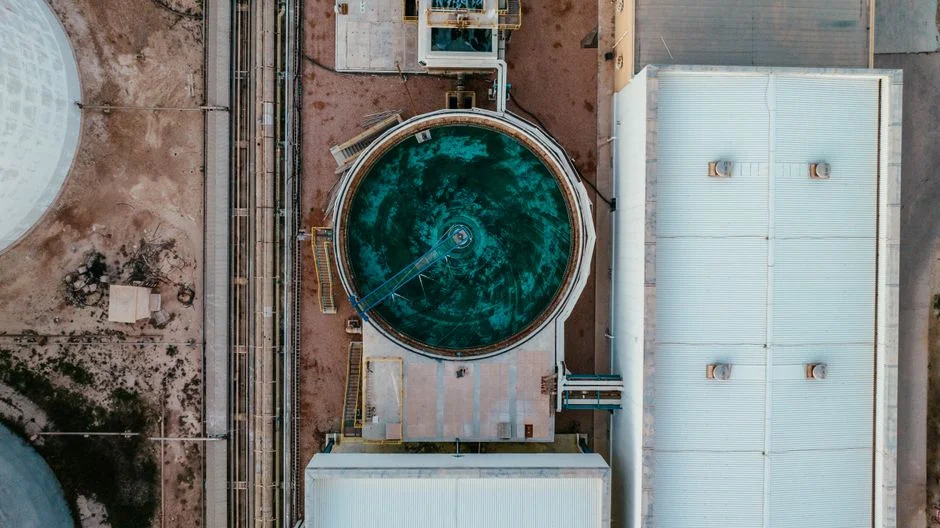
The first deliverable a buyer should hand a Moroccan supplier is a site-specific characterization, not a literature average. The minimum inputs are: average and peak flow (m³/h), pH and temperature, COD and BOD, TSS, color, salinity, and the trace-metal panel that includes the Cu²⁺ fraction the 2026 S2 study measured. Without those numbers, DAF surface loading, MBR sizing, and RO recovery cannot be defended in an RFQ.
Process questions to put on the RFQ: Is the DAF sized for the mill's peak FOG and fiber load, or only for the average? Is the MBR designed for the mill's hydraulic peaks, including dye-bath dumps? Is RO recovery feasible given the mill's salinity profile, or is a two-pass RO needed? Is there an automatic chemical dosing system to handle coagulation pH swings?
Compliance questions matter as much as process questions in 2026. The supplier should be able to document the treated-water data fields required to populate the EU Digital Product Passport entering into force in 2027 (IFC, 9 June 2026), and should reference a Moroccan- or EU-recognised discharge limit. The 2026 industrial effluent discharge limits and compliance framework is the relevant reference document for that conversation.
Local-context questions close the loop: experience in Fez, Tangier, Casablanca, and Marrakech textile zones; familiarity with AMITH and the IFC Morocco Textile Circularity program; and whether the supplier's disinfection, chemical dosing, and reverse osmosis steps integrate with the rest of the train. For background on the local sewer envelope, the 2026 domestic sewage treatment guide for Morocco is a useful cross-reference even for an industrial mill, because municipal pretreatment requirements are set against the same receiving-water envelope.
Frequently Asked Questions
What does a 2026 process train for Moroccan textile effluent actually look like?
Four stages: rotary bar screen plus equalization, coagulation/flocculation plus Dissolved Air Flotation, biological treatment (A/O, SBR, or MBR), and a UF plus optional RO polishing step. The MBR is the preferred upgrade where reuse is a target, and the UF/RO step is justified by the March 2026 Environ Sci Pollut Res study (Bourachdi et al.) that demonstrated 98.2% Cu²⁺ removal from real textile wastewater with Chitosan@EDTA beads, confirming the residual metal fraction needs a polishing step rather than biology alone.
How should a Moroccan mill in 2026 budget for a textile wastewater treatment plant?
The supplied research does not include CAPEX or OPEX figures for any of the four trains in Morocco, so a buyer cannot defend a budget from a literature number. The actionable step is to request a supplier quotation against a site-specific characterization covering average and peak flow, COD/BOD, TSS, color, salinity, and trace metals including Cu²⁺; that input set is the minimum a Moroccan supplier needs to return a defensible price for screen, DAF, biological, MBR, UF, and RO stages.
How do I pick a Moroccan supplier who can deliver EU-Passport-ready compliance?
Check that the supplier can document the treated-water data fields required to populate the EU Digital Product Passport entering into force in 2027 (IFC, 9 June 2026), reference a Moroccan- or EU-recognised discharge limit, and show prior work in Fez, Tangier, Casablanca, or Marrakech textile zones with AMITH or the IFC Morocco Textile Circularity program. The decision-relevant test is whether their offered train can produce