Why South Bend Fabricated Metals Plants Face Tight Pretreatment Pressure in 2026
A fabricated metals plant discharging to a South Bend-area POTW in 2026 is operating at the intersection of three overlapping compliance regimes, and the EPA's federal anchor for the sector is now three decades old. The EPA Office of Compliance Sector Notebook for Fabricated Metal Products (SIC 34), published in September 1995 as EPA/310-R-95-007, defines the industry as establishments that "fabricate ferrous and nonferrous metal products and those that perform electroplating, plating, polishing, anodizing, coloring, and coating operations on metals" (EPA Office of Compliance, 1995).
That same profile frames the regulatory chain as the Clean Water Act, NPDES permits, RCRA hazardous waste generator rules, and TRI toxic release reporting under EPCRA (EPA, 1995). The EPA Office of Compliance explicitly warns that "industries within specific geographic regions or States may have unique characteristics that are not fully captured in these profiles" and encourages State and local environmental agencies to supplement the federal profile with state and local requirements (EPA, 1995). For a St. Joseph County plant, that means the federal SIC 34 profile is a starting point, not a complete compliance picture.
Layered on top of the federal frame is the categorical pretreatment standard at 40 CFR Part 433 (Metal Finishing), which sets daily maximum and monthly average limits for pollutants such as total metals, cyanide, and oil and grease for any facility discharging to a POTW. The EPA Sector Notebook's discussion of NPDES permitting, the Permit Compliance System (PCS) database, and the Clean Water Act confirms that categorical standards remain the federal floor for SIC 34 discharges (EPA, 1995). Indiana's delegated pretreatment program then enforces site-specific local limits that are commonly stricter than the federal categorical standards for zinc, nickel, total suspended solids, and oil and grease from metalworking. The receiving POTW layers on its own discharge limits, sampling frequencies, and reporting forms through a sewer use ordinance and a pretreatment program manual. A 2026 design or audit must reconcile all three, which is why engineers treat pretreatment as a staged train rather than a single unit operation.
The Waste Streams a Fabricated Metals Plant Actually Generates
Before sizing any unit operation, an engineer has to map the floor. The EPA SIC 34 profile identifies forming operations, surface preparation, electroplating, electroless plating, and metal finishing as the defining process categories of the sector (EPA, 1995). EPA Exhibit 12 provides an overview of the metal finishing process, and Exhibits 15 and 16 list process materials, inputs, and outputs that include spent process baths, rinsewaters, and cleaning solutions (EPA, 1995) — these are the wastewater feed to the pretreatment system.
In a typical South Bend-area shop, the sidestreams that actually reach the pretreatment train are: alkaline and acidic cleaning baths from parts washing; rinsewater drag-out from plating lines; phosphating and conversion coating baths; machining coolant emulsions from CNC and screw machine operations; stamping lubricants and drawing compounds; and quench water from heat treatment. Each sidestream has a distinct chemistry, and the unit operations downstream must be matched to that chemistry. Plating rinsewater, for example, carries dissolved metals that respond to hydroxide precipitation, while machining coolant emulsions are low-density oils that respond better to air flotation than to sedimentation.
EPA Exhibit 18, "Source Reduction and Recycling Activity for SIC 34," documents that drag-out reduction, counter-current rinsing, and bath life extension are the first controls in the hierarchy (EPA, 1995). The exhibit also shows that the largest reductions in TRI releases between 1988 and 1993 came from in-plant changes rather than end-of-pipe treatment (EPA, 1995). A 2026 design that ignores source reduction ends up oversizing the downstream train, because every gallon of drag-out that is recovered at the tank is a gallon the equalization basin, the chemical dosing skid, and the separator do not have to handle. The Exhibit 18 hierarchy is the engineering reason the EPA notebook places source reduction ahead of end-of-pipe controls in its compliance framework (EPA, 1995).
The 2026 Regulatory Stack: Federal, Indiana, and Local POTW
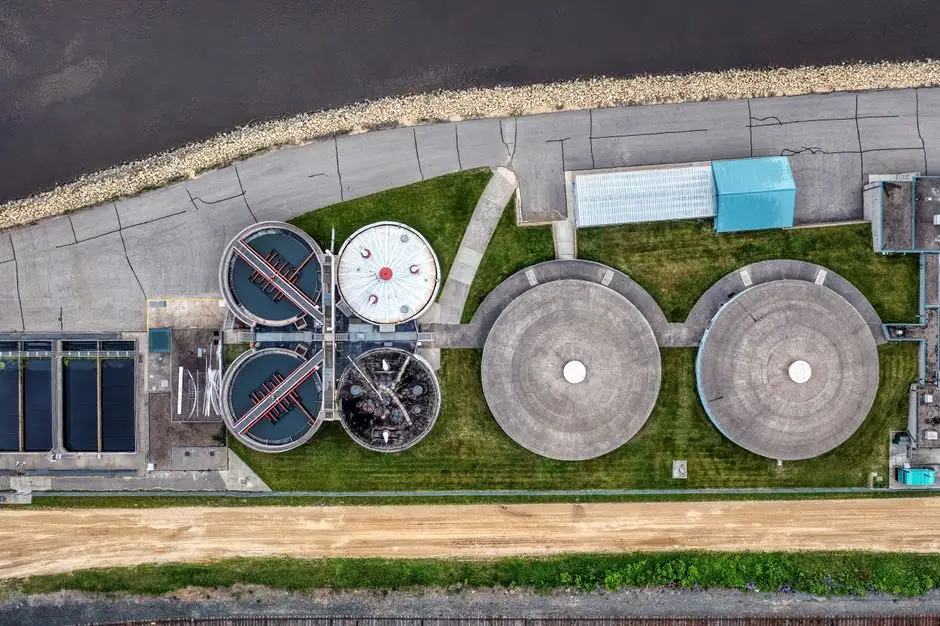
The compliance stack a South Bend metals plant must satisfy in 2026 has three layers, and each layer is enforced by a different authority. At the federal level, 40 CFR Part 433 sets categorical pretreatment standards for metal finishing, capping pollutants such as total metals, cyanide, and oil and grease for any indirect discharger; the EPA SIC 34 Sector Notebook's discussion of NPDES and the Clean Water Act confirms these standards sit at the top of the federal hierarchy (EPA Office of Compliance, 1995). The same notebook lists TRI toxic release reporting under EPCRA, RCRA hazardous waste generator rules, and the NPDES Permit Compliance System (PCS) database as part of the compliance stack a SIC 34 facility tracks (EPA, 1995), and all three remain active obligations in 2026.
Indiana's pretreatment program, delegated by EPA under the Clean Water Act, enforces site-specific local limits that are typically stricter than the federal categorical standards, especially for zinc, nickel, copper, lead, total suspended solids, and oil and grease from metalworking operations. Because these local limits are derived from the receiving POTW's local limits and the industrial user's allocation, the actual numbers vary by facility and must be pulled from the utility's current sewer use ordinance and pretreatment program manual. The local POTW serving the South Bend / Mishawaka corridor sets its own discharge limits, sampling frequencies, and reporting forms, and those values — not the federal categorical numbers — are what the Discharge Monitoring Report (DMR) is measured against. The EPA PCS database tracks compliance history against those DMRs, which means an excursion becomes part of the facility's permanent record (EPA, 1995).
For an engineer designing or auditing a pretreatment train in 2026, the practical sequence is: pull the current 40 CFR Part 433 limits; pull the current Indiana local limits from the state's pretreatment program; pull the current POTW sewer use ordinance and any industrial user permit; and reconcile the three into a single internal compliance envelope. The EPA Sector Notebook's own caution — that the federal profile is meant to be supplemented with state and local requirements (EPA, 1995) — is the explicit reason this reconciliation step exists.
A Step-by-Step Pretreatment Train for 2026 Compliance
A staged pretreatment train for a SIC 34 plant in the South Bend corridor typically follows seven steps. The sequence is anchored in the EPA SIC 34 Sector Notebook's identification of source reduction, chemical management in the wastestream, and end-of-pipe treatment as the layered control hierarchy (EPA Office of Compliance, 1995).
Step 1 — Screening and grit removal. A rotary mechanical bar screen protects downstream pumps and equalization tanks from rags, plastics, and tramp metal that enter the wastewater from floor washdown and stamping overruns. The EPA SIC 34 framework identifies solids management as a base control for the sector (EPA, 1995), and a bar screen is the lowest-cost way to keep solids out of the rest of the train.
Step 2 — Flow and chemistry equalization. Equalization tanks dampen the pH, flow, and concentration swings that come from batch plating dumps and cleaning-bath discharges. The EPA Sector Notebook highlights chemical management in the wastestream as a core control for SIC 34 (EPA, 1995), and equalization is the unit operation that makes the rest of the train controllable.
Step 3 — pH and chemistry adjustment. PLC-controlled chemical dosing for pH and precipitant adjustment ties caustic, sulfuric acid, lime, polymer, and (for heavy-metal precipitation) sulfide feed to online pH and ORP probes. Without automated dosing tied to a probe, the downstream separator cannot hold a consistent effluent quality, and the POTW's local limits become impossible to meet consistently.
Step 4 — Primary separation. A dissolved air flotation system for metalworking wastewater or a high-efficiency sedimentation tank removes suspended solids, precipitated metals, oil and grease, and emulsified coolants. Selection between the two depends on the waste profile (see decision framework below).
Step 5 — Polishing. An MBR, multimedia filter, or ultrafiltration stage lowers TSS and total metals further where local limits are tight or where the plant targets water reuse for rinsing, cooling, or washdown. The EPA framework notes that end-of-pipe systems are layered on top of source reduction rather than substituting for it (EPA, 1995).
Step 6 — Sludge handling. The floated or settled sludge is dewatered in a filter press for metal hydroxide sludge dewatering to reduce hauling volume and meet RCRA generator status thresholds referenced in the EPA SIC 34 framework (EPA, 1995).
Step 7 — Monitoring and reporting. Continuous flow, pH, and conductivity monitoring, plus composite sampling for the parameters listed in the local POTW permit, feed the DMRs that the EPA PCS database tracks (EPA, 1995). A documented sampling program with chain-of-custody is the operator's protection if a POTW excursion is alleged.
Choosing the Right Separator: DAF, Lamella, or MBR

Separator selection is driven by the influent waste profile, not by a vendor's standard offering. A dissolved air flotation system for metalworking wastewater is the common choice when the wastewater carries high oil and grease, emulsified machining coolants, or low-density sludge — which is typical of stamping, machining, and parts-washing sidestreams in the SIC 34 sector (EPA Office of Compliance, 1995). A high-efficiency sedimentation tank (lamella clarifier) is favored when the dominant load is precipitated metals and suspended solids from plating rinsewater, where high surface loading rates and a smaller footprint matter more than oil removal. An MBR polishing stage or an ultrafiltration polish is added when the local POTW imposes very low TSS or total metals limits, or when the plant aims to reuse a portion of the effluent for rinsing, cooling, or washdown. The EPA SIC 34 framework lists these as supplementary control options layered on top of source reduction (EPA, 1995).
The decision logic for a South Bend plant is best laid out as a head-to-head:
| Separator | Best fit for influent | Strength | Limit to verify in design |
|---|---|---|---|
| Dissolved Air Flotation (DAF) | High oil & grease, emulsified coolants, low-density sludge | Oil and floatable solids removal in a small footprint | Polymer consumption; sensitivity to surfactant loading |
| Lamella Clarifier (high-efficiency sedimentation tank) | Precipitated metals, plating rinsewater TSS | High surface loading rate; compact plate pack | Sludge blanketing on plates; need for sludge scraper |
| MBR or Ultrafiltration polish | Tight local TSS or total metals limits; water reuse targets | Low effluent TSS; enables closed-loop rinsewater | Membrane fouling control; CIP chemistry and waste |
The selection inputs an engineer must obtain from site data before picking a separator are: influent oil and grease concentration, the fraction of total suspended solids that is floatable versus settleable, the variability of influent flow, the local POTW's daily maximum and monthly average limits for TSS and total metals, and the available footprint. Without those numbers, the decision collapses to a vendor default, and the EPA framework's warning that "industries within specific geographic regions or States may have unique characteristics" (EPA, 1995) is exactly the situation a generic selection produces.
Operator-Level Actions That Keep a South Bend Plant in Compliance
Engineering upgrades only hold if the operators run them. EPA Exhibit 18, "Source Reduction and Recycling Activity for SIC 34," shows that the largest reductions in TRI releases between 1988 and 1993 came from in-plant changes rather than end-of-pipe treatment (EPA Office of Compliance, 1995), and the same logic applies to keeping pretreatment compliance intact between capital projects. A 2026-compliant plant operates a written best management practices (BMP) plan that covers spill containment, floor-cleaning procedures, chemical storage segregation, and a dead-band on batch discharges into the equalization tank so the pH and chemistry swings stay inside the dosing skid's control range.
Daily operator checks should include pH and temperature on the equalization tank, calibration of the dosing pumps, visual inspection of the DAF or lamella surface for scum buildup or sludge carryover, and confirmation of sludge withdrawal cycles on the filter press. These checks align with the EPA Permit Compliance System (PCS) monitoring framework referenced in the SIC 34 Sector Notebook (EPA, 1995). Documented self-monitoring with chain-of-custody sampling is the operator's protection if a POTW excursion is alleged, because the PCS database tracks compliance history for SIC 34 facilities (EPA, 1995) and a defensible in-house record changes the conversation during an enforcement review.
For an EHS manager, the practical 2026 discipline is a one-page daily log, a weekly composite sample, a monthly calibration verification on the pH and ORP probes, and a written annual review of the BMP plan tied to the most recent POTW DMR results. None of these are capital items; all of them are what keep a capital investment in PLC-controlled chemical dosing for pH and precipitant adjustment from being wasted on a poorly run floor.
Frequently Asked Questions
What does a pretreatment upgrade for a South Bend fabricated metals plant actually cost in 2026?
Capital cost depends on influent flow, the influent oil and metals concentrations, the local POTW's discharge limits, and the reuse targets. A buyer should request a line-item quote that separates screening, equalization, chemical dosing, primary separation (DAF or lamella), any polishing step (MBR or UF), and sludge dewatering, because each unit operation is sized to a different input. The EPA SIC 34 Sector Notebook does not provide a capital-cost benchmark (EPA, 1995), and regional contractor quotes vary enough that an engineer should obtain at least two site-specific budgetary quotes before committing.
How do I pick the right supplier for a SIC 34 pretreatment train in Indiana?
Shortlist suppliers on three verifiable items: documented experience with 40 CFR Part 433 metal finishing categorical standards, the ability to supply an integrated train (screening through sludge dewatering) rather than a single unit, and a controls platform that exposes pH, ORP, flow, and dosing trends for DMR reporting. Ask each supplier for a reference install on a plating or machining line of comparable flow and influent profile, and confirm the reference site is in good standing with its POTW. For regional context, the same supplier-evaluation logic that drives a DAF vs clarifier decision for an Indiana metal plant applies to a South Bend install, and a chemical plant pretreatment program structure is a useful cross-reference for the sampling and reporting discipline.
How long does a typical pretreatment upgrade take from PO to commissioning?
Lead time is driven by the longest single item, which is usually the chemical dosing skid, the DAF or lamella package, and any membrane polishing unit, plus the structural and electrical work on site. The EPA SIC 34 Sector Notebook does not publish a typical lead time (EPA, 1995), and Indiana POTW industrial user permits add their own review clock. A buyer should request a project schedule with separate milestones for engineering submittal, fabrication, ship, install, commissioning, and POTW acceptance sampling, and should ask the supplier to commit to those milestones in writing.
What compliance risk does a South Bend metals plant carry if it skips a polishing step like MBR or UF?
The risk is a TSS or total metals excursion against the local POTW's monthly average limit, and that excursion becomes part of the facility's PCS compliance history (EPA, 1995). Whether a polishing step is required depends on the local POTW's limits and the plant's reuse targets, both of which must be obtained from the utility's current sewer use ordinance. For categorical context on the federal floor, the mining and metals categorical pretreatment standards in 2026 reference covers the regulatory frame, and the actual pass/fail decision is driven by the local limits on the plant's DMR.