Why a Basrah Data Center Is a Water-Bound Project, Not Just a Power Project
Cooling systems account for 80–90% of data center water demand (Genesis Water Technologies, "Treated Wastewater for Data Center Cooling," 2025), so the water plant on a Basrah site must be sized against the evaporative cooling loop, not against IT headcount. A 100 MW facility can directly consume up to roughly 2 million litres of water per day — about the daily use of 2,600 U.S. households, per the IEA figures cited in the Congressional Research Service report R49057 (2025). That number is the cooling-loop water, not the staff's domestic draw.
Southern Iraq's hot, dry climate raises the cooling tower evaporation load and tightens the sustainable cycles of concentration (CoC) the loop can hold before scaling and microbiological fouling force a blowdown. Operators familiar with temperate sites tend to underestimate how quickly the blowdown ratio moves once wet-bulb temperature and makeup salinity climb together. The EPC must therefore confirm Basrah's ambient wet- and dry-bulb temperatures, seasonal evaporation rate, and the salinity profile of the Shatt al-Arab or municipal feed before fixing CoC and blowdown targets.
Water Usage Effectiveness (WUE) hides the real cost. A site can report 0.47–0.65 gal/kWh (≈1.8–2.5 L/kWh) and still discharge 20–40% of intake as contaminated blowdown, because WUE measures intake, not discharge water quality or reuse potential (Genesis Water Technologies, "The Data Center Water Efficiency Paradox," 2025). In Iraq, where municipal supply is the practical source for almost every site, outage and water-quality events on the feed propagate directly into cooling reliability. The baser the feed, the harder the chemistry, and the larger the blowdown plant has to be.
The Three Wastewater Streams Inside a Data Center Campus
Every data center campus has the same three streams, and the EPC's job is to keep them separate long enough to treat them correctly.
Stream 1 — cooling-tower blowdown (CTBD): brackish, silica- and hardness-rich, and the single largest recoverable stream. CTBD typically represents 20–40% of total site water intake (Genesis Water Technologies, "The Data Center Water Efficiency Paradox," 2025). It is the stream a Basrah design should be optimised around first.
Stream 2 — RO reject and brine: any on-site desalination unit produces a concentrate that, after the sparingly soluble salts (silica, CaCO₃, CaSO₄) have been removed or precipitated, is dominated by sodium chloride. This stream is best routed back into the cooling loop or, failing that, to a high-recovery brine stage rather than to municipal discharge (IDE Technologies, "Data Centers' Water: Turning Cooling Tower Blowdown into a Strategic Resource," 2026).
Stream 3 — sanitary and facility wastewater: kitchens, restrooms, washdown, humidification bleed. Lower volume, but higher BOD and pathogen load. This stream cannot be blended with CTBD upstream of a biological stage; it must run through its own integrated MBR wastewater treatment system before any reuse is contemplated (Genesis Water Technologies, "Treated Wastewater for Data Center Cooling," 2025).
The blowdown ratio is governed by CoC. At 4 CoC, blowdown equals 25% of makeup; at 5 CoC, 20%; at 6 CoC, 20% (Genesis Water Technologies, "The Data Center Water Efficiency Paradox," 2025). The drop from 4 to 6 CoC is therefore 5 percentage points, not the 50% many engineers assume. Field blowdown also runs 15–30% above the theoretical number because of leaks, drift, and emergency dumps, so design capacity should never be sized off the textbook calculation alone (Genesis Water Technologies, "The Data Center Water Efficiency Paradox," 2025).
Process Train: From Makeup Intake to Reusable Treated Blowdown
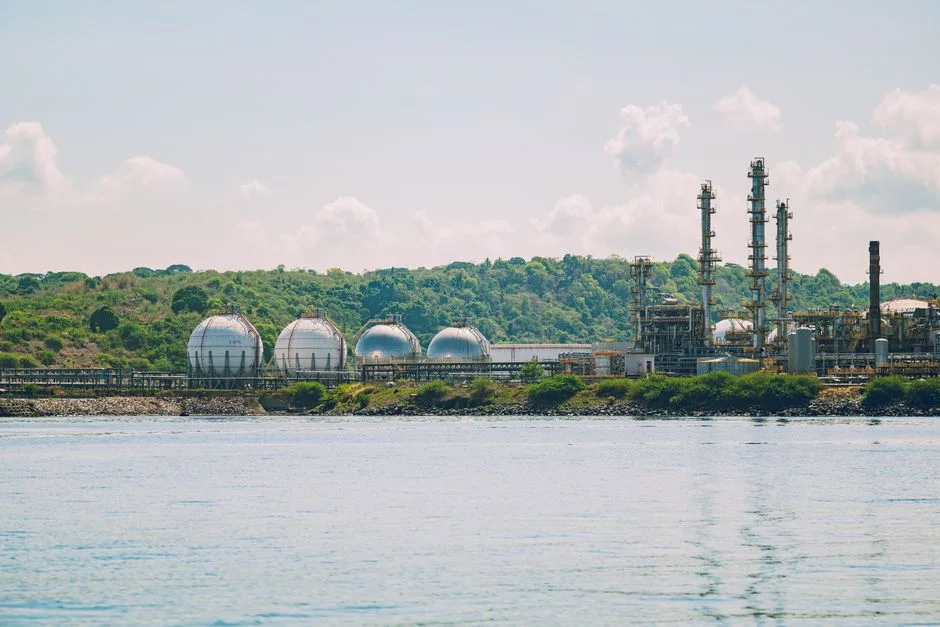
The treatment chain for a Basrah site is the same logical sequence used on any water-stressed site, but with the chemistry stage sized for Shatt al-Arab salinity and the disinfection stage sized for Legionella control on a recycled loop.
Step 1 — Intake screening and pre-treatment. A rotary mechanical bar screen protects every downstream biological and membrane stage from rags, plastics, and grit that arrive on the municipal feed, which in southern Iraq is rarely free of debris.
Step 2 — Biological treatment of sanitary streams. An integrated MBR wastewater treatment system delivers near-reuse-quality effluent at sub-micron filtration in roughly 60% of the footprint of a conventional activated-sludge train, which matters when the site is constrained by land cost or security setbacks.
Step 3 — Physical separation of CTBD. A DAF pre-treatment unit or a high-rate lamella clarifier removes suspended solids, oils and FOG that would otherwise foul downstream RO membranes. Lamella clarifiers operate in the 20–40 m/h surface-loading range and can cut coagulant demand on CTBD by up to 30%.
Step 4 — Desalination. An industrial RO system delivers permeate at up to 95% recovery on brackish feeds in general, but on CTBD alone conventional brackish water RO plateaus at 75–80% recovery before silica, CaCO₃ and CaSO₄ scaling become unmanageable (IDE Technologies, 2026). Pushing beyond that ceiling requires chemistry-aware staging or controlled precipitation, not a bigger high-pressure pump.
Step 5 — Disinfection and Legionella control. An on-site chlorine dioxide generator or a UV steriliser handles Legionella, biofilm, and chlorine-resistant Cryptosporidium and Giardia on the recycled cooling loop. UV is chemical-free and is the right primary barrier when the downstream reuse is cooling-tower makeup.
Step 6 — Sludge handling. A plate and frame filter press dewaters clarifier and MBR sludge to a handleable cake, cutting disposal volume and cost on a site where waste hauls are long.
| Stream | Inlet Character (typical) | Primary Block | Outlet Target | Key Sizing Driver |
|---|---|---|---|---|
| Sanitary / facility wastewater | BOD 200–400 mg/L, TSS 200–400 mg/L, variable pathogen load | MBR | <5 mg/L TSS, <5 mg/L BOD | Peak shift occupancy × unit load |
| Cooling-tower blowdown (CTBD) | Brackish, SiO₂, Ca²⁺, HCO₃⁻, treated-chem residual | DAF / Lamella → RO | TDS 500–1,500 mg/L; SS 10–25 mg/L | Makeup feed TDS, CoC target, % blowdown |
| RO reject / brine | NaCl-dominant after CaSO₄ / SiO₂ removal | Brine RO or precipitation + RO | High-recovery permeate, solid salt cake | CTBD volume, recovery target (75–95%) |
| Sludge (clarifier + MBR) | 1–3% DS | Plate-and-frame filter press | ~20–25% DS cake | Daily sludge mass, cake transport constraints |
Parameter Table: How Each Block Should Be Sized for a Basrah Site
The values below are drawn from the research and should be treated as design starting points, not as substitutes for site data. The site-specific numbers (Shatt al-Arab feed TDS, chloride, sulfate, silica, seasonal temperature, local discharge tariff) must be obtained from the Iraqi utility and the Basrah water authority before procurement.
| Parameter | Value / Range | Source | Site-Specific Input Required? |
|---|---|---|---|
| Cooling share of facility water demand | 80–90% | Genesis Water Technologies, 2025 | No |
| Blowdown ratio at 4 CoC | 25% of makeup | Genesis Water Technologies, 2025 | No |
| Blowdown ratio at 5 CoC | 20% of makeup | Genesis Water Technologies, 2025 | No |
| Blowdown ratio at 6 CoC | 20% of makeup | Genesis Water Technologies, 2025 | No |
| Field vs theoretical blowdown margin | +15–30% | Genesis Water Technologies, 2025 | No |
| Treated CTBD TDS target (cooling-tower reuse) | 500–1,500 mg/L | Genesis Water Technologies, 2025 | No |
| Suspended solids in cooling water | 10–25 mg/L cap | Genesis Water Technologies, 2025 | No |
| Conventional BWRO recovery on CTBD (scaling ceiling) | 75–80% | IDE Technologies, 2026 | No |
| Advanced / chemistry-aware CTBD recovery | ~95% | IDE Technologies, 2026 | No |
| On-site CTBD recovery range (treated blowdown vs intake) | 70–90% | Genesis Water Technologies, 2025 | No |
| Shatt al-Arab feed TDS, chloride, sulfate, silica | Site-specific | — | Yes — request from Basrah water authority |
| Basrah ambient wet/dry-bulb, seasonal evaporation | Site-specific | — | Yes — site meteorology file |
| Local discharge tariff and reuse-permit conditions | Site-specific | — | Yes — Basrah governorate environment authority |
Technology Shortlist: Modular Skid, Containerised MBR, or Full-Build RO Hall
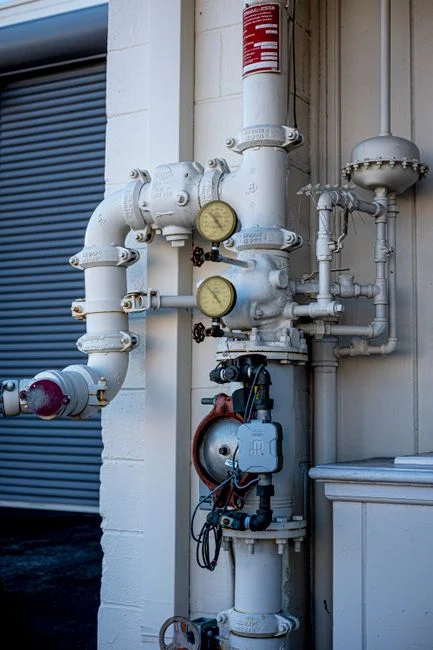
Right-size the architecture to the facility, not to the brand. A 5 MW colocation site that copies a hyperscale RO/IX train typically runs 3–4× higher capex per gallon treated than a hyperscaler and ends up under-staffed to run it (Genesis Water Technologies, "The Data Center Water Efficiency Paradox," 2025). Southern Iraq makes the wrong choice more expensive: a design that ignores local salinity, evaporation load, and discharge economics is not a small inefficiency, it is a stranded asset.
Modular skid (DAF + RO + ClO₂) at 100–300 GPM is the right call for a 2–10 MW edge or colocation site where the operator has no dedicated water staff. This is the configuration Genesis Water Technologies recommends for most facilities, and it is the configuration that most easily maps to a Basrah retrofit where the building is already in service. A modular skid on an automatic chemical dosing skid also gives the EPC a clean interface to the existing cooling plant.
Containerised MBR is the right call when the site also has to handle staff sanitary wastewater on a tight footprint. Containerised MBRs cover the 10–2,000 m³/day range and arrive pre-commissioned, which shortens the on-site critical path in a region where construction labour is a known bottleneck.
Full-build RO hall is the right call for a 50 MW+ hyperscale site with in-house process engineers. At that scale, multi-stage RO, ZLD-style brine polishing, and a dedicated reuse loop are justified by the volume alone. IDE Technologies' field experience in 2026 shows that an industrial site blending 20 hybrid cooling towers plus RO brine plus process wastewater was able to push overall recovery to about 95% with silica reduced to ~1 mg/L in the permeate, with that permeate then blended back into the cooling makeup.
| Architecture | Typical Facility Fit | Operator Staffing | Relative Capex per Gallon Treated | Notes for Basrah |
|---|---|---|---|---|
| Modular skid (DAF + RO + ClO₂), 100–300 GPM | 2–10 MW edge / colocation | Existing ops team, no specialist | Baseline | Fast mobilisation; fits phased build-out |
| Containerised MBR + RO add-on | Site with staff sanitary load on tight footprint | Existing ops team | Moderate | Pre-commissioned, reduces site labour |
| Full-build RO hall, multi-stage, ZLD polish | 50 MW+ hyperscale | Dedicated process engineers | Lowest at scale, but only at scale | Justified by volume; not for first-build colocation |
Discharge, Reuse and the Business Case in Basrah
Discharge compliance is frequently the primary driver for treatment, not water conservation. Cooling-tower blowdown leaves the loop heated and concentrated, and that combination often breaches generic temperature and TDS discharge rules (Genesis Water Technologies, "The Data Center Water Efficiency Paradox," 2025 and "Treated Wastewater for Data Center Cooling," 2025). The EPC should assume the regulator will look at temperature, TDS, residual chlorine, and Legionella control together, and should design the discharge pathway accordingly.
Reuse pathway priority, from highest to lowest treatment intensity, is roughly: boiler feed > cooling-tower makeup > landscape irrigation > toilet flushing (Genesis Water Technologies, 2025). A Basrah site that sends treated blowdown back to the cooling loop as makeup closes the largest single demand first, and only then tackles lower-value reuse streams.
On the cost side, treated wastewater typically runs 30–50% cheaper than potable water in major markets (Genesis Water Technologies, 2025). The local Basrah potable tariff, discharge tariff, and any reuse incentive must be confirmed with the utility before the business case is signed off. The 15 MW worked example in the research is illustrative: at $200,000 capex to recover 60% of blowdown (about 3 million US gallons per year), the simple payback on water alone is 6.7 years, falling to 3–5 years once avoided discharge, compliance, and risk costs are counted (Genesis Water Technologies, "The Data Center Water Efficiency Paradox," 2025). The Texas hyperscale example processed 2.5 million US gallons per month of CTBD on-site, cut municipal consumption 35%, and eliminated blowdown discharge fees (Genesis Water Technologies, "Treated Wastewater for Data Center Cooling," 2025) — a useful template for the Basrah business case once the local unit economics are confirmed.
Frequently Asked Questions
What is the minimum treatment block a Basrah data center must specify for cooling-tower blowdown?
At minimum: screening on the makeup feed, a clarification or DAF stage on the blowdown, a conventional brackish water RO sized for the 75–80% recovery ceiling on CTBD, and a disinfection barrier (ClO₂ or UV) sized for Legionella and biofilm control on the recycled loop (Genesis Water Technologies, 2025; IDE Technologies, 2026). Sludge dewatering with a plate-and-frame filter press should be included whenever the site is remote from municipal sludge handling. Add a chemistry-aware brine stage only if the EPC is targeting recovery above the 75–80% BWRO ceiling.
How do I choose between a modular skid and a full-build RO hall for a Basrah site?
Match architecture to facility size and operator staffing. A 2–10 MW site with no dedicated water staff should buy a pre-engineered 100–300 GPM modular skid (DAF + RO + ClO₂) on an automatic chemical dosing skid. A 50 MW+ site with in-house process engineers is the only case where a full-build RO hall with multi-stage trains and ZLD-style brine polishing is justified — at smaller scales, capex per gallon treated runs 3–4× higher than at hyperscale and the operations team typically cannot staff it (Genesis Water Technologies, "The Data Center Water Efficiency Paradox," 2025).
What compliance risk should the EPC price into a Basrah design?
Discharge temperature, TDS, residual chlorine, and Legionella control are the four parameters most likely to drive a permit condition. CTBD leaves the loop hot and concentrated, and ambient heat in southern Iraq makes the temperature issue harder to manage than on a temperate site. Before procurement, the EPC should request the Basrah governorate discharge limits, the local Legionella control standard, and any cooling-tower registration requirement, then size the disinfection and cooling-tower blowdown cooling stages against those numbers rather than against international averages.
What lead time and mobilisation should the buyer expect for a Basrah water treatment package?
Pre-engineered modular skids and containerised MBRs are factory-built, which shortens site work to installation, interconnect, and commissioning. Full-build RO halls are field-erected and tie the critical path to local construction labour, which is a known constraint in southern Iraq. A useful buyer check is to ask each vendor for a binding delivery date for the longest-lead item (typically the high-pressure RO pump or the membrane pressure vessels) and to confirm whether the package is pre-commissioned at the factory or only at site. Avoid pricing or lead-time commitments that are not backed by named equipment and a documented inspection regime.