Why Middlesboro Mining and Metals Plants Face a Real DAF-vs-Clarifier Decision in 2026
Middlesboro sits inside the Bell County coalfields, where active and legacy operations span coal preparation plants, aggregate wash circuits, and small non-ferrous mills along the Cumberland River watershed. Those plants send wastewater to a POTW whose pretreatment program is shaped by the federal General Pretreatment Regulations under 40 CFR Part 403, and a POTW with a hydraulic design capacity greater than 5 mgd must run a formal pretreatment program, per U.S.
EPA's 1986 report on interferences at POTWs (nepis.epa.gov, 1986-09). The same EPA report describes prohibited discharges as any pollutant that "obstructs wastewater flow" or "upsets treatment processes" — language that operators should treat as the floor for local limits even when their receiving POTW is smaller (nepis.epa.gov, 1986-09). Coal prep streams swing between high-TSS clay-and-fines wash water and metal-bearing thickener overflow; aggregate plants push abrasive silt; and small metals facilities add rinse water with copper, lead, zinc, and sometimes mercury. This variability means the choice between dissolved air flotation and a gravity clarifier requires evaluation each time the influent mix, the POTW's local limits, or the categorical subcategory under 40 CFR Part 437 changes. Engineers reviewing regional pretreatment expectations can also compare notes in the broader mining pretreatment compliance guide for adjacent Appalachian jurisdictions.
How a DAF System Treats Mining and Metals Wastewater
A dissolved air flotation unit clarifies wastewater by releasing air from a saturated recycle stream at atmospheric pressure inside a flotation tank, forming microbubbles typically 30-50 microns in diameter that attach to suspended matter and float it to the surface for skimming (clearwaterind.com, 2026-04; kemcosystems.com). For mining and metals duty, the DAF is almost always paired with upstream chemical conditioning: coagulant and flocculant dosing to grow particle size, pH adjustment for metals precipitation, and sometimes polymer activation in a serpentine floc tube before the flotation cell (clearwaterind.com, 2026-04; kemcosystems.com). The DAF's strength is its handling of low-density and colloidal material — emulsified oil, fine coal fines that resist settling, and metal hydroxides flocculated at near-neutral pH. Clearwater Industries positions its FPBC DAF as a high-profile separator with internal lamella pack technology that "reduces water flow velocity and obtain[s] maximum separation efficiency" for low-to-medium solids loads, while its FPHF model is designed for "high wastewater flows with low-to-large solids loads" (clearwaterind.com, 2026-04). For a Bell County plant polishing chemical precipitation effluent, that profile maps well. Buyers evaluating equipment should look at the DAF system configuration as a downstream polishing step rather than a stand-alone metals removal device.
How a Gravity Clarifier Treats Mining and Metals Wastewater
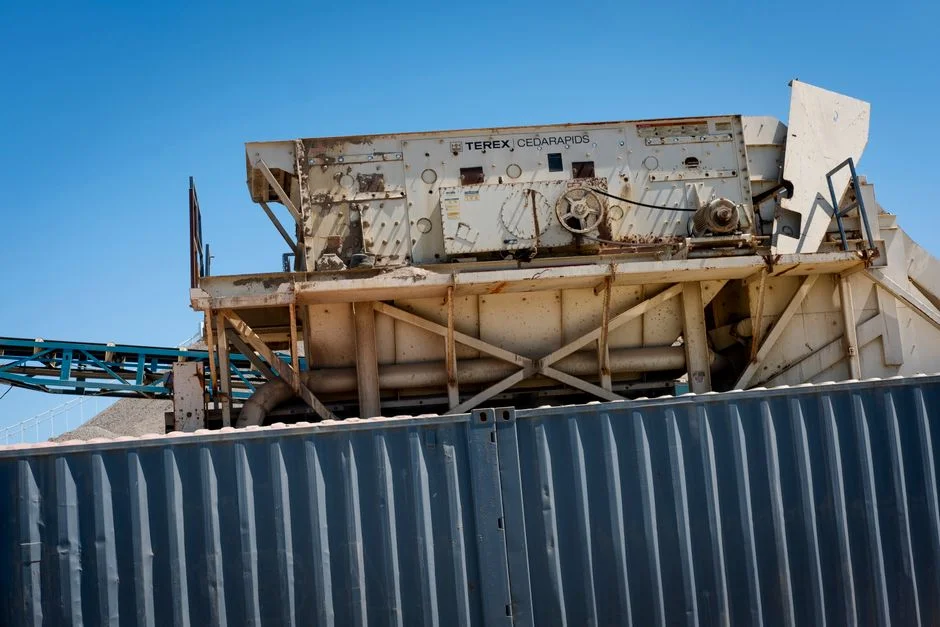
A gravity clarifier — including high-rate lamella designs — relies on Stokes-law settling of suspended solids under reduced upward velocity, with inclined plate packs multiplying the effective settling area inside a smaller footprint than a conventional circular basin. Mining and metals duty typically uses the clarifier as a primary workhorse: heavy coal refuse, sand, silt, and metal-hydroxide floc all settle under quiescent conditions, and the underflow is pulled to a sludge-handling stage. A lamella clarifier trades hydraulic residence time for plate area, so it tolerates higher surface loading rates on dense, settleable solids than on buoyant colloids. The clarifier's weakness is the DAF's strength: it does not capture emulsified FOG or low-density fines that never settle in the available residence time. Kemco Systems notes that coarse filtration, pH control, the DAF, and a downstream filter press form a typical train for industrial wastewater (kemcosystems.com), which means the clarifier and the DAF are more often sequenced than selected against each other. For a primary settling role, the lamella clarifier is the conventional reference design.
DAF vs Clarifier: 2026 Comparison for Middlesboro Mining and Metals Duty
The two technologies are complementary, but the duty they each own is different. The table below maps mechanism, loading, chemistry, footprint, and operating envelope to the Bell County mining context. Specific hydraulic loading rates, capital cost bands, and removal efficiencies must be obtained from a vendor against your own influent — no single published number is portable across coal prep, aggregate, and non-ferrous rinse water.
| Parameter | Dissolved Air Flotation (DAF) | Gravity / Lamella Clarifier |
|---|---|---|
| Primary mechanism | 30-50 micron microbubbles attach to particles and float them; surface skimming (clearwaterind.com, 2026-04) | Gravity settling under reduced upward velocity; inclined plates multiply effective area |
| Best-fit contaminant | FOG, emulsified oil, low-density colloids, fine metal-hydroxide floc | Heavy settleable solids: sand, silt, coal fines, dense metal-hydroxide floc |
| Typical influent window | Low-to-medium TSS with high floatable fraction; polishing after chemical precipitation | High TSS with dense solids; primary clarification |
| Chemistry requirement | Coagulant + flocculant + accurate pH control to grow floc and stabilize bubbles (kemcosystems.com) | Coagulant + flocculant; pH control for metals removal if paired with precipitation |
| Footprint | Compact cells; suited to retrofits and indoor skids | Lamella packs shrink the basin, but still larger than a DAF cell of equal flow |
| Energy / operating cost | Recycle pump, saturator, and air compressor dominate kWh; see the DAF energy efficiency guide for reduction levers | Lower energy; mostly pumping for underflow and sludge |
| Sludge handling handoff | Thin floated scum; commonly dewatered via a plate and frame filter press | Thick underflow; same downstream dewatering chain |
| Role in a typical mining train | Secondary clarifier / polishing after metals precipitation and primary settling | Primary clarifier ahead of DAF and chemical dosing |
When choosing equipment, the primary question is not "DAF or clarifier" but "which one is primary, and which one is polish?" — and that answer is set by your dominant contaminant.
Matching Equipment to 40 CFR Part 437 Metals in Middlesboro Discharges
40 CFR Part 437 sets national categorical pretreatment standards for the Ore Mining and Dressing point source category, and the subcategory that covers coal preparation is the one most Bell County operations will be measured against. The categorical standards express daily maximum and monthly average limits for metals such as antimony, arsenic, lead, mercury, selenium, and zinc, and Part 437 also caps TSS, FOG, and pH — the parameters a clarifier or DAF can move most directly. A lamella clarifier on its own will not reliably hit the categorical metals limits; it removes the solids that carry the metals, but dissolved metals need pH adjustment and precipitation, often with an automatic chemical dosing system holding the precipitation pH inside a tight band. Once metals are precipitated into a settleable or floatable floc, a DAF can polish colloidal carryover that the clarifier misses, and the same downstream plate and frame filter press dewaters the sludge. Pretreatment programs for adjacent jurisdictions are documented in the mining/metals sewer discharge guide and the mining pretreatment compliance guide, which provide a useful peer reference. The categorical framework is also why the EPA's 1986 report stresses that POTWs with smaller design flow "may also be required to establish such programs if their industries are subject to national categorical pretreatment standards" (nepis.epa.gov, 1986-09) — confirming that Part 437 is binding regardless of plant size.
2026 Decision Tree: Which Should a Middlesboro Factory Choose?
Follow this five-step path to translate the comparison into an equipment call for your influent.
- Identify the dominant contaminant. If floatable FOG, emulsified oil, or low-density fines dominate, lead with a DAF system after chemical dosing. If dense TSS dominates, lead with a lamella clarifier.
- Check the 40 CFR Part 437 subcategory. Coal preparation and ore milling subcategories have different metals limits; confirm which one applies before sizing.
- Plan the chemical stage. Metals precipitation needs accurate pH; an automatic chemical dosing system is normally required to hold pH inside the precipitation band.
- Sequence the solids step. Use the clarifier as primary when TSS is heavy, then DAF as polish. Reverse the order when FOG is high.
- Close the loop on sludge. Route floated scum and settled underflow to a plate and frame filter press so haul-off volume and disposal cost stay inside the operating budget.
Most 2026 Middlesboro pretreatment trains utilize both units in series, making the procurement decision a matter of sizing for design flow versus polish requirements.
Sizing, Compliance, and Supplier Checklist for 2026
Use this list to convert your requirements into an RFQ that protects both compliance and budget.
- Influent characterization: 24-hour composite TSS, FOG, total metals by 40 CFR Part 437 list, pH, temperature, and peak flow — all required to size either unit.
- Receiving POTW confirmation: copy of the local discharge limits, any special Pretreatment Program permit conditions, and the categorical subcategory under Part 437 that applies.
- Vendor data to request: guaranteed effluent TSS and FOG at your design flow, recycle ratio, air-to-solids ratio, polymer consumption, and skimmer speed range.
- Sludge handling hand-off: confirm floated scum and underflow solids content are compatible with a plate and frame filter press cake target.
- Chemistry package: require an automatic chemical dosing system with pH probe, redundant metering pumps, and a control panel that logs dose in mL/min for the operator's daily record.
- Supplier risk check: confirm manufacturing location, lead time in weeks, available spare parts, and whether the supplier has a U.S. reference installation on coal prep or aggregate wash water — not just food and beverage.
- Compliance evidence: ask for a pilot or jar-test report against your influent, with measured metals removals at the proposed dose rates.
Without these inputs, no vendor can provide a defensible capital estimate or a verified compliance case.
Frequently Asked Questions
How much does a DAF system cost for a Middlesboro mining or metals plant in 2026?
Capital cost is set by flow rate, materials of construction (304SS versus 316SS), influent TSS, and whether the skid includes a chemical package. Request a budget range from a DAF system vendor against your design flow and a pilot or jar-test result on your actual wastewater. Operating cost is dominated by the recycle pump, saturator, and compressor, so ask the vendor for kWh per 1,000 gallons treated at your recycle ratio before comparing bids.
What should I check when choosing between DAF and clarifier suppliers near Middlesboro?
Confirm the
Frequently Asked Questions
For a mining or metals plant in Middlesboro, KY in 2026, should we choose a DAF or a clarifier as our primary wastewater pretreatment unit?
The selection depends primarily on the density and particle size of the suspended solids. If your wastewater contains high concentrations of heavy, settleable particles or grit, a primary gravity clarifier is preferred for its ability to handle high solids loading. However, if your process involves emulsified oils, greases, or light, buoyant metal precipitates that resist sedimentation, Dissolved Air Flotation (DAF) is the superior choice for achieving high removal efficiencies in a smaller footprint.
For 2026 industrial standards in Kentucky, many facilities are opting for DAF units when targeting lower total suspended solids (TSS) effluent levels, as DAF can achieve 90-95% removal of non-settleable particles that would otherwise bypass a conventional gravity clarifier.
What 40 CFR Part 437 metals limits should a Middlesboro coal-prep or aggregate plant design its DAF or clarifier to meet?
Facilities under 40 CFR Part 437 (Centralized Waste Treatment) must design systems to meet strict daily maximum concentration limits. For example, the daily maximum for Total Chromium is 2.77 mg/L, Copper is 3.38 mg/L, Nickel is 3.98 mg/L, and Zinc is 2.61 mg/L. Monthly average limits are significantly lower, typically requiring a safety factor in your treatment design to account for fluctuations in influent concentration.
Because these limits are based on Best Available Technology (BAT), your pretreatment unit must be paired with appropriate chemical coagulation and flocculation dosing to ensure metal hydroxides are properly precipitated and captured. Failure to maintain these levels can lead to non-compliance with regional NPDES discharge permits.
How much does a DAF system cost compared to a lamella clarifier for a 50-200 m³/h mining wastewater flow?
For a flow rate of 50-200 m³/h, a lamella clarifier generally represents a lower initial capital expenditure (CAPEX) due to its simple mechanical design and lack of high-pressure saturation equipment. Expect to invest between $80,000 and $180,000 for a modular lamella system depending on plate material and integrated sludge handling.
A DAF system for the same flow range typically commands a 30-50% higher price point, ranging from $120,000 to $275,000. This cost premium accounts for the air saturation pump, air compressor, pressure vessel, and more complex automated controls required to maintain the dissolved air-to-solids ratio necessary for effective flotation.
What is the typical lead time and footprint for a packaged DAF system versus a lamella clarifier in a Kentucky industrial building?
A lamella clarifier offers a highly compact vertical footprint, often requiring 60-75% less floor space than a circular gravity clarifier of equivalent capacity, making it ideal for retrofitting existing Middlesboro industrial buildings. Lead times for lamella units are generally 12-16 weeks for standard carbon steel construction.
Packaged DAF systems have a slightly larger footprint than lamella units because they require an integrated contact zone and froth skimming mechanism, though they remain significantly smaller than traditional circular clarifiers. Due to the reliance on specialized pressure components and control instrumentation, DAF lead times are currently averaging 16-22 weeks for 2026 project timelines.
Can a DAF system and a gravity clarifier be used together for mining wastewater, and what is the recommended order?
Yes, a combined system is often the most robust solution for complex mining wastewater. The recommended order is to place the gravity clarifier first to act as a primary sedimentation stage, removing the bulk of heavy grit and high-density solids. This prevents premature wear on downstream equipment and reduces the chemical loading on the secondary stage.
The DAF system follows the gravity clarifier as a polishing step. By removing the lighter, non-settleable particles and residual emulsified contaminants that gravity sedimentation cannot capture, the DAF ensures the final effluent meets stringent discharge standards. This sequential approach increases overall system reliability and allows for easier sludge management by segregating heavy grit from the lighter, floc-heavy DAF sludge.