Start With the New York Regulatory Floor, Not the Membrane
The governing instrument for any New York facility discharging to surface water or groundwater is a NYSDEC State Pollutant Discharge Elimination System (SPDES) permit issued under 6 NYCRR Part 750. Limits are concentration-only for small facilities, and combined concentration-and-mass once a flow threshold is crossed — the project engineer of record must confirm which form applies before reactor sizing begins. Where the outfall enters the New York City sewer system, the NYC Department of Environmental Protection Bureau of Wastewater Treatment applies Title 15 of the Rules of the City of New York on top of the SPDES framework; outfalls into the East River, Hudson, Jamaica Bay, or the NYC Harbor are treated as sensitive receiving waters and carry tighter total-nitrogen and temperature clauses.
If the site is a children's camp, 6 NYCRR Subpart 7-1 triggers an additional DOH review of any water-reuse or disinfection step. The governing effluent numbers — BOD, TSS, ammonia, total nitrogen, fecal coliform — decide whether a standard packaged MBR (carbon and solids removal) is sufficient, or whether a pre-anoxic chamber for nitrification-denitrification must be folded into the same ISO box, as the Sigmadaf design literature recommends for high-nitrogen scenarios.
Establish Design Flow: Population, Occupancy Pattern, and Peaking
The reference per-capita flow for residential communities and camps is 50 gpd on the MBR-C reference basis (S3). Adopt that as the starting number until a project-specific water balance (fixture count, laundry schedule, food-service load) is available. Multiply average daily flow by a peaking factor of 2.5–4× to capture the diurnal peaks created by simultaneous shower, laundry, and mess-hall use; the exact factor must be confirmed against an hour-by-hour hydrograph developed by the design engineer. Seasonal camps should be sized on peak-summer occupancy, with a written turndown plan (lower aeration, longer HRT, intermittent permeation) for shoulder-season operation so the biomass does not wash out during low-load weeks. Convert gallons to cubic meters with 1 m³ = 264.17 US gal before reading the ISO envelope. Most NY residential and camp projects land in the 50–500 m³/day band, which is well under the >1,200 m³/day that MENA-Water reports fitting inside a single 40-ft ISO container (S2); the 20-ft or 40-ft HC form factor is the next design constraint. For a UK benchmark of the same flow methodology, the 2026 MBR sizing guide for Birmingham, UK walks the same per-capita logic against UK Building Regulations.
Set the Influent Load and Reactor Volume
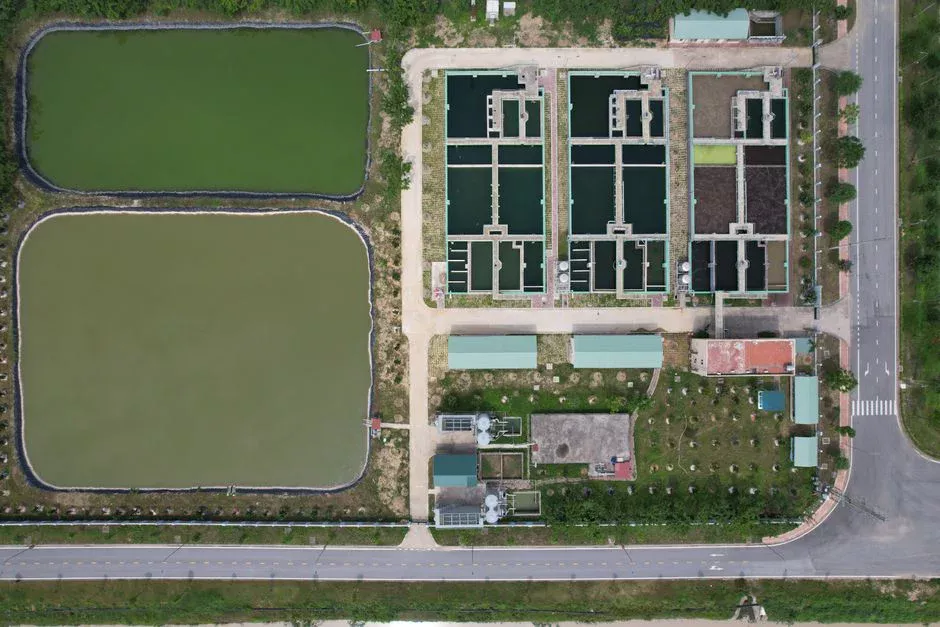
BOD₅ loading for domestic sewage runs roughly 0.17 lb per capita per day (qualitative reference from the 10 States' Standards family) and must be converted to kg/day before sizing the food-to-microorganism ratio against the reactor volume. MBRs operate at 6,000–12,000 mg/L mixed-liquor suspended solids (S1) — far above the 2,000–4,000 mg/L typical of a conventional activated-sludge tank — which allows a packaged MBR to shrink the aeration basin to a fraction of a conventional footprint. Hydraulic retention time for packaged MBRs is usually 6–12 hours; solids retention time is set to 20–40 days for nitrification and stretched longer when the receiving-water nitrogen limit is tight. Submerged membrane filtration replaces the secondary clarifier entirely (S5), so no downstream settling tank has to be fitted into the ISO envelope. NY winter wastewater temperatures frequently sit below 10 °C / 50 °F and slow nitrification, yet the MBR-C standard operating range is 68–86 °F (S3). The supplier must confirm that target MLSS and SRT are still achievable at the site's minimum design temperature; the standard response is an insulated container, heat tracing, and a partial enclosure around the aeration tank.
Match the Container: ISO Footprint, Membrane Area, and Ancillary Fits
Container options are 20-ft or 40-ft high-cube ISO (S3); a single 40-ft container is reported to deliver more than 1,200 m³/day with stainless internal tanks (S2), which puts the vast majority of NY residential and camp projects inside a single box. Membrane choice is between flat-plate (Kubota-equivalent, 0.2 µm average / 0.4 µm maximum pore per S1) and hollow-fiber PVDF at 0.04 µm (S3); both need coarse-bubble air scour underneath the modules, and the blower kW and its dBA-at-7 m rating must be checked against the nearest residential property line. Headworks protection is non-negotiable: a drum screen with 1.5 mm perforations (S3) is part of the MBR-C scope, and the Sigmadaf design literature is explicit that fats, oils, and hair must be excluded upstream to prevent membrane fouling. Ancillary items that all share the same box include fine-bubble diffusers in the aeration tank, coarse-bubble diffusers under the modules, the permeate (suction) pump, the backwash pump, the CIP chemical tank, the PLC panel, and the optional anoxic pre-chamber — every one of these must be confirmed on the GA drawing before FAT. A factory wet-test (S2) turns the container into a plug-and-play deliverable and keeps on-site civil work to a minimum during a NY winter. The HydropureWater integrated MBR membrane bioreactor system is one example of a factory-assembled, ISO-mounted package sized for this kind of community-scale flow band.
Worked Sizing Example: 200-Person Seasonal Camp in the Catskills
The arithmetic below is a direct application of the per-capita basis from S3 and the load assumption cited in the previous section — it is not a HydropureWater field measurement.
| Parameter | Calculation | Result |
|---|---|---|
| Average daily flow | 200 persons × 50 gpd (S3 basis) | 10,000 gpd ≈ 37.9 m³/day |
| Peak daily flow (3× peaking) | 10,000 × 3 | 30,000 gpd ≈ 113.6 m³/day |
| BOD₅ load | 200 × 0.17 lb/day | 34 lb/day ≈ 15.4 kg/day |
| Reactor MLSS | Within 6,000–12,000 mg/L band (S1) | F/M ≈ 0.05–0.15 kg BOD/kg MLSS·day |
| Container envelope | Single 20-ft HC ISO (drum screen + aeration + submerged UF cassette + permeate pump + PLC, per S3 scope) | Within single-container limit |
| Spec calls | Anoxic zone yes/no (Catskill N limit), winterization package, standby permeate pump, remote monitoring | Confirmed with supplier before FAT |
Peak flow of 113.6 m³/day sits well below the >1,200 m³/day single-container ceiling reported by S2, so a 20-ft HC ISO container is adequate for the MBR unit itself. The DF series PVDF flat-sheet MBR membrane module is the kind of cassette that drops into this envelope; its pore rating should be cross-checked against the SPDES effluent fecal-coliform limit for the receiving water.
Sizing Parameter Checklist (Lift-Into-Spec Table)
| Design parameter | Value / Range | Source |
|---|---|---|
| Per-capita flow | 50 gpd | S3 |
| Peaking factor (diurnal) | 2.5–4× (project-specific) | qualitative |
| BOD₅ per capita | ~0.17 lb/day (to confirm with engineer of record) | qualitative reference |
| MLSS operating range | 6,000–12,000 mg/L | S1 |
| Membrane pore size | 0.04 µm (HF PVDF, S3) or 0.2–0.4 µm (flat-plate, S1) | S1, S3 |
| Virus / bacteria log reduction | 99.9999% via UF | S2 |
| Chemical cleaning frequency | 1–2 maintenance cleans per year | S2 |
| Container form factor | 20-ft or 40-ft HC ISO; >1,200 m³/day per 40-ft unit | S2, S3 |
| Standard electrical | 460 V / 3 Ph / 60 Hz | S3 |
| Standard operating temperature | 68–86 °F (20–30 °C); design at 68 °F | S3 |
Buyers should treat the peaking factor and BOD₅/capita values as inputs to verify, not as fixed design numbers — both are project-specific and must be signed off by the engineer of record before the SPDES application is filed.
Procurement, Commissioning, and NY-Specific Delivery Risks
Insist on a Factory Acceptance Test that includes a wet run before the ISO box ships — MENA-Water markets its containerized plants specifically as plug-and-play because of that factory quality test (S2). Confirm the site logistics: a standard lowboy delivers the container, the pad must be level crushed stone, and the permeate/discharge piping is normally the only site-built scope. Cold-climate commissioning deserves its own plan — seed biomass from a nearby municipal works, do not try a cold start in January, and target the first fill for spring or early summer when the mixed liquor will warm naturally. Spare-parts logistics matter for remote Catskills or Adirondack sites: a GX series rotary mechanical bar screen and a spare membrane cassette should be on the shelf because field-replacement modules carry real lead time. For a side-by-side reading on how the MBR footprint compares against a conventional activated-sludge train — useful when defending the package-plant choice to a reviewing agency — see the MBR vs conventional activated sludge footprint comparison. For the operations side once the plant is running, the SBR plant operation and maintenance guide covers the parallel sequencing-batch discipline that NY seasonal operators often inherit.
Frequently Asked Questions
Do I need a NYSDEC SPDES permit for a small residential or camp MBR in New York?
Yes — any surface-water or groundwater discharge in New York falls under 6 NYCRR Part 750 and requires a NYSDEC SPDES permit. The exact limit form (concentration-only versus combined concentration-and-mass) is set by design flow and is what the engineer of record must confirm before submitting the application. Sites that discharge to the NYC sewer also need to satisfy Title 15 of the Rules of the City of New York through the NYC DEP Bureau of Wastewater Treatment.
Will a packaged MBR actually work through a New York winter at a seasonal camp?
It can, but the standard MBR-C operating range is 68–86 °F (S3) and NY winter wastewater regularly sits below 50 °F, which slows nitrification. The supplier must confirm the design holds target MLSS and SRT at the site's minimum design temperature, and the spec should call out an insulated container, heat tracing, and an enclosure around the aeration tank. The turndown strategy for shoulder-season low loads — lower aeration, longer HRT, intermittent permeation — should be written into the O&M manual before commissioning.
What is a realistic equipment cost and lead time for a 20-ft HC ISO MBR in the 50–200 m³/day range?
The research supplied does not publish a price for a packaged MBR at this flow band, so the buyer should request a written quote that itemizes the container, membrane cassette count, blower kW, permeate pump, drum screen, CIP