Why 'TITUS Competitors' Is a Confusing Search
A generic search for TITUS competitors returns almost nothing relevant to wastewater aeration, because the term "Titus" is shared by companies in unrelated industries. TITUS Wastewater Solutions (tituswws.com, 2025-06-16) manufactures the Twister Mixing Aerator and the Twister-FL Floating Aerator for lift stations, wet wells, lagoons, and headworks. The most visible "Titus alternatives" page on the open web is CB Insights' "Top Titus Alternatives, Competitors" list, and that page points buyers to 2J Supply, General Air Products, Quantum Cooling, TruTech Tools, Way Service, MANN+HUMMEL, Team Air Distributing, HVACDirect.com, Garner Underground, Compresseurs Robitaille, and Bambi Air Compressors (cbinsights.com).
Nearly every name on that list is either an HVAC distributor, a compressed-air specialist, or a filtration supplier; none manufactures a wastewater aeration system. The practical implication is that a buyer looking to benchmark TITUS should treat the CB Insights list as a disambiguation warning, then compare TITUS against the mechanism categories that actually compete with AirLift mixing: surface mechanical aerators, submerged diffuser systems, and jet or ejector aerators.
What TITUS Actually Makes and Where It Is Specified
TITUS Wastewater Solutions sells two named products, both built on the same AirLift architecture (tituswws.com, 2025-06-16). The Twister Mixing Aerator is a fixed-installation unit for lift stations, pump stations, wet wells, and headworks. The Twister-FL Floating Aerator is a floating unit for lagoons and large tanks. In both designs, an onshore blower pushes air through a pipe into the water, and the rising bubbles lift and circulate the entire column while transferring oxygen. Because no mechanical or electrical components sit below the surface, there is nothing submerged to corrode, clog, freeze, or burn out, and every serviceable part stays on shore where crews can reach it without boats or cranes (tituswws.com, 2025-06-16). The vendor states the systems are engineered and manufactured in the USA, which makes them BABA-ready for federally funded wastewater projects, and clarifies that BABA protects funding eligibility through domestic sourcing rather than serving as a measure of product compliance (tituswws.com, 2025-06-16). Stated applications cover oxygen transfer, odor, FOG, and sludge across municipal, industrial, food processing, agricultural, and aquaculture facilities (tituswws.com, 2025-06-16).
Categories of True TITUS Alternatives
The competitive set for TITUS is best organized by mechanism, not by brand, because each mechanism addresses a different duty point. Surface mechanical aerators are common in municipal lagoons, and TITUS's own framing argues these units reach only the top few feet of the water column and rely on submerged bearings, propellers, and motors that wear out (tituswws.com, 2025-06-16). Submerged diffuser systems, both fine-bubble and coarse-bubble, are the standard approach for activated-sludge basins. Jet aerators and ejector systems are used where high oxygen transfer in a compact footprint is required. AirLift systems with onshore blowers and no submerged moving parts are the architectural niche TITUS occupies, and any alternative being benchmarked on this axis should be evaluated by the same criteria (tituswws.com, 2025-06-16). Adjacent equipment categories such as rotary bar screens, Dissolved Air Flotation (DAF) systems, and MBR Membrane Bioreactor systems are not aeration substitutes and should be screened out of a TITUS comparison. The research supplied for this article does not name specific TITUS substitutes in the surface, diffuser, or jet categories, so the categories below should be treated as a shortlist to investigate rather than a confirmed list of named vendors.
| Mechanism category | Operating principle | Typical duty point | Submerged service exposure |
|---|---|---|---|
| AirLift / no-submerged-parts (TITUS) | Onshore blower drives air through pipe; rising bubbles lift and circulate the full water column (tituswws.com, 2025-06-16) | Lift stations, wet wells, headworks, lagoons, large tanks | None; all serviceable parts on shore |
| Surface mechanical aerator | Propeller or rotor at the surface splashes water into the air | Municipal lagoons, equalization basins | Submerged bearings, shafts, gearboxes, motors |
| Submerged fine/coarse-bubble diffuser | Compressed air released through membrane or ceramic discs on the basin floor | Activated-sludge aeration tanks | Diffuser membranes, air headers, condensate traps |
| Jet / ejector aerator | Recirculated liquid is mixed with compressed air through a nozzle and discharged as a jet | High-Oxygen-transfer, compact-footprint basins | Submerged nozzles, pumps, ejector bodies |
Head-to-Head Comparison: TITUS vs. Alternative Aeration Approaches
The table below compares TITUS and the three alternative mechanism categories so a buyer can see where the architectural differences matter. TITUS's vendor-stated AirLift architecture is the reference for the mechanism and maintenance columns (tituswws.com, 2025-06-16). For the alternative categories, the research supplied here does not include specific maintenance intervals, MTBF figures, or BABA documentation, so those cells are flagged as inputs a buyer must obtain from the alternative vendor rather than as facts in the research.
| Approach | Mechanism | Primary application fit (per TITUS's reference list) | Maintenance model | Domestic sourcing / BABA posture |
|---|---|---|---|---|
| TITUS Twister / Twister-FL | AirLift: onshore blower, bubble-lift circulation, no submerged mechanical or electrical parts (tituswws.com, 2025-06-16) | Lift stations, pump stations, wet wells, collection systems, headworks, lagoons, large tanks | All serviceable parts on shore; no boat or crane access required (tituswws.com, 2025-06-16) | Engineered and manufactured in the USA; BABA-ready per vendor (tituswws.com, 2025-06-16) |
| Surface mechanical aerator | Surface propeller or rotor; reaches only top few feet per TITUS framing (tituswws.com, 2025-06-16) | Lagoons, equalization basins; limited full-column mixing | Submerged bearings, props, motors; access via boat or crane typically required | Confirm with each vendor; not stated in this research |
| Submerged fine/coarse-bubble diffuser | Air released through membrane or ceramic diffusers on the basin floor | Activated-sludge aeration tanks; less common in lift-station or wet-well duty | Diffuser fouling and replacement; dewatering basin for service | Confirm with each vendor; not stated in this research |
| Jet / ejector aerator | Recirculated liquid plus compressed air through a submerged nozzle | Compact-footprint basins with high oxygen-transfer demand | Submerged nozzles, pumps, ejector bodies; pumping-system wear | Confirm with each vendor; not stated in this research |
Application-to-Alternative Mapping
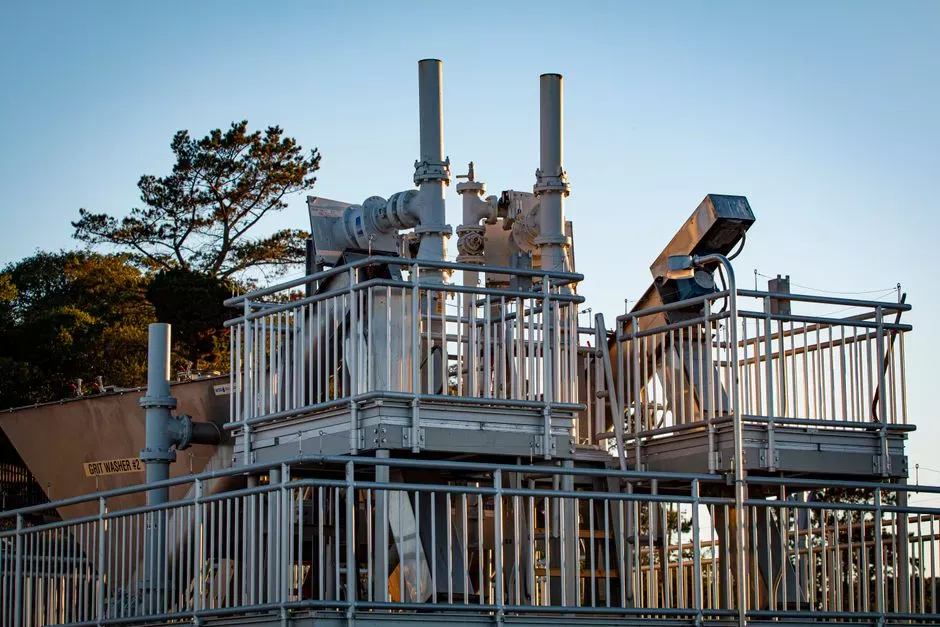
The clearest way to choose between TITUS and an alternative is to start from the duty point, not the brand. TITUS's own list frames lift stations, pump stations, wet wells, collection systems, headworks, lagoons, and large tanks as the application set for Twister and Twister-FL units (tituswws.com, 2025-06-16). For lagoon full-column mixing, the vendor's stated fit is the Twister-FL Floating Aerator, and the alternative category to evaluate is surface mechanical aerators, with TITUS's caveat that surface units reach only the top few feet (tituswws.com, 2025-06-16). For lift-station and wet-well hydrogen sulfide and FOG control, the Twister Mixing Aerator paired with ozone-enhanced odor control is the vendor's stated approach (tituswws.com, 2025-06-16). At headworks, a Rotary Mechanical Bar Screen handles the screening side; the aeration choice should be cross-checked against BABA sourcing rules for federally funded work (tituswws.com, 2025-06-16). For activated-sludge basins, submerged diffuser systems are the conventional choice, and specific vendor names in this category are not provided in the research supplied here, so the buyer must request references.
| Application | TITUS stated fit (tituswws.com, 2025-06-16) | Alternative category to evaluate | Key check before substituting |
|---|---|---|---|
| Lagoon full-column mixing | Twister-FL Floating Aerator | Surface mechanical aerator | Confirm whether the alternative delivers full-column mixing or surface-only oxygen transfer |
| Lift station / wet well H2S and FOG | Twister Mixing Aerator with ozone-enhanced odor control | AirLift peers, surface aerators in wet-well configurations | Confirm septicity-control approach under low-DO conditions |
| Headworks aeration | Twister Mixing Aerator (within TITUS application list) | Submerged diffuser in adjacent basins | Verify BABA documentation for federally funded headworks work |
| Activated-sludge basin | Not the primary TITUS duty point | Submerged fine/coarse-bubble diffuser | Request vendor references; this research does not name specific suppliers |
Buyer's Evaluation Framework for Choosing an Alternative
The replacement trigger, per the vendor's own public framing on LinkedIn, is the combination of rising operating cost and inability to consistently meet discharge limits; if both are present, the existing aeration system is a candidate for benchmarking or replacement (linkedin.com, 2025). Once that gate is passed, four checks structure the rest of the decision. Application-fit check: confirm the alternative targets the same duty point — lagoon full-column mixing, lift-station hydrogen sulfide, wet-well FOG, or headworks aeration — using TITUS's own application list as the reference (tituswws.com, 2025-06-16). Maintenance model check: TITUS's AirLift design places every serviceable part on shore (tituswws.com, 2025-06-16), so alternatives with submerged bearings, propellers, or motors should be scored on access cost (boat or crane) and downtime, not only on first cost. Domestic-sourcing check: TITUS states USA manufacture and BABA-ready status (tituswws.com, 2025-06-16); for any alternative on a federally funded US project, require written confirmation of country of manufacture and BABA documentation, because this research does not provide that information for competing vendors. Performance-validation check: TITUS explicitly separates BABA (a funding-eligibility question) from product compliance, and frames treatment performance as the real compliance case (tituswws.com, 2025-06-16); the same separation should be applied to every alternative. Buyers may also reference the package sewage treatment plant cost 2026 price guide and the heavy metals removal methods guide for adjacent decision inputs.
Frequently Asked Questions
What does TITUS Wastewater Solutions actually manufacture?
TITUS Wastewater Solutions manufactures the Twister Mixing Aerator and the Twister-FL Floating Aerator, both built on an AirLift design in which an onshore blower drives air through a pipe and rising bubbles lift and circulate the full water column, with no mechanical or electrical components below the surface (tituswws.com, 2025-06-16).
Who are the real competitors to TITUS in wastewater aeration?
True competitors fall into four mechanism categories: surface mechanical aerators, submerged fine/coarse-bubble diffusers, jet or ejector aerators, and other AirLift systems with onshore blowers and no submerged moving parts (tituswws.com, 2025-06-16). The
Frequently Asked Questions
Who are the real competitors to TITUS Wastewater Solutions for industrial aeration?
The primary competitors for TITUS Wastewater Solutions in the industrial aeration sector include manufacturers specializing in high-efficiency mechanical and pneumatic aeration technologies. Key market incumbents include Fluence Corporation with their Aspiral MABR units, Evoqua Water Technologies (now part of Xylem) for their range of fine-bubble diffused aeration systems, and various manufacturers of high-speed floating aspirating aerators such as Aeromix and Aire-O2 by Aeration Industries International. These competitors provide comparable oxygen transfer rates (OTR) and standard oxygen transfer efficiency (SOTE) metrics, typically ranging from 2% to 4% per foot of submergence for fine-bubble systems.
Is TITUS Wastewater Solutions the same company as the HVAC 'Titus' brands listed on sites like CB Insights?
No, TITUS Wastewater Solutions is a distinct entity and is not affiliated with the HVAC manufacturer Titus, which is a division of Johnson Controls (formerly part of Tomkins plc). The HVAC brand specializes in air distribution, grilles, and diffusers for building climate control, whereas TITUS Wastewater Solutions focuses exclusively on water treatment technology and lagoon aeration systems. Confusion often arises in database aggregators like CB Insights due to the similarity in trade names, but they operate in entirely different engineering sectors and supply chains.
When should I choose a TITUS Twister or Twister-FL aerator over a conventional surface aerator or submerged diffuser system?
The TITUS Twister and Twister-FL are best suited for applications requiring high oxygen transfer in variable-depth lagoons where maintenance access to submerged diffusers is restricted. You should consider these units when your oxygen transfer requirements exceed the capabilities of low-speed surface aerators, which typically provide lower alpha factors (0.5 to 0.7) in industrial wastewater. Unlike submerged diffuser systems, which require periodic cleaning of membranes to prevent fouling and pressure drop increases (often exceeding 0.5 to 1.0 psi over time), the Twister design maintains consistent aeration performance without the need for floor-mounted piping or compressed air header maintenance.
What should I confirm with a vendor before substituting an alternative for TITUS on a BABA-funded wastewater project?
For projects subject to the Build America, Buy America (BABA) Act, you must obtain a formal Certificate of Origin verifying that all iron and steel components, including castings, structural steel, and fasteners, are melted and manufactured in the United States. You should also request a breakdown of the cost of components to ensure that the "domestic content" threshold—currently requiring that the cost of domestic components exceeds 55% of the total cost of all components—is met. Failing to secure documented compliance from the manufacturer can lead to the disqualification of the equipment and the loss of federal funding for the project.
How do I size a TITUS alternative for a municipal or industrial lagoon without copying the vendor's selection spreadsheet?
To size an aeration system independently, you must first calculate the Required Oxygen Transfer Rate (ROTR) in pounds of O2 per day, based on the Biochemical Oxygen Demand (BOD) loading and the nitrification requirements of your influent. Use the formula AOR = (BOD_load * Factor) + (TKN_load * 4.6), where AOR is the Actual Oxygen Requirement. Once the AOR is established, apply your site-specific alpha (wastewater/water oxygen transfer ratio) and beta (salinity correction) factors to convert this to a Standard Oxygen Transfer Rate (SOTR) at 20°C and zero dissolved oxygen. Select a unit based on the manufacturer’s certified SOTR performance curve, ensuring the total capacity of the selected units provides a minimum 15% safety margin over your calculated peak AOR.