Why Abu Dhabi Treats Domestic Sewage Differently
The defining driver for any domestic sewage treatment in Abu Dhabi is the 100% treated wastewater reuse mandate embedded in the Abu Dhabi 2030 Plan. Four WWTPs commissioned between 2010 and 2013 added 850,000 m³/day of capacity and were designed to serve the equivalent of more than 3 million inhabitants, with every kilolitre of treated effluent intended for irrigation (Source: istp2.ae). With the population projected to reach 6.8 million by 2030, the Abu Dhabi Sewerage Services Company (ADSSC) coordinates the collection, treatment, and reuse infrastructure to keep pace (Source: istp2.ae).
A "standard" packaged sewage treatment plant (STP) specified for a European or East Asian project does not, on its own, satisfy this brief. The bar is the local definition of Treated Sewage Effluent (TSE): the discharge quality that allows the water to be reused for unrestricted landscape and public-space irrigation without a downstream buffer. The engineer should not infer numeric TSE parameter limits from generic WHO or EPA irrigation guidelines; request the current TSE specification from ADSSC and the Department of Municipalities and Transport (DMT) for the specific project before locking the equipment list.
How Abu Dhabi's Sewerage Network Evolved
The history of wastewater treatment in Abu Dhabi explains which corridors already have a central connection and which still rely on on-site plants. The first Abu Dhabi WWTP was built in 1973 with a design capacity of 4,545 m³/day (Source: istp2.ae). Mafraq WWTP, 40 km from downtown Abu Dhabi city and 40 m above sea level, had Phase 1 commissioned in August 1982 at approximately 100,000 m³/day for 332,500 inhabitants, and Phase 2 commissioned in October 1997, taking total designed capacity to 260,625 m³/day before being re-rated to 320,000 m³/day by a Water Research Company review — equivalent to a serviced population of 900,000 persons (Source: istp2.ae). Phase 1 was rehabilitated between 1999 and 2001, and new odour control and biosolids management systems were added in 2003 for both phases (Source: istp2.ae).
For projects in Al Ain city and its suburbs, Al Ain Zakher WWTP was commissioned in 1980 at 27,000 m³/day and expanded in 1992 to 54,000 m³/day to follow the same growth pattern (Source: istp2.ae). Beyond the two large WWTPs, approximately 30 small plants (each under 5,000 m³/day) have been built across the Emirate to serve communities not yet connected to the trunk network — a useful precedent for the capacity range packaged and MBR systems are typically specified to (Source: istp2.ae).
The Strategic Tunnel Enhancement Programme (STEP) is a planned 40-kilometre wastewater tunnel in Abu Dhabi City, sized to the flows forecast in the Urban Structure Framework Plan. Until STEP is commissioned in a given corridor, on-site treatment remains the only compliant path for projects outside the existing Mafraq and Zakher catchments (Source: istp2.ae).
| Plant / Programme | Commissioned | Design / Re-rated Capacity | Service Scope |
|---|---|---|---|
| First Abu Dhabi WWTP | 1973 | 4,545 m³/day | Original central city catchment |
| Al Ain Zakher WWTP | 1980 (expanded 1992) | 27,000 → 54,000 m³/day | Al Ain city and suburbs |
| Mafraq WWTP Phase 1 | August 1982 | ~100,000 m³/day | 332,500 inhabitants |
| Mafraq WWTP Phase 2 | October 1997 | 320,000 m³/day (re-rated) | 900,000 persons; upgraded 1999–2003 |
| Four new WWTPs (2010–2013) | 2010–2013 | +850,000 m³/day total | Equivalent to >3 million inhabitants; 100% reuse rated |
| ~30 small WWTPs (each <5,000 m³/day) | Various | Up to 5,000 m³/day each | Off-network communities across the Emirate |
| STEP tunnel | Planned (Abu Dhabi City) | 40 km tunnel | Future corridors in the Urban Structure Framework Plan |
Sizing the Load: Residential Flow Reality in Abu Dhabi
Domestic sewage treatment in Abu Dhabi is sized against some of the highest per-capita water consumption rates on record. Municipal water consumption in the Emirate is 565–920 litres per capita per day (lpcd), driven by high indoor use and landscape irrigation demand (Source: MODSIM 2015, Water consumption pattern in the traditional villas of Abu Dhabi). Residential activities account for about 52% of desalinated water demand, meaning the load arriving at a treatment plant in a residential compound, labour accommodation, or hotel is dominated by domestic inputs rather than process trade waste (Source: MODSIM 2015).
The sewage-return fraction of consumed water is project-specific. Typical residential developments will return 0.8–0.9 of consumption, but this is a variable that the engineer must confirm with ADSSC and the developer's water-balance data for an industrial camp, hotel, or mixed-use scheme. Readers should request the project's own consumption records from the facility operator or developer before sizing the biological stage.
Choosing the Right Treatment Configuration
The equipment choice for domestic sewage treatment in Abu Dhabi reduces to a three-way decision: connect to ADSSC's central network, install a buried A/O package plant, or deploy a containerized MBR.
If the project sits inside the Mafraq or Zakher catchment, or inside a corridor that the STEP tunnel will serve once commissioned, central connection is the baseline. The rest of this section applies to off-network or pre-network sites — labour camps, compounds, schools, and hotels on the urban fringe that cannot wait for STEP.
For residential communities, hotels, hospitals, factories, and rural sites in the 1–80 m³/h range, a buried package A/O sewage treatment plant that combines anoxic/aerobic biological contact oxidation with sedimentation and disinfection in a single buried unit is the conventional choice. The plant is fully automated, requires no on-site operator, and can be installed below grade with landscaping above.
Where TSE reuse quality and footprint are both critical, a containerized MBR sewage treatment plant pairing activated sludge with submerged PVDF membrane filtration delivers near-reuse-quality effluent in roughly 60% of the footprint of a conventional activated-sludge plant, and is suited to the 10–2,000 m³/day range. For a step-by-step sizing workflow, see the Abu Dhabi containerized MBR sizing guide.
Disinfection choice is a separate decision. UV disinfection for TSE reuse is the default for chemical-free effluent where Cryptosporidium and Giardia control matter; for design details see the UV disinfection design for industrial reuse reference. Where the reuse distribution network needs a residual, a chlorine dioxide generator sized from 50 g/h to 20,000 g/h produces ClO₂ on site for the residual.
| Configuration | Flow Range | Footprint | Operator | Best-Fit Project |
|---|---|---|---|---|
| ADSSC central connection | Any (per ADSSC) | None on site | ADSSC | Inside Mafraq / Zakher / future STEP corridor |
| Buried package A/O plant (WSZ) | 1–80 m³/h | Small, fully buried | Unattended | Compounds, hotels, hospitals, rural sites |
| Containerized MBR | 10–2,000 m³/day | ~60% of conventional | Unattended / remote monitoring | High TSE quality, footprint-constrained sites |
| UV disinfection | Per TSE flow | Skid-mounted | Unattended | Chemical-free reuse, pathogen control |
| Chlorine dioxide generator | 50 g/h–20,000 g/h | Skid-mounted | Unattended | Reuse networks needing a residual |
Sludge, Screening and Reuse: What the Spec Must Also Cover
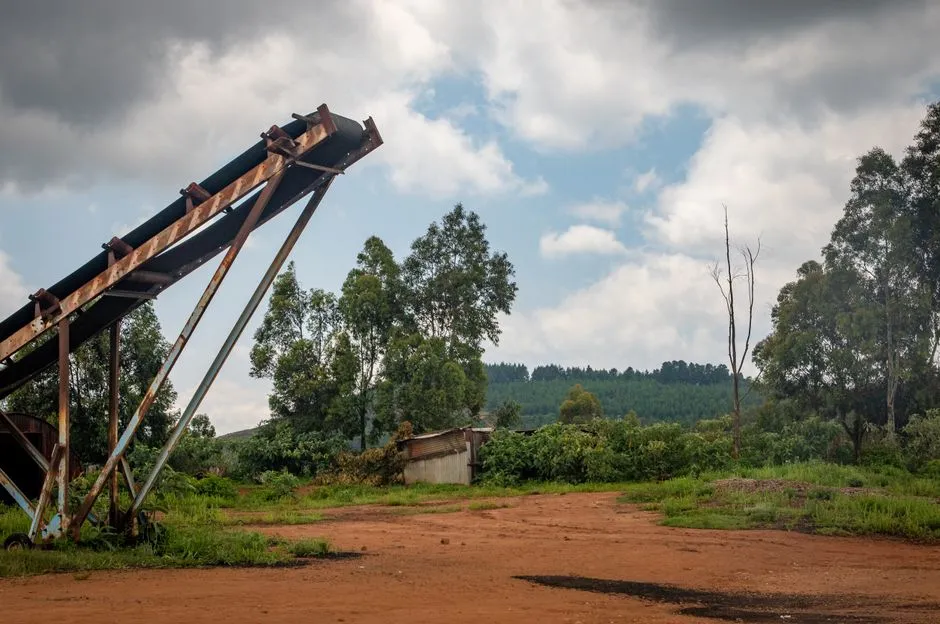
Procurement errors on Abu Dhabi STPs usually start with the liquid line and end with screening and sludge handling treated as afterthoughts. A rotary mechanical bar screen for STP headworks is required for any buried or containerized plant to manage the grit, wipes, and construction debris typical of phased residential and labour-camp developments.
For biosolids produced off-network, a plate and frame filter press for biosolids with a 1–500 m² filtration area is the typical solids-management step before the cake is transported off site.
Because the 100% reuse mandate leaves no discharge buffer, TSE storage and distribution must be sized against the peak irrigation window: confirm peak landscape demand versus the daily treated volume directly with the landscape consultant, and confirm the reuse quality parameter list (TSS, BOD, COD, E. coli, residual chlorine, nutrients) with ADSSC and DMT for the project.
Frequently Asked Questions
Should a new project in Abu Dhabi connect to the central sewer or install on-site treatment?
Connection to ADSSC's network is the baseline where the site falls inside the existing Mafraq or Zakher catchment or inside a corridor that the planned 40-kilometre STEP tunnel will serve (Source: istp2.ae). Outside these corridors — labour camps, compounds, and hotels on the urban fringe — on-site treatment remains the compliant path. Request a confirmation letter from ADSSC stating the catchment status of the plot before locking the equipment list.
How much does a domestic sewage treatment plant cost in Abu Dhabi?
The supplied research does not include capital or operating cost figures for packaged or MBR plants in the Emirate. Request a site-specific quotation that itemises the buried package A/O or containerized MBR unit, headworks screening, disinfection stage, sludge dewatering, TSE storage, and the commissioning / TSE compliance testing scope.
What flow rate should I size the plant for?
Sizing must start from the project's own water consumption records and a confirmed sewage-return fraction, not from a generic per-capita factor. Abu Dhabi's municipal consumption is 565–920 lpcd, with residential activities accounting for about 52% of desalinated demand (Source: MODSIM 2015). Combine that with a project-specific return ratio obtained from the developer or facility operator, and add a peaking factor for the irrigation window before selecting the 1–80 m³/h buried A/O range or the 10–2,000 m³/day MBR range.
How do I choose a supplier that will not cause compliance problems?
Shortlist suppliers who can document TSE quality data for a comparable Abu Dhabi or GCC reference, provide a full scope covering headworks, biological stage, disinfection, sludge dewatering, and TSE storage, and can supply a UV or chlorine dioxide disinfection stage sized to the project flow. Confirm the equipment list against the current ADSSC and DMT TSE specification for the project before placing the order, as compliance is judged against the authority's current parameter list.