
DAF vs Clarifier for Petroleum Wastewater: The Quick Decision
For petroleum wastewater in Bay Minette in 2026, a dissolved air flotation (DAF) clarifier is usually the right primary separator when the stream carries free oil, light emulsified oil, and suspended solids that need to rise; a gravity lamella clarifier is preferred when the oil is heavy and the solids are dense and settleable. DAF is widely used in treating industrial wastewater effluents from oil refineries, petrochemical plants, and natural gas processing plants (en.wikipedia.org, Dissolved air flotation), and DAF systems remove suspended solids, oils, and fats by attaching 30–50 micron microbubbles to the contaminants so skimmers can lift the float (clearwaterind.com, 2026-04-27).
In refinery service, the safer implementation uses nitrogen rather than air to avoid ignition risk, per the same Wikipedia entry, which a Bay Minette designer should confirm with the local pretreatment authority. For a packaged unit sized for the duty, the HydropureWater DAF system is the most relevant starting point.
How a DAF Clarifier Actually Separates Oil and Solids
A DAF clarifier separates oil and suspended solids by attaching fine gas bubbles to the contaminant particles so the buoyant force of the bubbles overcomes gravity, lifting the float to the surface for skimming (en.wikipedia.org). The mechanism is straightforward: clarified effluent is pressurized with air (or, in refinery service, nitrogen), then released through a pressure-reduction valve at the inlet of the flotation tank; the gas comes out of solution as micro-bubbles that nucleate on oil droplets and on floc, dragging them upward (en.wikipedia.org). Commercial DAF systems used in petroleum and similar duty operate with bubble sizes in the 30–50 micron band, which is the size range that reliably attaches to free and lightly emulsified oil as well as to chemical floc (clearwaterind.com, 2026-04-27).
Residence time separates the two common DAF geometries. A circular DAF needs only about 3 minutes in the float tank because the spiral scoop sweeps float efficiently to the center, while a rectangular DAF typically requires 20–30 minutes of residence time for the same separation work (en.wikipedia.org). The shorter circular-tank time drives a smaller footprint, but rectangular tanks are still common where surge capacity and feed variability matter. DAF units sit downstream of a chemical conditioning step where the feed is dosed with a coagulant such as ferric chloride or aluminum sulfate to destabilize colloids and a flocculant to build larger particles. The dosing package is normally a separate skid, and an automatic chemical dosing skid is the typical pairing.
How a Gravity Lamella Clarifier Handles Oily Streams
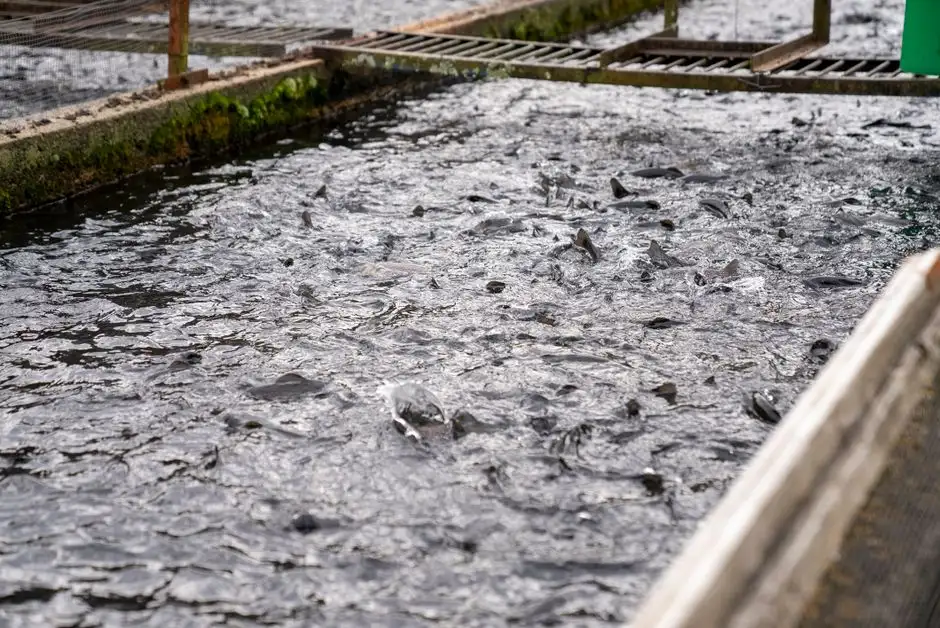
A gravity lamella clarifier handles oily streams by reducing the effective settling distance rather than by attaching bubbles. The unit stacks a series of inclined plates (or tubes) at roughly 55–60° inside a tank; a settleable particle only has to fall the short perpendicular distance between plates before it slides down the inclined surface and accumulates as sludge at the bottom of the basin. Because the separation is purely gravitational, the technology works best for heavy, settleable solids and for oil droplets dense enough to sink under quiescent conditions. A lamella clarifier will not capture free light oil, lightly emulsified oil, or FOG that simply will not sink, so it is the wrong primary unit for a typical refinery or terminal runoff stream. The HydropureWater lamella clarifier is the relevant product reference, and its surface-loading band of 20–40 m/h should be confirmed with the vendor for petroleum duty rather than assumed.
Used on its own, a lamella clarifier is a workhorse for heavy-oil, high-TSS streams and for polishing after a DAF or CPI separator; used as a polishing step, it takes the residual floc and dense solids that escape the float stage. The trade-off is mechanical simplicity — no air system, no saturation drum, no nitrogen skid — versus a narrower separation window that excludes the very contaminants a petroleum stream is most likely to carry.
Side-by-Side Comparison: DAF vs Clarifier for Petroleum Service
For a Bay Minette engineer walking into a supplier meeting, the practical difference is the separation mechanism and the stream it actually removes. The table below lines up the two technologies on the parameters a sizing conversation will turn on. Material of construction is included because the same unit can be specified in standard or upgraded alloys depending on chloride and hydrocarbon exposure. Confirm each parameter with the supplier for the specific feed and the available footprint.
| Parameter | DAF Clarifier | Gravity Lamella Clarifier |
|---|---|---|
| Separation mechanism | Pressurized air/nitrogen micro-bubbles attach to oil droplets and floc, lifting float to the surface for skimming (en.wikipedia.org) | Gravity settling on inclined plates; no bubble generation |
| Bubble / residence time | 30–50 micron bubbles; circular DAF ~3 min, rectangular DAF 20–30 min (en.wikipedia.org; clearwaterind.com, 2026-04-27) | No bubble residence time; hydraulic residence governed by plate spacing and surface loading (20–40 m/h for the HydropureWater unit, vendor to confirm) |
| Best-fit petroleum stream | Free oil, lightly emulsified oil, FOG, light suspended solids | Heavy settleable solids, heavy oils, high TSS that sinks; not effective on free/emulsified light oil |
| Chemical conditioning | Almost always required: coagulant (ferric chloride or aluminum sulfate) and flocculant (en.wikipedia.org; clearwaterind.com, 2026-04-27) | Same conditioning logic applies for colloidal streams, but the chemistry load is typically lower than DAF |
| Footprint / hydraulic loading | Higher hydraulic loading in a small footprint; short circular-tank residence (~3 min) supports compact skids | Larger footprint than a DAF for the same flow; footprint is set by the surface loading band |
| Standard material of construction | 304SS standard; 316SS and polypropylene available on request (clearwaterind.com, 2026-04-27) | PP plates in a carbon-steel or stainless tank, per vendor |
Bay Minette and Mobile-Baldwin Pretreatment Considerations
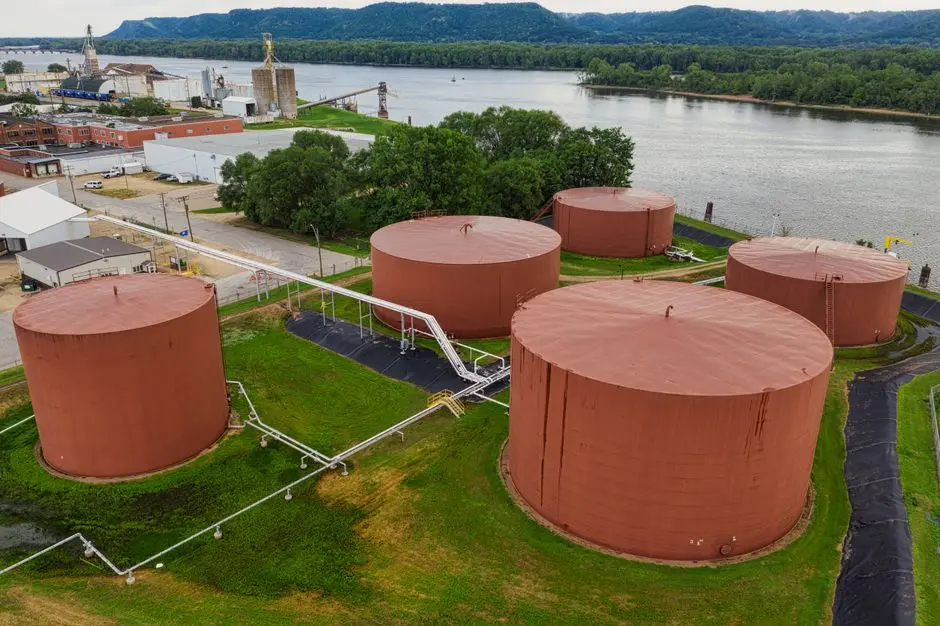
A petroleum facility in the Bay Minette / Mobile-Baldwin corridor discharges to a local publicly owned treatment works under a pretreatment program and must meet the receiving POTW's oil & grease, TSS, and pH limits. The engineer should request the current local discharge limits in writing from the POTW before any equipment is sized; the same applies to any site-specific flow cap and to monitoring frequency. At the federal level, the NPDES framework is the umbrella under which pretreatment permits are issued, as documented in EPA's Abstracts of Industrial NPDES Permits (nepis.epa.gov, July 1984) — a historical reference that frames the permitting system but does not itself contain a current Bay Minette limit.
Safety is the second local constraint. In refinery service, dissolved gas flotation (DGF) units do not use air as the flotation medium because of the explosion risk; nitrogen is used instead to create the bubbles (en.wikipedia.org). A Bay Minette DAF should therefore be specified as a nitrogen DGF, with the saturation drum, gas panel, and ventilation sized for inert service rather than compressed air. Confirm with the local fire/insurance authority whether an enclosed or vapor-balanced DAF is required for the classified area, and document the hazardous-area classification in the inquiry package so the vendor quotes the right enclosure and instrumentation.
How to Choose in 2026: A 5-Step Selection Checklist
The decision collapses to a five-step workflow that any engineer can run against their own wastewater characterization data. The table below frames what to collect and which way each step points the selection.
| Step | Action | Decision it drives |
|---|---|---|
| 1. Characterize the stream | Measure free vs emulsified oil, FOG, TSS, pH, temperature, and peak flow; pull these from plant logs or a sampling campaign | Defines which technology can physically remove the contaminants present |
| 2. Apply the rule of thumb | Free/emulsified oil and FOG → DAF as primary; heavy settleable solids → lamella as primary; mixed streams → DAF as primary, lamella as polishing | Selects the primary separator |
| 3. Decide air vs nitrogen | Any stream inside the refinery flash-point envelope or in a classified area should default to nitrogen DGF rather than air-DAF (en.wikipedia.org) | Sets the gas system specification |
| 4. Confirm chemistry | Plan coagulant (ferric chloride, aluminum sulfate) and flocculant dosing, plus an automatic dosing skid, ahead of either unit (en.wikipedia.org) | Adds the conditioning scope to the inquiry |
| 5. Confirm with the local POTW and AHJ | Get written pretreatment limits and hazardous-area classification before placing the order; cross-check against the NPDES framework (nepis.epa.gov, July 1984) | Prevents the unit from being undersized for local limits or the wrong enclosure for the area |
Steps 1, 4, and 5 typically pull in the automatic chemical dosing skid and the broader U.S. industrial pretreatment compliance guide for context on how 2026 limits are being written across the country.
Frequently Asked Questions
What does a DAF or lamella clarifier for petroleum service cost in 2026?
Price varies based on site requirements, so request a tailored quote against your specific flow rate (m³/h), peak factor, influent oil & grease, TSS, FOG, target effluent, available footprint, and hazardous-area classification; the HydropureWater DAF and lamella product pages list indicative specs that can be used as a starting point for that conversation.
How do I choose a supplier for a Bay Minette petroleum DAF or lamella clarifier?
Tie supplier selection to documented experience on petroleum duty, the ability to quote a nitrogen DGF (not just an air-DAF) for refinery service, and material-of-construction options that match the chloride and hydrocarbon exposure. Request references on at least one comparable influent and confirm the vendor can integrate the automatic chemical dosing skid and the local POTW's monitoring requirements; the HydropureWater DAF system and the HydropureWater lamella clarifier are the two in-house options to evaluate against that shortlist.
What inputs does a vendor need to size a DAF or lamella clarifier?
Send flow rate (m³/h) and peak factor, influent and target effluent oil & grease, TSS, FOG, pH, temperature, available footprint, and hazardous-area classification. Without those, the vendor cannot defensibly size the float-tank volume, the saturation drum, the plate area, or the chemical conditioning capacity.
What is the typical lead time and compliance risk for a nitrogen DGF in 2026?
Lead time is a function of engineering scope, enclosure rating, and material upgrades, so request a delivery date against your purchase order terms. On compliance, the unit must meet the local POTW's oil & grease, TSS, and pH limits, and the NPDES framework under which those limits are issued is documented in EPA's Abstracts of Industrial NPDES Permits (nepis.epa.gov, July 1984) — confirm current local limits in writing before final selection to avoid an undersized or non-compliant unit.