Why disinfection is a process-water design decision, not a chemical order
A process-water loop is not a drinking-water main, and the disinfection specification should not be treated like a chemical reorder. Cooling-tower make-up, RO feed, food-contact wash water, and rinse-water holding tanks each carry different microbial targets, different pH envelopes, and different discharge or reuse rules — the technology choice has to be made against those constraints before any vendor is asked for a price.
Bulk chemical supply (sodium hypochlorite, calcium hypochlorite, chlorine gas) is one delivery model; on-site generation of chlorine dioxide (ClO₂), ozone, or UV is another. Each model changes the equipment footprint, the safety profile, and the operating cost structure. Sodium hypochlorite at roughly 12–15% available chlorine per gallon is described as "universally applied" and user-friendly across municipal, food-processing, and industrial water treatment, while gas chlorine at 100% chlorine per pound is more concentrated and requires a purpose-built gas-feed room, scrubber, and emergency shutoff (Hawkins, S1). On-site chlorine dioxide generation eliminates liquid chemical transport but adds reagent storage and a generator skid to the equipment list.
Compliance scope is the third axis. A process-water system reused internally may only need to meet plant hygiene rules, but the moment the same water contacts a food surface, feeds a membrane, or is discharged to a receiving water body, the supplier should be able to evidence alignment with EPA registration (where applicable), the EU Drinking Water Directive 98/83/EC, and the WHO Guidelines for Drinking-water Quality (S5). Treat that evidence as part of the specification, not a follow-up question.
Four process-water disinfection technologies compared
The mainstream industrial process-water disinfection set includes four technologies: chlorine-based oxidants, chlorine dioxide (ClO₂), ozone, and UV-C. The table below puts them on a single page so a reader can rule options in or out before evaluating specific units.
| Technology | Mechanism | Strength / format | By-product profile | Residual in water | Typical industrial capacity |
|---|---|---|---|---|---|
| Sodium hypochlorite (bleach) | Oxidising biocide; HOCl/OCl⁻ active species | ~12–15% available chlorine per gallon (Hawkins, S1) | Forms halogenated by-products (THMs, HAAs); less effective above pH ~7.5 (Hawkins, S1) | Yes — measurable free chlorine residual | Bulk delivery (tank truck, mini-bulk, drum) — feed rate set by demand |
| Gas chlorine (Cl₂) | Oxidising biocide; forms HOCl in water | 100% chlorine per pound — highest strength (Hawkins, S1) | Halogenated by-products; effectiveness drops at high pH (Hawkins, S1) | Yes — measurable free chlorine residual | Cylinder / ton container feed; full gas-feed scope (scales, shutoff, scrubber) per Hawkins, S1 |
| Chlorine dioxide (ClO₂) | Selective oxidant; effective over wider pH range | Generated on-site; eight configurations spanning 50 g/h to 20,000 g/h (S5) | Lower THM formation than chlorine; reacts with organics differently | Yes — measurable residual as ClO₂ | Compact (50 g/h) up to fully automated industrial (20,000 g/h) per S5 |
| Ozone (O₃) | Strong oxidant and virucide | Generated on-site from air or oxygen | No halogenated by-products; produces aldehydes, bromate if bromide present | No lasting residual — decays rapidly | Reference compact skid footprint of ~0.5 m² per HydropureWater Medical & Hospital Wastewater System |
| UV-C | DNA/RNA damage at 254 nm | Lamp-based reactor, no chemical | No chemical by-products; no taste change (HydropureWater UV Sterilizer catalog) | None | Reactor sized to flow and UV transmittance; chemical-free UV sterilizer units available for process loops |
Sodium hypochlorite remains the default because it is "universally applied," is "user-friendly," and is carried in bulk, mini-bulk, and drums (Hawkins, S1). Gas chlorine is more concentrated — you need less of it to do the same job as calcium hypochlorite or sodium hypochlorite — but it is also the most safety-engineered of the three chlorine options (Hawkins, S1). Where by-product limits or pH variability rule out free chlorine, ClO₂, ozone, and a process-water ozone generator enter the shortlist, and UV closes the gap for chlorine-resistant organisms.
Matching technology to your process water matrix
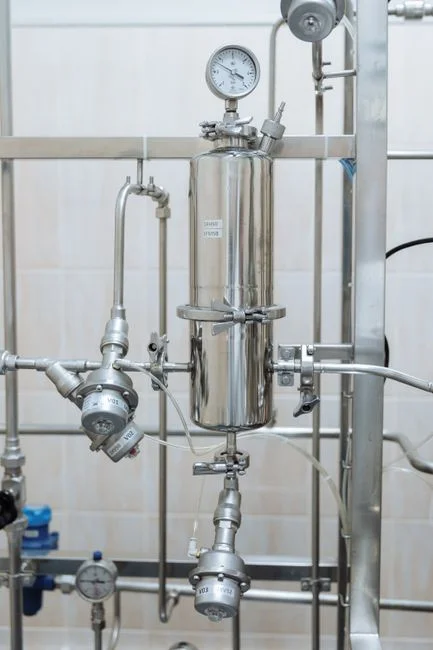
The right technology is a function of the water characteristics, not the catalogue. Four site conditions do most of the filtering. First, pH: free chlorine loses effectiveness above roughly pH 7.5, so a process loop that drifts alkaline pushes the decision toward ClO₂, ozone, or UV (Hawkins, S1). Second, by-product limits: if the discharge rule or reuse permit caps halogenated by-products, the same three technologies are the realistic options (S5; Hawkins, S1). Third, residual: a distribution loop, a rinse-water holding tank, or any pipe section downstream of the disinfection skid that needs biostatic protection requires a residual — chlorine or ClO₂; UV and ozone provide none and need a secondary barrier if the water sits. Fourth, target organism: where chlorine-resistant protozoa such as Cryptosporidium or Giardia are in scope, UV is the only listed technology that addresses them without forming halogenated by-products (HydropureWater UV Sterilizer catalog).
On-site generation provides an alternative for logistics-heavy sites. Where chemical logistics are difficult — remote sites, limited truck access, restricted bulk storage — on-site ClO₂ and ozone are the standard answer; gas chlorine requires scrubber, cylinder scales, and an emergency shutoff loop (Hawkins, S1; S5). The ClO₂ capacity range of 50 g/h to 20,000 g/h across eight configurations covers everything from a small process loop to a municipal-scale drinking-water plant, which is why on-site ClO₂ is often the shortest path to a defensible spec (S5).
Sizing and specification inputs to send a vendor
Quotes only become comparable when the same inputs are provided. The table below is the minimum data a buyer should hand a vendor so the responses can be lined up side by side.
| Input | What to provide | Why it matters |
|---|---|---|
| Peak and average flow | m³/h at design point and at average load | Sets reactor size and oxidant feed rate |
| Design log-reduction target | Organism named (e.g., coliform, Legionella, Cryptosporidium) and the log reduction required | Drives UV dose, ozone CT, or Cl₂/ClO₂ contact time |
| Water matrix | pH range, temperature, UV transmittance, oxidant demand measured on the actual water | Determines whether chlorine is effective and how big the ClO₂ unit needs to be (50 g/h vs 20,000 g/h) per S5 |
| Footprint and integration | Available floor area, services (power, water, drain, vent), and any existing automatic chemical dosing skid in place | Compact ozone skids fit as small as ~0.5 m²; industrial ClO₂ skids need reagent storage and ventilation (S5) |
| Compliance evidence required | EPA registration (where applicable), EU Drinking Water Directive 98/83/EC, WHO Guidelines (S5) | Sets the documentation the supplier must return with the quote |
Send the same table to every vendor on the shortlist to ensure consistency. The cheapest quote is only meaningful if it has been built from the same flow, the same log-reduction target, and the same water matrix.
Evaluating a disinfection-system supplier in 2026
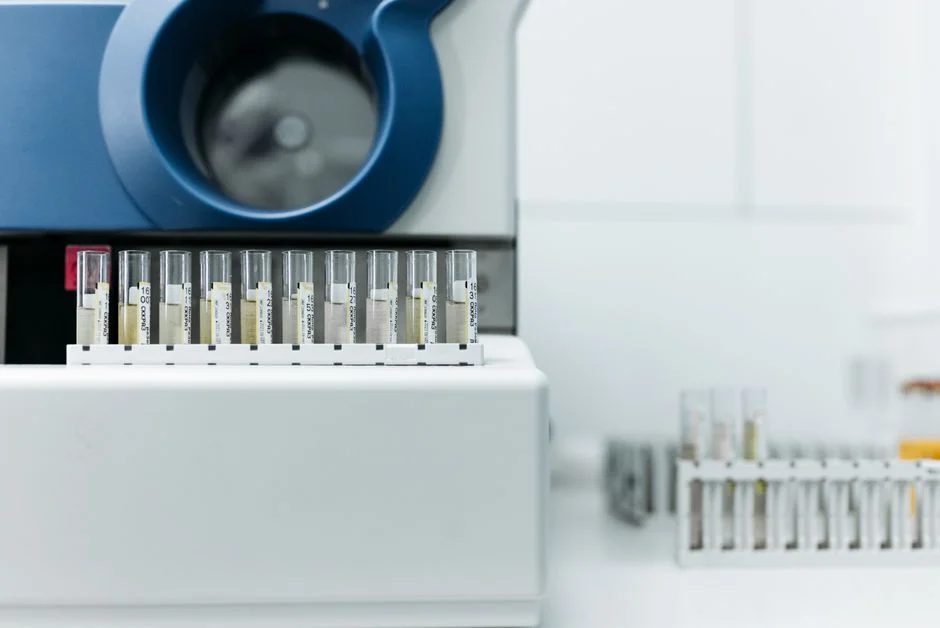
A price-only comparison misses most of the failure modes in an industrial disinfection project. A defensible shortlist framework has four checks. First, scope: confirm the supplier can quote the full package — generator, dosing skid, controls, and integration with existing chemical feed — not just the reactor. The Hawkins gas-feed model, which lists tank/drum/cylinder scales, emergency shutoff, chlorination, chlorine dioxide, dechlorination, ammoniation, CO₂, submersible induction units, and water analysis as a single procurement standard, is a useful reference benchmark (Hawkins, S1). Second, compliance evidence: ask for documented alignment with EPA, EU Drinking Water Directive 98/83/EC, and the WHO Guidelines for the specific technology on offer, not for the company in general (S5). Third, after-sales scope: locally based, professionally trained technicians who test, fine-tune, and optimize the system on site is the Hawkins service model and a useful reference for any industrial supplier (Hawkins, S1). Fourth, safety engineering: for gas chlorine, the supplier should provide emergency shutoff and weight-based monitoring; Hawkins' Halogen and Hydro Instruments scope illustrates the components expected (Hawkins, S1).
For non-gas systems, replace the fourth check with controls integration: does the supplier provide dose pacing from a flowmeter, residual analysers, and alarm logic, or is the buyer expected to integrate that with a separate platform?
Frequently Asked Questions
Which disinfection system should I specify for process water?
Start with the water matrix and the discharge or reuse rule, not the chemical. If pH drifts above 7.5 or the permit restricts halogenated by-products, narrow the shortlist to chlorine dioxide, ozone, or UV (Hawkins, S1). If a residual is required downstream, keep chlorine or ClO₂ in scope; UV and ozone provide no residual. For chlorine-resistant protozoa, UV is the only listed technology that addresses them without chemicals (HydropureWater UV Sterilizer catalog).
How do I evaluate a disinfection-system supplier in 2026?
Confirm four things before pricing matters: full-scope quotation (generator, dosing skid, controls, integration); documented compliance with EPA, EU Drinking Water Directive 98/83/EC, and WHO Guidelines for the offered technology; on-site service capability (testing, fine-tuning, optimisation) comparable to Hawkins' locally based technician model (Hawkins, S1); and safety-engineered controls — emergency shutoff and weight-based monitoring for gas systems, dose-pacing and residual analysers for non-gas systems (S5; Hawkins, S1).
Which standards should a process-water disinfection system meet?
For an industrial process loop that feeds food contact, membranes, or a discharge to a receiving water body, the reference set is EPA registration where applicable, the EU Drinking Water Directive 98/83/EC, and the WHO Guidelines for Drinking-water Quality — the same compliance scope declared for the eight-configuration ClO₂ generator range (S5). Ask the supplier to map each standard to the specific technology being quoted, not to the company in general.
Is sodium hypochlorite or on-site chlorine dioxide the better buy?
Sodium hypochlorite at roughly 12–15% available chlorine per gallon is the right form when bulk delivery is straightforward, a free-chlorine residual is acceptable, and halogenated by-products are not capped (Hawkins, S1). On-site ClO₂ is the better buy when pH varies, by-product limits are tight, or chemical logistics are constrained; the 50 g/h to 20,000 g/h configuration range covers small process loops through industrial-scale plants (S5). The trade-off is footprint and reagent storage against bulk chemical handling and transport.