What 'sizing' a containerized MBR STP actually means in Taipei
A containerized MBR STP is a plug-and-play unit built inside a 20' or 40' high-cube (HC) ISO container, combining activated-sludge biology with submerged ultrafiltration (Pure Aqua S4) so the entire plant can be lifted onto a low-loader, placed on a slab, and energized (MENA-Water S1). "Sizing" is the engineering exercise of converting project occupancy and fixture counts into four defensible numbers: average daily flow in m³/day, peak hourly flow, MBR unit/container count, and the required pre- and post-treatment stages.
For Taipei residential estates and worker camps, the controlling drivers are occupancy profile, peak simultaneity, subtropical ambient temperature, and local discharge or reuse limits. The right HydropureWater integrated MBR system covers 10–2,000 m³/day, which brackets the residential and camp range; the engineer's job is to land the duty inside that envelope cleanly rather than to chase a per-capita shortcut.
Step 1 — Build the average daily flow from Taipei occupancy
Engineers must collect data on the number of residents or camp beds, the day-versus-night population split, the food-service load, the laundry load, and any commercial flow (shops, offices, gym) discharging into the same sewer. Pure Aqua's published 50 gpd per capita baseline serves as a supplier-side reference point and should be treated as a starting value, not a Taiwan-specific number (Pure Aqua S4). Convert the resulting figure to m³/day using the IDA Water Security Handbook conversion of 1 m³ = 264.2 US gallons so the duty can be measured against MBR container capacity tables (IDA S2). Verify with the local utility whether greywater (showers, laundry) is combined with blackwater or kept separate: the MBR duty is materially higher when streams are combined versus a greywater-reuse-only scheme, and that decision shifts the container count.
Step 2 — Apply a peak factor for Taipei residential and camp duty
Peak factor is the ratio of peak-hourly flow to average daily flow, which accounts for morning and evening surges in housing estates and worker camps. In Taipei projects, qualitative factors that push the peak factor up include high-rise vertical risers that synchronize demand across floors, large communal mess halls that empty in a single shift change, and typhoon-driven inflow and infiltration (I&I) in separated sewer areas. Factors that push it down include buffer tanks at the head of the plant and phased occupancy. Because the peak factor must come from the MBR supplier's process guarantee and be cross-checked against local building and plumbing codes, the engineering task is to confirm in writing that the supplier's peak factor is layered on top of the average daily flow and is not already embedded inside the per-capita number.
Step 3 — Pick the MBR unit and 20'/40' container count
Translate the peak hourly flow into a 24-hour average MBR flux by matching it against the membrane area: Pure Aqua's submerged HF UF modules run at a nominal 0.04 µm pore size (Pure Aqua S4), and HydropureWater's DF-series flat-sheet MBR modules are sized per cassette. MENA-Water publishes that more than 1,200 m³/day can be filtered in a single 40-foot ISO container, and Pure Aqua offers both 40' and 20' high-cube formats (MENA-Water S1; Pure Aqua S4). For projects above roughly 1,200 m³/day, specify two or more 40' HC containers in parallel with a common upstream buffer tank rather than a single oversized unit, so each skid remains a true plug-and-play maintenance boundary.
| Average daily flow (m³/day) | Recommended container format | Notes |
|---|---|---|
| Up to 50 | One 20' HC | Compact sites, small camps, single building |
| 50–200 | One 40' HC | Typical residential block, 200-bed camp |
| 200–500 | One 40' HC plus buffer | Add equalisation tank upstream of the ISO skid |
| 500–1,200 | Parallel 40' HC | Two skids with common upstream buffer |
| Above 1,200 | Multiple 40' HC in parallel | Confirm upper bound with the selected DF-series flat-sheet MBR membrane modules supplier |
Step 4 — Lock in pre-treatment, post-treatment and utilities
Correct sizing of the MBR requires an equally capable headworks, making pre- and post-treatment essential components. Specify a drum screen at approximately 1.5 mm perforation ahead of the biological tanks (Pure Aqua S4), and add a coarse bar screen on the inlet works for camp projects that may encounter rags and construction debris. Add an anoxic zone upstream of the aeration tank for denitrification, which is necessary for nitrate-sensitive receiving waters in Taipei (Pure Aqua S4). Plan for built-in membrane cleaning and air scouring, plus a coarse-bubble aeration system below the membrane modules to keep the UF surface scoured continuously (Pure Aqua S4). Confirm utilities early: 460V/3Ph/60Hz supply and an operating temperature range of 20–30°C (Pure Aqua S4); Taipei winter temperatures remain within this envelope without heating. For headworks screening use a GX-series rotary mechanical bar screen, and pair the plant with an automatic chemical dosing system for any post-treatment polishing required by discharge consents.
Worked example — 200-person camp in Taipei
Consider a 200-bed worker camp in Taipei's Neihu or Beitou district. 200 occupants at the Pure Aqua 50 gpd per capita baseline provides an order-of-magnitude average daily flow that the engineer must confirm with the selected supplier and adjust for local shower and laundry habits (Pure Aqua S4). Converted through the IDA factor of 1 m³ = 264.2 US gallons (IDA S2), that duty sits comfortably inside the published single-40' HC ISO container envelope (MENA-Water S1), so one 20' HC or 40' HC container is sufficient. Apply a supplier-confirmed peak factor to derive the peak hourly flow for the hydraulic profile, and lock the configuration at one 40' HC containerized MBR with a 1.5 mm drum screen and an anoxic zone for denitrification (Pure Aqua S4). The handover pack for the supplier should list: occupancy profile, assumed peak factor, site footprint, electrical supply (460V/3Ph/60Hz), and the required effluent quality.
Containerized MBR vs underground package STP for the same duty
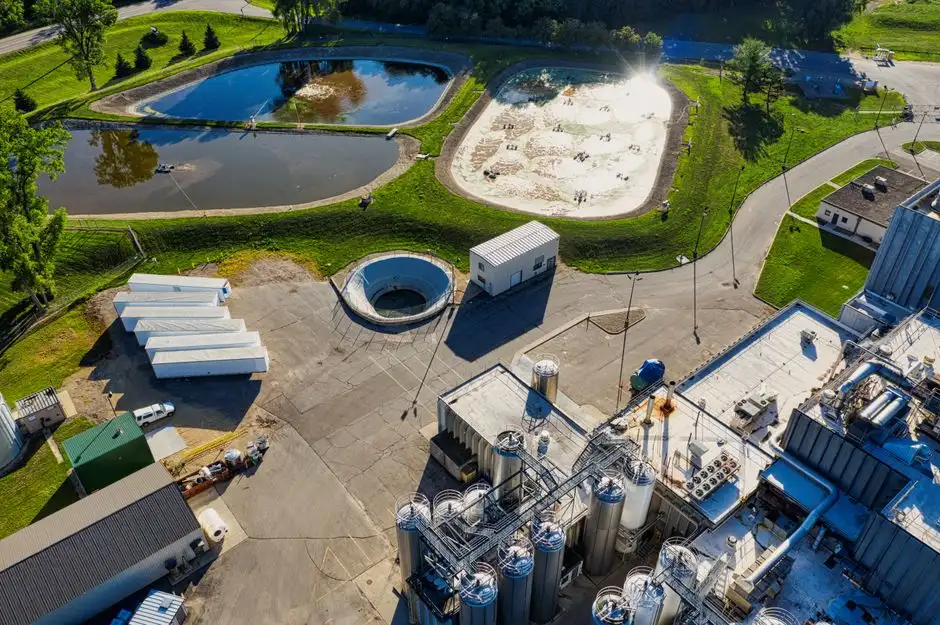
Taipei project engineers often choose between a containerized MBR and an underground integrated A/O package plant, such as the WSZ series, to meet hydraulic and effluent requirements. The two options are distinct: the MBR is an above-grade, plug-and-play skid commissioned in days, while the WSZ is buried to reclaim surface space for landscaping or parking but requires excavation, dewatering, and a longer site programme. Effluent quality also differs, as an MBR delivers near-reuse-quality filtrate at sub-micron pore size, whereas an underground A/O unit relies on a clarifier and typically meets conventional discharge consents. Pick a containerized MBR for fast deployment or temporary camps, and select the underground A/O for permanent residential estates where landscaping above the plant is a project requirement (compare against the WSZ underground A/O package plant).
| Criterion | Containerized MBR (20'/40' HC) | WSZ underground A/O |
|---|---|---|
| Deployment speed | Days; plug-and-play (MENA-Water S1) | Weeks; excavation and dewatering required |
| Footprint | Above-grade ISO skid, compact envelope | Buried; surface freed for landscaping |
| Effluent quality | Near-reuse; 0.04 µm HF UF (Pure Aqua S4) | Conventional A/O with clarifier |
| Membrane flux / biology | Submerged UF; anoxic zone for denitrification | A/O with settled sludge handling |
| Maintenance boundary | Single ISO skid, easy to swap out | Fixed buried structure |
| Best fit | Fast deployment, camps, phased capacity | Permanent estates with landscaping above |
Supplier-briefing checklist before you order
Compile a one-page input pack before contacting any vendor: occupancy profile with day/night split, average and peak daily flow, influent BOD/COD/SS, and target effluent quality. Ask the supplier to confirm three numbers in writing: the peak factor applied, the MBR unit count, and the ISO container format. Confirm utility requirements: 460V/3Ph/60Hz supply, footprint including clearance, and an operating temperature envelope of 20–30°C (Pure Aqua S4). Add a delivery and commissioning line item that covers factory plug-and-play testing, transport to Taipei, and on-site hydraulic and electrical hookup. This workflow matches the procedures used in the 2026 sizing guide for a containerized MBR STP in Colombo and the 2026 sizing guide for a containerized MBR STP in Madrid, which allow you to sanity-check your Taipei numbers against subtropical and Mediterranean references.
Frequently Asked Questions
What size containerized MBR STP do I need for a 200-person camp in Taipei?
A 200-bed camp fits within the 10–2,000 m³/day capacity of the HydropureWater integrated MBR system, and a single 40' HC ISO container covers up to 1,200 m³/day (MENA-Water S1), so one unit is normally sufficient. Confirm the duty in writing with the supplier using the Pure Aqua 50 gpd per capita baseline as a starting reference (Pure Aqua S4).
What peak factor should I apply to a Taipei residential or camp duty?
The peak factor must come from the MBR supplier's process guarantee and be cross-checked against local building and plumbing codes. The engineer should confirm in writing that it is layered on top of the average daily flow rather than embedded inside the per-capita number. Qualitative drivers include high-rise riser synchronization, mess-hall shift changes, and typhoon-driven inflow and infiltration.
How many containers and what lead time should I budget for?
Use the table in Step 3: up to 50 m³/day maps to one 20' HC, 50–200 m³/day to one 40' HC, 200–500 m³/day to one 40' HC plus a buffer, and above 1,200 m³/day to multiple 40' HC units in parallel. Request a written delivery date from the supplier covering factory plug-and-play testing, transport to Taipei, and on-site hookup.
What effluent quality can I expect, and does it meet Taipei discharge limits?
Pure Aqua's submerged HF UF modules deliver filtrate at a nominal 0.04 µm pore size, which retains bacterial flocs, suspended solids, and viruses (Pure Aqua S4). Buyers must request the project's specific discharge or reuse consent from Taipei City and the EPA, and confirm that the selected MBR configuration meets it with any required pre- or post-treatment.
Should I choose a containerized MBR or an underground package plant for the same duty?
Choose a containerized MBR for fast deployment, phased capacity, or temporary camps, and choose the underground A/O for permanent residential estates where landscaping above the plant is required. The two options differ on footprint, effluent quality, and maintenance requirements, so the decision should be based on programme length and reuse requirements.
Related Equipment
- HydropureWater integrated MBR system — specifications, capacity range, and technical data