Why Sizing Starts with Flow, Not Container Count
The number of ISO containers in a packaged MBR proposal is a consequence of the design flow, not a starting point. Defensible sizing for a Zurich residential block, staff camp, or small developer-led development is built from three numbers: per-capita wastewater flow in litres per person per day, the design population (peak camp occupancy or registered residents), and a peak factor that captures how concentrated that flow is in time. Plug-and-play containerized MBR systems are selected to match that hydraulic envelope.
Packaged-MBR suppliers use a per-capita anchor of 50 gpd per capita, equivalent to roughly 190 L per person per day, when they populate their sizing tables (Pure Aqua, MBR-C product description, 2025). Multiplying that anchor by the number of residents or peak occupants, then by a peak factor, gives the design flow that drives tank volume, membrane area, and blower sizing. For the typical Zurich residential or camp envelope of roughly 10–500 m³/day, integrated MBR systems such as the integrated MBR membrane bioreactor system cover the published 10–2,000 m³/day range without custom engineering.
Containerized MBR combines activated-sludge biology with submerged membrane filtration in a single factory-built unit, producing near-reuse-quality effluent and roughly 60% smaller footprint than a conventional activated-sludge package followed by clarification (HydropureWater MBR product description). The following sections detail how to verify your project requirements against these standardized units.
Swiss Per-Capita Loading Assumptions for Zurich Projects
Converting a headcount into a defensible m³/day figure determines the viability of a packaged-MBR tender. The international anchor used by packaged-plant suppliers is 50 gpd per capita, or about 190 L per person per day (Pure Aqua MBR-C sizing table, 2025). For permanent Swiss residential occupancy, a per-capita flow of 150–200 L per person per day is the realistic planning range, with the exact value confirmed against local water-meter data for existing comparable developments in the same canton.
For staff accommodation, holiday camps, and asylum or refugee camps, transient peaks dominate sizing. A peak factor of about 1.5–2.5 over the average daily flow is typically applied when showers, meals, and toilets all peak inside a short window such as the morning changeover. Document the assumed pollutant loadings — BOD, COD, TSS, NH4-N — alongside the hydraulic figure, because containerized MBR units from packaged-plant suppliers such as SIGMADAF and Pure Aqua are quoted for municipal-strength sewage, not for high-strength industrial waste (SIGMADAF, Containerized MBR product video, 2025-01-27).
Final numbers — both hydraulic and pollutant — must be confirmed with the responsible Zurich canton and the local wastewater authority. This article provides an engineering framework; cantonal sign-off in Zurich typically references AWEL practice and the federal Gewässerschutzgesetz framework.
Translating Design Flow into a Container Envelope
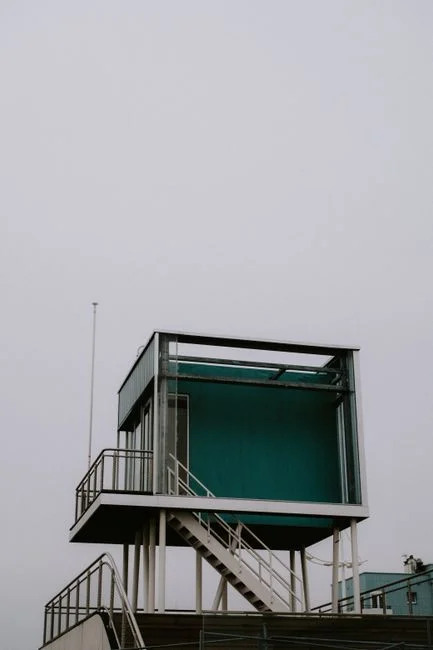
Mapping the fixed design flow in m³/day onto a 20' or 40' high-cube ISO container envelope follows the calculation of the hydraulic load. Standard packaged-MBR plants are factory-built into 20' or 40' high-cube ISO containers with insulated walls, seaworthy structure, and zero water leakage (Pure Aqua MBR-C product description, 2025). For larger plants, MENA-Water states that more than 1,200 m³/day can be filtered in a single 40-foot ISO container, with the inside tanks in stainless steel and a Plug & Play factory test before shipment (MENA-Water, MBR package plant page).
For the typical Zurich residential or camp envelope of 10–500 m³/day, a single 20' HC unit often suffices at the low end and a single 40' HC unit covers the upper end. Below roughly 10 m³/day, an underground packaged plant such as a WSZ underground integrated sewage treatment plant is usually more cost-effective than a containerized MBR. The container must include pre-treatment (a drum screen with 1.5 mm perforation per Pure Aqua), an aeration tank with fine-bubble diffusers, submerged membrane modules, a built-in cleaning and air-scour system, and PLC control (Pure Aqua MBR-C product description, 2025).
Site layout must reserve footprint for vehicle access, ISO corner-casting lifting, and a buffer/equalization tank to absorb transient hydraulic peaks. The buffer tank is not part of the membrane area but it dominates the plot required for the plant. For flows above the single-container envelope, multiple containers or larger skid modules are deployed in parallel.
| Container envelope | Typical design flow envelope | Indicative use case in Zurich | Membrane modules | Pre-treatment |
|---|---|---|---|---|
| 20' high-cube ISO | Lower end of small residential / camp range | Staff accommodation, small residential clusters | Submerged HF UF, 0.04 µm nominal | Drum screen, 1.5 mm perforation |
| 40' high-cube ISO | Up to and beyond 1,200 m³/day (MENA-Water) | Larger residential or mixed-use developments | Submerged UF or flat-sheet, sized in parallel | Drum screen, 1.5 mm perforation |
| Underground packaged plant (WSZ) | Below the containerized MBR envelope | Very small flows where footprint is constrained | Not applicable — packaged biological only | Internal |
Matching the Membrane Spec to Camp and Residential Duty
The two membrane formats that appear in packaged containerized MBRs are submerged hollow-fiber (HF) ultrafiltration and flat-sheet modules. The Pure Aqua MBR-C uses submerged HF UF with a nominal pore size of 0.04 µm, giving complete retention of bacterial flocs, suspended solids, small colloids, and viruses per the MBR-C product description (Pure Aqua, 2025). Flat-sheet modules such as the HydropureWater DF series flat-sheet MBR modules use 0.1 µm PVDF with integrated aeration boxes for continuous scouring; the modules are available in 80–225 m² pack sizes, with 10–20× lower energy consumption than external cross-flow systems per the DF product description.
Specify the maximum transmembrane pressure (TMP), the expected chemical-cleaning interval, and a built-in membrane cleaning and air-scour system before signing a PO. Pure Aqua notes that its UF membranes do not need regular chemical cleaning "except one or two maintenance clearings per year" (Pure Aqua MBR-C, 2025). For Zurich seasonal conditions, confirm the operating temperature window: the Pure Aqua MBR-C is quoted for 20–30 °C operation with a 20 °C design point. Cold winter influent can suppress biomass kinetics, so the spec must include either insulated/enclosed tanks, biomass heating, or an explicit design allowance for lower-temperature operation.
| Parameter | Submerged HF UF (Pure Aqua MBR-C) | Flat-sheet PVDF (HydropureWater DF) |
|---|---|---|
| Nominal pore size | 0.04 µm | 0.1 µm |
| Membrane material | PVDF (TIPS) | PVDF |
| Module pack sizes | Configured to container | 80–225 m² per pack |
| Air-scour | Coarse-bubble diffusers in membrane tank | Integrated aeration box for continuous scouring |
| Expected chemical cleans | One or two maintenance cleans per year | Similar low cleaning frequency; confirm with supplier |
| Design temperature | 20 °C (range 20–30 °C) | Confirm with supplier for Zurich winter operation |
Buyer-Spec Checklist Before You Sign a PO
Turning the sizing exercise into a defensible purchase specification protects the project at the procurement stage. Confirm the flow envelope — average and peak m³/day — and the influent loadings against the figures developed in the per-capita step, and state whether the plant is a U-Version (underground buffer tanks) or a fully integrated I-Version suitable for mobile applications; both formats are documented by MENA-Water and are relevant for site constraints. List the required ancillaries: drum screen pre-treatment, fine-bubble aeration, submerged membrane modules, membrane cleaning and air-scour, PLC control, remote monitoring, standby pumps, and an optional anoxic zone for denitrification (Pure Aqua MBR-C options, 2025).
State the utility requirements explicitly. Pure Aqua ships the MBR-C at 460 V / 3 Ph / 60 Hz; for a Swiss site this is a critical interface point and the supplier must confirm 400 V / 3 Ph / 50 Hz compatibility or include a transformer in the scope. Add potable water for membrane cleaning and a clear sludge-handling interface to the spec. For pre-treatment screening, a rotary mechanical bar screen is the usual upstream stage for larger or higher-load sites.
Request the documentation that lets you compare suppliers on equal terms: factory test certificate, membrane warranty terms, expected chemical-cleaning frequency, a full spare-parts list, and a reference list of similar residential or camp installations in central Europe. The reference list is the single best predictor of how the unit will behave in a Zurich winter.
| Checklist item | What to confirm | Why it matters for Zurich |
|---|---|---|
| Flow envelope (avg / peak) | Match to per-capita × population × peak factor | Drives container count and buffer-tank size |
| Electrical supply | 400 V / 3 Ph / 50 Hz compatibility or transformer scope | Pure Aqua MBR-C ships at 460 V / 3 Ph / 60 Hz |
| Membrane format | HF UF vs flat-sheet PVDF, TMP, clean interval | Drives OPEX and winter performance |
| Temperature window | Confirm 20 °C design vs Zurich winter | Needs heating or insulation below 20 °C |
| Ancillaries | Drum screen, fine-bubble aeration, PLC, remote monitoring | Defines Plug & Play boundary at site |
| Documentation | Factory test cert, warranty, spares, references | Equal-term supplier comparison |
For projects that fall outside this envelope, the sister sizing guide for residential MBR projects in Madrid addresses warmer-climate hydraulic assumptions, while the sister sizing guide for cold-climate camp projects in Astana is the closer reference for sub-zero operation. A broader view of capex, compliance, and supplier comparison is given in the package wastewater treatment plant cost and supplier checklist guide, which sets out the same checklist structure in a different regulatory environment.
Frequently Asked Questions
What is the realistic capital cost of a containerized MBR STP in Zurich?
There is no industry-standard, Zurich-specific packaged-MBR price. The buyer must request a quotation tied to the calculated design flow in m³/day, the influent loadings, the chosen container envelope (20' or 40' HC), the membrane format, and the electrical/temperature adaptations for a Swiss site. Any "starting from" figure a supplier publishes should be treated as indicative only and verified against the same scope as your spec sheet.
How long does delivery and installation take for a 20' or 40' HC containerized MBR?
Lead times
Frequently Asked Questions
How many people can a 20-foot containerized MBR STP serve in Zurich?
A standard 20-foot containerized Membrane Bioreactor (MBR) Sewage Treatment Plant (STP) is typically designed to serve a population equivalent (PE) of 50 to 150 people, depending on the specific hydraulic load and influent characteristics. Given the strict Swiss discharge standards, daily hydraulic capacity is generally rated between 10 and 30 cubic meters per day to ensure sufficient retention time for high-quality effluent.
What is the typical capital cost of a containerized MBR STP for a 100-person camp in Switzerland?
For a 100-person setup meeting Swiss environmental regulations, the capital expenditure (CAPEX) for a containerized MBR unit typically ranges from 80,000 CHF to 150,000 CHF. This price includes the pre-assembled container, membrane modules, integrated control systems, and chemical cleaning skids, but excludes site preparation, civil works, and Swiss-specific grid connection costs.
Which membrane type — hollow-fiber or flat-sheet — is better for a residential containerized MBR?
Hollow-fiber membranes are generally preferred for containerized residential MBR systems due to their superior packing density and higher surface-area-to-volume ratio, which allows for a compact footprint within a 20-foot container. While flat-sheet membranes are more resistant to fouling and easier to clean manually, hollow-fiber systems are more energy-efficient and offer automated back-pulsing capabilities essential for remote or unmanned operation in residential settings.
Do I need a cantonal discharge permit to install a containerized MBR STP in Zurich?
Yes, any wastewater treatment system in the Canton of Zurich requires a discharge permit issued by the Cantonal Office for Waste, Water, Energy and Air (AWEL). You must demonstrate compliance with the Swiss Water Protection Ordinance (GSchV), which mandates stringent effluent limits for nitrogen, phosphorus, and chemical oxygen demand (COD) before water can be discharged into surface waters or groundwater infiltration systems.
How long does it take to deliver and commission a packaged MBR STP from a Chinese or European supplier?
Delivery and commissioning timelines vary significantly based on supply chain logistics and customs clearance. A European supplier typically requires 12 to 20 weeks for manufacturing and delivery, while a Chinese supplier requires 16 to 24 weeks, factoring in maritime transit and the mandatory CE/Swiss-compliance certification process. On-site installation and commissioning by certified technicians generally add an additional 2 to 4 weeks to the project timeline.