
What an Effluent Treatment Plant in Luxor Has to Handle in 2026
Effluent treatment in Luxor is shaped by the governorate's geography and economic mix: a tourism economy built around the West Bank temple complexes, a textile cluster, sugar and food processing, and agricultural drainage demand along the Nile. A West Bank hotel with 200 rooms does not have the same waste profile as a dyeing unit discharging 800 m³/day of high-COD effluent, and neither profile matches a sugar campaign-period stream with a five-day BOD spike. Peer-reviewed research from Wageningen University and Research (Lei, 2022, ISBN 9789464473681) and the University of Twente (Schrader, doi 10.3990/1.9789036523325) has demonstrated that constructed wetlands and nanofiltration can polish WWTP effluent to standards suitable for agricultural or indirect potable reuse, moving Upper Egypt's effluent design from a "discharge-only" mindset to a "polish-for-reuse" one.
For a 2026 design, that means treating the plant as a reusable water asset, not a disposal endpoint. The decisions a Luxor engineer or EPC consultant must make are: target effluent quality, biological technology class, polishing step (DAF, multi-media, constructed wetlands, nanofiltration), and reuse pathway versus agricultural drain discharge. The remainder of this article works through those decisions against Egypt's Law 48/1982 framework, Decree 44/2000 and EEAA implementing rules, with sizing, technology comparison and a procurement checklist at the end.
Sizing and Load Estimation for a Luxor ETP
Sizing a Luxor effluent treatment plant requires four inputs: average and peak daily flow, peak factor, raw influent concentrations (BOD, COD, TSS, oil and grease, pH, temperature), and any sector-specific contaminant such as reactive dye, sucrose, blood or surfactant. For a hotel, the relevant unit is occupied bed × 0.25–0.30 m³/bed-day; for a textile dyeing line, it is fabric throughput in kg/day converted to a load via the dyebath liquor ratio. Peak factors in tourism sites routinely run 2–3× the average because breakfast, pool backwash and laundry cycles stack into a 3–4 hour morning window.
The regulatory anchor is Egyptian Law 48/1982 (the Law on the Protection of the River Nile and Water Channels from Pollution), Decree 44/2000 and the EEAA implementing rules, with the local Holding Company for Water and Wastewater (HCWW) or the relevant tourism authority setting the actual reuse limit. The exact numerical limits in force in 2026 should be confirmed against the latest EEAA/HCWW text, as Decree 44/2000 schedules and HCWW sewer-discharge criteria have been amended over time. Luxor-specific design adjustments are real: high ambient temperature accelerates biological kinetics but also membrane fouling and disinfection by-product formation; high evaporation effectively concentrates influent by reducing the hydraulic load while leaving the mass load unchanged; and the October-to-April peak tourism season drives a long hydraulic peak that the equalization tank must absorb without bleeding shock load into the biological stage.
| Parameter | Hotel / Resort (West Bank) | Textile mill (urban Luxor) | Sugar / Food (campaign) |
|---|---|---|---|
| Flow (m³/day) | Designer to fill | Designer to fill | Designer to fill |
| BOD (mg/L) | Designer to fill | Designer to fill | Designer to fill |
| COD (mg/L) | Designer to fill | Designer to fill | Designer to fill |
| TSS (mg/L) | Designer to fill | Designer to fill | Designer to fill |
| FOG (mg/L) | Designer to fill | Designer to fill | Designer to fill |
| Temperature (°C) | Designer to fill | Designer to fill | Designer to fill |
| Peak factor (×) | Designer to fill | Designer to fill | Designer to fill |
The numbers in this table must be filled from the operator's own flow survey and grab-sample data. Once filled, the values feed directly into the MBR or activated-sludge tankage calculation, and the peak factor sets the size of the equalization and screen chambers upstream.
Process Train: From Bar Screen to Disinfected Effluent
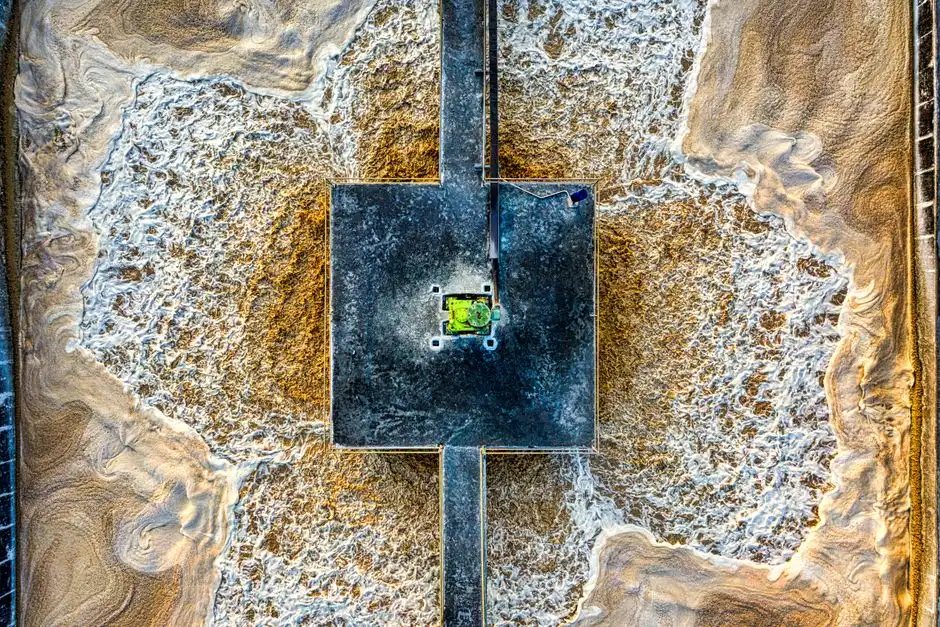
A defensible Luxor process train in 2026 consists of bar screening, flow equalization, biological treatment, tertiary polishing, disinfection, and sludge dewatering. At the front end, rotary mechanical bar screens such as the GX series mechanical bar screen handle solids protection for hotels, hospitals and municipal-style plants; manual coarse screens are only acceptable on the smallest packaged units where flow is below ~50 m³/day. Equalization tanks flatten the morning tourism peak and dilute shock loads from textile batch dyebaths; where site footprint is tight, a lamella clarifier is a compact primary stage that doubles as a buffer.
Biological treatment is the load-removing step. Conventional activated sludge (CAS) or sequencing batch reactor (SBR) is the lowest-cost baseline; moving-bed biofilm reactor (MBR/MBBR) is the right retrofit where the existing tank is fixed and the load has grown; and an integrated MBR membrane bioreactor system is the right choice when reuse is required or footprint is the binding constraint. The integrated MBR system in this range is typically deployed at 10–2,000 m³/day, with the DF series PVDF flat-sheet MBR modules designed as drop-in cassettes in the 32–135 m³/day-per-cassette band, allowing designers to scale capacity without redesigning the tank.
Tertiary polishing separates a discharge-quality plant from a reuse-quality plant. A dissolved-air flotation (DAF) machine is the standard polish for residual FOG and suspended solids after biological treatment, effective on hotel streams where cooking-oil loads ride through primary clarification. Multi-media filtration followed by activated carbon handles residual COD and colour, while constructed wetlands and nanofiltration provide the final reuse barrier. Disinfection is sized for the reuse case: an on-site chlorine dioxide generator in the 50 g/h to 20,000 g/h range provides a residual across a long hotel irrigation network, while a UV-C sterilizer provides chemical-free point-of-use safety where turbidity is already low. Sludge from these trains ends up at a plate and frame filter press for dewatering.
MBR vs DAF + Activated Sludge vs Constructed Wetlands: Which Fits a Luxor Site?
Technology choice in Luxor is a decision based on site-specific priorities. In a hot, footprint-constrained, reuse-oriented context, MBR wins on effluent quality and footprint, conventional AS plus DAF wins on CAPEX and operational simplicity, and constructed wetlands win on OPEX and tourism aesthetics when used as a polishing step. The BioMicrobics LIXOR® submerged aeration system is mature evidence that high-oxygen-transfer aeration is a workable option for pre- and post-treatment aeration in packaged plants. The Weilan 2026 manufacturer survey shows that each architecture is supplied by multiple global vendors, meaning a Luxor buyer is choosing a technology class rather than taking a single-source risk.
| Criterion | MBR | CAS / SBR + DAF | Constructed Wetlands (polish) |
|---|---|---|---|
| Effluent quality | High; reuse-ready | Discharge-ready with DAF | Polishing on already-treated effluent |
| Footprint | Small | Larger | Large but visually compatible |
| CAPEX | Higher | Lower | Low (civil works) |
| OPEX | Membrane replacement, aeration energy | Sludge handling, aeration | Low; seasonal vegetation work |
| Reuse suitability | Yes, including toilet flushing | Limited without further polish | Yes, as final barrier for irrigation |
| Climate resilience | Temperature-tolerant PVDF cassettes | Proven in hot climates | Evaporation must be balanced |
| Typical Luxor use case | Hotel/resort reuse, tight urban textile site | Textile mill, sugar campaign, food plant | Hotel landscape and agricultural drain polishing |
The optimal approach is often a combination: an MBR or CAS core for BOD/COD removal, a DAF or multi-media stage for solids and FOG, and constructed wetlands or nanofiltration as the final reuse barrier. For a small rural hotel, a packaged MBR plus a ClO₂ or UV step may be sufficient; for a textile mill, a CAS or MBBR core is more economic, with the polishing train addressing the colour and salt load.
Disinfection and Reuse: Closing the Loop on the Nile
Treated effluent requires disinfection sized for landscape irrigation and toilet flushing. A Luxor hotel benefits from an on-site chlorine dioxide generator to provide the residual that survives a long pipe run, while a UV-C sterilizer provides chemical-free point-of-use safety for short distribution loops. For a small Luxor clinic, a packaged medical wastewater system is the appropriate architecture: the medical wastewater treatment system in the ozone-based product family meets EU 91/271/EEC hygiene benchmarks within a small footprint.
For agricultural reuse and indirect potable considerations, research findings carry weight. Lei's Wageningen 2022 PhD thesis confirmed that constructed wetlands can remove micropollutants from WWTP effluent, while Schrader's University of Twente thesis confirmed that direct nanofiltration of WWTP effluent can deliver quality suitable for agricultural or indirect potable use. Reuse remains a regulatory decision: the same MBR effluent may be technically reusable but blocked by HCWW or the tourism authority unless the approvals are in place, so procurement must run the regulatory route in parallel with the engineering route.
2026 Compliance and Supplier-Selection Checklist for a Luxor ETP
Compliance in 2026 is anchored on Law 48/1982, Decree 44/2000, the EEAA implementing rules and HCWW standards; current numerical limits must be obtained directly from the issuing authority. Documentation that a Luxor engineer should require from a vendor includes pilot data, design basis, P&IDs, GA drawings, and a 12-month O&M cost estimate broken down by energy, chemicals, membrane replacement, sludge handling and labour. The Weilan 2026 manufacturer survey provides a shortlist of credible technology suppliers across the MBR, MBBR, DAF, packaged and ZLD categories.
Supplier screening for Egypt in 2026 should confirm in-country engineering and commissioning presence, availability of membrane spares (the DF series flat-sheet MBR modules and RO/UF membrane filter elements are designed as drop-in replacements), and reference plants in Egypt or comparable hot-climate sites. Risk items specific to 2026 include power instability, membrane fouling from hot influent, and the sludge disposal route under tightening agricultural reuse rules. The checklist below is essential for vendor vetting:
- Design basis signed: flow, loads, peak factor, temperatures, reuse target.
- Numerical discharge and reuse limits in writing from EEAA/HCWW for 2026.
- Pilot or reference data covering the same influent class (hotel, textile, sugar/food).
- P&ID, GA, single-line diagram and instrument list received.
- 12-month OPEX estimate with energy, chemicals, membranes, sludge and labour.
- Membrane spares availability in Egypt or short-sea lead time.
- Egypt-based commissioning engineer named in the proposal.
- Sludge disposal route confirmed with the receiving site or landfill.
Frequently Asked Questions
What is the realistic budget for an effluent treatment plant in Luxor in 2026?
Buyers should request a per-m³ installed CAPEX figure from each vendor based on their own flow and load, broken down by tank
Frequently Asked Questions
How much does an effluent treatment plant in Luxor cost in 2026 for a hotel or small textile mill?
For a hotel with a capacity of 200 to 500 cubic meters per day, capital expenditure for a Membrane Bioreactor (MBR) system typically ranges from $150,000 to $350,000 USD, depending on automation levels and construction materials. Small textile mills requiring advanced chemical dosing and color removal stages generally face higher costs, ranging from $250,000 to $500,000 USD, due to the complexity of treating high-load industrial wastewater.
Which ETP technology is best for a Luxor hotel that wants to reuse water for landscape irrigation?
Membrane Bioreactor (MBR) technology is the industry standard for hospitality applications in Egypt aiming for water reuse. By combining biological treatment with microfiltration or ultrafiltration membranes, MBR systems consistently produce high-quality effluent with turbidity levels below 1 NTU and negligible fecal coliform counts, making the treated water safe for subsurface landscape irrigation in compliance with local environmental guidelines.
What capacity MBR do I need for a 200-room hotel in Luxor?
Assuming an average water consumption rate of 250 to 300 liters per guest per day, a 200-room hotel operating at full occupancy requires an ETP with a hydraulic capacity of approximately 100 to 150 cubic meters per day (m³/day). It is recommended to size the plant for a peak flow of 180 m³/day to account for seasonal tourism surges and laundry operations.
Does an Egyptian ETP need to meet Law 48/1982 and what are the typical discharge limits?
Yes, all ETPs in Egypt discharging into the Nile or its branches must comply with Law 48/1982 and its executive regulations. Typical discharge limits for irrigation reuse or surface water discharge include a Biological Oxygen Demand (BOD) of less than 40-60 mg/L, Chemical Oxygen Demand (COD) below 80-100 mg/L, and Total Suspended Solids (TSS) not exceeding 30-50 mg/L, depending on the specific location and receiving water body classification.
How do I choose a reliable effluent treatment plant supplier in Egypt for 2026?
A reliable supplier must hold valid registration with the Egyptian Environmental Affairs Agency (EEAA) and provide a proven track record of installations within the Luxor or Upper Egypt region. Prioritize vendors who offer comprehensive service level agreements (SLAs), local spare parts availability for critical components like membranes and sensors, and the capability to perform on-site pilot testing to verify influent characterization before final system design.