
What an Effluent Treatment Plant in Alexandria Actually Does
An effluent treatment plant (ETP) is the wastewater treatment system operating inside an industrial facility boundary, treating process effluent to a discharge or reuse standard before water leaves the site. As of 2026, the Alexandria supplier market offers four configuration archetypes: zero discharge systems, prefabricated or packaged ETPs, single-site industrial ETPs, and common effluent treatment plants (CETPs) that serve clustered factories (S3, www.boilercoolingtowerchemicals.com, 2026). The standard performance targets the buyer is specifying against are BOD, COD, total suspended solids (TSS), color, and heavy metals, with the same chemical program also conditioning sludge for dewatering (S3).
An ETP differs from a municipal sewage treatment plant in one key way: industrial flows swing with production shifts. A dyeing line that discharges a hot, high-pH batch in the morning and a cool, low-pH rinse in the afternoon will punish a biological stage that expects steady feed. That variability is why every Alexandria ETP spec includes equalization, chemical dosing, and control loops sized for shock loads, not just for daily average flow.
Choosing the Right ETP Configuration for Your Alexandria Facility
The Alexandria market explicitly supplies four configuration archetypes, and the buyer's first decision is which one matches site flow, discharge target, and reuse intent (S3, www.boilercoolingtowerchemicals.com, 2026). A prefabricated or packaged ETP is sized to wastewater quantity and quality and is the right answer for smaller flows, modular deployment, and faster installation. A single-site industrial ETP is custom-engineered for larger or more variable flows, with the same standard chemical regimen of coagulants, flocculants, decolorizers, and pH regulators (S3). A CETP is shared infrastructure for industrial clusters, capital-efficient where multiple factories in an organized zone discharge similar effluent. A zero discharge system eliminates liquid effluent by recycling all water inside the plant boundary and is the shortlist pick when discharge permits are constrained or water reuse is a hard requirement (S3).
The matrix below maps the four archetypes against the buyer's three decision variables: flow envelope, discharge target, and reuse intent.
| Configuration | Typical flow envelope | Discharge target | Reuse intent | Best fit when |
|---|---|---|---|---|
| Prefabricated / packaged ETP | Small to medium (package-sized) | Municipal sewer or surface water | Optional, not primary driver | Modular deployment, fast installation, smaller sites |
| Industrial ETP (single-site) | Medium to large, variable | Municipal sewer, surface water, irrigation | Often included as polishing step | Single owner, custom flow, dedicated operations team |
| Common ETP (CETP) | Aggregated cluster flow | Single shared outfall per zone | Possible, depends on cluster agreement | Industrial zone with multiple similar factories |
| Zero Liquid Discharge (ZLD) | Any size, water-scarce or permit-constrained | No liquid discharge | Full recycle inside the plant boundary | Discharge permit constrained, reuse is mandatory |
Inside the Process Train: From Bar Screen to Polished Effluent
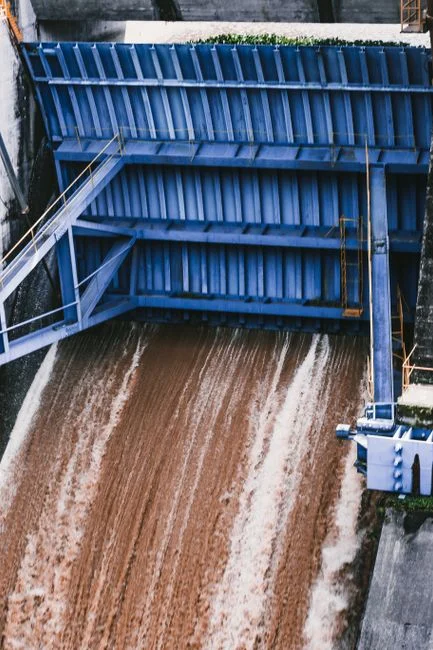
Every Alexandria ETP, regardless of configuration, is a sequence of physical and biological stages. The headworks starts with screening — rags, plastics, and large solids are removed before they can damage downstream pumps or clog membranes. A mechanical bar screen selection guide walks the sizing logic for this first guard. Equalization follows, buffering hydraulic and load swings so the downstream chemistry and biology see a stable feed. The physico-chemical stage — coagulation, flocculation, and a DAF system for physico-chemical ETP stages or clarifier — is where the standard Alexandria chemical package does most of the work: coagulants and flocculants aggregate colloids and suspended solids, decolorizing agents strip dye and color, and pH regulators keep the next stage in its operating window (S3).
Biological treatment uses microbial communities to break down dissolved organics. In textile-dyeing ETPs, protozoa accelerate dye degradation by stimulating the growth of acting bacteria, and they clarify secondary effluent by engulfing excess bacteria (S2, Bangladesh Journal of Microbiology). A compact MBR biological stage for higher effluent quality integrates this biology with membrane separation, lifting effluent quality and shrinking footprint. Polishing is the published route to reuse-grade water: nanofiltration has been formally studied for polishing WWTP effluent to EU Water Framework Directive quality for agricultural or potable reuse (S1, University of Twente PhD thesis, Schrader, DOI 10.3990/1.9789036523325). Where land allows and a low-energy tertiary step is preferred, constructed wetlands have been studied for removing micropollutants from WWTP effluent (Lei, Wageningen University, 2022; DOI 10.18174/575408). Disinfection — typically UV via a UV sterilizer for the final disinfection step or chlorination — finishes the train. The loop closes at sludge handling, where a filter press for ETP sludge dewatering drops the moisture content of the cake that the chemical program has already conditioned (S3).
Sizing the ETP: What You Must Give the Supplier
Accurate capacity and capex numbers come from the inputs the buyer hands the supplier, not from a catalogue line. The non-negotiable input is daily and peak hourly flow (m³/day and m³/h); the package plant or custom train is sized to this envelope (S3, www.boilercoolingtowerchemicals.com, 2026). The second input is the influent profile — BOD, COD, TSS, pH, temperature, color, oil and grease, and any industry-specific parameter (dyes for textile, heavy metals for metal finishing, FOG for food). The third input is the discharge destination: municipal sewer, surface water, irrigation, or full ZLD recycle, which is the single decision that drives whether a polishing or zero-liquid-discharge stage is required (S3). Variability profile (batch versus continuous, seasonal swings, planned 5–10 year expansion) and site constraints (footprint, headroom, power reliability, operator skill) round out the spec and push the design toward packaged, containerized, or buried configurations such as a underground packaged plant for footprint-constrained sites.
Providing these inputs is the difference between a proposal that quotes a real number and one that quotes a placeholder. Suppliers cannot size a DAF, an MBR, or a chemical dosing skid without them.
The Chemical Package That Makes the ETP Perform
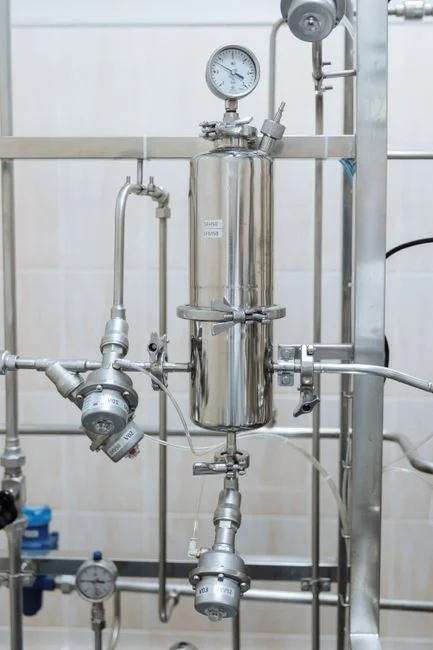
Chemistry is not an open line item in the contract; the supplier scope typically defines it. Coagulants destabilize colloidal particles so they can aggregate, and flocculants bridge those aggregates into settleable or floatable flocs — together they are the workhorse of the physico-chemical stage (S3, www.boilercoolingtowerchemicals.com, 2026). Decolorizing agents are explicitly part of the Alexandria product range and are critical for textile, dyeing, and certain food-industry discharges (S3). pH regulators keep the biological stage in its operating window; without correct pH, BOD and COD removal collapses. The supplier scope also typically covers RO membrane cleaning chemicals, which are needed when the polishing membrane is in continuous service (S3). Delivery format matters: an automatic chemical dosing skid for the ETP is the standard because manual dosing cannot hold tight effluent limits, and PLC-controlled skids are how Alexandria suppliers typically ship the chemistry package.
Matching ETP Type to Alexandria's Industrial Mix
Alexandria's industrial mix — textile and dyeing, food and beverage, metal finishing, and petrochemical — each pulls the ETP spec in a different direction. The table below ties the four configuration archetypes to the dominant industries in the buyer's region, with the stage that carries the load.
| Industry | Key influent load | Stage that carries the load | Shortlisted configuration(s) |
|---|---|---|---|
| Textile and dyeing | High COD, color, variable pH | Physico-chemical (DAF + decolorizer) plus biological with protozoa-aided dye degradation (S2) | Industrial ETP or CETP for clustered wet-processing factories |
| Food and beverage | High BOD/COD, FOG, TSS | DAF-led physico-chemical stage (S3) | Prefabricated or industrial ETP |
| Metal finishing and electroplating | Heavy metals, pH swings | Coagulation, flocculation, pH regulation (S3) | Industrial ETP |
| Petrochemical and refinery | Oil and grease, dissolved organics | Oil/water separation at headworks, followed by biological and possibly ZLD polishing (S3) | Industrial ETP or ZLD if discharge is constrained |
Frequently Asked Questions
What capex range should an Alexandria buyer expect for an industrial ETP?
The supplied research does not provide a capex range for an Alexandria ETP. Capex depends on flow, influent load, discharge target, and the polishing or ZLD stage required, so a buyer should request a site-specific proposal that itemizes equipment, civil works, the chemical dosing skid, and instrumentation against the inputs listed in the sizing section.
How is a packaged ETP different from a common ETP, and which fits a multi-tenant industrial zone?
A packaged ETP is a single-owner, modular unit sized to one site's wastewater quantity and quality; a CETP is shared infrastructure serving multiple factories in an industrial cluster (S3, www.boilercoolingtowerchemicals.com, 2026). For a multi-tenant zone with similar effluent types, a CETP is typically more capital-efficient than each tenant building its own packaged unit, but it requires a cluster agreement on flow, influent limits, and operating cost allocation — a buyer should confirm those governance terms before sizing the shared plant.
What discharge limits apply to ETPs in Alexandria?
The supplied research does not state Alexandria's numerical discharge limits. A buyer should request the current local discharge standard from the supplier or the relevant environmental authority, and confirm which parameters (BOD, COD, TSS, heavy metals, color, pH) are enforced for the specific industrial category before locking the polishing or ZLD decision.
How long does delivery and installation take for an Alexandria ETP?
The supplied research does not provide an Alexandria-specific lead time. Lead time depends on whether the configuration is a prefabricated unit or a custom-engineered industrial ETP, on equipment sourcing, and on civil works scope. A buyer should request a project schedule from the shortlisted supplier that includes engineering, equipment fabrication, shipping, installation, commissioning, and trial-run duration, tied to the same flow and influent inputs used for sizing.
Related Equipment
- RO polishing for reuse-grade discharge targets — specifications, capacity range, and technical data
