Start With the People, Not the Container
The most common undersizing error on Saudi residential and labor-camp MBR projects is to start from a container footprint or a tank volume and work backward to a population. The defensible direction is the opposite: count the people first, derive the flow, then select the container. Build the headcount from primary occupancy data — villas at 6–8 persons, apartments at 4–5 persons, labor-camp beds at 1 person — and never from plot area, plot ratio, or existing septic-tank volume. A 50 m³ septic tank does not justify a 50 m³/day treatment plant; it justifies an investigation into who is actually discharging into it.
Once the population is fixed, apply a per-capita flow allowance. Pure Aqua's published sizing table uses 50 gpd per capita as a worked example for its MBR-C, which converts to roughly 0.19 m³/person/day and is a defensible basis for a Jeddah residential or camp design. The next step is to separate foul flow from infiltration and inflow (I&I). High groundwater tables along the Red Sea coast and aged villa networks can add 20–30% to base sanitary flow, and that incremental load must be added to the design average before any peaking factor is applied. Finally, document the occupancy schedule: a labor camp at full muster, a shift camp with rotating beds, and a weekend villa compound produce very different diurnal curves, and the design basis should state which scenario governs.
Convert Occupancy Into Average and Peak Hydraulic Load
With the population and per-capita flow locked, the hydraulic sizing is arithmetic. Average daily flow (ADF) is population × per-capita flow, reported in m³/day so it lines up with manufacturer capacity tables. Peak factor is then applied on top of ADF to define the peak hourly flow (PHF) the feed pump, equalization tank, and membrane train must handle simultaneously. Use 2.0–2.5 for villas and compounds where fixture use is spread across families, and 2.5–3.0 for labor camps and worker accommodations where shower blocks, mess halls, and shift changes concentrate demand. The chosen factor and its justification belong in the design basis; an auditor will reject an unspecified peak factor as untraceable.
If the camp reuses MBR effluent for landscape irrigation or cooling-tower makeup, carry a small residual for RO reject or cooling-tower blowdown into the hydraulic load, because that stream returns to the treatment plant or augments the equalization tank. Pure Aqua's MBR-C explicitly supports additional pre- and post-treatment processes for reuse, so the front-end hydraulic design should already assume that the downstream reuse train is in scope. The table below summarizes the hydraulic parameters a Jeddah engineer will quote in a design basis memorandum.
| Parameter | Formula | Residential / compound | Labor camp / worker accommodation |
|---|---|---|---|
| Per-capita flow basis | — | ≈0.19 m³/person/day (50 gpd per capita, Pure Aqua MBR-C) | ≈0.19 m³/person/day (50 gpd per capita, Pure Aqua MBR-C) |
| I&I allowance | added to ADF before peaking | 20–30% in Jeddah coastal sites | 20–30% in Jeddah coastal sites |
| Peak factor (PF) | PHF = ADF × PF | 2.0–2.5 | 2.5–3.0 |
| Equalization | ≥ peak daily volume | Buffer 6–8 h of PHF | Buffer 4–6 h of PHF |
| Reuse recycle | RO reject / CT blowdown | Add as documented stream | Add as documented stream |
Once PHF is known, the feed pump duty and the membrane tank turnover can be checked against the HydropureWater integrated MBR membrane bioreactor envelope before moving to organic load.
Check the Organic Load Against MBR Capacity
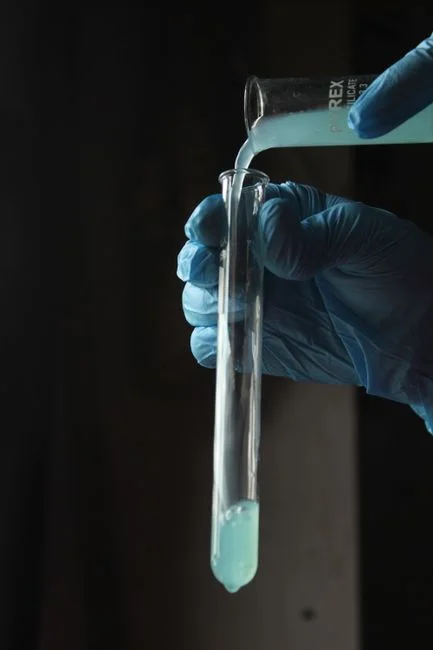
Hydraulic sizing alone is not enough; the membrane and aeration tank must also accept the actual organic and nitrogen load. Domestic sewage in Saudi residential and camp projects typically arrives at 250–400 mg/L BOD and 40–60 mg/L TKN. Multiplying those concentrations by the ADF gives a kg/day load that the biological reactor must process. If the camp runs a kitchen, laundry, or mess hall, those side streams push BOD higher and must be included in the load calculation, not averaged away.
MBRs tolerate a higher mixed liquor suspended solids (MLSS) concentration than conventional activated sludge because the ultrafiltration membranes retain biomass that a clarifier would lose. MENA-Water and HUBER both list higher biomass concentration as a defining MBR advantage, and MENA-Water notes that the secondary clarifier is replaced by membrane filtration, which also reduces footprint. That said, the MBR still needs an anoxic zone for denitrification if the design basis calls for NO3 removal — Pure Aqua's MBR-C lists an anoxic zone in its standard scope to achieve NO3 removal, and the designer should confirm that the offered container includes it rather than treating it as an option.
Upstream protection matters as much as the biology. Pure Aqua's MBR-C pre-treatment is a drum screen with 1.5 mm perforation; that is the minimum acceptable for a Jeddah camp where wipes, lint, and food waste will reach the plant. For camps with kitchens, a DAF unit ahead of the equalization tank is the standard answer for oil and grease control, because grease recovered upstream does not foul membranes downstream.
Apply Jeddah Climate and Saudi Reuse Conditions
A European-spec MBR sized on paper can drift outside its operating envelope the first August it is commissioned in Jeddah. Pure Aqua specifies a design temperature of 20°C and an operating range of 20–30°C for the MBR-C. Summer ambient in Jeddah regularly exceeds 35°C, and a black-coated ISO container in direct sun runs hotter still. The mitigation is shading, insulation, or flow equalization that limits the diurnal swing reaching the biology; whichever is chosen, it should appear in the RFQ, not as an afterthought on site. The insulated container walls Pure Aqua lists in the MBR-C scope help, but they are not a substitute for site-level shading on an exposed Jeddah compound.
Electrical supply is the second Saudi-specific gotcha. Pure Aqua's standard electrical supply is 460V/3Ph/60Hz; Saudi camp projects are typically 380–400V/3Ph/50Hz. Confirm at the RFQ stage whether a transformer or VFD scope is included, and who supplies it, because the answer changes both price and lead time. On the reuse side, MENA-Water notes that MBR effluent is suitable for irrigation use, which aligns with the Saudi reuse targets that prioritize landscape irrigation around residential and labor-camp compounds. Container corrosion is real within a few kilometers of the Red Sea coast; MENA-Water builds its internal tanks in stainless steel, and the same or a documented coating system should be specified for any containerized MBR destined for a coastal Jeddah site.
Match the Sized Flow to a 20' or 40' ISO Container
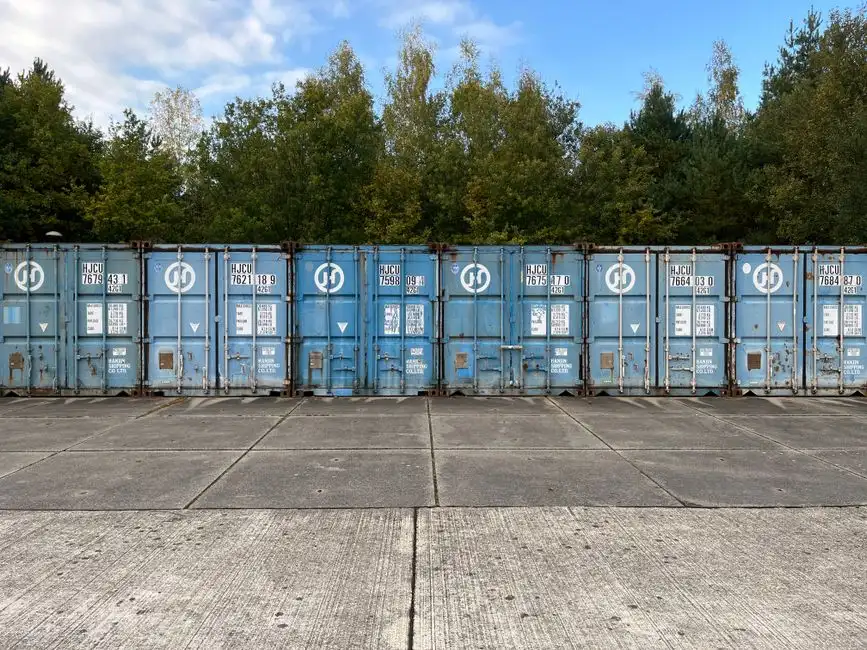
With ADF, PHF, and organic load locked, the container selection is a lookup against the manufacturer's capacity table. Pure Aqua builds the MBR-C in 40' and 20' high-cube containers depending on capacity, and MENA-Water standardizes its MBR package plants as ISO containerized systems with stainless internal tanks. The upper bound from MENA-Water is explicit: more than 1,200 m³/day can be filtered in one 40-foot ISO container. Anything above that should be specified as multiple parallel containers, not a single oversized unit, because parallel trains give redundancy during membrane cleaning and during a single-train failure.
A quick cross-check is to take the design ADF, divide by the per-capita basis of 50 gpd (≈0.19 m³/person/day) used in Pure Aqua's table, and confirm that the resulting population column is the one the manufacturer has actually tested. If the design population sits between two standard container ratings, the engineering choice is usually to round up to the next container size rather than to oversize the internals of the smaller one. For mobile or relocatable camps — construction workforce housing, exploration camps, seasonal developments — MENA-Water's I-Version fully integrated layout is designed for applications where the plant has to be shifted to a new location, and that should be specified at quotation stage because the structural and lifting points differ from a static unit. The table below frames the 20' HC versus 40' HC decision for typical Jeddah projects.
| Project profile | Indicative ADF | Container choice | Notes |
|---|---|---|---|
| Small villa compound (≤250 persons) | Up to ~50 m³/day | 20' HC | Single train; verify membrane area in FAT docs. |
| Mid-size residential compound (250–800 persons) | ~50–150 m³/day | 20' HC or 40' HC | Select on organic load, not just flow. |
| Large compound or labor camp (800–2,500 persons) | ~150–500 m³/day | 40' HC | Single 40' HC covers the bulk of this range. |
| Very large camp (>2,500 persons) | >500 m³/day | Multiple 40' HC in parallel | MENA-Water cites >1,200 m³/day in a single 40' ISO container as the practical upper bound. |
| Mobile / relocatable camp | Project-specific | I-Version fully integrated | Specify lifting points and road-transport envelope at RFQ. |
For the membrane elements themselves, confirm that the offered configuration uses the HydropureWater integrated MBR membrane bioreactor with field-replaceable DF series flat-sheet MBR membrane modules rather than a proprietary cassette that can only be returned to the OEM for service.
Containerized MBR vs Buried Package Plant: When to Choose Which
A containerized MBR is not always the right form factor for a Jeddah site. A buried WSZ-type integrated package plant such as the WSZ underground integrated sewage treatment plant is the better answer where excavation is possible, the unit can be landscaped over, and the installation is permanent. Containerized MBR is the better answer where the site is rocky, the landscape is already finished, the plant must be redeployed, or the client needs plug-and-play commissioning with the shortest possible site works. MENA-Water's I-Version is built for that mobile use case.
Effluent quality is the other axis. MBR delivers near-reuse water through ultrafiltration at 0.04 µm nominal pore size, and MENA-Water notes virus and bacteria reduction of 99.9999% — that effluent is suitable for landscape irrigation under Saudi reuse practice. A buried A/O package plant typically targets discharge-quality effluent and is more dependent on downstream disinfection and polishing before the same reuse is allowed. Footprint favors MBR on tight Jeddah compound plots; MENA-Water and HUBER both cite the small footprint of MBR versus conventional activated sludge with secondary clarifiers as decisive on space-constrained sites.
Commissioning, Monitoring and After-Sales Reality in KSA
A sizing exercise is only useful if the unit that arrives on site can be commissioned, monitored, and maintained locally. MENA-Water's package plants are factory quality-tested so they can be deployed as plug-and-play units, and the company offers remote monitoring from its back office — request that scope explicitly in the RFQ rather than assuming it is included. For membrane cleaning, Pure Aqua's MBR-C has a built-in membrane cleaning and air-scoring system, and MENA-Water notes that the membranes do not need regular chemical cleaning except for one or two maintenance clearings per year; HUBER adds that membranes are backwashed and chemically cleaned as required.
Specify spare-parts and membrane-element availability locally before signing. The RO and UF membrane spares inventory held in the Kingdom — versus air-freighted from Europe or the US — is the difference between a 48-hour swap and a two-week shutdown. Plan an anoxic-zone performance check at commissioning: Pure Aqua's MBR-C includes an anoxic zone for NO3 removal, and that performance should be confirmed in the FAT/SAT documents rather than assumed from the P&ID. The same principle applies to standby pumps and remote monitoring — both are listed in the MBR-C scope, and both should be tested before handover.
Frequently Asked Questions
What is the actual capital cost driver when sizing a containerized MBR for a Jeddah camp?
The published manufacturer data does not give a per-m³ price for a containerized MBR, and any number quoted without a site-specific RFQ should be treated as indicative only. The cost drivers that consistently move the price are container size (20' HC vs 40' HC), membrane type and area, stainless versus coated carbon-steel internals for coastal corrosion protection, voltage transformation scope (460V/3Ph/60Hz to 380–400V/3Ph/50Hz), and whether remote monitoring and standby pumps are in the supply scope. Ask each bidder to price the same scope line by line so the deltas are visible.
How long does it take to deliver a containerized MBR to a Jeddah site, and what drives the lead time?
Pure Aqua states that its treatment systems are pre-engineered using CAD and built in-house, which supports quick turnaround times on standard configurations, and MENA-Water's containerized plants are standardized for fast availability. The components that typically extend lead time on a Jeddah order are non-standard electrical supply (transformer or VFD), custom stainless internals for coastal sites, and factory acceptance testing windows. Request a written schedule with the longest-path item identified, not just an overall delivery week.
Can MBR effluent from a containerized plant be reused for landscape irrigation around a Jeddah compound?
Yes. MENA-Water states that MBR package plants transform sewage to clear, high-quality water suitable for irrigation use, and Pure Aqua's MBR-C supports additional pre- and post-treatment processes to meet reuse effluent quality requirements. Compliance still has to be confirmed against the current Saudi reuse requirements applicable to the specific compound or camp, so the reuse design basis should be documented and the offered post-treatment scope matched to it line by line.
How do I check that a quoted MBR will actually handle Jeddah summer temperatures?
Compare the offered operating temperature range against the on-site conditions. Pure Aqua specifies a design temperature of 20°C and an operating range of 20–30°C for the MBR-C, and Jeddah summer ambient is regularly above 35°C. Request documentation of any shading, insulation, or equalization provisions included to keep the biology inside that window, and ask for the temperature monitoring point and alarm setpoints in the proposed control philosophy. If the bidder cannot show how the tank stays inside range in August, the bid is not complete.