
Why Domestic Sewage Treatment in Egypt Is a 2026 Priority
Egypt is officially water-scarce, with per capita renewable water falling to 570 m³ in 2018, well below the 1,000 m³ threshold that defines scarcity, according to the Wikipedia overview of water supply and sanitation in Egypt (en.wikipedia.org, "Water supply and sanitation in Egypt," 2025). Sanitation coverage rose from 50% in 2015 to 66.2% by 2019, and the share of treated wastewater reached 74% by 2022. National installed wastewater treatment capacity passed 16 million m³/day by 2021, but the bulk of that capacity sits inside HCWW sewer networks. Compounds, hotels, hospitals, and rural communities outside those networks still need their own package or membrane plants, sized to roughly 1–2,000 m³/day. The institutional pair to know is HCWW (Holding Company for Water and Wastewater), created in 2004 to operate networks, and EWRA (Egyptian Water Regulatory Agency), established in 2006 to regulate service quality.
For a 2026 B2B buyer, a domestic sewage project is justified on two grounds: regulatory compliance under Law 48/1982 and Decree 92/2013, and a real avoided-cost case because treated effluent can displace potable water for irrigation or toilet flushing. With domestic water tariffs raised by up to 50% in August 2017 to reduce subsidies, the reuse arithmetic is materially better than it was a decade ago.
Influent Characteristics for Egyptian Domestic Sewage
National domestic water use was ~5.5 billion m³/year, roughly 8% of total water consumption, but actual sewage flow per capita diverges sharply by region (en.wikipedia.org, "Water supply and sanitation in Egypt," 2025). Late-20th-century installed supply capacity ranged from 70 L/c/d in Upper Egypt to 330 L/c/d in Cairo and about 300 L/c/d in Alexandria. A package plant in Luxor and one in New Cairo are therefore not the same hydraulic problem, and the designer cannot copy a temperate-climate default.
Network losses also matter: non-revenue water was 32% in 2012/13, down from 40–50% in the 1990s. A compound's true sewage flow can be 30% below metered supply in a leaky zone, or higher than expected where infiltration enters the collection pipework. Before sizing any biological stage, a 2026 designer should pull a site-specific laboratory panel and request at minimum: BOD₅, COD, TSS, NH₃-N, total phosphorus, fecal coliforms, temperature, and a 24-hour peak-factor profile. Without that panel, both MBR and WSZ quotes become guesswork.
The 2026 Regulatory Framework: Law 48, Decree 92, and HCWW
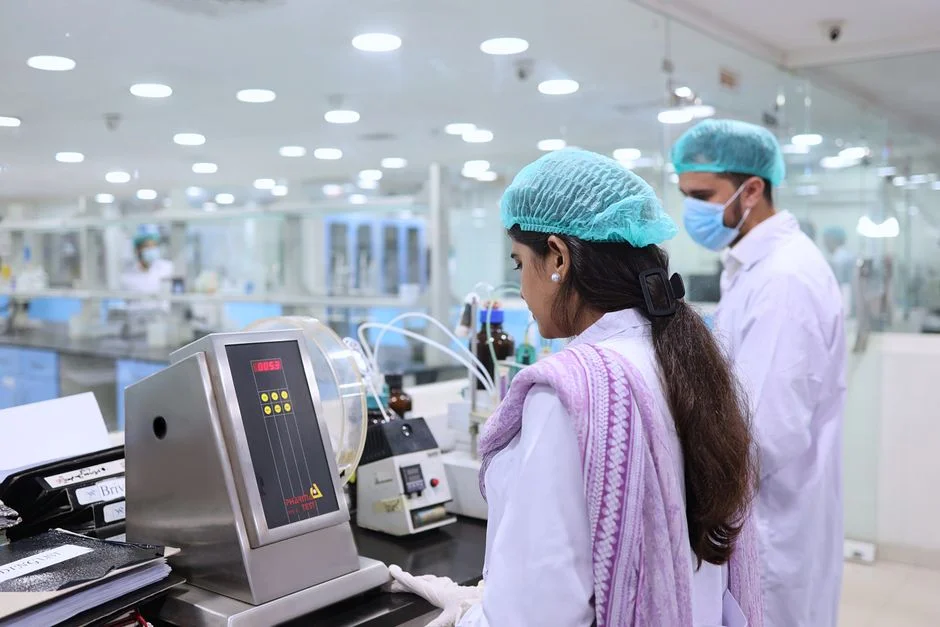
Two instruments dominate compliance for a domestic sewage treatment plant in Egypt. Law 48/1982 protects the Nile and waterways from pollution and sets the umbrella duty to treat before discharge. Ministerial Decree 92/2013 sets the actual effluent quality limits for wastewater discharged to the environment, with stricter thresholds for reuse applications. HCWW and EWRA are the operational regulators; the Egyptian Environmental Affairs Agency (EEAA) handles environmental permits for non-sewered discharge and reuse (en.wikipedia.org, "Water supply and sanitation in Egypt," 2025).
Exact 2026 parameter values for BOD, COD, TSS, TN, TP, and fecal coliforms are updated through EEAA and HCWW administrative decrees. A 2026 designer must request the current limits from HCWW or EEAA before final sizing, because reusing a 2013 table without checking can fail permit review.
Gatekeeping runs in three lanes. HCWW handles network connection, tariff structure, and any acceptance of treated effluent into a sewer. EWRA handles service quality and consumer-protection oversight. EEAA handles environmental impact and reuse permits. For compounds, hotels, and hospitals, expect all three touchpoints in sequence, with HCWW sign-off typically the last gate before commissioning.
Funding context is also relevant: between 2005 and 2010 Egypt received more than €1 billion in external aid for water supply and sanitation, of which 30% were grants and the rest soft loans at roughly 1% interest, channelled in part through the Improved Water and Wastewater Services Program (IWSP) in Delta and Upper Egypt governorates. New builds in qualifying governorates can co-apply for similar support, and a domestic sewage plant sized for reuse often scores well in those submissions.
Process Selection: MBR vs WSZ Package Plant for 1–2,000 m³/day
Two technologies dominate the Egyptian compound and small-community market in 2026. The first is an MBR membrane bioreactor, an integrated activated-sludge system with submerged PVDF hollow-fiber membranes that physically retain solids and most bacteria, producing near-reuse-quality effluent. The second is a WSZ buried A/O package plant, a buried anoxic/aerobic biological contact-oxidation unit with integral sedimentation and disinfection, designed for unattended operation at 1–80 m³/h. For modular capacity scaling, the standalone MBR membrane module is the building block that lets a contractor expand a 200 m³/day plant to 2,000 m³/day in steps.
For an Egyptian project in 2026, the trade is about which technology fits site constraints. MBR delivers a clarified, low-turbidity, low-coliform effluent that can be reused for irrigation, toilet flushing, or watering with minimal post-treatment. WSZ delivers a compliant discharge to sewer or evaporation, with very low operator involvement and lower civil cost because the unit is buried.
| Selection criterion | MBR membrane bioreactor | WSZ buried A/O package |
|---|---|---|
| Typical flow range | 10–2,000 m³/day (modular) | 1–80 m³/h (≈24–1,920 m³/day) |
| Effluent quality | Near-reuse; low TSS, low turbidity, very low coliforms | Compliant discharge; reuse possible with downstream polishing |
| Footprint | Compact, above-grade; suited to restricted urban sites | Buried, landscaping-friendly; ideal for compounds and resorts |
| Operator requirement | Skilled operator for membrane cleaning and aeration control | Unattended automated running; periodic inspection |
| Civil work | Concrete tank + equipment room | Excavation + buried tank, minimal superstructure |
| Best fit in 2026 Egypt | Reuse-driven projects, water-scarce sites, urban hotels/hospitals | Budget-driven projects, rural communities, small compounds |
Decision rule for a 2026 Egyptian project: specify WSZ when the project is a tight-budget residential compound, a remote rural site, or any installation under about 80 m³/h where reuse is not the driver. Specify MBR when the site must produce reuse-quality water, when the urban footprint is restricted, or when the end-use is irrigation, cooling, or toilet flushing and the avoided potable cost justifies the higher unit OPEX.
Pretreatment, Disinfection, and Sludge Handling for Egyptian Sites
A complete treatment train for 2026 requires more than a biological reactor. Headworks screening is non-optional: a rotary mechanical bar screen protects downstream pumps and membranes from the rags, plastics, and grit common in mixed municipal sewage in Egyptian collection networks. Skipping this stage is the fastest way to foul an MBR membrane and to lose pump impellers in a buried WSZ unit.
For disinfection, two options are standard. A chlorine dioxide generator provides residual-stable disinfection that is more effective than chlorine at high pH and does not form trihalomethanes at the dosing rates typical for reuse. A UV-C sterilizer provides chemical-free disinfection, which is attractive for sites where the operator wants to avoid chemical storage, and is effective against chlorine-resistant Cryptosporidium and Giardia. UV is commonly paired with MBR effluent where the water is reused for irrigation; ClO₂ is common where a residual is required in the distribution network.
Sludge handling closes the train. A plate-and-frame filter press dewaters the biological and chemical sludge to a stackable cake, while a lamella clarifier thickens primary sludge upstream of the press to keep hauling volumes within typical Egyptian collection logistics. Filter-press throughput and polymer dose depend on influent TSS and the polymer selected, and must be bench-tested per site rather than quoted from a generic table.
CAPEX, OPEX, and Sizing Inputs for a 2026 Egyptian Project
For a top-of-range benchmark, the New Cairo 250,000 m³/day BOT plant was awarded at US$160 million in 2010, useful only as an HCWW-megaproject reference, not for a compound-scale package (en.wikipedia.org, "Water supply and sanitation in Egypt," 2025). Package and MBR plants in the 1–2,000 m³/day range are quoted against site-specific inputs, not against national megaproject numbers.
Before any 2026 supplier will give a defensible CAPEX/OPEX figure, the buyer must deliver: average and peak daily flow, influent BOD/COD/TSS/NH₃-N/TP, discharge target, available footprint, power availability and quality, planned operator hours, and the intended reuse end-use. Without this pack, quotes vary widely and post-award change orders are common.
OPEX is dominated by aeration energy and sludge hauling. MBR OPEX per m³ is higher than WSZ because of membrane aeration and periodic chemical cleaning, but on a total-cost basis MBR often wins on water-scarce sites because the reuse offset reduces potable-water purchase. With domestic water tariffs raised by up to 50% in August 2017, the reuse value per m³ has improved, and any 2026 cost model should be built against the post-2017 tariff schedule (en.wikipedia.org, "Water supply and sanitation in Egypt," 2025).
| Cost driver | What the 2026 buyer should prepare | Why it matters |
|---|---|---|
| CAPEX — civil and equipment | Flow (avg + peak), influent panel, footprint, soil data | Sets tank sizing, equipment selection, and excavation scope |
| CAPEX — membranes (MBR) | Target flux, TMP, peak factor | Determines membrane area and module count |
| OPEX — energy | Aeration hours, diffuser type, power tariff | Largest single OPEX line for both technologies |
| OPEX — sludge hauling | Sludge yield estimate, dewatering target DS% | Sets hauling frequency and disposal cost |
| Revenue offset — reuse | Reuse end-use, post-2017 potable tariff, irrigation demand | Often decides MBR vs WSZ on a 10-year basis |
Frequently Asked Questions
Which authority approves a non-sewered discharge for a domestic sewage plant in Egypt?
HCWW handles acceptance into a sewered network and any tariff approval, while the EEAA handles the environmental permit for discharge to a waterway or for reuse. EWRA oversees service quality once the plant is operational. For a non-sewered discharge in 2026, expect
Frequently Asked Questions
What authority approves a domestic sewage treatment plant in Egypt in 2026?
The primary regulatory body for approving domestic sewage treatment projects is the Egyptian Environmental Affairs Agency (EEAA). Projects must submit an Environmental Impact Assessment (EIA) for review to ensure compliance with national environmental standards. Additionally, the Holding Company for Water and Wastewater (HCWW) must approve the final effluent discharge points and technical design specifications to ensure they integrate with existing public infrastructure or meet local discharge regulations.
How do you size a sewage treatment plant for a residential compound in Egypt?
Sizing is determined by calculating the daily flow rate based on the Egyptian Code of Practice (ECP) for Water and Wastewater. The design flow is typically calculated using an average consumption rate of 150 to 250 liters per capita per day, multiplied by the occupancy rate and a peak factor (usually 2.5 to 3.0). Engineers must also account for the Biological Oxygen Demand (BOD) load, generally estimated at 50-60 grams per capita per day, to ensure the aeration and treatment capacity meets projected residential density.
What is the typical lead time for a package or MBR domestic sewage plant in Egypt?
For standard package plants and Membrane Bioreactor (MBR) systems, the typical lead time ranges from 16 to 24 weeks. This period includes the procurement of specialized components like submerged membranes, blowers, and PLC controllers, which are often imported. Local fabrication of steel tanks or civil works can run concurrently, but commissioning and biological stabilization (seeding the biomass) typically require an additional 4 to 6 weeks post-installation to achieve stable effluent parameters.
Can treated domestic sewage be reused for irrigation in Egypt under Law 48 and Decree 92?
Yes, treated sewage can be reused for irrigation, provided it meets the quality standards stipulated in Decree 92/2013, which amended the executive regulations of Law 48/1982. Treated effluent must comply with specific parameters, including a BOD of less than 40 mg/l and Total Suspended Solids (TSS) of less than 50 mg/l for non-food crop irrigation. For restricted irrigation, the system must ensure the removal of pathogens and heavy metals, and the final design must be validated by the Ministry of Irrigation and Water Resources.
How do you evaluate a domestic sewage treatment equipment supplier for an Egyptian project?
Evaluation should focus on the supplier's proven track record of successful installations within Egypt, specifically those that have passed EEAA and HCWW inspections. Key technical criteria include the availability of local spare parts, the manufacturer's ability to provide a comprehensive O&M manual in Arabic and English, and the efficiency of the membrane or aeration technology in high-ambient-temperature climates. Suppliers should also provide verifiable references for sites currently meeting the effluent discharge limits mandated by the 2026 national environmental code.