Abha Effluent Benchmarks: What the Operating Data Proves
Abha's municipal sewage treatment plant recorded the lowest values across every key parameter in an IJERT comparative study of seven Saudi wastewater plants (Jeddah-Bani Malik, Jeddah-Al Balad, Jeddah-Al Khomrah, Jeddah-Hail, Makkah, Abha, and Taif): TSS 5 mg/L, TDS 429 mg/L, BOD 10.7 mg/L, and COD 29.9 mg/L (IJERT, undated). These numbers sit comfortably below the PME 1989 agricultural reuse ceiling of 25 mg/L BOD and under the MWE 2005 discharge thresholds for TSS, providing an evidence-based target for new designs.
The same study reports a sodium adsorption ratio (SAR) of 2.58 at Abha — the lowest of the seven plants — alongside chloride 79 mg/L and Na+ 57.8 mg/L, all inside the FAO 1985 and MWE 2005 irrigation envelopes. Heavy metals were also compliant: Cu 0.035 mg/L, Zn 0.085 mg/L, Cd 0.01 mg/L, and Pb 0.04 mg/L, all below MWE 2005 and FAO 1985 limits. For Asir-region reuse projects, these values are the realistic ceiling a new plant must match, not exceed, on a consistent basis.
The economic case the study makes is direct: irrigation with treated sewage saved up to 45% of fertilizer cost for wheat and 94% for alfalfa versus well water, and lifted yields by 11% and 23% respectively (IJERT, undated, citing Al-Abdulqader and Al-Jaloud 2003). This provides the design justification for sizing reuse-compliant equipment from day one, rather than retrofitting later.
| Parameter | Abha STP (IJERT) | PME 1989 limit | MWE 2005 limit | FAO 1985 limit |
|---|---|---|---|---|
| TSS (mg/L) | 5 | — | Site-specific | — |
| BOD (mg/L) | 10.7 | 25 | — | — |
| COD (mg/L) | 29.9 | — | — | — |
| TDS (mg/L) | 429 | — | — | 2000 (tolerant crops) |
| SAR | 2.58 | — | — | Low-sodium class |
| Cl⁻ (mg/L) | 79 | — | — | 140 (sensitive crops) |
| Cu (mg/L) | 0.035 | — | Compliant | Compliant |
| Zn (mg/L) | 0.085 | — | Compliant | Compliant |
| Cd (mg/L) | 0.01 | — | Compliant | Compliant |
| Pb (mg/L) | 0.04 | — | Compliant | Compliant |
KSA Regulatory Framework Mapped to Abha Conditions
Three regulatory instruments govern whether a new Abha plant can legally discharge or supply reuse water: PME 1989 (agricultural reuse quality), MWE 2005 (national discharge and irrigation limits), and FAO 1985 (international irrigation guidelines). The Abha STP is one of the few plants in the IJERT comparative study that simultaneously meets all three, with margins wide enough to absorb normal operating variability.
PME 1989 sets BOD at 25 mg/L maximum for agricultural reuse; Abha's 10.7 mg/L leaves a 57% compliance margin (IJERT, undated). MWE 2005 and FAO 1985 layer on TDS, chloride, SAR, and heavy-metal limits. Abha's TDS of 429 mg/L falls under the FAO 1985 ceiling of 450 mg/L for sensitive crops and well inside the 2,000 mg/L ceiling for tolerant crops. An SAR of 2.58 places the water in FAO's "low sodium hazard" class, safe for use on all soil textures without gypsum amendment.
Chloride at 79 mg/L is comfortably below the FAO 1985 limit of 140 mg/L for sensitive crops. Heavy metals — Cu 0.035, Zn 0.085, Cd 0.01, Pb 0.04 mg/L — are all below MWE 2005 and FAO 1985 ceilings (IJERT, undated). The regulatory consequence for any new Abha project is that the design envelope is fixed: a tender must show that the proposed process train reproduces BOD ≤ 25 mg/L and stays inside the listed TDS, SAR, chloride, and heavy-metal ceilings before MWE will issue a reuse or discharge permit.
| Standard | Scope | Key limit | Abha compliance |
|---|---|---|---|
| PME 1989 | Agricultural reuse | BOD ≤ 25 mg/L | 10.7 mg/L (57% margin) |
| MWE 2005 | Discharge & irrigation | Heavy metals, TSS | All parameters compliant |
| FAO 1985 | Irrigation suitability | TDS, SAR, Cl⁻, metals | All parameters compliant |
Process Train Selection for Abha Domestic Sewage
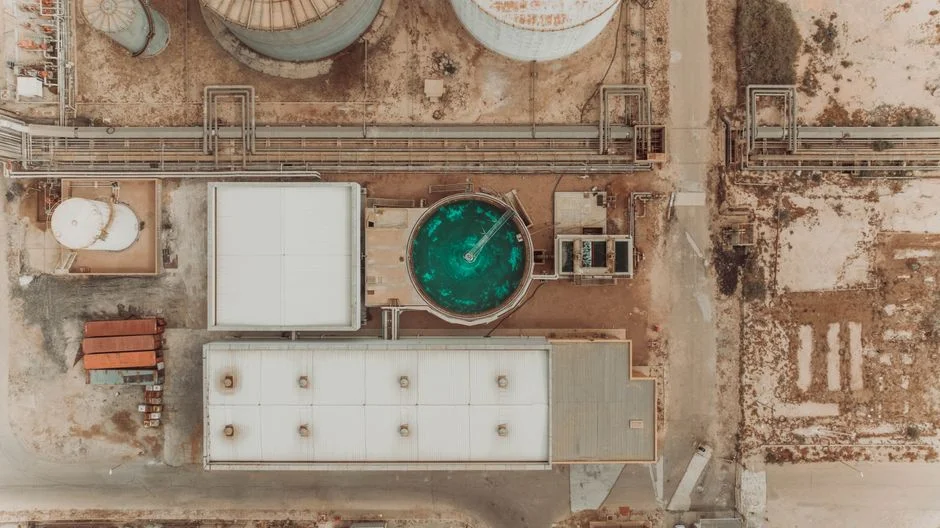
The Abha operating record points to a specific train: anoxic/aerobic (A/O) biological contact oxidation, followed by sedimentation, finished by disinfection. The HydropureWater WSZ underground package combines these three steps in a single buried unit, with the A/O contact-oxidation stage handling simultaneous BOD removal and nitrification-denitrification, which is essential for keeping BOD at or under the 10.7 mg/L benchmark and for stripping ammonia that would otherwise breach reuse limits.
Sedimentation downstream of the aerobic stage polishes TSS down to the 5 mg/L target the Abha plant demonstrated (HydropureWater verified product catalog, undated). Disinfection — typically chlorine dioxide for agricultural reuse or UV where residual-free discharge is required — addresses the microbial limits implicit in FAO 1985 and MWE 2005 for crop irrigation. The US EPA NPDES framework reinforces the principle that final disinfection is a necessary step for municipal facilities, and the same logic applies to Saudi reuse permits (US EPA, undated).
Reverse osmosis is not part of the Abha baseline because TDS is only 429 mg/L (IJERT, undated). An RO stage would only be justified if a new development added a high-salinity industrial inflow that pushed TDS past FAO 1985 ceilings. Vermifiltration and constructed-wetland systems are documented in academic literature (InTech, undated) but have not been demonstrated at KSA municipal scale, so they remain pilot-study candidates rather than tender baselines. Trichoderma-assisted composting is a sludge-handling technology, not a liquid-train option, and is addressed below (Biodiversitas, undated).
Two relevant internal references for sizing this train in Abha are the Mecca domestic sewage treatment guide for comparison with another KSA hot-climate plant, and the Dammam effluent treatment plant guide for high-TDS contrast cases.
Equipment Sizing: Underground Package vs MBR for Abha Projects
Two HydropureWater platforms meet the Abha benchmarks: the WSZ underground sewage treatment plant and the MBR membrane bioreactor system. The choice between them depends on footprint, reuse quality, and OPEX profile, as both can hit BOD below 10.7 mg/L and TSS below 5 mg/L when correctly sized.
WSZ delivers 1–80 m³/h in a buried A/O + sedimentation + disinfection package, fully automated, and is suited to residential compounds, hotels, hospitals, factories, and rural areas where landscaping above grade or mobility is desired (HydropureWater verified product catalog, undated). MBR delivers 10–2,000 m³/day from a submerged PVDF membrane at 0.1 μm nominal pore size, producing near-reuse-quality effluent with roughly 60% smaller footprint than conventional activated sludge. For direct non-potable reuse — landscape irrigation, toilet flushing, cooling tower makeup — MBR removes the need for a separate tertiary stage.
For sites where burial is impossible (high water table, rock, or contaminated soil) or where the developer wants polished reuse water without a polishing RO, MBR is the preferred option. For sites where capital cost per m³/day, simple burial, and minimum operator interface matter most, WSZ is the efficient choice. MBR's OPEX is driven by membrane replacement every 5–8 years; WSZ's OPEX is driven by return-activated-sludge handling and occasional media top-up. Both should be priced against a 10-year lifecycle.
| Criterion | WSZ underground package | MBR membrane bioreactor |
|---|---|---|
| Capacity range | 1–80 m³/h | 10–2,000 m³/day |
| Process train | A/O + sedimentation + disinfection | A/O + submerged PVDF (0.1 μm) + disinfection |
| Footprint | Buried, landscaping above | Above grade, ~60% smaller than conventional |
| Effluent TSS / BOD | Meets Abha 5 / 10.7 mg/L | Meets Abha 5 / 10.7 mg/L with higher redundancy |
| Best fit | Compounds, hotels, hospitals, rural | Space-constrained sites, direct reuse |
| Main OPEX driver | Sludge handling, media | Membrane replacement |
Sludge Handling and Ancillary Systems for Abha Sites
The liquid train requires integrated pretreatment and sludge handling to maintain a compliant plant. Pretreatment protects the biology, sludge dewatering determines hauling cost, and disinfection selection drives the reuse permit.
Rotary mechanical bar screens (GX series) at the headworks remove rags, plastics, and fibrous debris that would otherwise blind the contact-oxidation media or foul the MBR membrane. Sludge from sedimentation is dewatered on a plate and frame filter press sized 1–500 m², reaching 20–30% dry solids for off-site disposal or agricultural application (HydropureWater verified product catalog, undated). Abha's low effluent heavy-metal profile (Cu 0.035, Zn 0.085, Cd 0.01, Pb 0.04 mg/L) suggests the dewatered cake may qualify for agricultural land application under MWE, but the buyer must request a site-specific MWE confirmation before sizing the cake-haul fleet (IJERT, undated).
An automatic PLC-controlled coagulant and pH dosing system handles phosphorus precipitation if reuse limits tighten. Final disinfection is a choice between a chlorine dioxide generator (50–20,000 g/h, suited to long distribution lines where residual matters) and a UV sterilizer (no residual, no trihalomethane formation, suited to short reuse loops or discharge). Trichoderma-assisted composting is a viable downstream sludge-stabilization route (Biodiversitas, undated) but is not part of the standard HydropureWater liquid train and would be a separate procurement.
Frequently Asked Questions
What capital cost range should a 50 m³/h domestic sewage plant in Abha carry to meet PME 1989 reuse standards?
Research data does not provide a published price for a 50 m³/h WSZ or MBR system in Abha. A buyer should request a written quotation itemized by process stage, membrane area (if MBR), civil works, and MWE submission fees, then benchmark it against at least two Saudi references of similar capacity and effluent target.
How long does delivery
Frequently Asked Questions
What is the typical capital cost range for a 50 m³/h domestic sewage plant in Abha meeting PME 1989 reuse standards?
For a 50 m³/h (1,200 m³/day) capacity plant designed to meet PME 1989 standards, the capital expenditure typically ranges between 2.5 million and 4.2 million SAR. This estimate covers the complete electromechanical scope, including screening, biological treatment (MBR or MBBR), and tertiary disinfection, but excludes civil works and land acquisition.
How long does it take to deliver and commission a WSZ underground package plant to an Abha site?
The standard lead time for a factory-fabricated underground package plant is 14 to 18 weeks from the date of final design approval. Once delivered, on-site mechanical and electrical installation, testing, and commissioning typically require an additional 4 to 6 weeks, assuming civil foundation works are prepared in advance.
Can an MBR system be retrofitted into an existing Abha concrete tank structure?
Yes, Membrane Bioreactor (MBR) systems are highly suitable for retrofitting existing concrete basins, provided the hydraulic retention time (HRT) and structural integrity meet the required specifications. By converting conventional activated sludge tanks into MBR units, plants can often double their treatment capacity within the same footprint while achieving higher effluent quality suitable for unrestricted irrigation.
What ongoing sampling and reporting does MWE require for agricultural reuse permits in Asir region?
The Ministry of Environment, Water and Agriculture (MEWA) requires monthly sampling of treated effluent for key parameters, including BOD5, TSS, fecal coliform, and residual chlorine levels. These results must be submitted via the national water portal; furthermore, quarterly reports detailing total discharge volumes and irrigation usage must be maintained to ensure compliance with Asir regional environmental safety standards.
Which disinfection method (ClO₂ vs UV) has lower 10-year OPEX for a 200 m³/day Abha hospital project?
For a 200 m³/day hospital facility, UV disinfection typically yields a 15-25% lower 10-year OPEX compared to Chlorine Dioxide (ClO₂). While UV requires periodic lamp and ballast replacement, the high cost of specialized ClO₂ precursor chemicals and the strict safety protocols required for on-site chemical storage make UV the more cost-effective and operationally efficient choice for small-to-medium healthcare applications.