Why the DAF-vs-Clarifier Question Matters in Carrie, US
Carrie, US sits in a western Pennsylvania corridor where coal preparation, metal finishing, and aggregate wash operations discharge to surface water under Pennsylvania NPDES permits and federal effluent guidelines at 40 CFR Part 430 (ore mining and mineral processing) and 40 CFR Part 434 (coal mining and preparation). The primary solids-removal unit is the first guardrail against TSS, oil and grease, settleable solids, and metal exceedances on those permits, so a wrong choice is a compliance event rather than an operating inconvenience.
Project experience from SLR Consulting's US water and wastewater practice (S2) shows that nearly every mining and metals plant is built as a train of equalization, primary separation, polishing, filtration, and discharge, with the primary separator sized to protect every downstream step. That integration is the point: a clarifier that lets floatables bleed forward will overload the polish filter, and a DAF that is fed a stream it cannot float will dump solids into the recycle loop. Equipment, chemistry, energy, and sludge-disposal costs are all moving in 2026, so this article compares the two unit operations on operating profile, regulatory alignment, and procurement deliverables rather than a single CAPEX number.
For background on how similar plants are documenting compliance with NPDES pretreatment limits, see the Mining & metals 2026 NPDES pretreatment compliance reference and the US mining/metals 2026 sewer pretreatment guide.
What a Conventional or Lamella Clarifier Actually Does
A conventional clarifier is a gravity settler where heavier suspended solids drop to a sludge blanket, clarified water overflows a peripheral weir, and sludge is removed by a slowly rotating scraper or auger. The unit is mechanical, passive, and well understood by operators who already run potable-water and industrial process basins.
A high-efficiency or lamella clarifier uses inclined plates or tubes inside the basin to compress the effective settling path so that a much smaller footprint delivers the same solids capture. HydropureWater's high-efficiency sedimentation tank, for example, is rated for surface loading rates of 20–40 m³/m²/h and is documented to reduce coagulant and flocculant consumption by up to 30% versus a conventional basin of the same throughput (HydropureWater product data, /product/10-high-efficiency-sedimentation-tank.html).
Clarifier strengths include lower energy requirements (no saturation tank, no recycle pump), simpler controls, and robustness on heavy grit, metal-bearing precipitates, and high-density TSS. Limitations include an inability to remove emulsified oils, greases, or low-density fines; sensitivity to hydraulic surges that re-suspend the sludge blanket; and a large footprint for conventional basins unless a lamella pack is added. For a Carrie-area metals plant whose stream is dominated by precipitation sludge rather than oil sheen, this profile is often ideal.
What a DAF System Actually Does
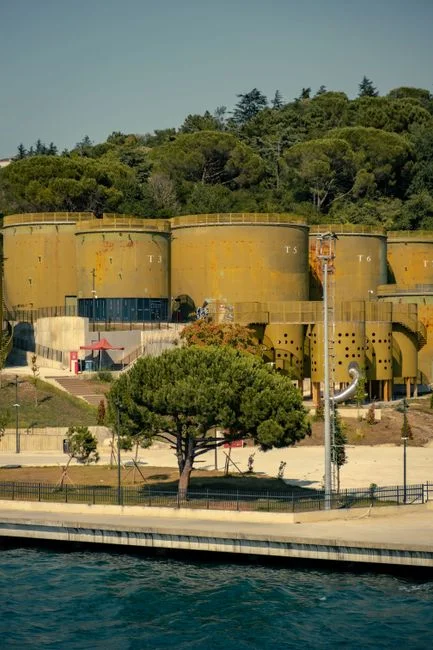
A dissolved air flotation system generates 30–50 micron microbubbles in a pressurized recycle loop, releases them into the flotation cell, and uses the bubbles to attach to flocculated particles and lift them to the surface. A paddle skimmer then removes the float layer, and heavier particles that drop out are augered from a bottom collection zone. SigmaDAF USA and Clearwater Industries describe this flow path and confirm the 30–50 micron bubble size in their 2026 product literature (S5).
Standard materials are 304SS, with 316SS, polypropylene, or other alloys available for corrosive mining leachates (S5). The HydropureWater DAF system spans 4–300 m³/h across 13 standard models, so a Carrie-area plant up to roughly 7 MGD can usually find a catalogue fit without going custom (/product/4-dissolved-air-flotation-daf-machine.html).
DAF strengths include excellent performance on oils, greases, FOG, low-density fines, and variable influent, as well as a compact, skid-based footprint, quick start-up, and predictable effluent TSS once chemistry is tuned. Limitations include the need for consistent coagulant/flocculation upstream, a saturated recycle-water loop, and trained operators, along with higher energy and chemical costs than a plain clarifier. This technology is also covered in a 2026 DAF engineering design guide for adjacent industrial sectors at /blog/11475-dissolved-air-flotation-for-airport-wastewater-design-2026-engineering.html, which walks through recycle ratios and air-to-solids design steps that translate directly to a mining skid.
Side-by-Side Comparison: DAF vs Clarifier for Mining/Metals
The table below consolidates the operating parameters a Carrie-area engineer needs to brief a procurement committee. The HydropureWater DAF range (4–300 m³/h, 13 models) and the lamella surface loading band (20–40 m³/m²/h with up to 30% chemical reduction) are the catalogue anchors used in the comparison.
| Parameter | Conventional / Lamella Clarifier | DAF System |
|---|---|---|
| Separation mechanism | Gravity settling; sludge drops to a bottom blanket | Microbubble flotation; 30–50 micron bubbles lift floc to the surface (S5) |
| Best-fit influent | High-density TSS, grit, metal-bearing precipitates | Oils, FOG, low-density fines, flotation-friendly sludges |
| Flowrate coverage | Surface loading 20–40 m³/m²/h (HydropureWater product data) | 4–300 m³/h across 13 standard models (HydropureWater product data) |
| Chemical use | Lamella design cuts coagulant/flocculant by up to 30% vs conventional basin (HydropureWater) | More chemistry-dependent; needs consistent coagulant and floc conditioning upstream (S5) |
| Footprint | Large for conventional basin; lamella pack compresses footprint | Compact, skid-based; useful where space is tight |
| Energy profile | Low — no saturation tank or recycle pump | Higher — saturation tank, recycle pump, air compressor |
| Materials of construction | Carbon steel, concrete, or 304SS depending on chemistry | 304SS standard, 316SS / polypropylene available for corrosive streams (S5) |
| Effluent limit alignment (40 CFR 430/434) | Can meet TSS and metals limits if designed for the load | More forgiving on oil-bearing streams; preferred when oil & grease drives the permit |
| Sludge handling downstream | Gravity-thickened; may need extra polymer conditioning | Float-thickened, typically higher cake solids on a plate and frame filter press |
| Operator skill | Low — basic scraper, sludge pump, polymer feed | Medium — chemistry tuning, recycle ratio, skimmer speed |
Matching the Decision to Carrie-Area Mining/Metals Streams
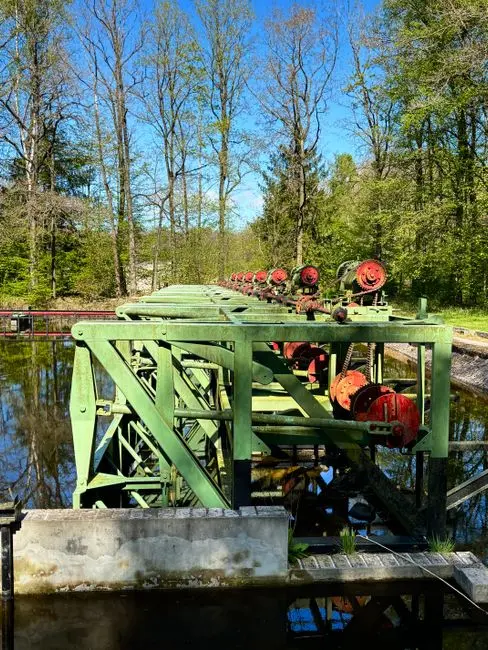
Choose a clarifier, preferably a lamella design, when the stream is dominated by heavy TSS and metal-bearing precipitates, oil and grease are negligible, and the plant wants to minimize chemical and energy costs. The design check involves comparing hydraulic residence time against peak flow plus a surface-loading calculation at 20–40 m³/m²/h using the HydropureWater high-efficiency sedimentation tank at /product/10-high-efficiency-sedimentation-tank.html.
Choose a DAF when the stream carries oils, FOG, cutting or hydraulic fluids, low-density fines, or fluctuating solids loadings. The design check involves verifying chemistry compatibility with the recycle loop, recycle-water capacity, and confirming that downstream polishing—for example, the HydropureWater automatic chemical dosing system paired with a multi-media filter (/product/8-automatic-chemical-dosing-system.html, /product/7-multi-media-filter-ultrapure-water.html)—can handle the floatable residuals.
A hybrid train is common on US mining and metals sites where a lamella clarifier handles primary grit and bulk sludge, and a DAF polishes the overflow where an oil-bearing sidestream enters. This pattern is visible across SLR Consulting's iron and steel and mining project list (S2). If the binding permit limit is oil and grease or low-mg/L TSS, a DAF as the primary unit typically provides more compliance margin than a clarifier alone.
Sizing, CAPEX/OPEX and Supplier Selection in 2026
For DAF sizing, send each shortlisted vendor a request that names the design flow (m³/h), peak hydraulic loading, target recycle ratio, air-to-solids ratio, polymer consumption, and expected float thickness, then ask for a guaranteed effluent TSS at design load. The HydropureWater DAF system (4–300 m³/h, 13 standard models) at /product/4-dissolved-air-flotation-daf-machine.html is wide enough to cover most small-to-mid Carrie-area plants without forcing a custom build.
For lamella clarifier sizing, request surface loading targeted at 20–40 m³/m²/h, plate spacing, plate material, and projected polymer consumption to ensure the selection remains independent of vendor optimism. The HydropureWater high-efficiency sedimentation tank at /product/10-high-efficiency-sedimentation-tank.html is the matching reference unit.
Ask each shortlisted supplier for a documented Carrie-region quote that bundles civil works, instrumentation, chemistry for the first 90 days, and operator training, and compare on total annualized cost. Pre-qualify suppliers on in-house manufacture, US-based commissioning support, mining and metals references, availability of sludge-dewatering integration, and lifecycle spares for pumps, bubble generators, and skimmer drives. A single catalogue covering the DAF, the lamella clarifier, the automatic chemical dosing system, and the plate and frame filter press simplifies the integration of the full primary-separation to sludge-dewatering train (/product/9-plate-frame-filter-press.html).
| Procurement deliverable | What to ask a DAF vendor | What to ask a lamella clarifier vendor |
|---|---|---|
| Design basis | Design flow (m³/h), peak factor, recycle ratio, A/S ratio | Surface loading target (20–40 m³/m²/h), peak flow, plate spacing |
| Chemistry | Polymer type, dose (mg/L), makeup water demand for recycle | Coagulant/flocculant dose; expected chemical reduction vs conventional basin |
| Materials | 304SS standard, 316SS or polypropylene for corrosive leachates (S5) | Plate material (PP, FRP, 304SS), frame coating, sludge wiper material |
| Effluent guarantee | Guaranteed TSS and oil & grease at design load | Guaranteed TSS and settleables at design load |
| Sludge handling | Float solids %; compatibility with plate and frame filter press | Underflow solids %; polymer conditioning requirement |
| Commercial | ||
| Quote scope | Skid, instrumentation, chemistry 90-day dose, commissioning, training | Basin or packaged unit, plates, scraper, instrumentation, commissioning |
| Schedule | Engineering lead time, build, ship, install, commissioning window | Engineering lead time, fabrication, ship, install, commissioning window |
| Compliance support | 40 CFR 430/434 and NPDES permit interface documentation | 40 CFR 430/434 and NPDES permit interface documentation |
Frequently Asked Questions
What is the realistic 2026 cost difference between a DAF and a lamella clarifier for a Carrie-area mining or metals plant?
A defensible 2026 cost comparison requires documented vendor quotes, because DAF pricing scales with flow, recycle loop, and alloy selection, while lamella pricing scales with plate area, basin civil works, and polymer dose. Request a written Carrie-region quote from at least two suppliers that bundles the unit, civil works, instrumentation, the first 90 days of chemistry, and operator training, then compare on annualized cost including energy, polymer, and sludge disposal.
Which supplier criteria matter most when picking a DAF or clarifier for a 40 CFR 430/434 site?
Confirm in-house manufacture, US-based commissioning support, mining or metals references on similar permit limits, and the ability
Frequently Asked Questions
Should a mining plant in Carrie, PA choose a DAF or a clarifier in 2026?
The choice depends on the specific gravity and particle size of the suspended solids in your wastewater. DAF is generally preferred in mining applications where contaminants include light oils, grease, or low-density metal precipitates that exhibit poor settling characteristics, as it can achieve 90-95% removal of non-settleable solids. Conversely, if the influent contains high concentrations of heavy, inorganic mineral tailings with a specific gravity greater than 2.0, a clarifier is typically more efficient and cost-effective.
For Carrie-area facilities, you must also consider the cold-weather impact on basin design. In 2026, many regional operations are favoring DAF systems for their smaller physical footprint, which allows for easier enclosure and temperature control compared to the large surface area required for traditional gravity clarifiers in Pennsylvania’s climate.
What flowrate range does a HydropureWater DAF system cover for a small-to-mid metals plant?
HydropureWater DAF systems designed for the metals industry typically cover a flow range from 50 gallons per minute (GPM) to 1,200 GPM per unit. For small-to-mid mining operations, modular units are often deployed in parallel to accommodate fluctuating influent volumes while maintaining a surface overflow rate (SOR) of 2.0 to 4.0 GPM/ft².
Is a lamella clarifier cheaper to operate than a DAF for TSS removal?
In terms of direct operating expenditures (OPEX), a lamella clarifier is generally cheaper because it does not require the continuous energy input of air compressors, saturation pumps, or chemical flocculant/coagulant dosing systems required to maintain the micro-bubble micro-floc structure of a DAF. A lamella clarifier relies on gravity and plate inclination, resulting in significantly lower electricity consumption per thousand gallons of water treated.
However, DAF systems often reduce downstream costs by producing a thicker sludge (up to 3-5% solids concentration) compared to the 1-2% typically achieved by gravity clarification. When evaluating total cost of ownership, the reduced sludge volume and lower disposal fees associated with DAF can offset the higher electrical and chemical overhead.
Which equipment is easier to integrate with a plate and frame filter press for sludge dewatering?
A DAF system is typically easier to integrate with a plate and frame filter press because the float produced by the DAF is already pre-thickened, often reaching solids concentrations of 4% or higher. This high-solids influent allows the filter press to achieve a faster cycle time and a drier filter cake, reducing the frequency of press cycles.
Clarifier underflow typically requires an intermediate thickening step, such as a gravity thickener or a sludge holding tank with a polymer injection system, before it is suitable for a filter press. Without this pre-thickening, the lower-solids sludge from a clarifier will result in inefficient press cycles and increased water return to the headworks.
How do I compare DAF and clarifier suppliers for a Carrie-area NPDES project in 2026?
To evaluate suppliers for a 2026 NPDES project, request a pilot study that demonstrates performance against specific Pennsylvania Department of Environmental Protection (PADEP) discharge limits for your site's target metals, such as copper, zinc, or iron. Suppliers should provide a verified bill of materials including corrosion-resistant coatings (e.g., epoxy-coated carbon steel or 316L stainless steel) suitable for the acidic or alkaline nature of mining wastewater.
Ensure that the supplier provides a detailed site-specific mass balance calculation showing expected TSS removal efficiency and sludge volumes. Furthermore, verify that the supplier offers local field support in the Pennsylvania region to assist with the rigorous reporting and maintenance requirements mandated by current NPDES permits.