
Why Airport Wastewater COD Removal Is a Regulated Problem
Airport wastewater COD removal sits at the intersection of three compliance layers, and a design that ignores any one of them fails on paper before it fails in the field. The EPA Airport Deicing Effluent Guidelines require collecting at minimum 60% of all aircraft deicing fluid at qualifying primary commercial airports, a figure the ifactoryapp.com industry brief on airport wastewater and de-icing fluid management (S2) cites as the federal floor that anchors collection infrastructure design.
Direct dischargers must meet Best Available Technology (BAT) standards requiring a minimum 97% chemical oxygen demand (COD) removal rate (S2), a target that forces a multi-barrier treatment train rather than a single unit operation. Indirect dischargers that route inadequately treated glycol-laden runoff to municipal systems can face surcharges exceeding $2.8 million annually (S2), which converts pretreatment design from a permitting checkbox into a capital protection decision. Industrial wastewater streams contaminated with glycol, fuel, or deicing chemicals must be kept separate from general stormwater drainage and routed to their appropriate treatment pathway (S2), because mixing the two streams dilutes the industrial load into stormwater infrastructure that cannot legally accept it. The EPA Effluent Limitation Guidelines apply to primary commercial airports generally defined as those with 10,000 or more annual passenger departures located in cold climate zones (S2), which defines both the design population and the climate envelope the equipment must survive.
What Arrives at the Headworks: Influent Characterization
Influent characterization at an airport headworks consists of a layered mix of chemically distinct contamination sources that each respond differently to downstream unit operations. Aircraft deicing fluid is primarily propylene glycol, while airfield pavement deicers are potassium acetate, sodium acetate, or sodium formate, and each carries a different contamination profile and a different monitoring requirement (S2). EPA guidelines require separate documentation for aircraft deicing fluid and pavement deicers because they create different contamination profiles and are subject to different monitoring and collection requirements (S2), which is also why the downstream treatment train must accommodate both biodegradable organics (glycol) and salt-laden acetate or formate streams in the same envelope. Glycol-laden runoff drains across aprons, taxiways, and deicing pads into stormwater systems that feed local waterways (S2), typically picking up jet fuel traces, hydraulic fluid, and runway rubber particulates along the way. Cold temperatures slow bacterial reproduction, which constrains biological treatment kinetics during peak deicing season (S2), the exact season when pollutant loads are highest and biological removal efficiency is at its worst. FAA criteria require zero ponding within Runway Safety Areas (S2), a safety obligation that constrains detention basin sizing and forces treatment infrastructure off the safety area footprint.
| Contaminant Stream | Primary Source | Regulatory Treatment | Design Implication |
|---|---|---|---|
| Propylene glycol (ADF) | Aircraft deicing/anti-icing fluid | 60% minimum collection; EPA ELG | Capture before mixing with stormwater; route to biological train |
| Potassium/sodium acetate | Pavement deicer | Separate documentation chain from ADF | Higher salt load; monitor conductivity separately |
| Sodium formate | Pavement deicer | Separate documentation chain from ADF | Biodegradable but raises effluent TDS |
| Jet fuel / hydraulic fluid traces | Apron and taxiway runoff | Industrial wastewater separation | FOG loading requires DAF pre-clarification |
| Runway particulates and rubber | Runway Safety Area drainage | FAA zero-ponding rule | Sediment load on headworks; grit removal upstream of DAF |
The Standard Treatment Train for COD Compliance
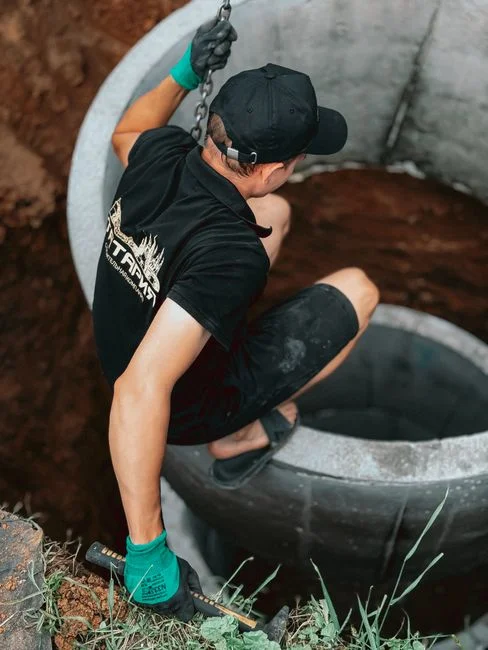
A defensible COD-removal train for airport wastewater is staged so that each unit operation handles the fraction of the load it is best suited to remove, with the next stage picking up what the previous one cannot. The sequence starts at the apron: dedicated deicing pads with drainage capture glycol-laden runoff from aircraft treatment, feeding catch basins, underground pipe networks, detention storage, and glycol recovery vehicles (GRVs) (S2). Recovering glycol at this point is the highest-value step in the entire train, because it removes the COD load from the wastewater stream entirely rather than spending energy to biologically oxidize it downstream. From the collection network, the flow enters a continuous-duty rotary mechanical bar screen for airport headworks to protect downstream pumps and biological processes from rags, plastics, and fibrous debris. The next stage is dissolved air flotation, which the ifactoryapp.com brief identifies as the typical pre-clarification step before biological treatment (S2); a DAF system for airport pretreatment removes suspended solids, oil and grease, and colloidal matter that would otherwise overload the downstream biological stage or pass straight through into the effluent. After DAF, the flow enters equalization to dampen the seasonal and diurnal peaks that deicing operations produce, followed by advanced biological treatment using anaerobic digestion and post-lagoon rock media beds (SAGR), which handles glycol breakdown even at low temperatures where bacterial reproduction slows (S2). Each deicing event requires documentation of fluid type, volume, collection rate, and disposal or recovery pathway (S2), and treatment system performance must be continuously documented against permit limits, with any exceedance reported to the permitting authority within the required notification window (S2). For seasonal or trailered deployments, a modular biological treatment plant for seasonal airport loading can be specified to support the peak-period surge and then de-mobilized for the off-season.
Comparing the Three COD-Removal Pathways
Three COD-removal pathways compete for the same downstream polishing slot, and the decision between them should be driven by airport-specific constraints rather than headline numbers from laboratory studies. Electrocoagulation with 4 aluminium and 4 iron electrodes, 2 cm spacing, 12 cm depth, pH 7, 50 min reaction time, 10.5 V, and 0.5 g/L NaCl achieved 99.5% COD removal from a 710 mg/L petroleum-refinery feed at 12 kWh/m³ (S1, Muslim & Asel, Wasit University). This result is not an airport result: the feed was refinery wastewater, not propylene glycol or acetate/formate-laden apron runoff, and the energy consumption of 12 kWh/m³ is a meaningful operating cost line. The honest reading is that electrocoagulation is a candidate for pilot testing on actual airport runoff, not a documented compliance pathway for it. Advanced biological treatment with anaerobic digestion followed by post-lagoon rock media beds (SAGR) is the documented cold-tolerant pathway for glycol breakdown (S2), and it is the only one of the three with airport-specific evidence in the supplied research. DAF-based physico-chemical pretreatment handles suspended solids, FOG, oil and grease, and colloidal matter ahead of biological polishing, and a lamella clarifier can be deployed as a high-rate sedimentation polish to reduce chemical consumption. Advanced glycol recovery systems can achieve glycol purity above 99%, meeting ASTM standards, enabling resale or reblending that can reduce de-icing operational costs by up to 50% (S2), which is a financial return that neither biological nor electrochemical polishing can match. The practitioner decision framework is therefore sequential: capture and recover glycol first, then DAF pretreatment, then anaerobic + SAGR, with electrocoagulation reserved as a pilot option for sites where the biological pathway is constrained by footprint or climate.
| Pathway | Documented COD Removal | Feed Provenance | Cold-Weather Fit | Key Constraint |
|---|---|---|---|---|
| Biological (anaerobic + SAGR) | Documented for glycol breakdown (S2); specific % not stated in research | Airport-specific | Explicitly designed for low temperatures (S2) | Slower kinetics in deep cold; sizing for peak loads |
| Physico-chemical (DAF + chemical) | Removes suspended solids, FOG, colloidal matter (S2); removal % tied to influent | Industrial wastewater generally | Unaffected by temperature | Does not remove dissolved COD; must precede or follow biology |
| Electrocoagulation | 99.5% on 710 mg/L refinery feed (S1) | Petroleum refinery, not airport | Not characterized for airport cold-weather use | 12 kWh/m³ energy; pilot validation required on airport feed |
Equipment Selection Framework for Airport Projects
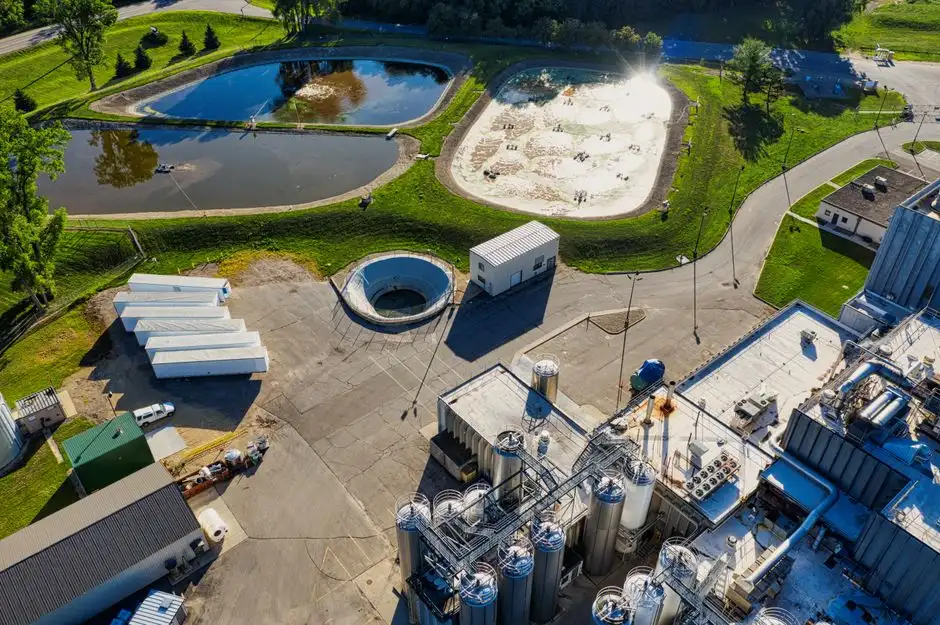
Equipment selection for an airport COD-removal project is governed by the operating envelope the equipment must survive. Pretreatment headworks should use a continuous-duty rotary mechanical bar screen for airport headworks to protect downstream pumps, valves, and biological processes from rags, plastics, and fibrous debris; the GX series specification covers this duty. DAF capacity should be sized for peak wet-weather deicing flows, with a documented 4–300 m³/h range across standard models covering most hub-airport pretreatment duty; an automatic chemical dosing system for DAF and pH control should be specified alongside the DAF to manage coagulant feed and pH trim on the variable airport influent. A lamella clarifier for space-constrained airport sites can be deployed as a high-rate sedimentation polish where apron real estate is limited, and the equipment specification documents up to 30% chemical consumption reduction when lamella is used ahead of DAF. Biological stages using MBR or SAGR configurations should be specified with cold-weather operating envelopes explicitly called out; an MBR system for airport polishing or the WSZ modular plant can be matched to the seasonal load profile. Glycol recovery infrastructure — vacuum trucks and storage — is the only compliance investment that can generate a measurable financial return through resale of recovered product above 99% purity (S2), and it should be specified as a front-end capture stage, not a downstream polishing add-on.
Documentation and Compliance Layer
The treatment train is only half of the compliance picture; the other half is the documentation chain that defends the design during an audit. NPDES stormwater permits demand continuous monitoring with monthly and quarterly discharge reports (S2), which means every influent and effluent data point must be tied to a timestamped, geotagged event record. Airports must pre-treat to avoid surcharge assessments based on COD load, and pre-treatment records per discharge event must be available for immediate challenge documentation (S2), because a municipal surcharge challenge that cannot produce event-level COD data is a surcharge that gets paid. Each collection event requires documentation of fluid type (propylene glycol for aircraft vs potassium acetate for pavement), volume, collection rate against the regulatory minimum, and disposal or recovery pathway (S2). EPA requires separate documentation chains for aircraft deicing fluid and airfield pavement deicers because they create different contamination profiles (S2), and merging those chains into a single log destroys the auditability that the permit depends on. A defensible compliance layer maps monitoring data, lab results, and flow measurements against the specific effluent limits in the airport's NPDES permit, flags any results approaching or exceeding limits, and generates the formatted report structure ready for submission.
Frequently Asked Questions
What is the typical capital envelope for an airport COD-removal train in 2026?
The supplied research does not provide a 2026 capital figure for a complete airport COD-removal train; it identifies the $2.8 million annual surcharge exposure at hub airports routing inadequately treated glycol-laden runoff to municipal systems (S2, ifactoryapp.com) but does not price the equipment train. Buyers should request itemized vendor quotes for the DAF unit, rotary bar screen, equalization basin, anaerobic reactor, and SAGR or MBR polishing stage, sized to their peak deicing-season flow, before sizing the contingency line.
How do I select a treatment-train supplier for a primary commercial airport project?
Verify that the supplier can document cold-weather operating envelopes for the biological stage, not just nominal flow ratings, and request reference installations at airports with comparable passenger-departure counts and cold-climate-zone status (10,000+ annual departures per the EPA ELG scope cited in S2). Cross-check that the proposed DAF, screen, and biological package integrate on a single control platform so that continuous monitoring data feeds NPDES Discharge Monitoring Report generation without manual re-entry.
Does the 60% aircraft deicing fluid collection rule apply to every airport?
No. The 60% minimum collection requirement applies to qualifying primary commercial airports under the EPA Airport Deicing Effluent Guidelines (S2, ifactoryapp.com), and the EPA Effluent Limitation Guidelines apply to primary commercial airports generally defined as those with 10,000 or more annual passenger departures located in cold climate zones (S2). Smaller airports or those outside cold climate zones may face different or no federal ELG requirements, though state and municipal permits can still impose collection or treatment obligations.
Can electrocoagulation replace the biological stage in an airport treatment train?
No evidence currently supports this