Why Water and Wastewater Disruption Now Counts as a Critical-Function Risk
CISA's National Critical Functions framework lists "Supply Water" and "Manage Wastewater" as functions whose disruption, corruption, or dysfunction would have a debilitating effect on national economic security, public health, or safety. A 2026 facility must plan against this operating reality (CISA, Supply Water and Manage Wastewater NCF). The scale baseline CISA attributes to the EPA is striking: U.S. wastewater treatment facilities process approximately 34 billion gallons of wastewater per day, served by more than 150,000 public water systems, so a single unplanned outage rarely stays local (CISA, Supply Water and Manage Wastewater NCF).
Service interruptions are common rather than exceptional: a University of Houston Hobby School of Public Affairs survey cited by Domestic Preparedness found that almost half (49%) of Texans had experienced a water service disruption (Domestic Preparedness, 2023). The cascading consequences are concrete: inoperable pumps at a drinking water utility can make firefighting difficult and close local health care facilities and restaurants, and wastewater pump failure may lead to direct discharge of untreated sewage to rivers and streams or sewage backup into homes and businesses (Domestic Preparedness, citing EPA). For a B2B plant or utility operator, that combination of national designation, daily volume, frequent customer-side disruption, and severe collateral damage justifies a minimal-disruption capital plan rather than treating water and wastewater as ordinary maintenance lines.
The Three Failure Modes That Drive Minimal-Disruption Design
Designing for "no shutdown" is a response to specific, documented failure modes, not a generic resilience slogan. Pump and power loss is the first failure mode; Domestic Preparedness documents that pumps are central to conveyance, treatment, and distribution, and that the loss of power contributes directly to the loss of drinking water and wastewater services. This means any minimal-disruption plan must include temporary pumping and aeration capacity rather than relying on the existing pump room alone (Domestic Preparedness, 2023). Process upset and contamination is the second mode: EPA data cited by Domestic Preparedness shows utilities experience accidental contamination of finished water twice per year, and 10% of these incidents have significant public health or economic consequences, so any bypass loop must include a disinfection barrier, not just screening and settling (Domestic Preparedness, citing EPA). Control-system outage is the third mode: Domestic Preparedness describes growing IT/OT integration in the sector as an expanded attack surface, while CISA's Supply Water and Manage Wastewater page highlights ransomware, lateral movement, and ICS/SCADA exposure as live vectors (Domestic Preparedness, 2023; CISA, Supply Water and Manage Wastewater NCF). The design implication is that a minimal-disruption plan must assume control loss and include manual-mode fallback plus a short SCADA cutover window, not just a redundant PLC.
The Four Engineering Levers for Minimal-Disruption Upgrades
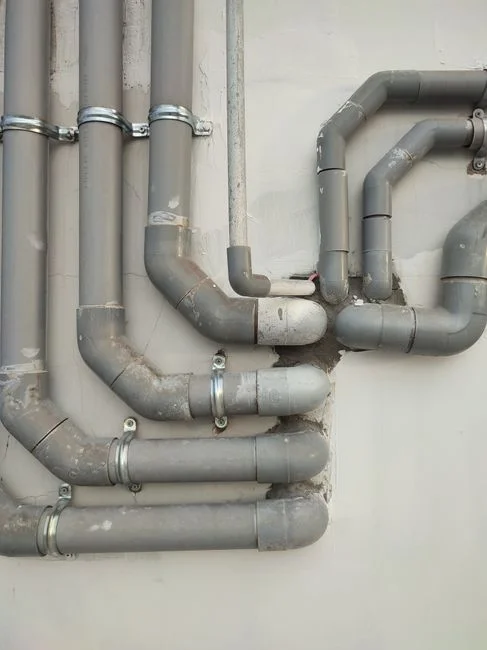
Four engineering levers cover the majority of no-shutdown retrofits a B2B operator will run in 2026, and they are designed to be combined rather than picked as alternatives. Temporary bypass and mobile treatment is the first lever: route the full design flow through a packaged treatment train, typically screening followed by a biological or physico-chemical step and then disinfection, while the main plant is worked on. Treat the bypass as a parallel circuit rather than an in-line add-on so a slip in the main plant cannot contaminate the mobile unit. The second lever is modular packaged skids installed in parallel, such as containerised MBR membrane bioreactor systems or a WSZ underground integrated sewage treatment plant, which tie in next to the existing asset so only tie-in welds and short pipe spools are needed and a full-drain shutdown is avoided. The third lever is staged retrofit sequencing, taking one process train offline at a time while a parallel train carries full flow, a redundancy principle that aligns with the OECD's finding, drawn from its Lithuania consolidation pilots, that consolidation can support more efficient investment decisions and economies of scale (OECD, Reform of Water Supply and Wastewater Treatment in Lithuania, 2022-09-21). The fourth lever is digitally controlled process skids, including PLC-controlled valves and dosing, an automatic chemical dosing skid, and a pipeline UV steriliser, that allow remote reconfiguration, automated backwash, and chemical-free changeover so an operator is not required to be physically present at every transition. For readers comparing pump-side controls during these works, the trade-offs in pump control technologies for extreme rainfall events in 2026 wastewater plants are directly relevant.
Equipment Categories to Shortlist for a No-Shutdown Retrofit
The four levers translate into a shortlist of equipment categories the buyer can put in front of vendors. For screening and pre-treatment, a rotary mechanical bar screen protects downstream bypass pumps and biological units from ragging and debris during the works, which is the single most common cause of mobile-package failure in temporary trains. For pre-packaged biological or physico-chemical treatment, containerised MBR or A/O units drop into the bypass train and can produce near-reuse-quality effluent during the retrofit window, with sizing approaches covered in the containerised MBR STP sizing guide and footprint trade-offs set out in the MBR vs conventional activated sludge footprint comparison. For disinfection, chemical-free UV sterilisation is a bypass-friendly barrier that does not need chemical dosing during commissioning, while on-site chlorine dioxide generation remains an option for facilities that need a residual during the changeover. For sludge handling, mobile plate-and-frame dewatering or decanter centrifuge capacity keeps solids processing online while the main dewatering line is being worked on, and a PLC-controlled chemical dosing skid protects the bypass train from flocculation upsets that would otherwise force a shutdown.
Comparing the Four Levers: Cost, Speed and Disruption Risk
The matrix below summarises the trade-offs between the four engineering levers. The "best" combination depends on project duration, design flow, and discharge consent limits, so the matrix is a starting point; the buyer should request project-specific flow, footprint, and downtime figures from vendors rather than rely on assumed ranges.
| Lever | Typical deployment time | Relative CAPEX | Relative OPEX | Residual disruption risk | Best-fit project type |
|---|---|---|---|---|---|
| Temporary bypass and mobile treatment | Days | Low | High per cubic metre treated | Moderate, driven by mobile-unit reliability and discharge compliance | Emergency repair, short scheduled works under 4 weeks |
| Modular packaged skids in parallel | Weeks | Medium to high | Low once commissioned, skids reusable across future projects | Low, as the main asset stays in service | Capacity expansion, multi-train retrofits, projects with future reuse intent |
| Staged retrofit sequencing | Weeks to months | Medium, requires parallel hydraulic capacity already in place | Low to medium, dominated by labour during cutovers | Low if parallel trains are verified, higher if redundancy is assumed but not proven | Plants with multiple existing process trains, larger scheduled upgrades |
| Digitally controlled process skids | Days to weeks for control cutover, integrated with the above | Medium | Low, fewer manual interventions and faster backwash cycles | Low for process control, residual cyber risk to be managed per CISA guidance | All projects, especially those with limited on-site operations cover |
The OECD's Lithuania work is a useful check on this matrix: it found that consolidation of utilities yields more efficient investment decisions and economies of scale, which is the same logic that makes reusable modular skids financially attractive across a multi-project capital plan rather than as a one-off hire (OECD, Reform of Water Supply and Wastewater Treatment in Lithuania, 2022-09-21).
Building a Minimal-Disruption Plan: A 7-Step Sequence
- Map the criticality of every asset against CISA's Supply Water and Manage Wastewater framing so downtime tolerance is set by consequence, not habit (CISA, Supply Water and Manage Wastewater NCF).
- Quantify the three failure modes (pump and power loss, contamination, control-system outage) for each asset, using the EPA-cited incident statistics (49% Texas disruption; twice-per-year contamination with 10% significant consequences) as a calibration baseline (Domestic Preparedness, citing EPA, 2023).
- Decide which of the four levers to deploy and in what sequence so only one process train is offline at a time.
- Pre-build the bypass train, skid, and dosing modules off-site so on-site work is limited to tie-ins and re-commissioning.
- Use PLC- and SCADA-ready skids to keep control integration to a short, well-defined cutover window with manual-mode fallback.
- Commission the bypass first, prove discharge compliance against the site-specific permit, then take the main train offline.
- Run the main asset in parallel with the bypass for a defined acceptance window before final cutover, mirroring the staged approach used in the OECD-documented utility consolidation pilots (OECD, 2022-09-21).
Standards, Funding and Compliance Hooks for 2026 Projects

The BSI/ISO examples-of-good-practice standard for water-supply and wastewater systems provides a recognised reference for asset-management documentation, and BSI recommends its version for organisations operating in or with the UK (BSI, Examples of good practice for the management of assets of water supply and wastewater systems). The US funding backdrop is significant: Domestic Preparedness cites an EPA figure that the country will need to spend more than $744 billion over the next decade on water infrastructure, including pipes, treatment plants, and wastewater management facilities. This policy backdrop makes 2026 minimal-disruption upgrades fundable (Domestic Preparedness, citing EPA, 2023). The CISA Supply Water and Manage Wastewater page also flags EPA's Clean Water and Drinking Water State Revolving Funds as mechanisms that can support cybersecurity and resilience upgrades tied to minimal-disruption work, which lets operators bundle a control-system hardening scope with a mechanical retrofit (CISA, Supply Water and Manage Wastewater NCF).
Frequently Asked Questions
What should a 2026 budget request for a minimal-disruption water or wastewater upgrade actually include?
The defensible inputs to budget against are project-specific flow rate, the duration of the works, the discharge consent limits, and whether any bypassed stream needs reuse-quality effluent. Without those four numbers, CAPEX and OPEX estimates should be treated as indicative only. The buyer should request a per-cubic-metre bypass OPEX figure and a skid reuse credit from the vendor before signing.
How do we shortlist a vendor for a no-shutdown retrofit?
Shortlist on three things the vendor must demonstrate in writing: prior work using a parallel, not in-line, bypass circuit, an off-site pre-build and factory acceptance test for the modular skids, and a documented manual-mode fallback for the control system. The four-lever framework in this article is the basis for that checklist, and the BSI/ISO examples-of-good-practice standard is the reference for the operator's own asset-management documentation (BSI, Examples of good practice for the management of assets of water supply and wastewater systems).
Which failure mode should the bypass train be designed around first?
Pump and power loss is the priority, because it is the most frequent initiating event across the documented cases. Domestic Preparedness notes that loss of power contributes to the loss of drinking water and wastewater services, so temporary pumping and aeration must be sized for full design flow rather than average flow (Domestic Preparedness, 2023). Contamination control via a disinfection barrier is the next priority, then control-system fallback.
How does the CISA National Critical Function designation change what we have to do on site?
It elevates water and wastewater from a utility line item to a regulated, high-consequence risk, and it is the basis for using the EPA Clean Water and Drinking Water State Revolving Funds flagged on the CISA page to fund resilience and cybersecurity work bundled with the retrofit (CISA, Supply Water and Manage Wastewater NCF). Operationally, it also means the design must assume control loss as a credible scenario, not a tail risk.